PepsiCo(PEP)

Search documents
3 Elite High-Yield Dividend Stocks Down 8% to 27% That Have Hiked Their Payouts for More than 50 Years in a Row
The Motley Fool· 2025-05-29 10:21
Core Insights - Some of the best dividend stocks, including Federal Realty Investment Trust, Johnson & Johnson, and PepsiCo, are currently experiencing significant price declines, making them attractive investment opportunities due to higher dividend yields [1][12] Federal Realty Investment Trust - Shares have declined nearly 20% from their 52-week high, resulting in a dividend yield exceeding 4.5%, which is over three times higher than the S&P 500's sub-1.5% yield [2] - The company has a record of increasing dividends for 57 consecutive years, the longest in the REIT industry, qualifying it as a Dividend King [4] - Federal Realty focuses on high-quality retail properties in major metro markets, particularly open-air shopping centers and mixed-use properties, leading to high occupancy and steady rent growth [5] Johnson & Johnson - Shares have dropped more than 8% from their recent peak, raising the dividend yield to nearly 3.5% [6] - The company has increased its dividend payment by 4.8% this year, extending its growth streak to 63 consecutive years [6] - Johnson & Johnson holds a AAA credit rating, with a strong balance sheet and robust free cash flow, generating about $20 billion annually, which comfortably covers its nearly $12 billion dividend outlay [7][8] PepsiCo - The stock has fallen over 27% from its 52-week high, resulting in a dividend yield surpassing 4% [9] - PepsiCo recently increased its dividend payout by 5%, extending its growth streak to 53 consecutive years [9] - The company invests heavily in product development and capacity expansion, expecting 4% to 6% annual organic revenue growth and high single-digit earnings-per-share growth [10][11]


Abercrombie & Fitch Says Tariffs Will Cut Profits By $50 Million—Joining These Companies Warning Of Tariff Impacts
Forbes· 2025-05-28 15:10
Summary of Key Points Core Viewpoint - Numerous companies are lowering their profit forecasts for 2025 due to the impact of tariffs and economic uncertainty, indicating a broader trend of caution across various industries. Group 1: Retail Sector - Abercrombie & Fitch lowered its full-year profit forecast for 2025, citing a $50 million hit from tariffs, including a 30% tariff on imports from China and a 10% tariff on other imports [1][2] - Macy's also reduced its earnings per share outlook for the year, attributing it to tariffs, moderation in consumer spending, and increased competition [3] - Target expects sales to decline throughout 2025, previously projecting a 1% growth, due to weaker spending linked to tariff uncertainties [3] Group 2: Consumer Goods and Food & Beverage - Diageo warned of a $150 million hit to annual profits in 2025 but plans to offset half of this impact through unspecified actions [4] - PepsiCo lowered its earnings forecast for 2025, facing higher supply chain costs due to tariffs and a volatile consumer environment [15] - Kraft Heinz also lowered its outlook, citing a volatile operating environment influenced by tariffs and inflation [13] Group 3: Automotive Industry - Ford expects tariffs to reduce its earnings before interest and taxes by about $1.5 billion in 2025 and has suspended its full-year guidance [8] - General Motors lowered its earnings forecast to between $10 billion and $12.5 billion, down from $13.7 billion to $15.7 billion, due to the impact of tariffs [12] - Toyota estimated a $1.25 billion profit loss in April and March due to U.S. tariffs, forecasting a nearly 21% dip in operating income through 2025 [5] Group 4: Technology and Electronics - AMD anticipates a $1.5 billion revenue loss in 2025 due to restrictions on chip shipments to China [7] - Apple expects a $900 million hit to its bottom line in the second quarter due to tariffs, complicating future predictions [10] - Logitech withdrew its outlook for the 2026 fiscal year due to ongoing tariff uncertainties [17] Group 5: Airlines and Transportation - JetBlue and Alaska Airlines both pulled their full-year guidance for 2025 due to macroeconomic uncertainty [13][17] - Delta Airlines withdrew its full-year guidance, citing broad macro uncertainty [18] - United Airlines issued a second guidance featuring significantly lower earnings for 2025, reflecting the unpredictable economic environment [17] Group 6: Miscellaneous - Steve Madden withdrew its financial guidance for 2025, facing heightened uncertainty from new tariffs [6] - Rivian lowered its targets for vehicle deliveries and capital spending for 2025 due to significant uncertainty in the global economic landscape [6] - Snap declined to issue guidance for its second quarter, citing uncertainty in macroeconomic conditions affecting advertising demand [14]






Pretzelmaker Cranks Up the Heat with Cheetos® Flamin' Hot® Pretzel Bites
GlobeNewswire News Room· 2025-05-28 14:05
Company Overview - Pretzelmaker, owned by FAT Brands Inc., is known for its innovative Pretzel Bites and has been in operation since 1991, starting as a single pretzel stand [3][6] - The company has grown to over 280 locations worldwide and continues to innovate with various menu offerings [6] New Product Launch - Pretzelmaker has introduced a new menu item, Cheetos Flamin' Hot Pretzel Bites, available until July 13, 2025, following the success of last year's Cheetos Pretzel Bites [2][3] - The new product features a dusting of Cheetos' Flamin' Hot Dust and is freshly baked and hand-rolled daily, providing a spicy flavor that pairs well with the chain's all-natural Lemonade [2][3] Marketing Strategy - The Vice President of Marketing at Pretzelmaker, Katie Thoms, emphasized the company's commitment to customer feedback and the desire to enhance flavor offerings, indicating a strong focus on customer engagement [3] - The collaboration with Cheetos aims to maintain excitement and attract customers through innovative flavor combinations [3] Parent Company Information - FAT Brands is a global franchising company that owns 18 restaurant brands and operates over 2,300 units worldwide, indicating a robust presence in the fast-casual dining sector [5] - The company strategically acquires and develops various dining concepts, showcasing its diverse portfolio [5]

美洲饮料:截至5月17日的NielsenIQ数据-非酒精饮料销售增长因价格趋软而连续放缓
Goldman Sachs· 2025-05-28 05:10
Investment Rating - The report does not explicitly state an investment rating for the industry or specific companies Core Insights - Recent sales growth trends for non-alcoholic beverages have decelerated slightly, with overall dollar sales growth up +3.4% year-over-year for the two weeks ending May 17, 2025, compared to previous periods [1] - Pricing growth has softened to +2.7%, while volume growth remains stable at +0.7% year-over-year [1] - Energy drinks continue to show strong sales growth at +8.3% year-over-year, although this is a slight deceleration from previous periods [7] Summary by Category Carbonated Soft Drinks (CSDs) - Dollar sales growth in CSDs was up approximately +LSD% and stable sequentially, with pricing growth slightly stronger but offset by weaker volumes [2] - Coca-Cola Company and Pepsico Inc reported dollar sales growth of +2.7% and +0.3% respectively, with volume declines [9] Bottled Water - Dollar sales trends in bottled water were stable sequentially, with growth around +LSD% and stable pricing and volume growth [2] Energy Drinks - The energy drink category saw dollar sales growth of +8.3% year-over-year, with volume growth at +6.7% [7] - Monster Energy Co. (excluding Bang) reported dollar sales growth of +9.5% year-over-year, driven by stable volume growth [7] Salty Snacks - Dollar sales trends for salty snacks modestly accelerated to -0.9% year-over-year, with volume growth at -2.1% [8] - Pepsico Inc's salty snack sales growth was down -3.3% year-over-year [8] Specific Company Trends - PEP's dollar sales growth modestly accelerated sequentially, while MNST (excluding Bang) showed strong and stable growth at +HSD% [3] - KO's dollar sales growth remained stable at +MSD%, with stable volumes and pricing growth [3] - KDP's dollar sales growth was stable at +LSD%, with stronger pricing growth offset by softer volumes [3]


真正的好生意,毛利和净利是不会低的
Hu Xiu· 2025-05-27 00:32
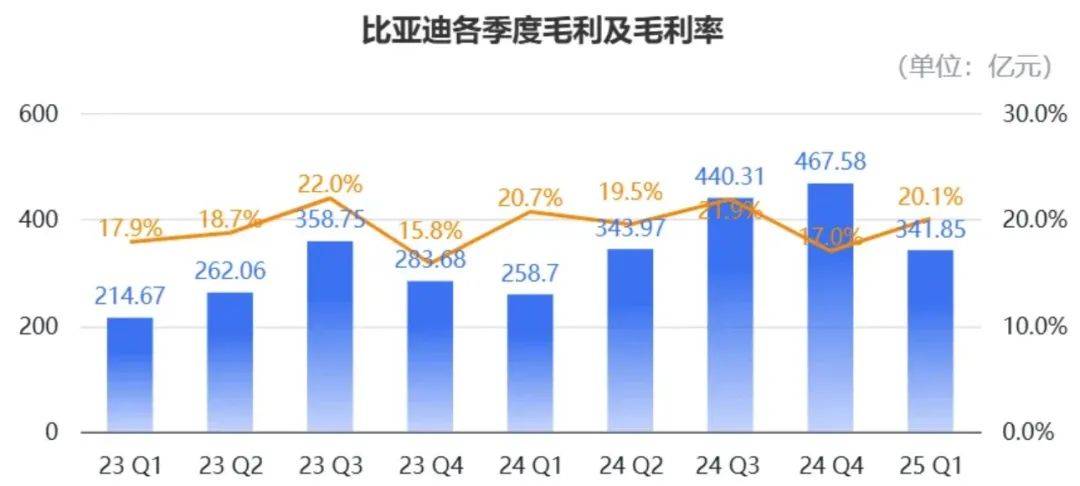
Group 1: Internet Platform Companies - Tencent has a gross margin of 53% and a net margin of 33.7%, dominating the social media space [1] - Trip.com has a gross margin of 81.76% and a net margin of 32.02%, holding a market share of 65-70% in high-star hotels [1] - Pinduoduo reports a gross margin of 60.9% and a net margin of 28.6%, affected by losses from TEMU [1] - NetEase Games shows a gross margin of 57.14% and a net margin of 28.2% [1] Group 2: Fast-Moving Consumer Goods (FMCG) Brands - Leading FMCG brands like Nongfu Spring and Coca-Cola have net margins around 20%, with Coca-Cola at 22.6% due to its innovative business model [2] - Second-tier brands like PepsiCo and Nestlé have net margins around 10%, often due to insufficient brand loyalty or high pricing with low scale [3] - Third-tier brands such as Master Kong and Uni-President operate with net margins around 5%, relying on low prices for market share but struggling with brand loyalty and production scale [4] Group 3: Chain Beverage Companies - Top-tier chain beverage companies like Bawang Tea have a net margin of 20.3%, benefiting from brand premium [5] - Starbucks typically has a net margin of around 15%, but faces margin pressure due to increased competition [6] - Second-tier brands like Mixue Ice City and Gu Ming have net margins of 17.94% and 16.99%, respectively, leveraging scale advantages [6] Group 4: Hardware Companies - Apple has a gross margin of 46.2% and a net margin of 24%, while Xiaomi has a gross margin of 20.4% and a net margin of 6.44% [8] - NVIDIA shows a gross margin of 78.9% and a net margin of 57%, compared to AMD's gross margin of 50.2% and net margin of 15.3% [8] Group 5: Business Insights - High net margins (above 30%) often indicate monopolistic products, while margins below 15% suggest competitive pressures [9] - Companies with single-digit net margins typically rely on price wars, indicating weak product differentiation and low competitive advantage [14] - Trends in gross and net margins can reveal significant insights about a company's market position, as seen with Tesla and BYD [15]




This Dividend King's Yield Has Never Been This High. Time to Buy, or Run Away?
The Motley Fool· 2025-05-27 00:14
Core Viewpoint - PepsiCo, a Dividend King with a history of consistent dividend growth, is currently facing challenges that have led to a decline in stock price and an increase in dividend yield to all-time highs [2][10]. Group 1: Company Performance - PepsiCo's sales exceeded $91 billion last year, but growth is slowing, with food volumes dropping 1% last year and a 3% year-over-year decline in the first quarter of 2025 [4][7]. - The company has historically leveraged its iconic brands and premium shelf space for pricing power, but inflation has significantly impacted food prices, which rose approximately 25% from 2019 to 2023 [5]. - Analysts' long-term earnings growth estimates for PepsiCo have decreased from about 8% to under 4%, contributing to the stock's decline [8]. Group 2: Financial Health - PepsiCo paid $5.42 per share in dividends last year while generating only $5.28 per share in free cash flow, indicating a potential strain on dividend sustainability [10]. - Despite this, PepsiCo maintains a strong financial position with $8.5 billion in cash and an "A+" credit rating from S&P Global, suggesting that the dividend is likely secure [10]. Group 3: Strategic Outlook - The company is adapting to market changes, including the rise of weight loss drugs, by acquiring emerging brands in health and specialty categories, which may help restart growth [12]. - There is potential for PepsiCo to divest brands that do not align with its strategic direction, indicating a proactive approach to maintaining competitiveness [12][13]. - For income-focused investors, PepsiCo remains an attractive option due to its above-average yield, despite the current challenges [13][14].
This Market Sell-Off Might Trigger a Value Rotation Into Pepsi
MarketBeat· 2025-05-25 11:43
Group 1: Market Overview - Investors need to understand their position in the stock market cycle, which can be obscured by market noise [1] - Capital typically flows into two main areas: value stocks, known for stability, and growth stocks, which are more speculative [2][3] - Current market indicators suggest a potential rotation back into value stocks, particularly in light of recent volatility in the S&P 500 [3][8] Group 2: PepsiCo Stock Analysis - PepsiCo's stock is currently trading at $129.34, with a 52-week range of $127.75 to $180.91 and a dividend yield of 4.40% [2] - The stock's forward P/E ratio is approximately 16.0x, lower than during the peak months of the COVID-19 pandemic, indicating a potential undervaluation [10][11] - Institutional buyers, such as UBS Asset Management, have increased their stakes in PepsiCo by 1.8%, amounting to a total stake worth $1.7 billion [12] Group 3: Price Forecast and Investment Strategy - Analysts have set a 12-month price target for PepsiCo at $160.69, suggesting a potential upside of 24.24% from the current price [13] - The consensus price target indicates a possible rally of up to 23.2% compared to current prices, which may attract investors amid market uncertainty [14] - Investors are encouraged to consider dollar-cost averaging strategies to capitalize on current price discounts while monitoring the value versus growth ratio for potential breakout signals [15]
美国FTC撤销对百事公司的定价相关反垄断诉讼
news flash· 2025-05-23 04:15
美国联邦贸易委员会(FTC)5月22日宣布,一致投票驳回拜登政府末期针对百事公司提起的反垄断诉讼。 该诉讼于1月17日提起,指控百事向小型零售商收取的价格高于其向大型跨国连锁店出售饮料的价格, 违反《罗宾逊-帕特曼法案》。(智通财经) ...
PepsiCo Vs Monster: Who is Really Fueling the Energy Drink Empire?
ZACKS· 2025-05-22 13:51
Core Viewpoint - The energy drinks market is highly competitive, with PepsiCo and Monster Beverage Corporation vying for dominance as consumer preferences evolve and the category diversifies [1][2]. Group 1: PepsiCo's Position - PepsiCo is leveraging its extensive distribution network and brand strength to assert itself in the energy drinks space, with a focus on high-growth segments like zero sugar and functional hydration [4][6]. - The company has made strategic acquisitions, such as Poppi, to tap into health-focused segments that overlap with energy drink consumers [5]. - Despite its strengths, PepsiCo faces challenges including soft top-line trends and cautious consumer sentiment in North America, influenced by inflation and value-conscious purchasing behavior [7]. Group 2: Monster Beverage's Position - Monster Beverage maintains a strong market presence with a diversified portfolio, achieving 2.2% sales growth in its core energy drinks segment in Q1 2025 [8][10]. - Innovation is central to Monster's strategy, with successful product launches like Monster Energy Ultra Blue Hawaiian contributing to its category leadership [9]. - The company is expanding its affordable energy offerings in international markets, which accounted for approximately 40% of total revenues in Q1 2025 [10][11]. Group 3: Financial Performance and Valuation - Year-to-date, PepsiCo shares have declined by 14.4%, while Monster's shares have increased by 20.1%, reflecting differing market sentiments [12]. - PepsiCo trades at a forward P/E multiple of 16.16X, while Monster's is significantly higher at 32.44X, indicating differing growth expectations [13][16]. - Earnings estimates for PepsiCo have been revised downwards, while Monster's estimates have seen upward revisions, suggesting growing investor optimism for Monster [17][21].
PepsiCo Refines Sustainability Goals to Position Business for the Long-Term
Prnewswire· 2025-05-22 12:00
Core Insights - PepsiCo has made significant advancements in sustainability through its pep+ initiative, focusing on regenerative agriculture, water stewardship, sustainable packaging, and climate change since its launch in September 2021 [1][2]. Sustainability Goals - The company is refining its sustainability goals to enhance business resilience and focus on areas with the most positive impact, including an increased target for regenerative agriculture from 7 million acres to 10 million acres by 2030, with 3.5 million acres already achieved as of 2024 [5][6]. - PepsiCo aims to achieve net zero emissions by 2050, aligning its Scope 1, 2, and 3 targets with a 1.5°C trajectory, reflecting updated scientific guidance [6][10]. - The company is updating its packaging goals to prioritize key markets and reduce the use of virgin plastic, while also sunsetting its reuse target but continuing efforts to design packaging that is reusable, recyclable, or compostable [7][8]. Water Management - PepsiCo has exceeded its previous water-use efficiency goals, achieving a 25% improvement in operational water-use efficiency in high-risk watersheds and a 15% improvement in agricultural water-use efficiency ahead of schedule. The company maintains its goal to become net water positive by 2030 [9][23]. Transparency and Reporting - The company emphasizes transparency in its sustainability journey, committing to detailed reporting on progress in its 2024 ESG Summary, which will include both successes and challenges faced [10][5].