Roche(RHHBY)

Search documents
Prothena Corporation (PRTA) 2025 Conference Transcript
2025-09-04 15:55
Summary of Prothena's Conference Call Company Overview - **Company**: Prothena - **Industry**: Biotechnology, specifically focused on neurodegenerative diseases and amyloidosis Key Points and Arguments 1. **Pipeline Updates**: Prothena has made significant progress in its pipeline, with Roche advancing prasinezumab for Parkinson's disease into a phase three study and Novo moving Kuramitug for ATTR cardiomyopathy into a phase three study as well [4][5] 2. **Restructuring**: The company underwent a restructuring to align its resources with ongoing partnership obligations and to focus on shareholder-friendly activities [13][14] 3. **Financial Milestones**: Prothena anticipates up to $105 million in clinical milestone payments in 2026, contingent on the progress of its partnered programs with Novo and Bristol Myers Squibb [8][16] 4. **Shareholder Returns**: Plans for a share repurchase program are in place, supported by the establishment of distributable reserves through an extraordinary general meeting [11][20] 5. **PRXO12 Data**: The recent data for PRXO12 indicated higher than expected ARIA events, prompting consideration of a transferrin-based approach to mitigate these issues while retaining the drug's efficacy [21][24] 6. **Partnerships**: Prothena has four partnership programs, with two in phase three and one in phase two, which are crucial for the company's future value creation [12][19] 7. **Roche Partnership**: The deal with Roche is valued at $755 million, with $135 million received to date. Roche sees a peak sales opportunity for prasinezumab exceeding $4 billion [32][33] 8. **Novo Partnership**: The partnership with Novo for Kuramitug is valued at $1.23 billion, with $100 million received so far. The next milestone payment is expected to be around $50 million [60][63] 9. **Clinical Development**: Prothena is focused on the clinical development of its partnered assets, with expectations for data releases from ongoing studies [39][70] Additional Important Content 1. **Market Potential**: The market for treatments targeting neurodegenerative diseases and amyloidosis is significant, with increasing demand for effective therapies [43][58] 2. **Competitive Landscape**: The competitive environment is intensifying, with multiple companies developing similar therapies, which could impact Prothena's market positioning [21][22] 3. **Regulatory Considerations**: The timeline for potential partnerships and clinical trials is uncertain, with ongoing discussions expected to take time [29][30] 4. **Scientific Insights**: Prothena's approach to targeting alpha-synuclein in Parkinson's disease is based on empirical data, focusing on the carboxy terminus of the protein for better efficacy [44][46] This summary encapsulates the critical insights from Prothena's conference call, highlighting the company's strategic direction, financial outlook, and ongoing clinical developments.


Roche receives CE mark for Contivue, its Port Delivery Platform containing Susvimo, for neovascular age-related macular degeneration (nAMD)
Globenewswire· 2025-09-04 06:00
Core Viewpoint - Roche has received the EU CE mark for its Port Delivery Platform containing Susvimo, now known as Contivue® in the EU, which allows for continuous delivery of ranibizumab directly to the eye for the treatment of neovascular age-related macular degeneration (nAMD) [1][7]. Company Overview - Roche is focused on developing innovative therapies to combat vision loss, particularly through its advancements in continuous drug delivery systems [10][12]. - The company has a broad pipeline in ophthalmology, including treatments for various retinal diseases [11]. Product Details - Contivue is a refillable eye implant that allows for the delivery of a customized formulation of ranibizumab, with the potential for up to two treatments per year [6][7]. - The device includes four ancillary devices for filling, inserting, refilling, and removing the implant if necessary [1][6]. Clinical Data - Long-term data from the LADDER study indicates that patients treated with Contivue with Susvimo maintained good visual outcomes over seven years, with an average decline of only six letters in best-corrected visual acuity (BCVA) [3][4]. - Approximately 95% of patients maintained the durability of Contivue with Susvimo over the study period [3]. Market Impact - Susvimo is under review with the European Medicines Agency (EMA) and, once approved, will be the first continuous delivery treatment for nAMD, potentially impacting 1.7 million people in the European Union [7]. - The product is already approved in the US for nAMD, diabetic macular edema (DME), and diabetic retinopathy (DR) [9].


罗氏(RHHBY.US)4亿美元加码IBD领域 开发临床前口服小分子
智通财经网· 2025-09-02 13:21
Core Viewpoint - OMass Therapeutics has entered into an exclusive collaboration and licensing agreement with Genentech, a member of Roche Group, to develop and commercialize OMass's oral small molecule project targeting inflammatory bowel disease (IBD) [1][3] Group 1: Financial Terms - OMass will receive an upfront payment of $20 million, with potential milestone payments exceeding $400 million related to preclinical, development, commercial, and net sales achievements [3] - OMass is also eligible for tiered royalties based on net sales [3] Group 2: Project Development Responsibilities - OMass will lead the initial preclinical development of the project until a candidate compound is selected [3] - Genentech will be responsible for clinical development, regulatory submissions, manufacturing, and commercialization activities [3]

ALNY/RHHBY's Zilebesiran to Enter Phase III After Third Phase II Win
ZACKS· 2025-09-01 15:51
Core Insights - Alnylam Pharmaceuticals and Roche reported positive mid-stage results for zilebesiran in patients with uncontrolled hypertension and high cardiovascular risk [1][5] Group 1: Study Results - The phase II KARDIA-3 study achieved its primary endpoint with a single 300 mg dose of zilebesiran showing placebo-adjusted reductions in office systolic blood pressure at month 3, although it did not meet the pre-specified statistical significance [3][5] - The 300 mg dose also resulted in clinically meaningful reductions in 24-hour mean ambulatory systolic blood pressure at three and six months, with effects sustained throughout the 24-hour cycle [3][6] - Zilebesiran demonstrated early and durable reductions in cardiovascular and renal biomarkers, indicating potential long-term benefits for high-risk populations [7] Group 2: Future Plans - Alnylam and Roche plan to initiate a global phase III cardiovascular outcomes trial, ZENITH, to evaluate zilebesiran's potential to reduce major adverse cardiovascular events [9][11] - The ZENITH study will enroll approximately 11,000 patients and is expected to start by late 2025, focusing on patients with uncontrolled hypertension on multiple antihypertensives [11] Group 3: Market Performance - Year to date, Alnylam's stock has increased by 89.8%, significantly outperforming the industry average growth of 2.7% [4]


医药板块下跌 特朗普再放狠话:下调药品价格1400%至1500%
贝塔投资智库· 2025-08-26 04:02
Core Viewpoint - The U.S. government, led by President Trump, plans to significantly reduce drug prices by 1400% to 1500% and impose higher tariffs on imported drugs, although the mathematical validity of such claims is questionable [1][2]. Group 1: Drug Price Reduction - Trump emphasized the need for major reductions in drug prices, stating that the U.S. drug prices need to be drastically cut [1]. - A formal letter was sent to major pharmaceutical companies, including Johnson & Johnson, Pfizer, and AstraZeneca, demanding price reductions by September 29 [1]. - The letter insisted on providing all existing drugs at the Most Favored Nation (MFN) price for all Medicaid patients, with a warning of potential government action if compliance is not met [1]. Group 2: Tariff Plans - Trump revealed plans to impose tariffs on imported drugs, starting with lower rates and potentially increasing to 250% over time, aimed at encouraging domestic pharmaceutical production [1][2]. - The proposed tariff plan has raised doubts regarding its consistency, as previous threats of high tariffs were later retracted [2]. Group 3: Market Reaction - Following Trump's announcements, pharmaceutical stocks experienced a decline, with notable drops in companies such as Pfizer (down 2.86%) and Merck (down 2.36%) [2].



医药板块下跌 特朗普再放狠话:下调药品价格1400%至1500%
Zhi Tong Cai Jing· 2025-08-25 22:28
Core Viewpoint - The U.S. government, led by President Trump, plans to significantly reduce drug prices by up to 1400% to 1500%, while also proposing higher tariffs on imported drugs, although the mathematical validity of such claims is questionable [1][2] Group 1: Drug Price Reduction - President Trump has issued a strong statement regarding the need for drastic reductions in drug prices, emphasizing that the U.S. drug prices need to be cut significantly [1] - Trump has sent formal letters to major pharmaceutical companies, including Johnson & Johnson, Pfizer, AstraZeneca, and others, demanding they lower drug prices by September 29 [1] - The administration aims to extend the "Most Favored Nation" (MFN) pricing to all Medicaid patients, insisting that all existing drugs must be available at MFN prices [1] Group 2: Tariff Plans - Trump has revealed plans to impose tariffs on imported drugs, potentially reaching as high as 250%, marking the most severe proposal to date [1] - The tariff strategy will start with lower rates, gradually increasing to 150% within one to one and a half years, and ultimately reaching 250% [1] Group 3: Market Reaction - Following Trump's announcements, pharmaceutical stocks experienced a decline, with notable drops including Johnson & Johnson down 0.49%, Pfizer down 2.86%, and AstraZeneca down 1.62% [2] - The overall sentiment in the pharmaceutical sector appears negative, reflecting concerns over the proposed price cuts and tariffs [2]
Roche's US subsidiary Genentech breaks ground on state-of-the-art manufacturing facility in North Carolina, USA
GlobeNewswire News Room· 2025-08-25 18:30
Core Points - Genentech has commenced construction on its first manufacturing facility on the East Coast, located in Holly Springs, North Carolina, which will support the production of metabolic medicines, including obesity treatments [1][2] - The initial investment for this facility exceeds $700 million and is part of Roche's broader commitment of $50 billion towards US manufacturing infrastructure and R&D [2][8] - The facility is expected to create over 1,900 jobs and is strategically located in a growing biopharmaceutical hub with access to a skilled workforce and leading academic institutions [2][8] Facility Details - The new facility will cover an area of 65,000 m² and is designed to incorporate modern biomanufacturing technologies, advanced automation, and digital capabilities [3] - It is projected to be operational by 2029 and will enhance Roche's manufacturing capacity and supply chain resilience [3][4] - The facility will also allow for future expansion on the 400,000 m² lot [3] Company Background - Roche, founded in 1896, is the world's largest biotechnology company and a leader in in-vitro diagnostics, focusing on developing innovative medicines and diagnostics [5][6] - The company has a long-standing commitment to sustainability and aims to achieve net zero by 2045 [6]

Roche’s US subsidiary Genentech breaks ground on state-of-the-art manufacturing facility in North Carolina, USA
Globenewswire· 2025-08-25 18:30
Core Points - Genentech has commenced construction on its first manufacturing facility on the East Coast, located in Holly Springs, North Carolina, which will support the production of metabolic medicines, including obesity treatments [1][2] - The initial investment for this facility exceeds $700 million and is part of Roche's broader commitment of $50 billion towards US manufacturing infrastructure and R&D [2][8] - The facility is projected to create over 1,900 jobs and is strategically located in a growing biopharmaceutical hub with access to a skilled workforce and leading academic institutions [2][8] - The new site will be completed and operational by 2029, featuring modern biomanufacturing technologies and advanced automation [3] - Designed for high-volume and sustainable production, the facility will enhance Roche's manufacturing capacity and supply chain resilience, complementing existing sites globally [4][8] Company Overview - Roche, founded in 1896, is the world's largest biotechnology company and a leader in in-vitro diagnostics, focusing on developing innovative medicines and diagnostics [5] - Sustainability has been a core aspect of Roche's operations for over 125 years, with commitments to achieve net zero by 2045 [6]
财经观察:瑞士如何招架“发达国家最高关税”?
Huan Qiu Shi Bao· 2025-08-10 22:56
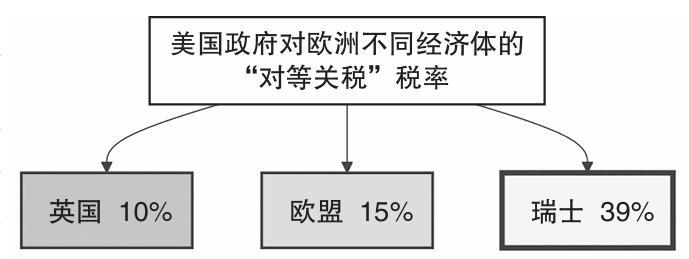
Group 1: Tariff Impact on Switzerland - The U.S. has imposed a 39% tariff on Swiss goods, the highest among developed countries, leading to significant shock and confusion in Switzerland [1][3] - The trade deficit between the U.S. and Switzerland exceeded $38 billion last year and approached $48 billion in the first half of this year, prompting U.S. dissatisfaction with Switzerland's trade balance [3] - Swiss exports to the U.S. are heavily reliant on gold, which accounted for two-thirds of exports recently, alongside strong performances in pharmaceuticals, precision machinery, watches, chocolate, and cheese [3] Group 2: Economic Consequences - Economists estimate that the U.S. tariffs could result in the loss of 7,500 to 15,000 jobs in Switzerland and potentially decrease the country's GDP by up to 1% [6] - The high tariffs, combined with the strong Swiss franc, are expected to severely impact Swiss exporters, particularly in the machinery and electrical engineering sectors [7] Group 3: Industry Responses - Swiss companies are preparing for the tariff impact by increasing exports to the U.S. before the tariffs take full effect, but the long-term effects will become apparent as inventories deplete [9] - The luxury watch industry may see prices rise by 65% in the U.S. due to tariffs, while chocolate prices could increase by nearly 55%, risking market share loss [9] Group 4: Negotiation Challenges - Swiss authorities are in ongoing discussions with the U.S. to lower tariffs, but the negotiation leverage appears limited due to Switzerland's already high level of trade liberalization with the U.S. [10] - The potential for Swiss companies to relocate production to Germany is being considered, but this process is complex and time-consuming [10] Group 5: Broader Trade Dynamics - The current trade negotiations between Switzerland and the U.S. are characterized by pressure and threats rather than traditional cooperative discussions, complicating the resolution process [11]

寻找未被满足的临床需求(3):HR+/HER2-BC:多种新机制药物有望延长免化疗生存期
Guoxin Securities· 2025-08-07 15:20
Investment Rating - The report maintains an "Outperform" rating for the industry [1] Core Insights - There is an unmet clinical need in HR+/HER2- breast cancer (BC), which accounts for approximately 60-70% of all breast cancer cases globally [2][8] - New mechanism drugs are expected to extend chemotherapy-free survival for HR+/HER2- BC patients, with a focus on overcoming resistance to endocrine therapy (ET) and enhancing the efficacy of CDK4/6 inhibitors [2][40] - The report highlights the potential of various new target molecules and mechanisms to improve patient outcomes and expand market size [2][40] Summary by Sections 1. Unmet Clinical Needs in HR+/HER2- BC - HR+/HER2- BC is the most common subtype of breast cancer, with significant unmet clinical needs, especially for patients with specific mutations [2][8] - Current treatment options, including ET and CDK4/6 inhibitors, are limited for patients who progress after first-line therapy [2][40] 2. Endocrine Therapy: New Mechanism Molecules to Overcome Resistance - New generation oral SERDs and ER PROTACs are promising in overcoming resistance caused by ESR1 mutations [2][40] - The estrogen signaling pathway plays a critical role in breast cancer, and targeting this pathway is essential for effective treatment [13][48] 3. CDK Inhibitors: Partners in ET to Extend Treatment Duration - CDK4/6 inhibitors significantly improve progression-free survival (PFS) when combined with ET in first-line treatment [14][25] - There is a need for new mechanism molecules targeting the CDK-cyclin pathway to address resistance after first-line therapy [2][40] 4. Other New Target Molecules: Potential to Extend Chemotherapy-Free Survival - Activation of the PI3K/AKT/mTOR pathway is a common resistance mechanism in HR+/HER2- BC, with several products already approved for treatment [2][40] - New targets such as KAT6i and ADCs are expected to show advantages over chemotherapy and occupy significant positions in treatment sequences [2][40] 5. Company Analysis - Companies leading in the development of new mechanism drugs include BeiGene, Hansoh Pharmaceutical, Kelun-Botai Biopharmaceutical, and China National Pharmaceutical Group [2][40]