手表

Search documents
飞亚达(000026):2025年报点评报告:手表业务承压,积极推动精密科技转型
GUOTAI HAITONG SECURITIES· 2026-03-22 11:49
Investment Rating - The investment rating for the company is "Accumulate" [5] Core Insights - The company's watch business is under pressure, prompting a proactive shift towards precision technology transformation. The precision manufacturing business and the acquisition of Chang Kong Gear are progressing steadily [2][3] Financial Summary - Total revenue for 2025 is projected at 3.51 billion yuan, a decrease of 11.0% from the previous year. Net profit attributable to shareholders is expected to be 87 million yuan, down 60.4% [4] - Earnings per share (EPS) for 2025 is forecasted at 0.22 yuan, with a projected increase to 0.35 yuan in 2026 and 0.45 yuan in 2027 [4] - The return on equity (ROE) is expected to be 2.6% in 2025, improving to 5.2% by 2027 [4] Revenue Breakdown - The company's revenue from the watch business in 2025 is expected to be 3.23 billion yuan, accounting for 92% of total revenue, with a decline of 11.6% year-on-year. The luxury watch segment is projected to generate 2.66 billion yuan, down 9.3% [11] - The precision technology segment is anticipated to generate 140 million yuan in revenue, representing a growth of 7.1% [11] Strategic Initiatives - The company is focusing on enhancing its product and channel strategies in the watch sector, including the introduction of aviation-themed products and optimizing brand and channel structures for luxury watches [11] - The acquisition of Shaanxi Chang Kong Gear is aimed at strengthening the company's capabilities in precision gear and reducer businesses, supporting its strategic transformation [11] Market Performance - The company's stock has a 52-week price range of 9.52 to 21.73 yuan, with a total market capitalization of 5.65 billion yuan [6] - The target price for the stock is set at 15.80 yuan, based on a projected price-to-earnings (PE) ratio of 45 times for 2026 [11]

谁在熔掉宝珀与积家?金价狂飙下名表按克计价,“机芯当垃圾卖”
Sou Hu Cai Jing· 2026-02-11 09:20
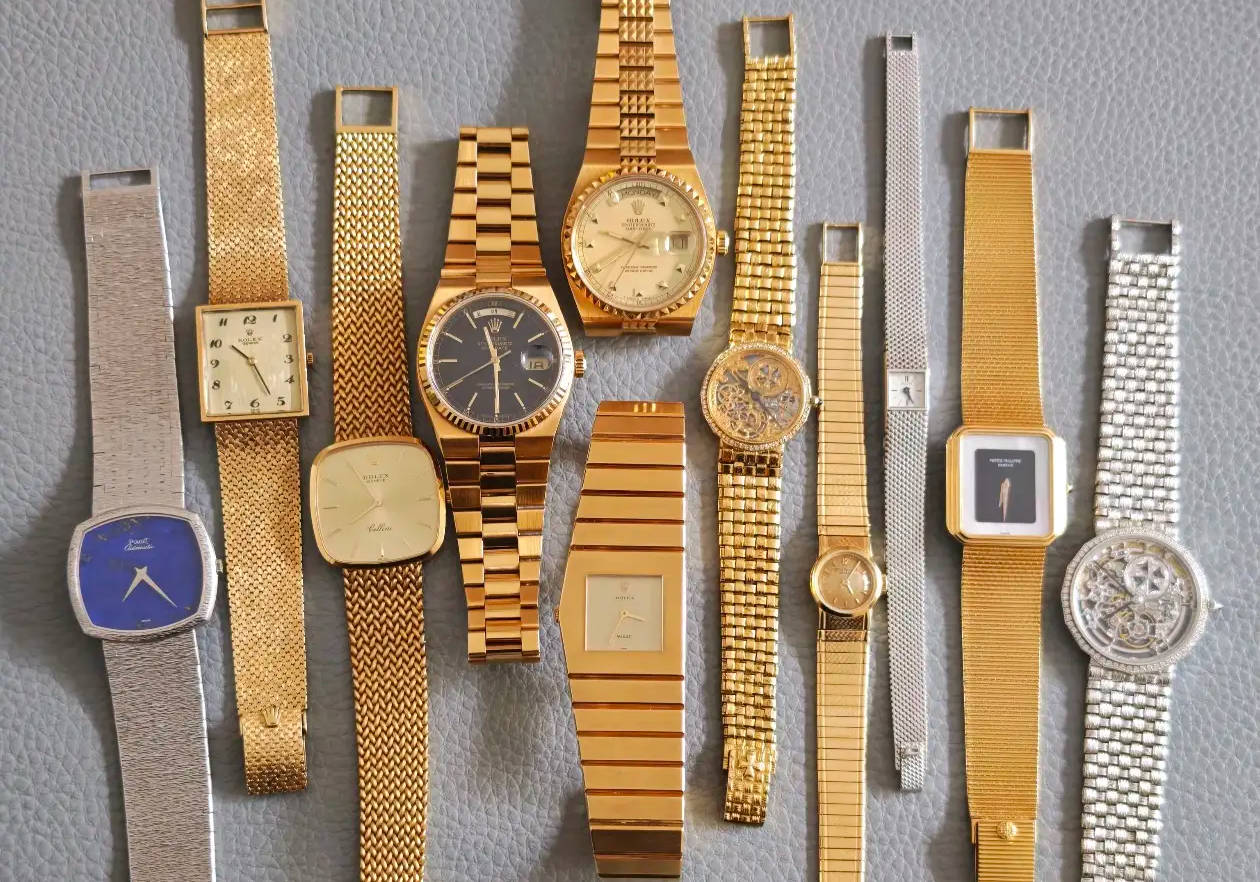
Core Viewpoint - The recent surge in gold prices has led to a dramatic increase in the liquidation of luxury gold watches, with many owners opting to melt them down for cash rather than sell them on the secondary market [2][4]. Group 1: Gold Price Surge - International gold prices have experienced a historic bull market since 2025, surpassing $3000 and $4000 per ounce, with an annual increase of over 60% [2]. - By early 2026, gold prices reached new highs, exceeding $5500 per ounce [3]. Group 2: Impact on Luxury Watches - The rise in gold prices has significantly altered the fate of luxury watches, with many being melted down for their gold content [3]. - Domestic gold prices have also risen, with some brands quoting as high as 1700 RMB per gram, marking a historical peak [4]. Group 3: Market Behavior and Trends - The trend of melting down luxury watches is reminiscent of past market behaviors during previous gold price surges, particularly in the 1970s and 1980s [4]. - Many second-tier luxury watch brands are more frequently being melted down compared to top-tier brands like Patek Philippe and Rolex, which maintain their value and liquidity [8]. Group 4: Cash Flow Considerations - Owners prefer melting watches for immediate cash flow, as selling on the secondary market can take months [9]. - The value of gold in a watch can constitute up to 80% of its total value, making melting a more attractive option for high-weight models [9]. Group 5: Changing Consumer Preferences - The younger generation is increasingly favoring smartwatches over traditional mechanical watches, leading to a decline in the social and status significance of luxury watches [14]. - This shift in consumer behavior is contributing to the depreciation of second and third-tier luxury gold watches in the secondary market, pushing them towards the fate of being melted down [16].

拆开熔金多卖大几千,冷门二奢手表变宝贝
3 6 Ke· 2026-02-02 10:44
Core Viewpoint - The rising gold prices from 2024 to early 2026 have significantly transformed the second-hand luxury watch market, leading to a trend where owners dismantle their watches to sell gold components instead of selling the watches as whole [1][4]. Group 1: Market Dynamics - Gold prices have surged, with domestic gold prices rising from "5000" to "1100+ yuan" and gold jewelry prices exceeding "1500 yuan per gram" [1]. - The trend of dismantling watches for gold has become prevalent, especially for less popular brands like Jaeger-LeCoultre and Cartier, where the material value surpasses the secondary market price [3][4]. - The second-hand luxury watch market is experiencing a revaluation, with some watches being worth significantly more when sold for their gold content rather than as complete watches [2][3]. Group 2: Pricing and Valuation - A second-hand watch dealer noted that the price difference for a watch can reach 2000 to 3000 yuan between the first and second half of the year, indicating market volatility [5]. - The valuation of second-hand watches is influenced by material value, craftsmanship, and brand value, with high-end brands like Rolex generally not being dismantled due to their high secondary market prices [2][3]. Group 3: Impact on Repair and Counterfeiting - The influx of dismantled watch components into the market is benefiting the repair sector, as many repair technicians use these parts for servicing watches [6]. - However, the increase in available parts also raises the risk of counterfeit watches, as unscrupulous individuals may assemble fake watches using genuine components [7][8]. - The complexity of identifying genuine watches increases, particularly for brands like Cartier, where the market is flooded with assembled watches that can easily deceive consumers [8].
飞亚达:2025年前三季度整体实现营业收入26.75亿元
Zheng Quan Ri Bao· 2026-01-09 13:38
证券日报网1月9日讯 ,飞亚达在接受调研者提问时表示,2025年前三季度,由于手表主要业务销售下 滑,公司整体实现营业收入26.75亿元,同比下降12%。面对手表消费市场持续承压的挑战,公司积极 推进一系列的经营与管理优化措施,2025年全年未出现趋势性的变化。2026年,消费市场仍存在不确定 性,公司将继续夯实经营管理基础,深耕手表基本盘业务,加快推进转型升级进程,努力提升经营业 绩。 (文章来源:证券日报) ...
老登资产正在集体崩盘
Sou Hu Cai Jing· 2026-01-07 10:43
Group 1 - The core point of the article is that the demand for traditional luxury assets, referred to as "old assets," is declining, as evidenced by the changes in consumer behavior and market dynamics [1][3][7] - Moutai, a premium liquor brand, has relaxed its purchase limits, indicating a significant shift in sales pressure and consumer interest [1][8] - The concept of "old assets" includes luxury items like famous cigarettes, wines, watches, and antiques, which are primarily valued by middle-aged consumers for their emotional and social significance [3][4] Group 2 - The decline in the value of "old assets" is attributed to a generational shift, where younger consumers prioritize practicality over status symbols, leading to a decrease in demand for luxury items [4][6] - The sales of Swiss watches in China have dropped nearly 30%, reflecting a broader trend of declining interest in high-end luxury goods among younger demographics [9] - The market for collectibles, such as stamps, is also suffering, with younger generations showing little interest in inheriting these traditional assets, causing concern among older collectors [10] Group 3 - The current economic environment is characterized by a return to value, where consumers are more focused on essential needs rather than luxury items, indicating a fundamental shift in consumer behavior [12] - The price of Moutai has significantly decreased from 3000 to 1500 per bottle, highlighting the changing market dynamics and consumer sentiment [8] - The overall trend suggests that both high-end and mid-range luxury markets are experiencing a downturn, with potential implications for the future of these asset classes [7]

飞亚达(000026.SZ):目前公司智能穿戴业务相关收入占总收入比重较小
Ge Long Hui A P P· 2026-01-06 08:16
Core Viewpoint - Feiya Technology (000026.SZ) is primarily engaged in the watch business while actively cultivating strategic emerging industries such as precision manufacturing and smart wearables. Currently, the revenue from the smart wearables segment constitutes a small portion of the total revenue, and related policies do not have a significant impact on the company's overall operations [1]. Group 1 - The company focuses on the watch business as its main operation [1] - The company is also developing precision manufacturing and smart wearable industries as strategic emerging sectors [1] - Revenue from the smart wearables segment is currently minor compared to total revenue [1] Group 2 - Related policies do not significantly affect the company's overall business operations [1]
2025年11月中国电动手表进口数量和进口金额分别为55万只和0.44亿美元
Chan Ye Xin Xi Wang· 2026-01-05 03:17
Core Insights - The report by Zhiyan Consulting highlights the current market status and investment directions for the Chinese watch industry from 2026 to 2032 [1] Group 1: Import Data - In November 2025, China imported 550,000 electric watches, representing a year-on-year increase of 48% [1] - The import value for electric watches reached $44 million, showing a year-on-year growth of 7.8% [1] Group 2: Industry Analysis - Zhiyan Consulting is recognized as a leading industry consulting firm in China, specializing in in-depth industry research and providing comprehensive consulting services [1] - The firm has over a decade of experience in the industry research field, focusing on delivering tailored solutions to empower investment decisions [1]

【盈喜】西普尼(02583.HK)前11个月净利润超9000万元 料年度净利润增长
Jin Rong Jie· 2025-12-24 01:55
Group 1 - The company, Xipuni (02583.HK), reported a net profit exceeding RMB 90 million for the 11 months ending November 30, 2025, compared to a net profit of approximately RMB 49 million for the year ending December 31, 2024 [1] - The expected increase in net profit for the year ending 2025 is primarily driven by an increase in sales revenue from jewelry and an improvement in the gross margin from watch sales [1]
【环球财经】美瑞达成贸易谈判框架协议 行业担忧仍存
Xin Hua She· 2025-11-15 07:56
Core Points - The United States and Switzerland have reached a framework agreement to reduce tariffs on Swiss imports from 39% to 15% [1] - Swiss companies have committed to invest $200 billion in the U.S., with $67 billion planned for 2026 [1] - The two countries aim to expedite trade agreement negotiations, targeting completion by early 2026 [1] Trade Impact - The U.S. tariffs on Swiss goods, which were implemented in August, have significantly impacted Switzerland's export-oriented economy, with approximately 18% of Swiss exports going to the U.S., and nearly 60% affected by these tariffs [1] - Key Swiss exports to the U.S. include watches, pharmaceuticals, chocolate, and cosmetics [1] - The Swiss mechanical and electrical engineering association noted that the reduction of tariffs to 15% only alleviates the competitive disadvantage faced by Swiss producers compared to EU or Japanese manufacturers, indicating that challenges remain [1]
Trump's 39% tariffs ‘horrible' for Switzerland, Breitling CEO says
Youtube· 2025-11-11 16:15
Core Viewpoint - The introduction of a 39% tariff on Swiss goods by the US administration has significantly impacted Swiss watch exports, leading to a decline in sales [1][2]. Impact of Tariffs - The 39% tariff is described as "horrible" and has resulted in a drastic drop in Swiss watch exports [2][1]. - The watch industry has responded by increasing prices globally by 4% to mitigate the impact of tariffs, although this is insufficient to cover the full tariff cost [3][4]. Market Performance - Despite the tariff challenges, the US market for luxury watches is reportedly booming, with strong double-digit growth in sellout figures [4]. - Consumer sentiment in the US remains positive, contrasting with the negative outlook in Europe, particularly in Germany and France, where political instability is a concern [4][5]. Regional Insights - China, while not a major market (4-5% of revenues), has shown signs of stabilization and growth in recent months [7][8]. - Other regions such as South America, the Middle East, and India are performing well, contributing to a generally positive outlook for the luxury watch industry [9][10]. Industry Dynamics - The luxury watch market is expected to concentrate around a few dominant brands, which will control a significant market share, while niche brands may still survive [13][14]. - The industry is experiencing a globalization of taste, with a few brands emerging as leaders, similar to trends seen in other sectors like fashion and entertainment [16].