Siemens(SIEGY)

Search documents
前瞻全球产业早报:宇树发布全身遥操作平台
Qian Zhan Wang· 2025-11-07 15:08
Group 1 - The International Electrotechnical Commission (IEC) has officially released the world's first international standard for industrial 5G, titled "General Requirements for 5G Communication Technology in Industrial Networks," co-proposed by China and Germany, with contributions from experts from multiple countries including the USA, France, and Japan [3] Group 2 - Chongqing has announced a significant administrative division adjustment, approved by the Central Committee and the State Council, which involves the abolition of Jiangbei District and Yubei District, marking a milestone in the city's development strategy [4] Group 3 - A large magnesium limestone deposit has been discovered in Gansu Province, with a total resource volume of 700 million tons and an average MgO grade of 20.67%, indicating a significant breakthrough in mineral exploration in the region [5] Group 4 - Yantai, a city in northern China, leads the GDP growth among cities in the "trillion-yuan club" with a growth rate of 6.4%, surpassing the national average growth rate of 5.2% [6] Group 5 - Chengdu has 42 enterprises listed in the "Top 100 Private Enterprises in Sichuan," with Tongwei Group ranking first, and the entry threshold for the list has increased to 3.945 billion yuan [7] Group 6 - Siemens (China) and Sichuan Chuanrun Co., Ltd. signed a strategic cooperation agreement focusing on AI computing power, data centers, zero-carbon energy solutions, and industrial AI integration [8] Group 7 - Yushu Technology has launched a full-body remote operation platform, showcasing its G1 robot performing various household tasks under human control [9] Group 8 - Yu Minhong confirmed the departure of Sun Dongxu from Oriental Selection, emphasizing their good communication and the positive contributions made by Sun to the company's development [10] Group 9 - Nvidia's CEO Jensen Huang stated that China is likely to win the AI competition due to a more favorable regulatory environment and lower energy costs [10] Group 10 - BMW Group reported that U.S. tariffs have significantly pressured its profitability, with a projected decline of 1.5 percentage points in the EBIT margin for the automotive business for the year [11] Group 11 - Nissan is selling its global headquarters building for 97 billion yen (approximately 4.5 billion yuan) as part of its operational restructuring, while continuing to lease the building [12] Group 12 - SoftBank considered acquiring Marvell Technology Inc. earlier this year, aiming to merge it with its subsidiary Arm Holdings, although no agreement was reached [13][14] Group 13 - Google is set to announce its largest investment plan in Germany, focusing on infrastructure and data center construction, with details to be revealed on November 11 [15] Group 14 - Pfizer plans to increase its acquisition offer for Metsera, following a court ruling that allowed a competitor to proceed with a higher bid [16] Group 15 - Naver plans to invest over 1 trillion won (approximately 692.9 million USD) in AI infrastructure next year, incorporating AI agents into its main services [17]




(第八届进博会)西门子全球执行副总裁:中国开放的态度为AI应用创造先机
Zhong Guo Xin Wen Wang· 2025-11-07 13:59
Core Insights - Siemens' global executive vice president highlighted China's open attitude towards AI applications, which creates opportunities for innovation and development in the field [1]. Group 1: Siemens' Participation in the Expo - Siemens has participated in the China International Import Expo (CIIE) for eight consecutive years, showcasing its latest innovations [2]. - Over the past seven expos, Siemens has hosted more than 400 delegations from various government levels and enterprises, signing cooperation agreements with over 200 partners [2]. - The expo serves as a platform for Siemens to display innovations and explore new partnerships, contributing to the implementation of many showcased products across various industries in China [2]. Group 2: China's AI and Innovation Landscape - China is recognized as a significant global market and a source of innovation, particularly in sectors like new energy vehicles and AI [2]. - The country holds 60% of the world's AI patents, ranking first globally, showcasing its rapid development in the AI sector [2]. - China has a complete industrial system with over 6 million manufacturing enterprises actively participating in the industrial value chain, contributing to the fast-paced development of AI [3]. Group 3: Siemens' Strategy and Future Plans - Siemens has established a comprehensive ecosystem in China, consisting of 20 R&D centers, 24 manufacturing bases, and over 20 digital innovation empowerment centers [3]. - At the current expo, Siemens presented over 10 industrial AI products and solutions, demonstrating the practical applications of its AI technology across multiple industries [3]. - The company plans to strengthen local R&D in China, particularly in software and AI, to support Chinese enterprises in achieving productivity and green development through AI [3].
《发展中的中国中小制造企业数智化转型》发布暨研讨会在京举行
Zhong Guo Jing Ji Wang· 2025-11-07 11:45
Core Insights - The collaboration between the Development Research Center of the State Council and Siemens focuses on the digital transformation of small and medium-sized manufacturing enterprises in China, emphasizing the importance of this transition for the manufacturing sector's high-quality development [1][2]. Group 1: Government Perspective - The 20th Central Committee's Fourth Plenary Session has highlighted the need to promote the digital transformation of the manufacturing industry, particularly for small and medium-sized enterprises, to support the construction of a strong manufacturing nation [1]. - The government aims to leverage China's vast market, robust manufacturing base, and complete industrial chain to accelerate the digital transformation of small and medium-sized manufacturing enterprises [1]. Group 2: Industry Perspective - Siemens emphasizes that the current era marks a historical turning point for digital transformation, with artificial intelligence influencing various industries and creating new opportunities for innovation and efficiency [2]. - The report indicates that small and medium-sized manufacturing enterprises are crucial to China's manufacturing landscape, acting as vital components of the supply chain, and their digital transformation is essential for building a modern industrial system [2]. - Successful models of digital transformation have emerged from small and medium-sized enterprises, showcasing the integration of technological and business model innovations to meet new demands and create new supply [2]. Group 3: Research Collaboration - The report was co-authored by the Innovation Development Research Department of the Development Research Center and Siemens (China) Co., Ltd., highlighting a collaborative effort to address the challenges and opportunities in the digital transformation of manufacturing [2][3]. - The release event featured discussions among various experts, including representatives from the China Macro Economy Research Institute and Tsinghua University, indicating a broad interest in the findings of the research [3].
从“设备智能”到“场景智能” 浙江“科学咖啡馆”共话下一代家居体验
Zhong Guo Xin Wen Wang· 2025-11-06 13:53
Core Insights - The smart home industry is transitioning from "device intelligence" to "scene intelligence," focusing on high-quality development centered around user needs and experience [1][3] - Key players like Huawei, Xiaomi, and Siemens are enhancing their market competitiveness through continuous product innovation [1][2] Group 1: Industry Trends - The integration of smart home products with AI and design aesthetics is becoming crucial, with companies like Huawei and Xiaomi emphasizing the importance of core life elements such as "light," "air," and "water" [2] - The concept of "scene intelligence" aims to create seamless experiences by breaking down device silos and addressing real-life scenarios [3] Group 2: Company Strategies - Huawei's smart home products are designed to merge technology with home aesthetics, focusing on user-centric solutions [2] - Xiaomi's ecosystem approach covers various aspects of smart living, including lighting, security, and health management, to meet diverse user needs [2] - Siemens is analyzing consumer groups to identify trends in embedded smart appliances, emphasizing AI-driven intelligence and emotional value [2][3] Group 3: Future Directions - The future of smart homes will likely see the mainstream adoption of full-house intelligent solutions, with a focus on data security and privacy protection [3] - The development of standards for smart home products is essential to address new demands in safety, electromagnetic compatibility, reliability, performance, and energy efficiency [3]

进博观察①:从“一”到“八”,看中国机遇“确定性”|大江东
Guo Ji Jin Rong Bao· 2025-11-06 08:37
Core Insights - The 8th China International Import Expo (CIIE) showcases China's commitment to openness and cooperation, aiming to provide confidence and momentum for global development [1][4][7] - The event has grown significantly since its inception in 2018, with increasing participation and transaction volumes, reflecting China's position as the world's second-largest import market for 16 consecutive years [3][4][5] Growth and Development - The first CIIE featured 30,000 square meters of exhibition space with 172 participating countries and a transaction volume of $57.83 billion; the 8th CIIE has expanded to over 430,000 square meters with 4,108 foreign enterprises from 155 countries [3][4] - The transaction volume at the 7th CIIE reached $80.01 billion, indicating a continuous upward trend in international trade facilitated by the expo [3][6] Commitment to Openness - Despite global challenges such as the pandemic and geopolitical tensions, China has maintained its commitment to hosting the CIIE annually, ensuring a stable platform for international cooperation [4][5] - The CIIE has become a symbol of China's unwavering promise to open its market wider, with initiatives like providing free exhibition space for underdeveloped countries [5][6] Global Engagement - The CIIE has fostered deep interactions between China and the world, with significant participation from countries involved in the Belt and Road Initiative, and a notable increase in African enterprises [7][8] - The event has evolved into a platform for high-level openness and a public good for global sharing, addressing the need for certainty in a changing global landscape [7][8]

硬核新品”首发首秀 朝阳区300余家企业开启“进博”时刻
Bei Jing Shang Bao· 2025-11-06 06:34
Core Insights - The 8th China International Import Expo (CIIE) officially opened on November 5, showcasing over 36.7 million square meters of exhibition space with participation from 290 Fortune 500 and industry-leading companies [1][2] - The event serves as a platform for international trade cooperation, allowing companies to display their latest products and seek collaboration opportunities [1][2] Group 1: Event Overview - The CIIE features six major exhibition areas including medical devices, automotive, technology equipment, consumer goods, agricultural products, and service trade, along with an innovation incubation area [1] - Key companies such as Olympus, Tesla, and Siemens are presenting their latest innovations, with Olympus focusing on medical technology and Tesla showcasing its Cybertruck [2] Group 2: Economic Impact - Chaoyang District, as Beijing's primary area for foreign trade, has attracted significant foreign investment, with 399 new foreign enterprises established from January to September 2025, leading the city [3] - The district's actual foreign investment reached $1.98 billion during the same period, also ranking first among all districts in Beijing [3] - Chaoyang's total import and export volume for the first nine months of 2025 was 936.13 billion yuan, accounting for 38.9% of the city's total, with both import and export values leading the city [3]

进博会首日“最卷展区”创新药械扎堆亮相,多个“全勤生”再赴约
Xin Jing Bao· 2025-11-06 03:32
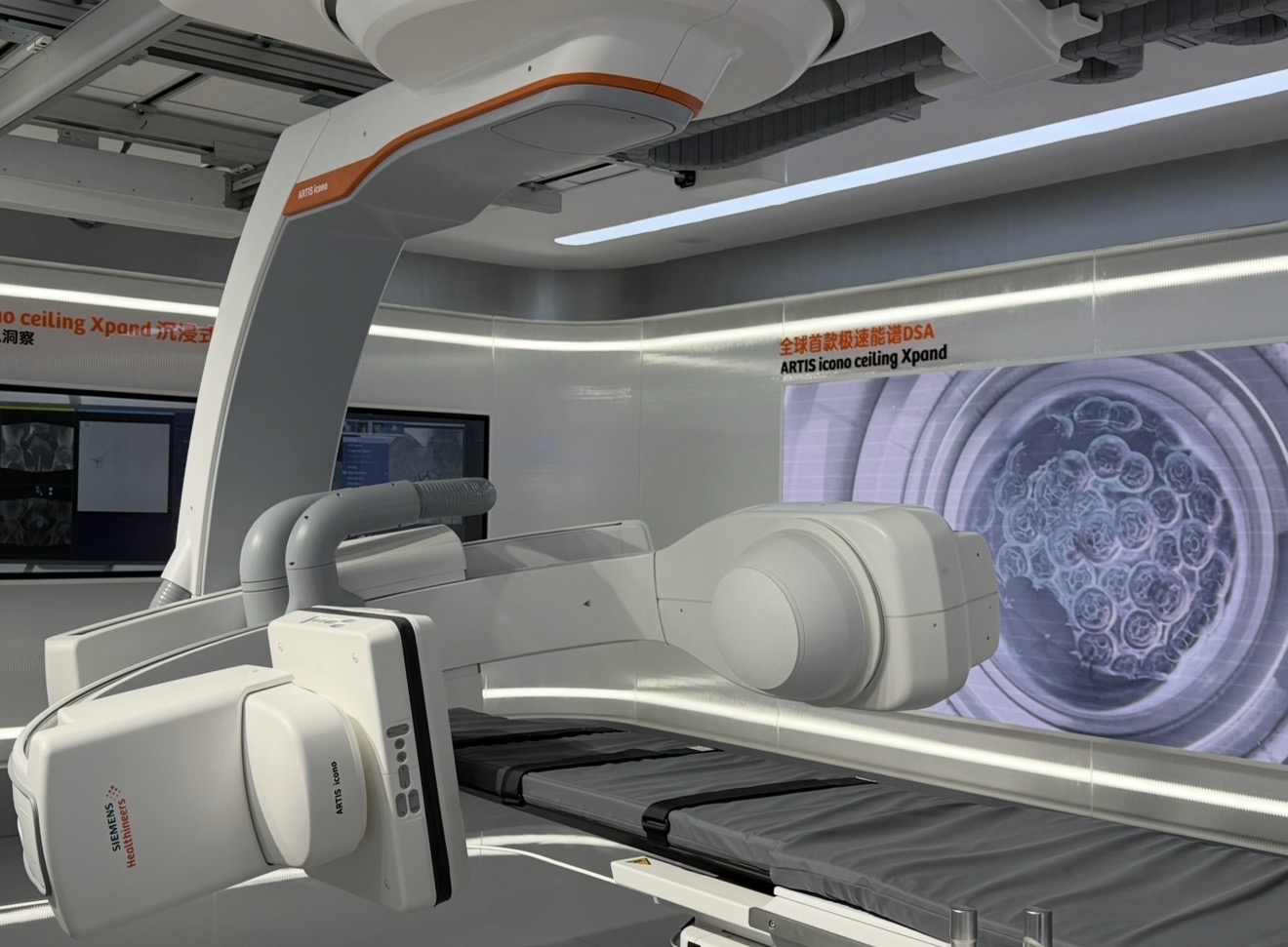
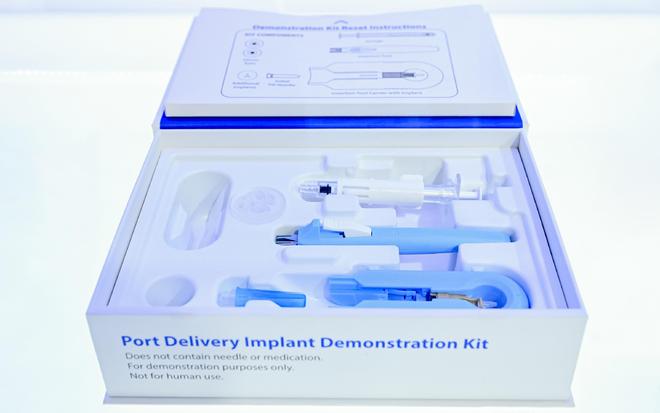
Core Insights - The 8th China International Import Expo (CIIE) opened in Shanghai on November 5, showcasing innovations in the medical device and pharmaceutical sectors under the theme "Healthy China, Beautiful Life" [1] - The medical device and pharmaceutical health exhibition area, known for its high competition, featured global leaders in medical technology and pharmaceuticals, including the top ten medical device companies and 11 Fortune 500 pharmaceutical firms [1] Company Highlights - **Roche**: Displayed over 40 products, including new treatments for Alzheimer's, Parkinson's, and lupus nephritis, with the anti-CD20 monoclonal antibody, Gazyva, and the Port Delivery System (PDS) for eye diseases being key highlights [2][4][5] - **Siemens**: Focused on high-incidence cancers, showcasing advanced technologies like the ARTIS icono ceiling Xpand and the Biograph Vision Quadra PET/CT, aimed at improving diagnostic precision and treatment outcomes [6][7] - **Novartis**: Presented nearly 20 innovative products, including the oral complement factor B inhibitor, Iptacopan, and the radioligand therapy drug, Pluvicto, which received approval for prostate cancer indications [10][12] - **Fosun Pharma**: Introduced the Marie upright particle therapy system, a revolutionary cancer treatment technology, along with advanced non-invasive treatment systems for neurological conditions [12][14] - **Boston Scientific**: Showcased over 80 products in the minimally invasive intervention field, including the Orbera365 gastric balloon system and the Intera3000 hepatic artery infusion pump, with several products making their debut [15][17] - **Novo Nordisk**: Highlighted advancements in diabetes and obesity treatments, including the oral GLP-1 receptor agonist, Rybelsus, and the weekly insulin formulation, IcoSema, which have significantly improved patient convenience [18][20]


西门子医疗要求母公司西门子就出售其多数股权做出明确决定
Xin Lang Cai Jing· 2025-11-06 02:36
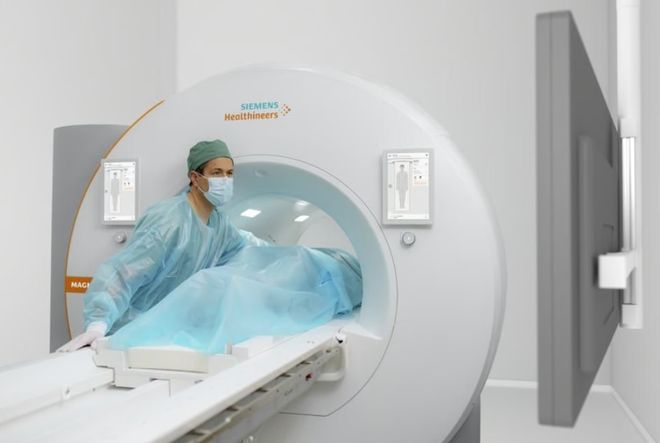
(来源:欧洲并购与投资) 来源:市场资讯 西门子医疗首席执行官Bernd Montag在公司第四季度业绩公布后的电话会议上对记者说:"最重要的事情是明确性。" 他指出,自2018年西门子医疗IPO以 来,他的目标一直是将西门子医疗打造成一个独立的实体。Montag强调,他不认为自己的决策受到母公司西门子的影响,但他坚持认为,西门子医疗不 应仅仅被视为"西门子的医疗技术子公司"。关于西门子是否完全或部分退出可能会促使公司更名,Montag表示:"这是我们需要仔细考虑的事情。"他补充 说,尽管西门子的名称在某些地区很有帮助,但Healthineers本身也对西门子品牌的高科技形象做出了积极贡献。 西门子管理层计划在下周宣布,该集团是否会继续长期参与医疗技术领域,还是会放弃多数股权。 图片来源: Siemens Healthineers 西门子医疗要求母公司西门子就出售其多数股权做出明确决定 西门子医疗Siemens Healthineers要求母公司西门子就其在西门子医疗中的多数股权做出明确决定。西门子医疗首席财务官Jochen Schmitz表示,西门子医疗 正在为西门子股份公司可能减持其股份至低于50%做准备 ...
“硬核新品”首秀,北京朝阳300余家企业开启“进博会时间”
Xin Jing Bao· 2025-11-05 14:31
Group 1 - The 8th China International Import Expo (CIIE) opened on November 5, showcasing over 36.7 million square meters of exhibition space with participation from 290 Fortune 500 and industry-leading companies, marking a historical high in both exhibition area and number of exhibitors [2] - Beijing Chaoyang District organized a delegation of over 300 enterprises to participate in the expo, aiming to promote international trade cooperation and share new development opportunities with the world [1][2] - Olympus, Tesla, and Siemens highlighted their latest innovations at the expo, with Olympus focusing on medical technology, Tesla showcasing its Cybertruck, and Siemens presenting digital solutions for sustainable transportation [1] Group 2 - The expo serves as a significant platform for companies to display products, expand markets, enhance communication, and realize value, with Chaoyang District being a key area for international consumption in Beijing [2] - Tesla's Cybertruck, set to be produced by 2026 with an expected cost below $30,000, attracted attention with its unique design [1] - Siemens emphasized its commitment to sustainable development in transportation through innovative digital solutions [1]
聚焦进博会|AI赋能医疗器械,跨国厂商研发重心转向中国
Di Yi Cai Jing· 2025-11-05 12:32
Core Insights - The article highlights the advancements in medical imaging technology, particularly in cancer diagnosis and treatment, showcasing the integration of AI in medical devices [1][3][5] Group 1: Medical Device Innovations - Current CT and MRI devices provide comprehensive cancer diagnosis and treatment solutions, enabling minimally invasive and non-invasive procedures [3] - Siemens Healthineers showcased a DSA angiography device with sub-millimeter spatial resolution, capable of capturing previously undetectable lesions in just 2.5 seconds, incorporating AI technologies developed by local teams [3] - Medtronic introduced a newly FDA-approved ultra-hard guidewire, enhancing the stability and predictability of transcatheter aortic valve replacement (TAVR) procedures, with plans to enter the Chinese market [3] Group 2: AI Integration in Healthcare - The Chinese government emphasizes the development of artificial intelligence, providing strong momentum for the digital transformation of the healthcare industry [5] - Many medical companies at the expo established AI zones, presenting AI surgical solutions, with Siemens demonstrating innovations in AI-driven medical transformations [5] - Medtronic plans to launch a localized AI solution for TAVR procedures, developed in collaboration with local doctors and AI firms, aiming to create a comprehensive treatment chain [5][6] Group 3: Localized Product Development - Karl Storz introduced a second batch of domestically produced products, including cold light sources and pneumoperitoneum machines, promoting day surgery through minimally invasive techniques [4] - The company set up simulation units for outpatient bladder endoscopy and gynecological procedures, demonstrating resource optimization in hospitals [4] Group 4: Future Directions - Siemens aims to integrate AI with diagnostic imaging and adaptive radiotherapy, enhancing treatment precision and efficiency while reducing complications [6] - Medtronic is increasing investment in local AI and healthcare R&D, establishing a digital medical innovation base focused on cardiovascular, minimally invasive surgery, and neuroscience [6]