Siemens(SIEGY)

Search documents
Trump Signals End to Iran War as IRGC Threatens US Tech Giants; Zelenskyy Seeks Easter Truce
Stock Market News· 2026-03-31 15:38
Group 1: U.S.-Iran Conflict - President Trump predicts that the military campaign against Iran is nearing its conclusion, stating that the Strait of Hormuz will reopen "automatically" after U.S. withdrawal [2][9] - The IRGC has designated 18 major U.S. technology and aerospace firms, including Apple, Microsoft, and Alphabet, as military targets, threatening strikes beginning April 1 [4][9] - The IRGC claims these companies are involved in terrorist operations through their technologies, warning of consequences for any further acts of terror in Iran [5][9] Group 2: Regional Military Actions - The Iranian Army reported successful drone strikes on strategic industrial sites in Israel, specifically targeting Siemens and Telmone facilities [6][9] - The Israeli Army has destroyed 180 rocket platforms in Southern Lebanon since the conflict began, with Iran vowing to respond to any aggression [7][9] Group 3: Ukraine Conflict - President Zelenskyy is seeking a temporary truce in the Ukraine-Russia conflict, aiming for an Easter ceasefire and discussing the proposal with the U.S. negotiation team [8][9]






Ann Fairchild named President and CEO of Siemens USA
Businesswire· 2026-03-30 15:18
Core Viewpoint - Ann Fairchild has been appointed as the President and CEO of Siemens USA, effective immediately, after serving as interim CEO since October 2025. She will lead Siemens' strategy and operations in the U.S., the company's largest market, which generated $24 billion in revenue in fiscal 2025 [1][2][3]. Group 1: Leadership and Experience - Ann Fairchild has over 25 years of experience at Siemens, most recently as general counsel for Siemens USA, providing her with a deep understanding of the company's business objectives and strategic priorities [2][6]. - Fairchild has held various senior leadership roles within Siemens, overseeing legal, compliance, regulatory, and intellectual property functions, which have been crucial in navigating complex regulatory environments [3][5]. Group 2: Strategic Focus and Goals - Fairchild's leadership is expected to enhance Siemens' ability to deliver value to U.S. customers as they focus on strengthening critical infrastructure, reshoring manufacturing, and expanding AI capabilities [3][4]. - Siemens aims to leverage AI technologies to help customers become more competitive, resilient, and efficient, aligning with the company's broader goal of transforming industries and infrastructure [4][7]. Group 3: Company Overview - Siemens generated €78.9 billion in revenue and €10.4 billion in net income in fiscal 2025, employing around 318,000 people globally [8]. - The company is focused on combining the real and digital worlds to accelerate digital and sustainability transformations across various sectors, including industry, infrastructure, mobility, and healthcare [7].

科技未来-AI 数据中心将推动固态技术变革-Future of Tech_ AI Data Centers to unlock Solid-State Transformation
2026-03-30 05:15
Summary of Key Points from the Conference Call Industry Overview - The report focuses on the **European Capital Goods** sector, particularly the **Solid-State Transformer (SST)** technology and its implications for the power systems industry, driven by the demand from **AI data centers** [2][3]. Core Insights and Arguments - **SST Adoption**: The adoption of SSTs is being accelerated due to the increasing power and efficiency demands driven by AI data centers, which are reshaping power systems and exposing the limitations of legacy technologies [3]. - **Technological Advantages**: SSTs utilize semiconductor-based power electronics, offering significant improvements in efficiency, control, and compactness compared to traditional transformers. They can reduce the footprint of power distribution equipment by up to **80%** [4]. - **Market Potential**: The SST market is projected to reach **$3 billion** in the US by **2030**, with a potential blue-sky scenario estimating it could grow to **$10 billion** if AI data centers drive rapid adoption [6]. - **Commercialization Timeline**: Key milestones for SST commercialization include pilot projects in **2026**, full commercialization in **2027**, and industrialization from **2028 to 2029**. Companies like Eaton and Heron Power are already preparing for this transition [5]. Challenges to Adoption - **Historical Constraints**: SSTs have faced challenges related to cost, size, and reliability, but advancements in semiconductor technology are addressing these issues. However, systems integration remains a critical focus [5]. - **Lead Times for Conventional Transformers**: The lead times for medium-voltage transformers have increased by **60%** since **2019**, creating a bottleneck that SSTs could help alleviate [10][19]. Investment Implications - **Opportunities for Major Players**: Companies like **Eaton**, **ABB**, **Schneider**, and **Siemens** stand to benefit from SST adoption, while companies like **Legrand**, which are not actively exploring SST technology, may face risks if SSTs scale rapidly [8]. - **Energy Efficiency Gains**: SSTs could unlock significant energy cost savings, estimated at **$0.7 billion per GW** for hyperscale data centers, enhancing the pricing power of vendors involved in SST technology [108]. Additional Important Insights - **AI's Role in Power Demand**: The rapid growth of AI and data centers is driving unprecedented electricity demand, influencing energy investment decisions across the power infrastructure spectrum [9]. - **Grid Connection Delays**: Approximately **20%** of the global data center buildout from **2025 to 2030** is at risk due to grid connection delays, which SSTs could help mitigate by improving grid capacity and visibility [21][30]. - **Technological Evolution**: The transition from conventional transformers to SSTs represents a significant shift in power distribution, with SSTs offering enhanced controllability, integration of backup power, and improved efficiency [32]. Conclusion - The SST technology is positioned to revolutionize the power systems industry, particularly in the context of AI-driven data centers. The potential market size, coupled with the urgency created by increasing power demands and supply chain constraints, presents a compelling investment opportunity for key players in the European Capital Goods sector.


人形机器人行业周报20260322:优必选与西门子签署战略协议,多家企业连获融资
Guolian Minsheng Securities· 2026-03-29 00:50
Investment Rating - The report suggests a focus on five key areas for investment opportunities in the humanoid robotics industry, emphasizing the importance of capitalizing on domestic supply chain opportunities and companies that can realize revenue and profit [4][23]. Core Insights - The humanoid robotics index experienced a decline of 5.87% from March 16 to March 20, while the Shanghai and Shenzhen 300 index fell by 2.19%. Year-to-date, the humanoid robotics index is down 5.58% [4][7]. - A strategic cooperation framework agreement was signed between UBTECH and Siemens, aimed at enhancing the production capacity of industrial humanoid robots [12]. - Huang Renxun announced a deep collaboration with global robotics leaders, including Zhiyuan Robotics, to deploy physical AI across various sectors [15]. - The Beijing Humanoid Robotics Innovation Center held a delivery ceremony for 15 general-purpose robots to several universities and partners [16]. Industry Dynamics - The humanoid robotics index's trading volume was 1,041 billion yuan, a decrease of 7.81% compared to the previous week [4]. - UBTECH's partnership with Siemens aims to improve the digitalization of the entire production process, enhancing efficiency and product quality [12]. - The collaboration with NVIDIA focuses on large-scale deployment of physical AI, enhancing the capabilities of robots in various applications [15]. - The delivery of robots to educational institutions aims to foster innovation and practical application of core technologies [16]. Financing Dynamics - DiGua Robotics completed a $120 million B1 round of financing, led by entities associated with ByteDance and other major investors, bringing total financing to $220 million [20]. - Qingtian Rental announced the completion of a significant angel round of financing, with a post-financing valuation of 3 billion yuan, focusing on commercializing robot leasing services [21]. - Ruisi Zhixin secured several hundred million yuan in B+ round financing, aimed at advancing AI visual sensor technology for robotics and autonomous driving applications [22]. Investment Recommendations - Emphasize opportunities in domestic supply chains that can achieve revenue and profit realization [23]. - Focus on hardware with cross-scenario and cross-form capabilities, as the technology landscape is still evolving [23]. - Pay attention to the rapid iteration of robot software models and the demand for high-quality sensory inputs [23]. - Monitor the military and special-purpose robotic dog sectors, which are experiencing increased demand due to advancements in intelligent and unmanned equipment [24]. - Consider the AMR sector, which is expected to see significant growth as logistics and warehousing become more intelligent [25].
怎么才能让工厂放心用AI?
虎嗅APP· 2026-03-27 10:12
Core Viewpoint - The article discusses the challenges and complexities of integrating AI into industrial settings, highlighting that a significant percentage of AI projects fail to transition from laboratory settings to scalable deployment and business value [2][6]. Group 1: Challenges in AI Implementation - A staggering 85% of AI projects do not achieve scalable deployment and business value, indicating a significant gap between AI capabilities and real-world applications [2]. - AI's probabilistic nature conflicts with the deterministic requirements of industrial processes, making it difficult for AI to effectively manage complex production environments [3][7]. - The integration of AI into physical systems is not a natural progression and requires deliberate efforts to overcome existing barriers [5][6]. Group 2: Data as a Critical Factor - Industrial AI's success hinges on high-quality data, which is often difficult to obtain due to the complex and heterogeneous nature of industrial environments [13][19]. - Companies must transform raw industrial data into usable formats, akin to refining crude oil, to leverage AI effectively [16][23]. - The lack of understanding and accessibility of data within industrial processes presents a significant hurdle for AI adoption [20][28]. Group 3: Siemens' Role and Strategy - Siemens has established a comprehensive technology stack that integrates hardware, software, and data to facilitate AI's entry into the physical world [15][23]. - The company has accumulated a vast amount of industrial data, reaching 150PB, which serves as a competitive advantage in developing AI models [23]. - Siemens is transitioning from being a technology provider to becoming a key player in industrial AI, focusing on enabling digital transformation across various sectors [28][30]. Group 4: Future Outlook - The article suggests that the breakthrough in industrial AI will not merely be a technological upgrade but a complete redefinition of industrial systems [30]. - As more factories successfully implement AI in core business scenarios, a new wave of productivity revolution is anticipated [30].
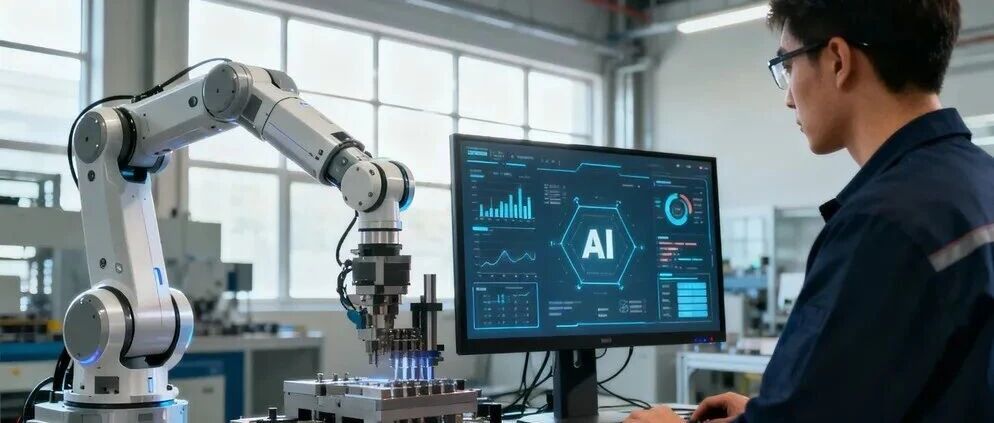
西门子 + 阿里云 + 宇树:工业 AI 的“新三角”正在成型
美股研究社· 2026-03-25 11:50
Core Viewpoint - The collaboration between industrial giants, cloud computing platforms, and robotics signifies a shift of AI from the internet realm to the industrial era, marking the beginning of a new phase in AI development focused on physical world applications rather than just virtual ones [1][3][16]. Group 1: Collaboration and Integration - The partnership between Siemens, Alibaba Cloud, and Yuzhu Technology represents a significant step towards achieving a "closed-loop" system in industrial AI, integrating software, cloud computing, and robotics [5][6]. - Siemens provides industrial software and automation systems, serving as the "operating system" for manufacturing, while Alibaba Cloud offers scalable computing power and infrastructure, addressing concerns about data security and deployment costs [6][9]. - Yuzhu Technology introduces humanoid robots that enhance the execution layer of AI, enabling adaptability in unstructured environments and solving the challenge of transitioning from simulation to real-world application [7][9]. Group 2: Advantages of the Chinese Market - China is identified as the optimal environment for the implementation of industrial AI due to its comprehensive manufacturing ecosystem and the willingness of local factories to adopt new technologies for efficiency gains [9][10]. - Local cloud providers like Alibaba have developed mature capabilities in data processing and service responsiveness, which are crucial for addressing the specific needs of Chinese enterprises [10][11]. - The rapid advancement in robotics within China, exemplified by Yuzhu Technology, is narrowing the gap with international competitors, making the commercialization of "robot + AI" more feasible [10][11]. Group 3: Investment Implications - The collaboration indicates a paradigm shift in the industrial landscape, where the value chain is transitioning from traditional manufacturing to a focus on data, models, and execution capabilities [13][14]. - The importance of ecosystem collaboration is emphasized, as no single company can cover the entire industrial AI chain, necessitating a focus on connectivity and integration among cloud, models, and hardware [13][14]. - The efficiency gains from AI in manufacturing are expected to be exponential, with robots capable of managing multiple processes and continuously learning, which will significantly impact profit margins [15][16].
RXD大会首发北京:当硅谷还在谈论物理AI,西门子已重写工业规则
机器之心· 2026-03-24 09:17
Core Viewpoint - The article emphasizes the transformative potential of AI in the physical world, particularly in industrial applications, highlighting Siemens' role in integrating AI into manufacturing processes and systems [2][3][40]. Group 1: AI Integration in Industry - Physical AI is not just a technological spectacle but is being implemented in real-world applications, such as the UTree robots in Siemens' factories [3][5]. - Siemens' CEO, Roland Busch, asserts that AI is a general-purpose technology, comparable to electricity in its impact on the industrial era, fundamentally changing work and production systems [7][18]. - The integration of AI into physical systems requires a robust technology stack that combines hardware, software, and data, which Siemens possesses [7][9]. Group 2: Digital Twin and AI Applications - Siemens introduced a new Digital Twin Composer that allows companies to create real-time digital twin systems, enabling extensive pre-implementation testing and optimization [12][15]. - AI has been shown to identify up to 90% of potential issues before physical modifications, leading to a 20% increase in throughput and reduced design cycles [13][14]. - The shift from traditional simulation tools to a comprehensive system that spans the entire lifecycle of design, manufacturing, and operation is highlighted as a significant advancement [15][16]. Group 3: Data as a Key Asset - Siemens emphasizes that industrial AI relies heavily on high-quality, long-term industrial data, which is essential for effective model training and application [18][22]. - The company has developed specialized AI models trained on proprietary industrial data, significantly improving problem-solving accuracy from 60-70% to nearly 95% [19][20]. - The challenge of data acquisition and standardization in industrial settings is noted, with a focus on the necessity of integrating high-value scenarios to unlock AI's potential [22][23]. Group 4: Industry Knowledge and Expertise - Siemens' competitive advantage lies in its deep understanding of industry-specific processes, accumulated over 170 years, which is crucial for the effective application of AI [25][27]. - The company has a vast pool of AI experts and engineers, enabling it to tailor solutions to various industrial contexts [27][29]. - The integration of AI into existing systems requires not just technological capability but also a profound understanding of the underlying industrial mechanics [26][30]. Group 5: Ecosystem and Collaboration - The fragmented nature of industrial AI necessitates collaboration across various sectors, with over 60% of Siemens' partners bringing AI-related products to the table [31][34]. - Siemens' Xcelerator platform allows companies to build their solutions on a unified foundation, promoting ecosystem development [32][38]. - Strategic partnerships, such as with NVIDIA and Alibaba Cloud, enhance Siemens' capabilities in simulation and deployment of AI solutions in complex environments [35][36][41].

3 Industrial Services Stocks to Watch Despite Industry Headwinds
ZACKS· 2026-03-23 15:45
Core Viewpoint - The Zacks Industrial Services industry faces challenges due to a weak manufacturing sector and rising input costs, which are expected to erode margins, but the growth of e-commerce presents a significant opportunity for companies in this space [1][5][6]. Industry Overview - The Zacks Industrial Services industry includes companies providing industrial equipment and MRO services, serving diverse sectors such as commercial, government, healthcare, and manufacturing [3]. - The industry focuses on reducing MRO supply-chain costs and enhancing productivity through inventory management and procurement solutions [3]. Current Trends - Manufacturing activity, which contributes approximately 70% to the industry's revenues, has shown signs of growth but remains uncertain due to subdued customer spending influenced by tariffs [4]. - The manufacturing index fluctuated, indicating expansion in early 2026 but returning to contraction later, highlighting the volatility in customer demand [4]. Cost Pressures - The industry is experiencing significant inflation, with rising labor, freight, and fuel costs, alongside labor shortages, prompting companies to implement cost-cutting measures and diversify their supplier base [5]. - Tariffs and retaliatory tariffs are expected to further increase costs for the industry [5]. E-commerce Growth - The evolution of e-commerce is significantly impacting MRO demand, with customers seeking tailored solutions and rapid product delivery [6]. - Companies are investing heavily in digital capabilities to enhance their e-commerce presence, driven by increased internet penetration and smartphone adoption [6]. Industry Performance - The Zacks Industrial Services Industry currently holds a Zacks Industry Rank of 232, placing it in the bottom 5% of 244 Zacks industries, indicating bearish prospects in the near term [7]. - Over the past year, the industry has underperformed, declining 8.5% compared to a 16.6% gain in the sector and a 15.8% increase in the Zacks S&P 500 composite [9]. Valuation Metrics - The industry is trading at a forward 12-month EV/EBITDA ratio of 31.58X, significantly higher than the S&P 500's 11.51X and the Industrial Products sector's 7.47X [12]. - Historical trading ranges for the industry have been between 24.47X and 40.54X, with a median of 31.58X over the last five years [15]. Company Highlights - **Siemens**: Reported a 10% increase in orders in Q1 fiscal 2026, with revenue growth of 8% and expectations for 6-8% growth in fiscal 2026. The company is investing over $165 million to expand manufacturing capacity in the U.S. [16][17]. - **Fastenal**: Achieved an 11% increase in net sales in Q4 2025, with a focus on cost control and automation to improve efficiency. Digital sales accounted for 62% of total sales, with a target of 66% in 2026 [20][21]. - **Global Industrial Company**: Reported a 14% revenue increase in Q4 2025, driven by volume growth and pricing gains. The company is transforming its business model to be more customer-centric [23][24].


Goldman Sachs expects ECB rate hikes in April and June as inflation concerns mount
Reuters· 2026-03-23 07:13
Group 1 - Goldman Sachs anticipates the European Central Bank (ECB) will implement two interest rate hikes of 25 basis points each in April and June due to rising inflation concerns linked to the Middle East conflict [1] - Previously, Goldman Sachs expected the ECB to keep interest rates steady throughout the year, indicating a shift in outlook based on current economic conditions [2] - The ECB's March policy meeting resulted in unchanged interest rates, but the bank is closely monitoring growth and inflation risks, particularly from surging oil prices, and is prepared to take action if necessary [2] Group 2 - Siemens has reported that the ongoing Iran war is causing customers to delay new investments, attributing this to rising prices for raw materials and energy [3]


——EDA行业系列报告202603期:系统级时代来临,芯和领衔国产多物理场仿真
Shenwan Hongyuan Securities· 2026-03-20 11:57
Investment Rating - The report maintains a positive outlook on the EDA industry, particularly focusing on the multi-physics simulation segment, which is expected to see significant growth due to the increasing complexity of semiconductor designs and the integration of EDA and CAE tools [1][2]. Core Insights - The EDA industry is entering a system-level era, with multi-physics simulation becoming a critical requirement as the semiconductor sector shifts towards advanced packaging and multi-die chip designs. This trend is driven by the need for enhanced performance and efficiency in AI chips, which are increasingly sensitive to physical disturbances [1][2][3]. - The report highlights that the market for EDA tools is projected to grow at a compound annual growth rate (CAGR) of 8.1% over the next five years, with the CAE sub-sector expected to grow at a much higher CAGR of 25.8% [1][2]. - Major acquisitions by leading EDA companies, such as Synopsys acquiring Ansys, Cadence's strategic mergers, and Siemens' acquisition of Altair, validate the trend towards system-level integration and the necessity for multi-physics simulation capabilities [1][2][3]. Summary by Sections 1. Multi-Physics Simulation: A Key Demand in the System-Level Era - Multi-physics simulation is essential for modeling complex systems where multiple physical fields interact, particularly in the semiconductor industry as designs become more intricate with advanced packaging technologies [8][12]. - The increasing complexity of chip designs necessitates early-stage simulations to predict potential issues, thereby reducing development costs and risks [8][12]. 2. Overseas Trends: Major Acquisitions Validate the "System-Level" Trend - Synopsys' acquisition of Ansys for $35 billion aims to enhance its multi-physics simulation capabilities, addressing the urgent need for system-level simulations in the semiconductor industry [54][55]. - Cadence is actively acquiring smaller firms to build a comprehensive multi-physics simulation portfolio, enhancing its capabilities across chip, packaging, and system levels [58][59]. 3. Domestic Trends: Chip and Semiconductor Positioning in System-Level EDA - The report emphasizes that domestic companies like Chip and Semiconductor are focusing on system-level EDA, filling gaps in the market for multi-physics simulation tools [1][2][3]. - The current landscape shows that domestic EDA companies primarily offer chip-level design tools, indicating a need for development in system-level multi-physics simulation capabilities [1][2].