
Walmart(WMT)

Search documents
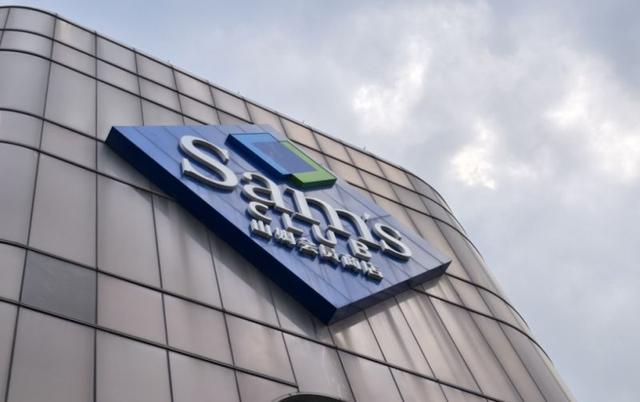
深圳第五家山姆门店10月31日开业
Sou Hu Cai Jing· 2025-10-29 16:02
Core Insights - Sam's Club will officially open its fifth store in Shenzhen, located in Bao'an, on October 31, marking the 59th store nationwide [1] Group 1: Expansion and Strategy - The opening of the Bao'an store reflects Sam's Club's commitment to deepening its presence in the local market and actively participating in the construction of the Greater Bay Area as an international consumption center [3] - Since its first store opened in Shenzhen in 1996, Sam's Club has adhered to a membership model and continuously innovated, contributing to the local consumer market and retail development [3] Group 2: Product Offerings - The Bao'an store features a variety of unique products, including a Harry Potter-themed 3D Christmas puzzle, Lebanese-imported Patchi chocolate, a gift box of Peets coffee beans with nine popular flavors, a classic Mickey Mouse-shaped lamb fleece sofa, a German Villeroy & Boch bowl set shaped like Christmas ornaments, and Buzz Lightyear-themed children's ski suits [5] Group 3: Sustainability Initiatives - Sam's Club is promoting green energy by introducing a "ultra-low carbon" CO2 transcritical refrigeration system in the Bao'an store, which produces minimal carbon emissions and allows for heat recovery and reuse [7]



不到一年官宣换帅,阿里前高管接棒山姆能否解决两大难题
Hua Xia Shi Bao· 2025-10-29 15:53
Core Insights - Walmart China has appointed Liu Peng as the new president of Sam's Club, effective immediately, following the departure of Jane Ewing, who served in an interim capacity for less than a year [2][3] - Sam's Club has faced challenges this year, including product quality controversies and increasing competition from rivals like Hema and Ole [2][4] - Liu Peng's primary challenges will be to rebuild trust and restore the brand's core advantages amid these pressures [2][3] Leadership Transition - Liu Peng brings extensive experience from Alibaba, where he held senior positions in Tmall International and import/export operations [3] - Jane Ewing's tenure as acting president was brief, and she will return to Walmart's international division by the end of the year [3] - The leadership change is seen as a move to enhance e-commerce capabilities and address online competition [3] Market Position and Challenges - Sam's Club has positioned itself as a "selected" retailer, focusing on high-quality products and competitive pricing, which has allowed it to achieve growth despite overall retail sector pressures [5] - In the first half of the fiscal year 2026, Walmart China's net sales reached $12.365 billion, a 25.1% year-on-year increase, with Sam's Club showing strong growth [5] - However, the retail landscape in China is becoming increasingly competitive, with local brands like Hema and Ole gaining market share and challenging Sam's Club's traditional advantages [6] Consumer Trust Issues - Sam's Club has faced a trust crisis due to controversies over product quality, including incidents involving popular brands like Holley and Panpan [4][6] - The membership model, which requires annual fees of 260 or 680 yuan, targets middle to high-income consumers who are less price-sensitive [4] Competitive Landscape - Competitors are rapidly innovating and adapting to consumer preferences, with Hema and Ole outperforming Sam's Club in product development and market responsiveness [6] - Sam's Club's larger packaging sizes may not align with the preferences of smaller Chinese households, posing a structural challenge to its business model [6]
Jim Cramer on Walmart: “The Stock, It’s Just Not Cheap”
Yahoo Finance· 2025-10-29 15:40
Group 1 - Walmart Inc. has a current market capitalization of $833 billion and is considered the closest company to reaching a trillion-dollar market cap, with odds estimated at 10:1 for achieving this milestone [1] - The stock is trading at approximately 40 times earnings, which is considered high for a retailer, especially compared to Amazon's 34 times earnings [1] - Walmart's significant scale allows it to manage tariffs more effectively than most competitors, contributing to its strong performance despite the high valuation [1] Group 2 - Walmart operates a diverse range of retail and wholesale stores, clubs, and eCommerce platforms, offering products such as groceries, apparel, electronics, and health products [2]
Walmart, Eli Lilly to Offer Pickup for Zepbound With D2C Pricing
PYMNTS.com· 2025-10-29 14:55
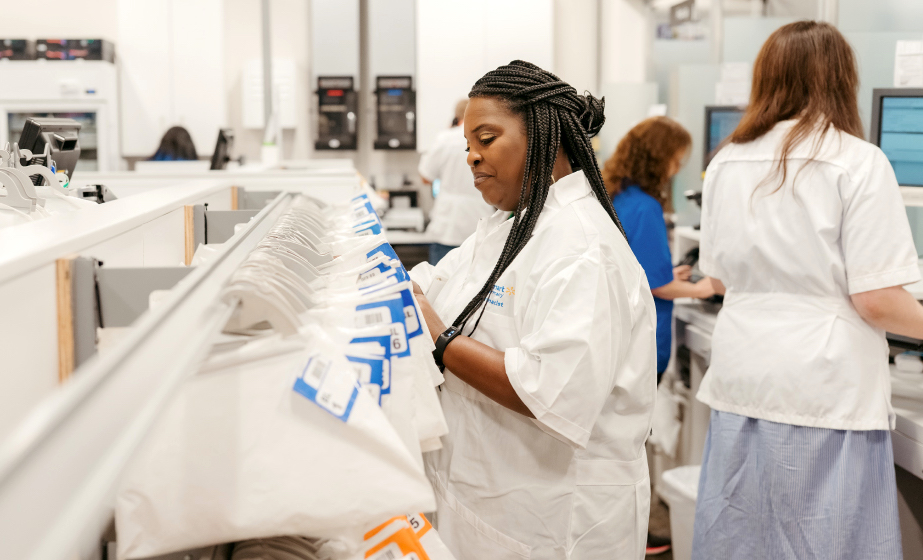
Core Insights - Eli Lilly and Walmart have partnered to offer single-dose vials of the weight loss drug Zepbound at Walmart pharmacies, matching the price available through LillyDirect [1][2][3] - The service will be available at nearly 4,600 Walmart pharmacies across the U.S. by mid-November, allowing customers to select local pickup during the checkout process on LillyDirect [2][5] - This collaboration marks LillyDirect's first retail partnership and aims to enhance access to prescription medications for patients managing chronic diseases like obesity [3][4][6] Company and Industry Developments - The partnership is designed to provide additional convenience and choice for customers in obtaining their medications, addressing access challenges faced by patients [4][5] - LillyDirect, launched in January 2024, serves as a digital healthcare platform for patients with obesity, migraines, and diabetes, facilitating access to healthcare providers and home delivery of medications [6] - The trend towards consolidated online healthcare platforms is highlighted, indicating a shift in consumer preferences for streamlined healthcare management [7]

Are Retail-Wholesale Stocks Lagging Stitch Fix (SFIX) This Year?
ZACKS· 2025-10-29 14:41
Core Viewpoint - Stitch Fix (SFIX) is currently outperforming its peers in the Retail-Wholesale sector, showing a positive trend in year-to-date performance and earnings estimates [1][3]. Group 1: Company Performance - Stitch Fix has achieved a year-to-date return of approximately 8.1%, surpassing the average return of 7.7% for the Retail-Wholesale sector [4]. - The Zacks Consensus Estimate for Stitch Fix's full-year earnings has increased by 29.3% over the past quarter, indicating improved analyst sentiment [3]. - In comparison, the Retail - Apparel and Shoes industry, which includes Stitch Fix, has seen a decline of about 11.8% year-to-date, highlighting Stitch Fix's relative strength [5]. Group 2: Sector Comparison - The Retail-Wholesale sector consists of 195 individual stocks and currently holds a Zacks Sector Rank of 12 out of 16 groups [2]. - Walmart (WMT), another stock in the Retail-Wholesale sector, has outperformed with a year-to-date return of 14.2% and a Zacks Rank of 2 (Buy) [4][5]. - The Retail - Supermarkets industry, to which Walmart belongs, is ranked 28 and has moved up by 14.2% year-to-date [6].


Walmart reveals dates for Black Friday deals, Cyber Monday sale
Fox Business· 2025-10-29 14:38
Core Insights - Walmart is launching its annual holiday sales events to attract budget-conscious shoppers and maintain its market dominance during the critical shopping season [1][2] Sales Events - Walmart will hold three major sales events, known as Walmart Deals Events, with priority access for loyalty members. The first event is scheduled from Nov. 14 to Nov. 16, with early online access for Walmart+ members starting on the evening of Nov. 13 [2] - The second event will take place from Nov. 25 to Nov. 30, with early access for Walmart+ members beginning on Nov. 24 at 7 p.m. ET. The final event will start on Cyber Monday [2] Discounts and Consumer Behavior - Walmart U.S. CEO John Furner announced that some products will be discounted by up to 60%, with thousands of deals priced under $20, aiming to attract shoppers facing financial pressures [3] - Bank of America CEO Brian Moynihan noted that while the American consumer remains strong, the middle class is increasingly feeling economic strain, which influences spending behavior [3][5] Retail Environment - Retailers are emphasizing value to consumers due to economic challenges and tariff-related price increases. Joe Feldman from Telsey Advisory Group highlighted that consumers are shopping more frequently but spending less, focusing on value and being selective with discretionary purchases [6][8] - Competition among retailers is intensifying, with companies like Amazon and Best Buy launching their own promotional events to attract customers during the holiday season [8] Pricing Trends - Feldman indicated that promotions this year may be used to counteract tariff-related price increases, suggesting that discounts may be less steep compared to previous years, with products potentially being 30% off instead of 40% [9]


Walmart Connect Ads Up 31%: Can Digital Ads Become a Core Driver?
ZACKS· 2025-10-29 14:16
Core Insights - Walmart Inc.'s second-quarter fiscal 2026 results demonstrate a significant shift towards digital advertising, with Walmart Connect achieving 31% year-over-year growth, excluding VIZIO [1][8] - The company's global advertising revenues surged by 46% during the quarter, driven by increased marketplace adoption and brand partner engagement [2] - Higher-margin businesses, particularly advertising and membership, are transforming Walmart's income statement, indicating a long-term strategy to diversify revenue streams beyond traditional retail [3][4] Financial Performance - Walmart's advertising at Sam's Club U.S. increased by 24%, while international markets like Flipkart contributed an additional 15% to overall growth [2] - The Zacks Consensus Estimate projects year-over-year sales growth of 4.1% and earnings per share growth of 3.6% for the current financial year [10] - Walmart's forward 12-month price-to-earnings ratio is 36.29, which is higher than the industry average of 33.59, indicating a premium valuation compared to Target but a discount relative to Costco [6] Market Position - Walmart's shares have increased by 26.8% over the past year, slightly underperforming the industry growth of 28.2%, while Costco shares rose by 5.1% and Target shares fell by 34.6% [5] - The integration of digital and physical advertising channels allows Walmart to leverage its extensive ecosystem, reaching millions of shoppers and enhancing profitability [4]

Is Walmart (WMT) The Best Non-AI Stock to Buy?
Yahoo Finance· 2025-10-29 12:24
We recently published Top 10 Trending Stocks and ETFs as Analyst Predicts $9 Trillion Productivity Gains Due to AI. Walmart Inc (NYSE:WMT) is one of the top trending stocks. Tim Seymour, the founder and Chief Investment Officer of Seymour Asset Management, talked about WMT in a recent program and said the stock has potential for multiple expansion in the future. Here is what he said: “There’s there’s no question I guess the theme of tonight is rerating and while we talked about that with Walmart Inc (NYS ...
山姆中国换帅,阿里来的“救火队长”能否挽回会员信任
Mei Ri Jing Ji Xin Wen· 2025-10-29 11:36
Core Insights - Walmart China has appointed Liu Peng, a former Alibaba executive, as the new president of Sam's Club, which is significant given the company's goal of opening 60 stores in China amidst quality control controversies and membership value concerns [1][2] - Liu Peng's extensive experience in the retail industry, particularly his tenure at Alibaba, positions him well to address the challenges faced by Sam's Club in the Chinese market [1][2] Group 1: Company Developments - Sam's Club has opened nearly 60 stores in China, with membership numbers, renewal rates, and activity levels showing stable growth, while e-commerce now accounts for over 50% of its business [2] - The previous president, Andrew Miles, retired in January, leading to concerns that aggressive cost-cutting strategies may compromise product quality and customer trust [2][3] - Liu Peng's appointment is seen as a strategic decision aimed at revitalizing the brand's focus on value creation through product selection, service, and customer experience [5][6] Group 2: Market Challenges - The retail environment in China is evolving, with consumers becoming more discerning, seeking both value and quality [2][3] - Sam's Club faces competition not only from other membership-based retailers like Costco but also from changing consumer expectations regarding value propositions and trust [4][5] - Liu Peng's leadership will be tested in balancing growth with maintaining the core values of the membership model, which emphasizes selective offerings and unique customer experiences [3][5] Group 3: Strategic Direction - Liu Peng's philosophy of building long-term relationships with customers and brands aligns with Sam's Club's "member first" principle, which is crucial for its future success [2][3] - The company must prove that it is more than just a shopping destination, but a lifestyle choice that resonates with its members [5][6] - The outcome of this strategic shift will determine Sam's Club's fate in the competitive Chinese market [6]

Lilly and Walmart launch first retail pick-up option for weight-loss drug
Reuters· 2025-10-29 11:11
Core Insights - Eli Lilly and Walmart are collaborating to enhance access to Lilly's weight-loss drug Zepbound, which will be available for pick-up at Walmart pharmacies across the nation by mid-November [1] Company Summary - Eli Lilly is expanding the distribution of its weight-loss drug Zepbound through a partnership with Walmart [1] - Walmart will facilitate the pick-up of single-dose vials of Zepbound at its pharmacies, aiming to improve accessibility for consumers [1] Industry Summary - The partnership reflects a growing trend in the pharmaceutical industry to collaborate with retail chains to increase the availability of medications [1] - The initiative may influence the competitive landscape in the weight-loss drug market by making Zepbound more accessible to a broader audience [1]
