Walmart(WMT)

Search documents
Consumer spending powers the US economy. A K-shaped economy will further test this dynamic in 2026.
Yahoo Finance· 2025-12-24 11:08
Economic Overview - The US economy is characterized by a K-shaped recovery, with a widening divide between economic haves and have-nots, particularly affecting middle-income consumers due to a softening labor market and inflation fears [1][2]. Consumer Sentiment - As of November, the unemployment rate reached a four-year high of 4.6%, with nearly two-thirds of respondents in a consumer sentiment survey expecting unemployment to rise in the coming year [2]. - Consumer sentiment remains nearly 30% below December 2024 levels, primarily driven by financial concerns [2]. Consumer Spending Trends - Spending among consumers in the top third of the income distribution increased by 4% year-over-year in November, marking the fastest growth in four years, while spending from the lowest third rose by less than 1% [3][4]. - The divergence in consumer spending reflects the K-shaped economic dynamic, with higher-income households benefiting from stock market gains [4]. Retail Sector Performance - Retailers focusing on value and low prices, such as Walmart and TJX, reported strong performance and outperformed the S&P 500 [6]. - Economic uncertainty has led to an influx of higher-income shoppers at dollar store chains, indicating a shift in consumer behavior towards frugality [8]. Consumer Behavior Insights - Analysts note that consumers, particularly in the middle and lower income brackets, are under significant pressure and are prioritizing basic and essential needs [7]. - Walmart described US consumers as "choiceful," reflecting a trend towards more selective spending [8].


谁在真正控制沃尔玛?揭秘全球首富家族的“总控台”
3 6 Ke· 2025-12-24 04:57
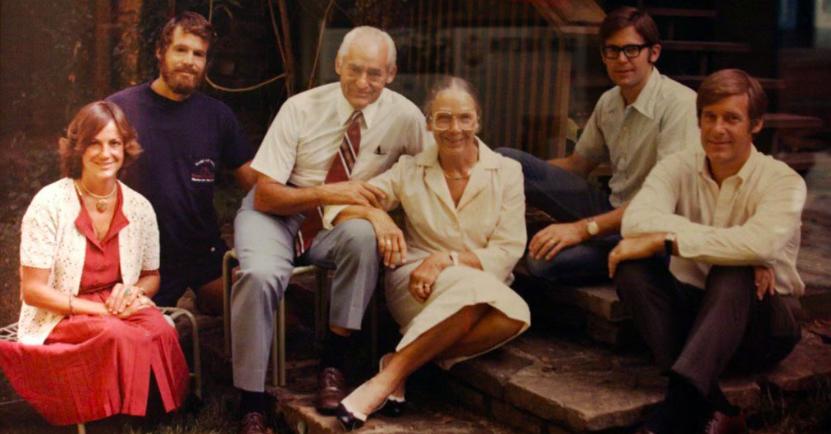
1962年,在美国阿肯色州,本顿维尔一家不起眼的小卖场悄然开业。它源自山姆·沃尔顿"用低价服务小镇"的设想,最终成长为沃尔玛——一家年收入超 过6810亿美元、门店遍布全球、每周服务约2.7亿顾客的零售帝国。 据彭博社数据显示,沃尔顿家族以约5134亿美元净资产位列全球最富家族。 慈善与家族底座:提供税务会计、合规、行政、物业等共享型基础设施,并与慈善体系协同。 真正支撑这份财富跨代延续的,并不仅是沃尔玛的规模,而是家族办公室Walton Enterprises。它将股权、治理、投资与慈善制度化,使家族在多代、多分 支中仍能保持控制力与长期秩序。家办新智点带你走进Walton Enterprises。 1 家族"总控台":Walton Enterprises 尽管许多公司都梦想成为下一个亚马逊,但亚马逊衡量自身规模时仍会对标沃尔玛。要理解这家零售帝国背后的长期控制力,绕不开其核心家族持股与治 理载体——沃尔顿家族的家办Walton Enterprises。 Walton Enterprises成立于1953年,比1962年沃尔玛开出第一家门店还要更早。后来,它逐步演变为沃尔顿家族的"总控台",主要承担三类职能 ...

2025 Market Triumph: Silver and Gold Soar, WMT A Value Play
Youtube· 2025-12-23 17:06
Now, I want to talk more broadly about the market and news that's been shaping it so far this year. For that, we're going to welcome in David Straeski. He's the CEO of Sound Planning Group.David, thank you so much for being with us today. You know, I'd love to just get some of your key takeaways from 2025 before we dive into your expectations for 26. >> Well, you know, we had an amazing year.Anytime that you see the S&P up 20 25%, that's obviously an incredible year. Um, you know, obviously this year was ma ...
Walmart's Ad Sales Jump 53%: Is Advertising Becoming a Profit Engine?
ZACKS· 2025-12-23 16:16
Core Insights - Walmart Inc.'s third-quarter fiscal 2026 performance showcased a significant acceleration in its global advertising business, raising questions about its role as a profit engine for the company, with advertising revenues growing by 53% during the quarter [1][7] Group 1: Advertising Growth - Growth in advertising was evident across different geographies, with Walmart Connect in the U.S. showing strong gains, supported by increased advertiser participation and engagement from third-party marketplace sellers [2] - Internationally, Flipkart led advertising growth, driven by rising brand demand as more sellers sought digital visibility linked to shopping behavior [2] Group 2: Digital Traffic and Data Capabilities - Management indicated that advertising benefits from Walmart's expanding digital traffic and data-driven capabilities, allowing for more targeted and measurable ad placements as e-commerce penetration rises [3] - Advertising is increasingly integrated into the shopping journey, enabling brands to reach consumers at the point of purchase rather than through standalone marketing channels [3] Group 3: Profit Mix and Business Model - Advertising, along with membership income, accounted for approximately one-third of consolidated adjusted operating income during the third quarter, indicating a shift in Walmart's profit mix towards higher-margin streams [4] - These developments suggest that advertising is evolving from a supporting function to a structurally important driver within Walmart's omnichannel strategy [4] Group 4: Market Performance and Valuation - Walmart's shares have increased by 21.5% over the past year, slightly underperforming the industry's growth of 22.4%, while competitors Costco and Target have seen declines of 11.4% and 28.1%, respectively [5] - From a valuation perspective, Walmart's forward 12-month price-to-earnings ratio is 38.79, higher than the industry's 35.71, indicating a premium compared to Target but a discount relative to Costco [8] Group 5: Financial Projections - The Zacks Consensus Estimate for Walmart's current financial-year sales and earnings per share implies year-over-year growth of 4.5% and 4.8%, respectively [10]

Holiday Sales Boom: 4 Retail Stocks Ready for 2026 Gains
ZACKS· 2025-12-23 14:16
Core Insights - The holiday shopping season of 2025 highlighted the resilience of consumer demand despite economic concerns, with shoppers prioritizing value and convenience [1][4] - Retailers adapted to changing consumer behaviors by enhancing delivery logistics and utilizing digital and physical channels, leading to innovative shopping experiences [2] - Targeted promotions and loyalty programs were employed to stimulate demand while maintaining profitability, with subscription perks and buy-now-pay-later options appealing to value-conscious consumers [3] Retail Sales Performance - U.S. holiday sales for November and December are projected to exceed $1 trillion for the first time, with year-over-year growth estimated at 3.7%-4.2%, translating to total sales of $1.01-$1.02 trillion [4] - Online spending during Cyber Week increased by 7.7% year-over-year, reaching $44.2 billion, indicating strong digital engagement [4][8] Retailer Strategies and Stock Recommendations - Retailers like Amazon, Ross Stores, Walmart, and Costco are highlighted as strong contenders for growth in 2026, leveraging innovative strategies and consumer engagement [5][8] - Amazon's dominance in e-commerce is supported by its Prime ecosystem and technological innovations, with sales growth estimates of 11.9% for the current year and 11.3% for the next [6][7] - Ross Stores is benefiting from its off-price model and effective merchandising, with sales growth estimates of 6% for the current year and 5.4% for the next [11][12] - Walmart's omnichannel approach and focus on low prices position it well for value shoppers, with sales growth estimates of 4.5% for both the current and next year [15][16] - Costco's membership model drives strong traffic and loyalty, with sales growth estimates of 7.5% for the current year and 7.3% for the next [19][20]



上海一山姆会员商店陈列81万元黄金榴莲,店员:每天都有人拍照询价
Di Yi Cai Jing Zi Xun· 2025-12-23 11:35
Core Insights - The newly opened Sam's Club store in Shanghai's Pudong district features unique gold durian jewelry, attracting significant customer interest with prices of over 810,000 yuan and 470,000 yuan for two pieces [2][4]. Company Overview - Beijing Juyuan Cultural Technology Co., Ltd. is the creator of the gold durian pieces, which are original works registered for copyright [4]. - The company was established in June 2002, with a registered capital of 28 million yuan, and its business scope includes jewelry manufacturing and design services [4][5]. Product Details - The store showcases two gold durians weighing 636.57 grams and 366.38 grams, both hollow and without labor costs [4]. - The gold durians are titled "Golden Years, Lucky Lotus Year," and have not yet been sold but are popular among customers who frequently inquire about them [4].

X @Nick Szabo
Nick Szabo· 2025-12-23 04:00
RT ConservativeCarolinaGirl (@RightGoDeacs)*Me just now on a Walmart errand for my mom*Me to Walmart employee: “Excuse me, do y’all have any more of the white fudge Oreos?Walmart employee: *just smiles*Me: *Repeats the same sentence*Walmart Employee: *Tries handing me her phone so I could type in what I was needing.*Me refusing to take her phone but noticed it was in all Spanish so began using what little Spanish I know: “No habla English?”Her: “No”Me: “Never mind then” and I walked off.Wasn’t trying to be ...
Suspected Walmart shoplifter pulls gun on police officer
NBC News· 2025-12-23 02:00
HEY. HEY. >> THIS IS THE moment Ohio police say a shoplifting incident devolved into an attempted murder.Use >> your hands. Now, >> in Canton, Ohio, police say 21-year-old Shane Newman and 23-year-old Katarina Jeffrey were suspected of shoplifting at this Walmart on Thursday when a police officer led them to the store's loss prevention office. The incident shown on police edited body camera footage.>> Come here, guys. Come on. cuz that's the way it is.>> Inside, the officer checks Newman for weapons. >> You ...

THYME&TABLE™ DEBUTS NEW COLORS FOR ITS PREMIER LINE OF KITCHEN APPLIANCES, MADE EXCLUSIVELY FOR WALMART
Prnewswire· 2025-12-23 00:35
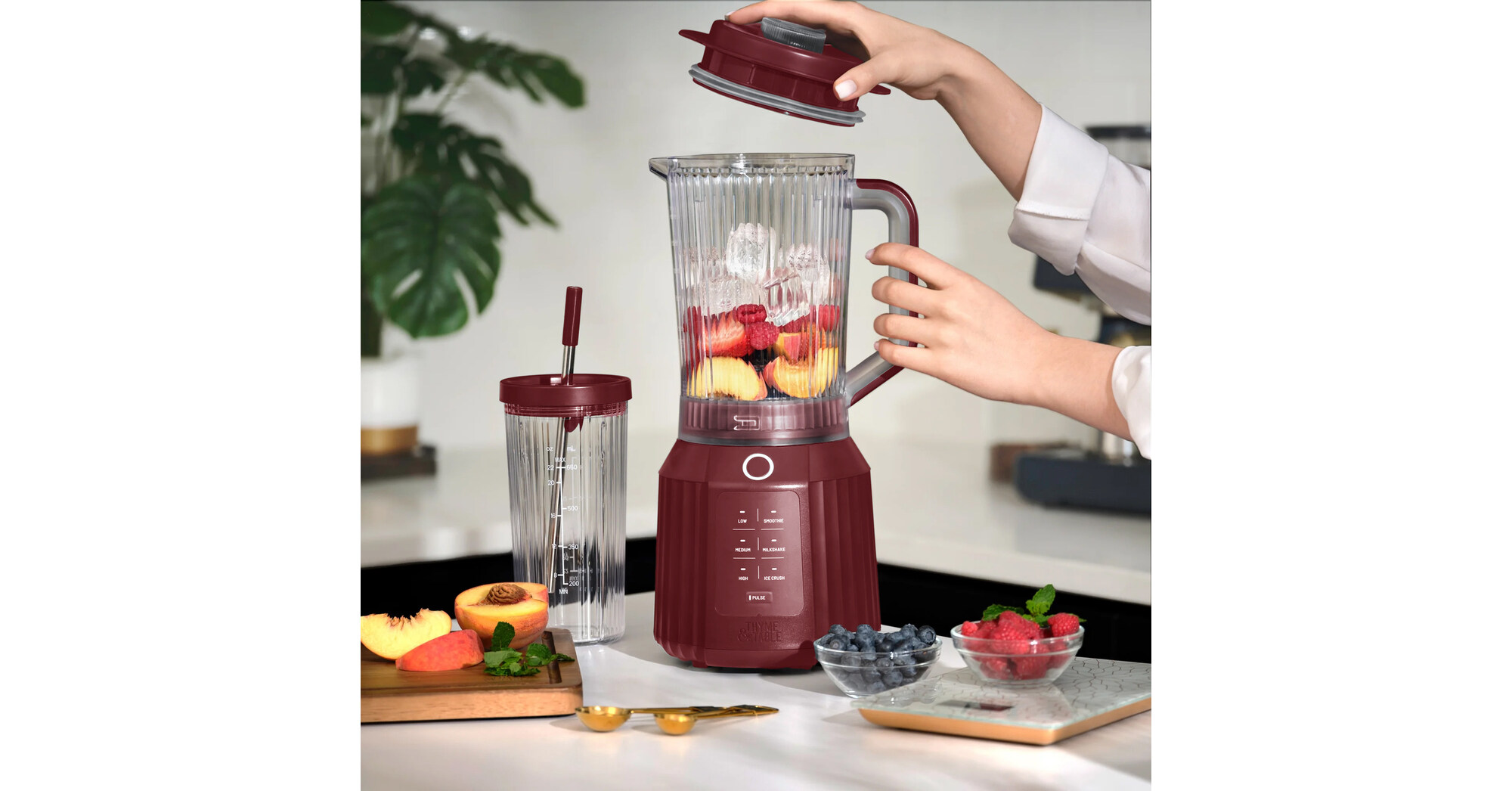
Core Insights - Thyme&Table™ has launched a new line of kitchen electronics designed exclusively for Walmart, featuring user-friendly designs and competitive pricing [1][4] - The new products include a variety of kitchen appliances with expanded color options, enhancing their aesthetic appeal while maintaining affordability [2][3] Product Offerings - The product lineup includes a Countertop Blender Duo priced at $86.97, a Single-Serve Blender at $65.97, and a Barista Grade Espresso Machine at $368, among others, with new color options like Cabernet Red, Dusty Moss, and Eucalyptus Green [3] - The 6QT Air Fryer is priced at $96.44 and features a unique CrispFlow™ basket for enhanced air circulation, while the 12-Cup Programmable Drip Coffee Maker is available for $84.97 [3] - The 2-Slice Toaster, priced at $47, incorporates ThymeToast technology for precise toasting control [4] Company Background - Thyme&Table™ is a brand under Core Home, a New York City-based manufacturer known for innovative and stylish home products [5] - The company focuses on creating functional and accessible solutions, collaborating with top brands to deliver exceptional collections [5]
今年第10家门店亮相荔湾 山姆开店提速 广州荔湾店开业引排队狂潮
Xin Lang Cai Jing· 2025-12-23 00:31
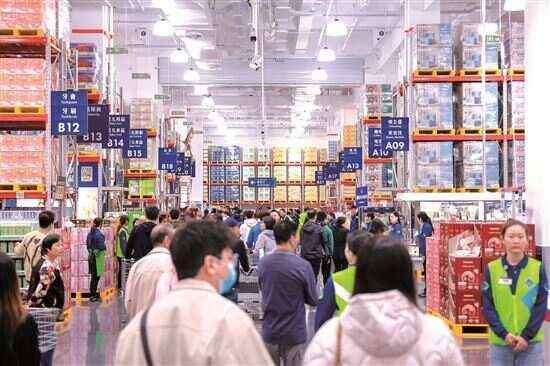
Core Insights - The newly opened Sam's Club in Liwan, Guangzhou, has attracted significant consumer interest, with long queues forming before its official opening time, indicating strong demand in the area [2][3] - The store features a wide range of unique products, including exclusive items and popular brands, aligning with Sam's Club's strategy of offering differentiated merchandise [3][4] - The opening of the Liwan store is part of a broader expansion strategy, with 10 new stores planned in China for 2025, marking a record year for store openings since entering the Chinese market [4] Group 1: Store Opening and Location - The Sam's Club Liwan store is strategically located in the Guangzhou International Intelligent Technology Park, serving as a key hub connecting Guangzhou and Foshan, with a total area of approximately 100,000 square meters and a commercial area of 15,000 square meters [3][4] - The store is the third Sam's Club in Guangzhou and the first in Liwan, filling a gap in high-end warehouse-style retail in the western part of Guangzhou [4] Group 2: Product Offering and Promotions - The store offers around 4,000 types of products across various categories, including fresh food, baby products, daily necessities, home appliances, and clothing, adhering to global standards [3] - Special promotional items include a Philips electric toothbrush priced at 99.9 yuan, with limited purchase per member, and other attractive opening deals such as Olay products and TimberRidge chairs [3] Group 3: Business Performance and Future Plans - Walmart's financial report for Q3 of the 2026 fiscal year shows a net sales figure of 6.1 billion USD (approximately 43.4 billion RMB), with a year-on-year growth of 21.8%, and a strong 32% increase in e-commerce sales [4] - With the opening of the Liwan store, the total number of Sam's Club locations in China has reached 63, and new stores in Foshan, Wuxi, Qingdao, Jinan, and Shijiazhuang are in the recruitment phase, indicating imminent openings [4]