ExxonMobil(XOM)

Search documents
Trump says he might keep Exxon out of Venezuela
Reuters· 2026-01-12 00:46
Core Viewpoint - U.S. President Donald Trump may block Exxon Mobil from investing in Venezuela following the CEO's remarks labeling the country as "uninvestable" during a recent White House meeting [1] Group 1 - Exxon Mobil's CEO expressed concerns about Venezuela's investment climate, indicating it is not viable for investment [1] - The potential intervention by President Trump highlights the political risks associated with foreign investments in Venezuela [1]


特朗普强硬施压美国石油巨头:赶紧去委内瑞拉投资,你们要是不干,有的是人愿意接手
Sou Hu Cai Jing· 2026-01-11 21:52
Group 1 - The U.S. military's recent actions in Venezuela have created an environment that President Trump claims is "absolutely safe" for American oil companies to invest in [1][3] - Venezuela possesses the largest oil reserves in the world, with over 300 billion barrels, surpassing Saudi Arabia and Canada [3][5] - Despite its vast reserves, Venezuela's oil production has drastically declined from 3.5 million barrels per day in the late 1990s to around 1 million barrels per day currently, accounting for less than 1% of global production [5][9] Group 2 - Chevron is currently the only major U.S. oil company still operating in Venezuela, while ExxonMobil and ConocoPhillips express significant caution regarding investment due to past asset seizures [5][11] - Smaller oil companies have shown a willingness to invest in Venezuela, contrasting with the hesitance of larger firms [11][16] - The restoration of Venezuela's oil industry is estimated to require an investment of $110 billion just for exploration and production to return to levels seen 15 years ago [11][13] Group 3 - The U.S. energy market's reaction to the situation in Venezuela has been muted, with no immediate impact on oil prices or gasoline costs observed [9][16] - Experts suggest that U.S. companies will only return to Venezuela if there are guarantees of investment returns and security [9][13] - The complexities of Venezuela's oil industry, including the need for significant infrastructure investment and the challenges posed by the current political climate, make immediate investment unlikely [5][11][13]


The Trump Market: Where Tweets Are Policy and Volatility Is Just a Feature
Stock Market News· 2026-01-11 18:00
Group 1: Tariffs and Pharmaceutical Sector - President Trump has threatened pharmaceutical tariffs of up to 250% and 500% on India over Russian oil purchases, indicating a shift in the administration's approach to tariffs as a tool for industry reshaping rather than negotiation [2] - Johnson & Johnson (JNJ) has secured an exemption from certain tariffs by committing to lower drug prices, joining 14 other major pharmaceutical companies in the "TrumpRx" program, which aims to align US drug prices with European counterparts [3] - Moody's Analytics reported a "collapse in pharmaceutical imports" as companies stockpiled goods in anticipation of tariffs, demonstrating the market's tendency to react preemptively to presidential announcements [3] Group 2: Energy Sector and Venezuela - Following the capture of Venezuelan President Nicolás Maduro, President Trump declared a national emergency and announced new sanctions, leading to a surge in US energy stocks, with Chevron (CVX) rising 5% and Exxon Mobil (XOM) increasing by 2.2% [4] - However, by January 10, 2026, analysts expressed skepticism about the viability of Venezuelan oil investments, citing a lack of legal pathways and the need for significant infrastructure rebuilding [5] - Venezuelan government bonds saw a rally, with a bond maturing in 2027 increasing from 31.5p to over 40p on the dollar, indicating market interest despite the geopolitical instability [5] Group 3: Credit Card Industry - President Trump proposed a one-year, 10% cap on credit card interest rates, aiming to save Americans "tens of billions of dollars," which has raised concerns among banking executives [6][7] - The banking industry, including the Bank Policy Institute and the American Bankers Association, warned that such a cap could lead consumers to less regulated alternatives and reduce credit availability [8] - Major credit card companies like American Express (AXP) and JPMorgan Chase (JPM) experienced stock declines of -1.92% and -0.18% respectively, reflecting market apprehension about the proposed cap [8] Group 4: Defense Sector - President Trump's executive order threatening to restrict stock buybacks and dividends for defense contractors initially caused a drop in defense stocks, but a subsequent announcement of a $1.5 trillion defense budget for fiscal year 2027 led to a rally in the sector [9][10] - Northrop Grumman (NOC) saw a premarket increase of 6.8%, while Lockheed Martin (LMT) rose 6.7%, indicating strong market response to the budget announcement [10] - The iShares US Aerospace & Defense ETF gained approximately 55% over the past year, significantly outperforming the S&P 500's 17% increase, highlighting robust demand in the defense sector [10] Group 5: Market Reactions and Trends - The US stock market exhibited polarized performance on January 8, 2026, with the DOW gaining 60.94 points (+0.12%) while the S&P 500 and NASDAQ Composite fell [13] - By January 9, 2026, the indices largely recovered, with the S&P 500 climbing 0.6% and the DOW adding 0.5%, indicating a rotation out of high-growth technology into heavy industry [14] - Analysts forecast a 10% increase for the S&P 500 in the remainder of 2026, although they acknowledge that presidential tariffs pose a significant source of uncertainty for market performance [15]




特朗普对话20家美石油公司:已经亏的120亿美元就算了,你不干还有25家愿意干
Sou Hu Cai Jing· 2026-01-11 12:33
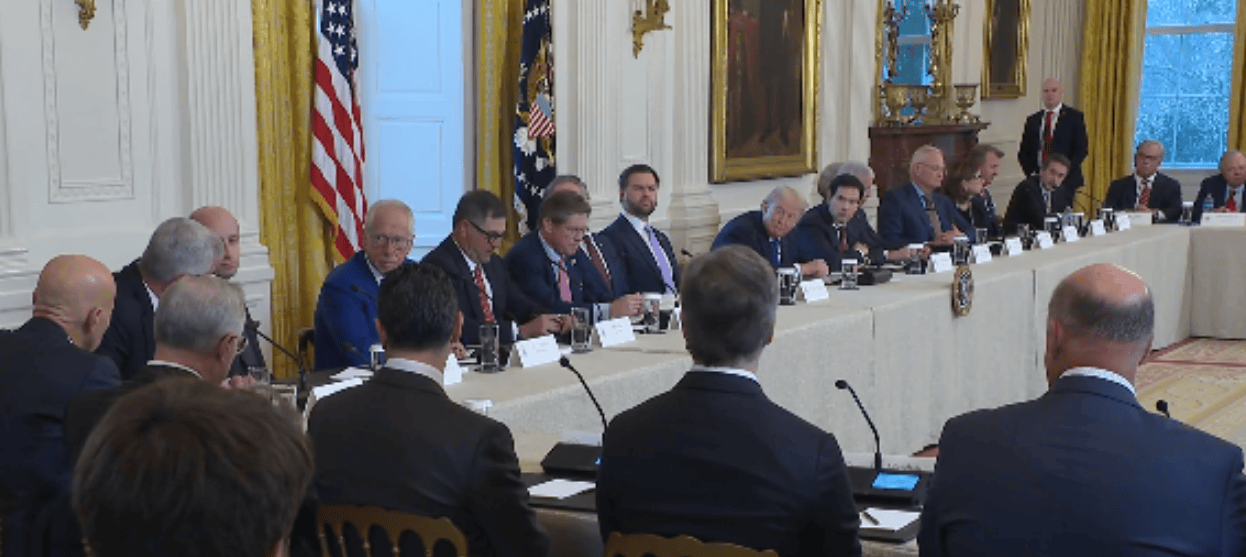
Group 1 - The core message of the news is that President Trump announced a potential collaboration between the U.S. and Venezuela to rebuild the oil and gas infrastructure, with U.S. oil companies expected to invest at least $100 billion [1][3] - Trump held a meeting with nearly 20 representatives from the oil industry, predicting that an agreement to resume operations in Venezuela could be reached soon [3] - Despite Trump's encouragement, major U.S. oil companies expressed caution about re-entering the Venezuelan market, with ExxonMobil's CEO stating that the company views Venezuela as "uninvestable" due to past asset seizures [3][4] Group 2 - Trump emphasized that if companies are not interested in investing in Venezuela, there are others willing to take their place, indicating a competitive environment for investment [3] - Concerns were raised by industry leaders regarding the need for legal and financial protections before making significant investments in Venezuela, with Trump claiming that the oil industry would receive "comprehensive security" assurances, though specifics were not provided [3][4] - A private equity investor highlighted the unpredictability of entering the Venezuelan market, noting that a single tweet could alter the country's foreign policy, which adds to the investment risk [4]
Benjamin Edwards Inc. Raises Stake in Exxon Mobil Corporation $XOM
Defense World· 2026-01-11 08:32
Investment Activity - Benjamin Edwards Inc. increased its stake in Exxon Mobil by 3.7% in Q3, owning 613,076 shares after acquiring an additional 21,786 shares, representing 0.8% of its portfolio valued at $69,131,000 [2] - Other institutional investors also modified their holdings, with Eagle Capital Management increasing its stake by 15.3% in Q1, now owning 2,836 shares worth $337,000 [3] - Jones Financial Companies Lllp boosted its position by 52.3% in Q1, owning 382,989 shares valued at $45,149,000 after acquiring 131,600 shares [3] Analyst Ratings - BNP Paribas Exane upgraded Exxon Mobil from "underperform" to "neutral" with a price target of $114.00 [4][5] - Piper Sandler decreased its target price from $144.00 to $142.00 while maintaining an "overweight" rating [4][5] - The consensus rating for Exxon Mobil is "Hold" with an average price target of $129.71, with one Strong Buy, eleven Buy, thirteen Hold, and one Sell rating [4][5] Stock Performance - Exxon Mobil shares opened at $124.60, with a 12-month low of $97.80 and a high of $125.93 [6] - The company has a market capitalization of $525.44 billion, a P/E ratio of 18.11, and a beta of 0.37 [6] Financial Performance - Exxon Mobil reported $0.65 EPS for the last quarter with revenue of $57.55 billion and a net margin of 8.99% [7] - Analysts forecast an EPS of 7.43 for the current year [7] Dividend Information - Exxon Mobil declared a quarterly dividend of $1.03, representing an annualized dividend of $4.12 and a yield of 3.3%, an increase from the previous $0.99 [8] Insider Transactions - VP Darrin L. Talley sold 3,000 shares at an average price of $117.19, resulting in a 9.50% decrease in ownership [9]

“你们不干有人干” 特朗普撂狠话威胁美油企高管
Xin Lang Cai Jing· 2026-01-11 05:54
Core Viewpoint - The meeting between President Trump and major oil executives aimed to encourage investment in Venezuela's oil industry, but executives expressed caution due to previous losses and uncertainties in the region [1] Group 1: Company Perspectives - Executives from major oil companies, including Chevron and ExxonMobil, were present at the meeting but showed reluctance to commit to investments in Venezuela [1] - Ryan Lance, CEO of ConocoPhillips, highlighted the need to discuss the "restructuring" of Venezuela's entire energy system, citing a previous loss of $12 billion in the country [1] Group 2: Government Stance - President Trump issued a warning to the executives, stating that if they were not interested in investing in Venezuela, there were others willing to take their place [1]
石油巨头裹足不前的心理阴影:委内瑞拉与美国的百年石油恩怨
Xin Lang Cai Jing· 2026-01-11 02:46
Group 1 - The U.S. military action against Venezuela has prompted President Trump to announce that major U.S. oil companies will invest billions to repair the country's damaged oil infrastructure and generate profits for the U.S. [1] - Trump held a meeting with executives from U.S. oil giants, urging them to invest in Venezuela and promising full security guarantees, although executives expressed caution regarding the investment [1][6] - The historical relationship between U.S. oil companies and Venezuela has been complex, with U.S. firms initially dominating the industry before nationalization efforts in the 1970s and subsequent re-engagement in the late 1990s [2][3] Group 2 - The political landscape in Venezuela has shifted significantly since the rise of Hugo Chávez, who restructured the oil industry to increase state control and revenue distribution, leading to disputes with foreign companies [3][4] - Trump's strategy appears to be a response to domestic pressures, aiming to lower oil prices and assert U.S. energy dominance in the Western Hemisphere, while also countering the influence of countries like Russia and China [4][5] - The U.S. has reached an agreement with Venezuela's transitional government for the supply of 50 million barrels of oil, which will be sold by the U.S. and the proceeds managed by the U.S. [5] Group 3 - U.S. oil companies have shown a lukewarm response to Trump's proposed investment plan, as the potential returns from Venezuela are not significant enough to alter their overall business outlook [6][7] - Companies like ExxonMobil and ConocoPhillips remain cautious due to past experiences with nationalization and the current unstable political environment, preferring to wait for clearer investment guarantees [6][7] - Chevron, while maintaining a presence in Venezuela, is also hesitant to expand operations without assurances regarding safety and financial conditions [7]
特朗普宣布进入国家紧急状态!多位石油高管就投资委内瑞拉表态谨慎
Zheng Quan Shi Bao· 2026-01-11 00:51
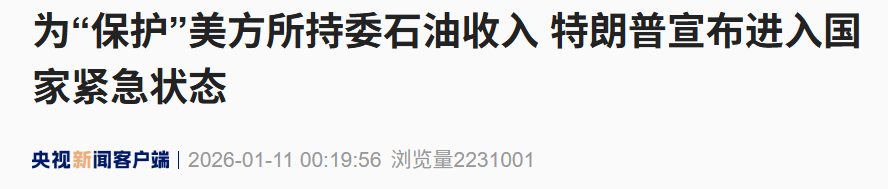
Group 1 - The U.S. government has declared a national emergency to protect Venezuelan oil revenues stored in U.S. Treasury accounts from being seized or subjected to legal proceedings [1][2] - The executive order aims to ensure that Venezuelan oil revenues are preserved for advancing U.S. foreign policy objectives, preventing claims from private creditors [2] - President Trump has initiated a military operation to control Venezuelan President Maduro and manage the country's oil reserves [2] Group 2 - During a meeting with executives from major oil companies, including Chevron and ExxonMobil, President Trump sought to secure investments in Venezuela's oil industry, but executives expressed caution regarding future investments [3] - Trump emphasized that the U.S. will decide which oil companies are allowed to invest in Venezuela, indicating a controlled approach to foreign investment [3] - ConocoPhillips' CEO highlighted the need to discuss restructuring Venezuela's entire energy system, noting significant past losses in the country [3]
Trump seeks to stop courts, creditors from seizing Venezuelan oil revenue in the U.S.
CNBC· 2026-01-10 20:32
Group 1 - The executive order signed by U.S. President Donald Trump aims to block the seizure of Venezuelan oil revenue held in U.S. Treasury accounts, declaring it as sovereign property of Venezuela [2][3] - The order states that any judicial attempts to seize these funds would harm U.S. national security and foreign policy, and interfere with efforts to stabilize Venezuela economically and politically [2][3] - Trump indicated that U.S. oil companies are expected to invest at least $100 billion in Venezuela's oil and gas infrastructure following the military operation that captured Venezuelan leader Nicolás Maduro [4] Group 2 - Major oil executives, including ExxonMobil's CEO, expressed concerns about Venezuela being "uninvestable" due to past nationalization of the oil sector and ongoing legal disputes for compensation [5] - Chevron remains the only major U.S. oil company currently operating in Venezuela, facilitated by a special license from the Trump administration [6] - The legal basis for the executive order includes the 1977 International Emergency Economic Powers Act and the 1976 National Emergencies Act [6]
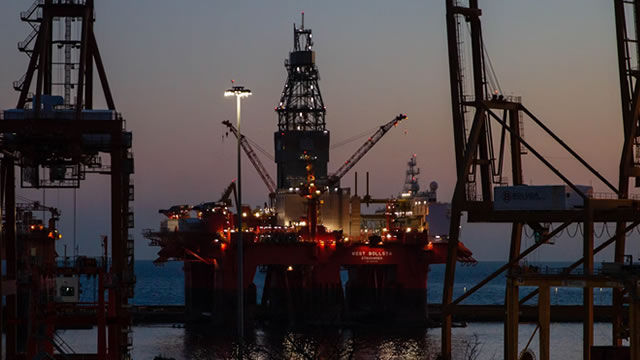
Exxon Labels Venezuela 'Uninvestable' Without Major Reforms
Benzinga· 2026-01-10 19:11
Core Viewpoint - President Trump is urging US oil companies to invest at least $100 billion in Venezuela's oil sector, but industry leaders express skepticism about the feasibility of such investments due to past experiences with asset seizures [1][2][4]. Group 1: Industry Response - Executives from major oil companies, including Exxon Mobil and Continental Resources, have expressed concerns about investing in Venezuela, labeling it as "uninvestable" due to the risk of asset confiscation by the government [2][4]. - Chevron is highlighted as the only major US oil company still operating in Venezuela, with its Vice Chairman confirming readiness to significantly increase output in the country [3][5]. Group 2: Investment Potential - Despite the skepticism from industry leaders, Trump remains optimistic about the potential for significant investments in Venezuela's oil sector, suggesting that it could benefit both Venezuela and the United States [4]. - The willingness of Chevron to consider increasing production indicates that some companies may be open to taking on the associated risks, which could lead to a boost in Venezuela's oil production and economic recovery [5].