
Ecovacs

Search documents
Chinese robot vacuum maker Dreame gives gifts of gold and trip to Antarctica to employees
Yahoo Finance· 2025-12-29 09:30
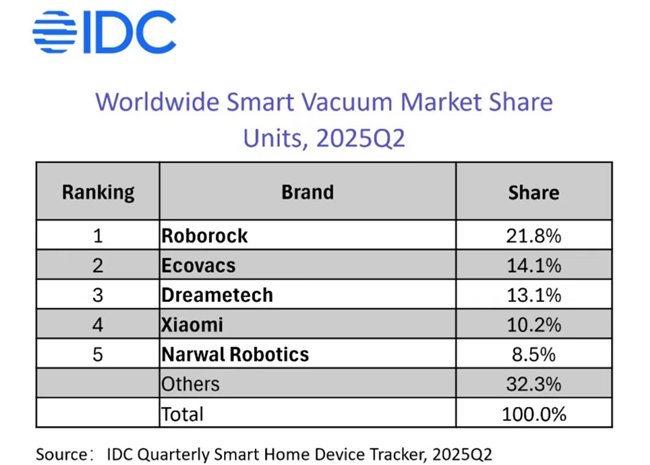
Core Insights - Dreame Technology is enhancing employee satisfaction by providing gold bonuses and a trip to Antarctica, reflecting its strong business performance in the robot vacuum cleaner market [1][2][4] Company Performance - Dreame's total gold giveaway is estimated to cost approximately 26 million yuan (US$3.7 million), based on an internal staff count of around 18,500 [3] - The company has experienced significant growth, with its 2025 midyear revenue surpassing the total revenue of 2024, maintaining a compound annual growth rate above 100% for six consecutive years [5] - Dreame holds a 12.4% share of the global robot vacuum cleaner market as of the first three quarters of 2025, ranking among the top five vendors globally [5][4] Market Position - The global market for robot vacuum cleaners is dominated by Chinese vendors, with Dreame being one of the leading companies alongside Roborock, Ecovacs, Xiaomi, and Narwal, which collectively accounted for nearly 70% of worldwide shipments [4] - The company is diversifying its product portfolio beyond smart cleaning, venturing into home appliances, outdoor smart equipment, personal care electronics, smartphones, and drones [6] Future Prospects - Dreame announced plans to enter the electric vehicle market, with its first ultra-luxury pure-electric car expected to debut in 2027 [7] - The company has recorded the fastest growth in new job listings among Chinese companies this year, indicating robust expansion and hiring [7]
Robotic vacuum maker Dreame says untapped global demand to drive next phase of growth
Yahoo Finance· 2025-12-27 09:30
Core Insights - The global robotic vacuum cleaner market is poised for growth due to low penetration rates, with less than 10% in China and under 20% internationally [1] - The robotic vacuum category is still in its "ascent stage," indicating that there is significant potential for improved user experience [2] Market Dynamics - Europe is the largest market for Dreame's robotic vacuum cleaners, driven by a consumer base that embraces advanced technology, with over half of Dreame's revenue in Europe coming from premium products priced above 1,000 euros (approximately US$1,174) [3] - The Chinese market is highly competitive, with the 3,000 to 4,000 yuan (US$568) price range accounting for about 50% of Dreame's domestic revenue, contrasting with the premium-focused European market [4] Company Performance - Dreame has shown the fastest growth in new job listings among Chinese companies this year, actively recruiting for its research and development department [5] - Chinese manufacturers, including Dreame, have consolidated their global lead in smart robotic vacuum shipments, with Dreame holding a 12.4% share of the global market, ranking third overall [6]
iRobot founder says company's bankruptcy revealed a new kind of competitor: 'The Chinese fast follower'
Business Insider· 2025-12-21 23:17
Core Insights - iRobot, known for its Roomba vacuum, filed for Chapter 11 bankruptcy and will be acquired by Picea Robotics, highlighting the importance of recognizing competition, especially from Chinese firms [1][7]. Company Overview - iRobot was founded in 1990 by roboticists from MIT and launched the Roomba in 2002, which established the consumer robotics category [2]. - The company reached its peak revenue of $1.56 billion in 2021 but faced increasing competition from Chinese companies like Roborock, Dreame, and Ecovacs starting in 2018 [7]. Competitive Landscape - Chinese competitors benefited from a "protected market" and government subsidies averaging 17.5% of equipment costs, which provided them with a competitive edge over iRobot [8][10]. - iRobot's product features, such as its mopping robot Scuba, lagged behind competitors, contributing to its decline [10]. Strategic Moves - iRobot attempted to innovate through a deal with Amazon valued at $1.4 billion, which was ultimately blocked due to antitrust concerns from the FTC and European regulators [10][11]. - The lengthy investigation by regulatory bodies had a detrimental impact on iRobot's operations and contributed to its challenges in the market [12][13].



iRobot Just Filed for Bankruptcy. What Does That Mean for IRBT Stock? And Why Have Investors Been Chasing Shares Higher?
Yahoo Finance· 2025-12-18 20:52
Core Viewpoint - iRobot has filed for Chapter 11 bankruptcy protection, transferring its business to two Chinese companies and going private, marking a significant decline from its previous market dominance [1][4][6]. Company Overview - iRobot was founded in 1990 by MIT engineers and initially focused on defense and space projects before launching the Roomba robotic vacuum in 2002, which revolutionized the consumer robotics market [3][9]. - The company achieved peak annual revenue of nearly $1.6 billion in 2021, selling over 40 million units and commanding approximately 60% of the global market share by value [10][11]. Recent Developments - The company has faced increasing competition from lower-priced Chinese rivals and rising costs due to tariffs, leading to a significant decline in stock value, with shares down 92% year-to-date as of the bankruptcy filing [2][4][11]. - iRobot's restructuring agreement involves acquisition by Shenzhen Picea Robotics Co. and a subsidiary, with the main lender forgiving $190 million in loans and an additional $74 million in debt [6][7]. Market Dynamics - The competitive landscape has shifted dramatically since 2021, with Chinese companies introducing advanced features at lower prices, which iRobot struggled to match until its 2025 product lineup [11][13]. - Tariffs have added significant costs, with iRobot reporting an increase of $23 million in 2025 due to tariff-related expenses, complicating future planning [13]. Stock Performance - iRobot's stock experienced extreme volatility, including a brief rally driven by retail traders speculating on a short squeeze, but the bankruptcy announcement led to a dramatic sell-off, erasing gains [2][5][15]. - Existing common shareholders are expected to be wiped out under the restructuring plan, with a high likelihood of Nasdaq delisting the stock [15].
iRobot filed for bankruptcy: How the Roomba maker got here
Business Insider· 2025-12-16 16:30
Core Insights - iRobot, known for its Roomba vacuum cleaners, filed for Chapter 11 bankruptcy protection due to financial struggles and a failed $1.4 billion acquisition deal with Amazon [1][22] - The company, founded in 1990 by MIT roboticists, initially focused on military and space-related robots before achieving consumer success with the Roomba in 2002 [4][12] - iRobot's annual revenue peaked at $1.56 billion in 2021 but has since declined due to increased competition from lower-cost rivals [19] Company History - iRobot was established by Colin Angle, Helen Greiner, and Rodney Brooks with the vision of making practical robots a reality [4] - The company gained prominence with the launch of the Roomba, selling over 50 million units globally [12] - iRobot went public in 2005, with its shares trading on Nasdaq under the ticker symbol IRBT [15] Financial Struggles - Following its peak revenue in 2021, iRobot experienced a decline in sales, attributed to competition from brands like Dreame, Roborock, and Ecovacs [19] - The failed acquisition by Amazon, which was intended to strengthen iRobot's market position, fell through due to regulatory issues, leading to significant layoffs and the resignation of CEO Colin Angle [22][31] - iRobot expressed "substantial doubt" about its ability to continue operations in a March 2025 earnings report [26] Bankruptcy Filing - iRobot filed for Chapter 11 bankruptcy on December 14, 2025, and plans to be acquired by its primary contract manufacturer, Picea Robotics, through a court-supervised process [31] - The company aims to maintain normal operations and ensure continuity for consumers and partners during the bankruptcy process [31][32]

中国线上品牌追踪_2025 年 10 月_多数板块增长乏力;乳制品改善;啤酒、美妆板块表现滞后-China Consumer Connection_ Online Brand Tracker_ Oct-25_ Muted growth across most sectors; Diary improved; Beer_Beauty lagged
2025-11-14 05:14
Summary of Key Points from the Conference Call Industry Overview - The conference call discusses the performance of various sectors in the Chinese consumer market, particularly focusing on e-commerce platforms like Tmall, Taobao, and JD. The overall growth across most sectors is described as muted, with specific categories showing significant declines in year-over-year (YoY) growth rates [1][12]. Category Performance - **Supplements/Infant Milk Formula/Dairy**: - Supplements grew by 9% YoY, Infant Milk Formula (IMF) by 2%, and Dairy by 1% [1][12]. - **Declining Categories**: - Beer saw a decline of 19%, Beauty products declined by 9%, Small kitchen appliances by 7%, Sportswear by 6%, and Sports shoes by 4% YoY [1][12]. - **Flat Performance**: - Pet foods and Women's clothing remained flat YoY [1][12]. Brand Performance - **Domestic vs. MNC Brands in Cosmetics**: - Multinational Corporations (MNCs) outperformed local brands in October, attributed to easier bases and favorable platform support. Estee Lauder and Kose led with 33% and 32% YoY growth, respectively [2][29]. - Local brands like Mao Geping and Botanee grew by 33% and 11% YoY, while Proya and Giant saw declines of 24% and 25% YoY [2][28][29]. Sportswear Insights - Niche MNC brands continued to outperform larger brands, with product cycles playing a significant role in performance disparities. For instance, Adidas showed solid momentum, while Nike did not perform as well [3]. - Weather-sensitive brands like Bosideng and Uniqlo experienced growth due to colder weather in Northern China [3]. Sales Recognition Practices - The growth rates for October may be distorted due to sales recognition practices related to pre-sales and returns during the Double-11 shopping festival. A combined analysis of October and November data is recommended for a clearer picture [7]. Notable Brand Performers - **Outperforming Brands**: Lululemon, Adidas, Roborock, Pop Mart, and Maogeping [8]. - **Underperforming Brands**: QuadHA, Nutrilon, Fancl, Carlsberg, and Comfy [8]. Additional Insights - The report highlights the importance of omni-channel strategies being executed by brands, indicating that online sales may not fully reflect overall performance due to offline sales channels [3]. - The performance of various categories is further detailed in the exhibits, showing YoY trends and market share changes for key brands in the infant milk formula and supplements sectors [19][20][22][25]. Conclusion - The overall consumer market in China is experiencing stagnant growth with significant variances across categories and brands. MNCs are generally outperforming local brands, particularly in cosmetics, while certain sectors like sportswear are seeing a bifurcation in performance based on brand strategies and external factors like weather.
The maker of the Roomba is running out of cash and options. After its failed Amazon deal, iRobot could face bankruptcy.
Business Insider· 2025-11-06 10:18
Core Viewpoint - iRobot, once a leader in the robotic vacuum market, is facing severe financial difficulties and is on the brink of bankruptcy due to failed acquisitions and increasing competition [1][2][3]. Financial Strain - iRobot has been under financial pressure, worsened by the collapse of Amazon's $1.4 billion acquisition plan in early 2024 [2]. - The company reported that its last potential buyer withdrew after exclusive negotiations, offering a price significantly lower than its recent stock trading price [2][3]. - iRobot warned that without new funding, it may have to significantly reduce or cease operations and could seek bankruptcy protection [3][16]. Product and Market Position - iRobot has sold over 50 million Roomba models since its launch, but competition has intensified from brands like Dreame, Roborock, and Ecovacs [8][13]. - The company launched a new fleet of Roomba vacuums and mops in March 2023, aiming to reinforce its market leadership [4][8]. - iRobot's annual revenue peaked at $1.56 billion in 2021 but has been declining since, with shares dropping about 65% year-to-date, currently priced at $2.70 [13][16]. Historical Context - Founded in 1990 by MIT roboticists, iRobot initially focused on military and space-related robots before achieving consumer success with the Roomba in 2002 [9][11]. - The company sold its defense and security business in 2016 for up to $45 million, shifting its focus entirely to consumer robotics [12]. Strategic Challenges - iRobot acknowledged increased competition in the robotic floorcare segment, leading to a loss of market share [14]. - The failed acquisition by Amazon, initially agreed upon at $61 per share, was a significant setback, resulting in layoffs of 350 employees, or about 31% of its workforce [14][15].


云鲸二季度全球市场表现强劲,跻身2025年Q2全球扫地机器人市占TOP5
Cai Fu Zai Xian· 2025-09-10 07:52
Group 1 - The core point of the article highlights that Cloud Whale (NARWAL) has achieved significant growth in the global smart home cleaning robot market, ranking fifth with a market share of 8.5% and a shipment volume of 524,200 units in Q2 2025 [1][3]. - The global smart vacuum robot market reached a shipment volume of 6.17 million units in Q2 2025, reflecting a year-on-year growth of 20.5% [3]. - Chinese brands dominate the top five positions in global vacuum robot sales, collectively holding 67.7% of the market share, indicating a trend towards increased market concentration among leading brands [3]. Group 2 - At the IFA 2025, Cloud Whale showcased a full range of cleaning products, including the flagship Narwal Flow robot, which features innovative carpet cleaning technology, enhancing its competitive edge in the market [4]. - Cloud Whale has adopted a differentiated market strategy focusing on regions with lower market penetration, achieving a 50% growth in Europe and over 200% growth in emerging markets like Southeast Asia and Latin America in the first half of 2025 [6]. - The company plans to expand into over 70 new markets globally, anticipating a 3-4 times growth in its overseas business, further solidifying its position in the international market [6].

中国新兴前沿领域-入境旅游零售:中国已做好准备-China's Emerging Frontiers-Inbound Travel Retail China Is Ready
2025-09-06 07:23
Summary of Inbound Travel Retail in China Industry Overview - The inbound travel retail market in China is projected to grow from **US$14 billion in 2024 to US$60 billion by 2034**, representing a **15% CAGR** [1][10][27] - By 2034, inbound travel retail is expected to account for **25% of China's total travel retail market**, up from **10%** in previous years [10][27] Key Drivers of Growth - **Globally Known Brands**: The presence of well-known brands and competitive pricing is attracting international tourists [4][10] - **Improved Shopping Experience**: The introduction of tax-free shopping (TFS) and instant tax refunds is enhancing the shopping experience for inbound tourists [5][10][31] - **Policy Support**: Recent policy changes are aimed at expanding tax-free shopping and improving infrastructure to support inbound tourism [26][48] Tax-Free Shopping Impact - The tax-free shopping market is expected to grow from **<US$0.5 billion in 2024 to US$20 billion by 2035** [94] - The **instant tax refund system** was expanded nationwide in April 2025, significantly increasing the number of malls offering this service from **2 to 17** among the top 20 malls in China [5][34][98] - Retail sales with tax refunds in cities like Shenzhen and Shanghai have shown remarkable growth, with increases of **160% and 75% YoY**, respectively, in the first half of 2025 [35][103] Competitive Pricing - Chinese brands offer products at **20-50% lower prices** compared to international markets, making them attractive to tourists [4][29] - Imported luxury goods in China are competitively priced, often similar to or lower than prices in key Asian markets [29][74] Market Segmentation - The inbound travel retail market is primarily driven by international tourists, excluding visitors from Hong Kong, Macau, and Taiwan, who are expected to contribute significantly to growth [27][45] - The duty-free market is also gaining traction, with projections of **US$5 billion in spending by inbound tourists by 2035** [36] Implications for Retailers - Retailers, malls, and duty-free operators in China are expected to benefit the most from the growth in inbound tourism [6][40] - Companies like **CR Land, Hang Lung Properties, and CTG Duty Free** are identified as key beneficiaries [43] Risks and Challenges - Potential dilution of the Hong Kong retail market due to increased competition from mainland China [6][40] - The need for improved tax refund services and training for sales staff to facilitate the shopping experience for tourists [39] Conclusion - The inbound travel retail market in China is at a pivotal point, with significant growth potential driven by favorable policies, competitive pricing, and an enhanced shopping experience. Retailers and duty-free operators are well-positioned to capitalize on this trend, although challenges remain in execution and market competition.
具身智能企业扎堆赴港上市 资本盛宴还是技术突围?
Xin Lang Zheng Quan· 2025-07-02 10:10
Core Insights - The recent surge in IPOs on the Hong Kong Stock Exchange (HKEX) is driven by companies in the embodied intelligence sector, such as Woan Robotics, Stand Robotics, and Megatech, which are experiencing rapid revenue growth and narrowing losses [1][4]. Group 1: Company Performance - Woan Robotics, incubated by "DJI's father" Li Zeshang, is leading the IPO wave with a projected revenue increase from 275 million yuan in 2022 to 610 million yuan in 2024, representing a compound annual growth rate (CAGR) of 49% [2]. - The gross margin of Woan Robotics is expected to rise from 34.3% in 2022 to 51.7% in 2024, significantly outperforming the industry average [2]. - Stand Robotics, established in 2016, has seen its sales grow from 725 units in 2022 to 1,932 units in 2024, with revenue increasing from 96 million yuan to 251 million yuan, achieving a CAGR of 61.3% [2][3]. - Megatech's revenue is projected to grow from 455 million yuan in 2022 to 930 million yuan in 2024, maintaining a CAGR of 43%, but it has incurred substantial losses exceeding 2.2 billion yuan over the same period [3]. Group 2: Market Dynamics - The HKEX's "18C chapter" policy has created a favorable environment for tech companies, lowering the barriers for unprofitable firms to go public, which aligns with the high investment and long cycle characteristics of the embodied intelligence sector [4][6]. - The global market for household robots is expected to grow from 257.7 billion yuan in 2024 to 428.3 billion yuan by 2029, with a CAGR of 10.7%, while the industrial mobile robot market is projected to expand from 15.3 billion yuan to 81.4 billion yuan at a CAGR of 39.8% [4][5]. Group 3: Challenges and Competition - Despite the growth, profitability remains a significant challenge, with Woan Robotics still facing a loss of 3.07 million yuan in 2024, and Megatech's losses reaching 780 million yuan [6][7]. - Woan Robotics relies heavily on international markets, with over 95% of its revenue coming from Japan and Europe, making it vulnerable to fluctuations in international trade and currency [6]. - Stand Robotics faces challenges in supply chain management and pricing power, as indicated by high accounts receivable and sales expense ratios [6][7]. - The competitive landscape is intensifying, with local players like Ecovacs and international brands dominating the market, necessitating a delicate balance between technological innovation and pricing strategies for emerging companies [6][7].