
OPEC

Search documents
OPEC+ weighs output plans as Iran snapback sanctions hit
CNBC Television· 2025-09-29 16:00
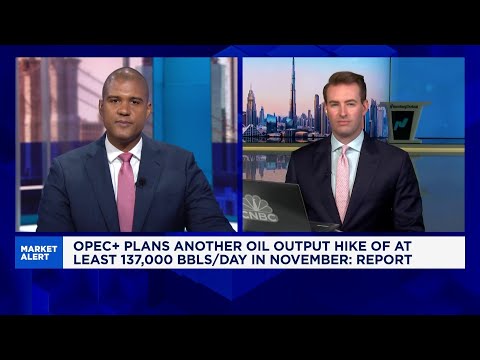
Turning to the energy markets and oil prices under pressure this morning on a new report that OPEC plus is gearing up for another production hike. Taking a look at oil right now. We see WTI pulling back about 1 and a.5%. Brent crew pulling back about one and a quarter.Our Dan Murphy joins us now from Dubai with the very latest. Dan, good morning. Frank, good morning to you.Well, OPEC is meeting this week to discuss oil output for November. But Frank, our sources have actually pushed back on these reports, s ...

Brent Oil Breaks Above $70 as Pressure on Russia Intensifies
Yahoo Finance· 2025-09-26 20:16
Core Viewpoint - Oil prices experienced their largest weekly gain in over three months, driven by geopolitical tensions and algorithmic trading momentum, with Brent crude settling above $70 a barrel for the first time since late July, marking a 5.2% increase for the week [1][2]. Group 1: Market Dynamics - The commodity market rose alongside broader markets due to stronger-than-expected US economic data, which alleviated concerns about near-term demand deterioration [2]. - The weakening of the dollar made commodities priced in the currency more attractive, contributing to the price increase [2]. Group 2: Geopolitical Influences - Increased pressure on Russia to cease its actions in Ukraine has created uncertainty regarding oil exports from the country, with Trump urging Turkey and Hungary to stop purchasing Russian oil [3][4]. - Ukraine has intensified drone strikes on Russian energy infrastructure, while NATO has warned Russia of a strong response to any further airspace violations [4]. Group 3: Speculative Trading Behavior - Commodity trading advisers shifted to a net-long position for the first time since early August, indicating heightened bullish sentiment in the market [6]. - Algorithmic traders have significantly changed their positions, moving from 27% short to 27% long in Brent crude within a day [6]. Group 4: Future Market Outlook - The recent price gains may help oil break out of a tight trading range that has persisted since early August, as investors consider the balance between market supply and rising geopolitical tensions [7]. - Forecasts from the International Energy Agency suggest a surplus in oil supply later this year, driven by increased output from OPEC and non-OPEC producers, particularly in the Americas [7].
Kuwait oil production capacity at highest level in more than a decade
Yahoo Finance· 2025-09-23 11:05
Group 1 - Kuwait's crude oil production capacity has reached 3.2 million barrels per day, the highest level in over a decade [1] - The country plans to increase its oil production to 2.56 million barrels per day from October under the OPEC+ agreement [2] - OPEC+ members agreed to increase oil production by 137,000 barrels per day in October, continuing a strategy of gradually boosting output [2] Group 2 - OPEC+ decisions are flexible and can be paused or reversed based on market developments, allowing for a swift response to changing conditions [3] - Minister Al-Roumi expressed optimism about achieving market balance, noting positive impacts from OPEC+'s April decision to enhance output [4] - The International Energy Agency anticipates global oil consumption growth of 740,000 barrels per day in 2025 and an additional 700,000 barrels per day next year [4] Group 3 - Global oil demand is recovering, with crude inventories dropping below the five-year average [5]
南华期货原油产业周报:降息落地,油价震荡下行-20250922
Nan Hua Qi Huo· 2025-09-22 05:23
Group 1: Report Industry Investment Rating - The investment rating for the crude oil market is "Oscillating weakly" [9] Group 2: Core Views of the Report - The core contradiction in the current crude oil market lies in the game between the phased support of short - term disturbing factors (geopolitical risks, aftermath of macro - policies) and the continuous suppression of medium - and long - term fundamentals (increasing supply, decreasing demand, and surplus pressure). Short - term factors usually have an impact within a week and are often followed by price drops after rebounds, with the high points showing a downward trend [1] - In the medium - and long - term, the fundamentals are bearish. The supply side will face increasing pressure as OPEC+ starts the second - stage production resumption in October, and the end of the Middle East's summer peak electricity demand will turn direct - burning crude oil demand into supply. On the demand side, there is a clear seasonal inflection point, with demand in the US and China showing a "seasonal peak - to - decline" trend [4] Group 3: Summary by Relevant Catalogs 1. Core Contradiction and Strategy Suggestions 1.1 Core Contradiction - **Short - term trading logic**: Tensions in the Middle East, Eastern Europe, and South America have not substantially escalated, and the boost to oil prices is only an "expected risk premium", which is usually digested within a week. After the Fed's interest rate cut, the macro - sentiment is stable, and the policy impact has been gradually realized. Short - term oil price rebounds are often "weak repairs" and are difficult to form a trend reversal [3] - **Long - term trading expectation**: In the medium - and long - term, the supply side will see increased pressure due to OPEC+ production resumption and the change in Middle East demand - supply. The demand side shows a seasonal decline, and the supply - demand imbalance will accumulate surplus pressure unless OPEC+ makes a significant production cut [4] 1.2 Speculative Strategy Suggestions - **Market positioning**: Oscillating weakly - **Strategy suggestions**: Consider a long position in the spread between consecutive contracts 1 and 3; consider a short position in the spread between SC and Brent; gasoline cracking spreads are seasonally weak, while diesel cracking spreads are strong [9] 2. This Week's Important Information and Next Week's Focus Events 2.1 This Week's Important Information - **Positive information**: Ukraine's attack on Russian energy facilities, an unexpected decline in US crude oil inventories, and the Fed's interest rate cut have all supported oil prices [10] - **Negative information**: OPEC's production increase plan, an increase in US distillate inventories, and weak global demand expectations have put downward pressure on oil prices [11] 2.2 Next Week's Focus Events - A new round of domestic oil price adjustment will take place at 24:00 on September 23. As of September 19, the reference crude oil change rate is - 0.33%, and the expected reduction in domestic gasoline and diesel prices is 20 yuan/ton. Due to the impact of the previous price adjustment, there is a high probability of a price increase this time [13] 3. Disk Analysis 3.1 Volume, Price, and Capital Analysis - **Trend analysis**: This week, oil prices oscillated and rose slightly, showing a "rising in the early stage and adjusting in the later stage" pattern. The average price this week is higher than last week but lower than last month due to factors such as OPEC's production increase and weak global demand recovery [14] - **Domestic market**: On September 19, the warehouse receipts of medium - sulfur crude oil futures remained unchanged. The daily - level MACD is in a golden - cross cycle, and the price is close to the middle track of the Bollinger Bands [16] - **Foreign market**: On September 19, the trading volume of WTI crude oil futures decreased, while the number of open contracts increased. The trading volume of Brent crude oil futures increased, and the number of open contracts also increased slightly. As of the week ending September 16, the speculative net long positions in WTI crude oil increased [16] 4. Valuation and Profit Analysis 4.1 Crude Oil Market Spread Tracking - Analyze the seasonal trends of various crude oil spreads, such as the spreads between different contracts of Brent, WTI, and SC [25] 4.2 Crude Oil Regional Spread Tracking - Track the seasonal trends of regional spreads, including the spreads between SC and Brent, SC and WTI, etc. [27] 4.3 Crude Oil Downstream Valuation Tracking - Analyze the downstream valuation in different regions, including Europe, North America, Asia - Pacific, and China, and track the seasonal trends of cracking spreads and refining margins [37][41][48] 5. Supply, Demand, and Inventory Projections 5.1 Supply - side Tracking - From September 6 - 12, US crude oil production decreased week - on - week. From September 13 - 19, the number of active oil rigs in the US increased week - on - week [57] 5.2 Demand - side Tracking - From September 6 - 12, US refinery crude oil input and operating rate decreased week - on - week. From September 12 - 18, the capacity utilization rate of independent refineries in China increased week - on - week, while that of major refineries decreased slightly [59] 5.3 Inventory - side Tracking - As of September 12, US commercial crude oil inventories decreased, strategic petroleum inventories increased, and Cushing region oil inventories decreased week - on - week [62] 5.4 Balance Sheet Tracking - The EIA September report predicts that global oil demand will increase slightly in 2025, but the growth will slow down in the second half of the year. Global oil supply is expected to increase in 2025 and 2026. Refinery throughput will decrease in October due to seasonal maintenance. Global oil inventories increased in July and remained stable in August [65][66]
Oil prices slip as robust supply outweighs Fed cut
Yahoo Finance· 2025-09-19 01:25
Group 1 - Oil prices declined due to concerns over large supplies and weakening demand, despite expectations of increased consumption from the Federal Reserve's interest rate cut [1][2] - Brent crude futures settled at $66.68 per barrel, down 1.1%, while U.S. West Texas Intermediate futures finished at $62.68, down 1.4% [1] - OPEC is reducing its oil production cuts, and there has been no significant impact on Russian crude oil exports from sanctions [2] Group 2 - Future Federal Reserve rate cuts may not boost oil markets as they could weaken the dollar, making oil more expensive [3] - Analysts express concerns about weakening demand, with all energy agencies signaling tempered expectations for significant near-term price increases [3][4] - The refinery turnaround season is expected to further reduce demand, as refineries shut production units for overhauls [4] Group 3 - A higher-than-expected increase of 4 million barrels in U.S. distillate stockpiles has raised worries about demand in the U.S., the world's top oil consumer [4] - Recent economic data indicates a softening U.S. jobs market and a significant decline in single-family homebuilding, contributing to demand concerns [4]
原油周报:宏观地缘局势复杂,供需维持近强远弱-20250916
Yin He Qi Huo· 2025-09-16 01:36
Report Title - Crude Oil Weekly Report: Complex Macroeconomic and Geopolitical Situations, Supply and Demand Maintaining Near-Term Strength and Long-Term Weakness [1] Report Industry Investment Rating - Not mentioned Core Viewpoints - Last week, oil prices rebounded and then declined. OPEC+ announced a new round of 1.65 million barrels per day production increase plan on September 7. After the previous digestion of the production increase negative, oil prices started a strong rebound on Monday. Since June, the implementation of OPEC+ production increases has become the starting point for oil price rebounds. Geopolitical conflicts remained intense during the week, and Europe and the United States planned to strengthen sanctions on relevant enterprises involved in Russian oil trade, with geopolitical premiums supporting the near-term pattern. The US CPI was strong during the week, while employment data was weak. The Fed is expected to cut interest rates in September. Near-term economic weakness and persistent long-term inflation affect market sentiment. Oil prices are still trading on short-term demand prospects and declined towards the weekend. With the expectation of continuous growth in the supply side, the long-term surplus pattern is difficult to disprove. The main driving force for oil price increases comes from geopolitical disturbances. The market still has short-term differences. The intensification of the Russia-Ukraine conflict and strong replenishment in China support near-term prices. There are resistances to both oil price increases and decreases. Attention should be paid to the market sentiment trend after the Fed's interest rate cut is implemented next week. The Brent operating range is expected to be between $62 and $68 per barrel [5]. Summary by Directory Chapter 1: Comprehensive Analysis and Trading Strategies Comprehensive Analysis - Last week, oil prices rebounded and then declined. OPEC+ announced a new production increase plan. Geopolitical conflicts and sanctions supported the near-term pattern. The US CPI was strong, employment data was weak, and the Fed is expected to cut interest rates. The long-term surplus pattern is difficult to disprove, and oil price increases are mainly driven by geopolitical disturbances. The market has short-term differences, and attention should be paid to the market sentiment after the Fed's interest rate cut. The Brent operating range is expected to be between $62 and $68 per barrel [5]. Strategies - Unilateral: Wide - range oscillation. - Arbitrage: Domestic gasoline cracking is weak, and diesel cracking is weak. - Options: Wait and see (views are for reference only and not for trading basis) [6][7] Chapter 2: Core Logic Analysis Macroeconomy - The US CPI increased in August, and employment data was weak, leading to an increase in interest rate cut expectations. The 8 - month CPI rose 0.4% month - on - month and 2.9% year - on - year, both the largest increases since January. The initial jobless claims reached the highest level since October 2021. The 10 - year US Treasury yield rebounded, and the US dollar index continued to weaken [10][12]. Supply - OPEC may continue to increase production, strengthening supply - side pressure. In August, OPEC's production increased by 509,000 barrels per day, with Saudi Arabia leading the increase. Russia's oil exports increased, but refined oil exports decreased significantly. The number of active US rigs increased slightly, and weekly production increased [13][14][17]. Inventory - Shore tank inventories remained at a high level, while floating storage was at a low level. In 2024, global crude oil inventories decreased by 71.09 million barrels year - on - year, with a daily destocking of 195,000 barrels [21][24]. Balance - The IEA slightly raised the global oil demand growth forecast for 2025 but still pointed to a significant long - term surplus. In 2025, the surplus will be close to 2 million barrels per day in the third quarter, and more than 4 million barrels per day in the first half of 2026 [25][27]. Spot Market - The Middle East spot market was strong, while the North Sea market was weak. The Dubai swap first - to - third spread remained above $3 per barrel, while the DFL in the North Sea fell below $0.5 per barrel [28][29][31]. Chapter 3: Weekly Data Tracking Crude Oil Price and Calendar Spread - Data on the first - line prices and calendar spreads of Brent, WTI, and Dubai were presented [34][35]. Crude Oil Spot - Europe & West Africa - Data on the price premiums of Forties, Brent, Bonnylight, Girassol, etc. were presented [37][38]. Crude Oil Spot - Middle East & Mediterranean - Data on the price premiums of Oman, Urals, etc. were presented [41][42]. Crude Oil Spot - North America - Data on the price differentials of LLS - Mars, WCS - Midland, etc. were presented [46][47]. US Crude Oil Weekly Supply and Demand - Data on US crude oil production, feedstock intake, imports, and exports were presented [49][50]. EIA Weekly Data - Refinery Operations - Data on US refinery operating rates in different regions were presented [52][53]. EIA Weekly Data - Gasoline - Data on US gasoline production, net imports, inventories, and demand were presented [56][57]. EIA Weekly Data - Distillates - Data on US distillate production, net imports, inventories, and demand were presented [59][60]. EIA Weekly Data - Jet Fuel - Data on US jet fuel production, net imports, inventories, and demand were presented [62][63]. US Crude Oil Weekly Inventory - Data on US commercial crude oil inventories, Cushing inventories, and strategic inventories were presented [65][66][68]. Crude Oil Floating Storage - Data on global, Asian, European, and West African crude oil floating storage were presented [70][71][72]. Global Floating Crude Oil and In - Transit Crude Oil - Data on global floating crude oil and in - transit crude oil were presented [76][77][78]. European Refined Oil Inventories - Data on ARA gasoline, diesel, jet fuel, naphtha, and fuel oil inventories were presented [81][82][86]. Singapore & Middle East Refined Oil Inventories - Data on heavy, medium, and light inventories in Fujairah and Singapore were presented [87][88]. Tanker Freight - Heavy Oil - Data on the freight rates of Dirty - VLCC on different routes were presented [90][91]. Cracking and Profits - Northwest Europe - Diesel cracking declined from high levels, gasoline cracking remained stable, and other components were generally stable [94][95]. Cracking and Profits - Asia - Pacific - Diesel cracking declined from high levels, gasoline cracking was stable, naphtha cracking was strong, and high - sulfur and propane cracking weakened [101][102]. Cracking and Profits - North America - Diesel cracking declined from high levels, and other components' cracking was generally stable [108][109]. Cracking and Profits - China - Oil prices fluctuated, domestic refined oil cracking spreads had narrow - range fluctuations, gasoline cracking was at a high level compared to the same period in previous years, diesel cracking declined, and gasoline and diesel export profits continued to rise [115]. Oil Price vs. Position - Data on the relationship between Brent, WTI prices and positions, as well as the positions of Gasoil, RBOB, and HO were presented [122][124][125].
OPEC+ barrels have entered oil markets as Russian energy wanes: Bank of America's Francisco Blanch
CNBC Television· 2025-09-15 19:19
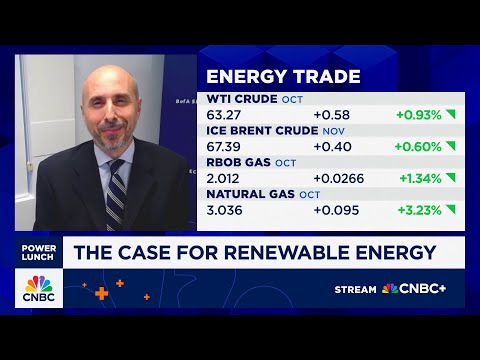
Francisco Blanch is head of commodities and derivatives research at Bank of America Securities. Francisco, it's great to have you back on the program. How do you see this Russia story playing out.And are you surprised that oil's not moving more given that Ukrainian drones hit pretty deep inside Russia. >> Hey, hey, thanks for having me. Look, we've had of course hits to Ukrainian refineries, but also so Russian refineries by by Ukrainian drones, but also uh we had the port of Primorsque, which uh which was ...
OPEC sticks to oil demand forecasts, says economy doing well
Reuters· 2025-09-11 12:02
Group 1 - OPEC maintained its global oil demand growth forecasts for this year and next, indicating stability in the market [1] - The organization noted that the world economy is sustaining a solid growth trend in the second half of the year [1]

Oil Prices: Market Can't Absorb Increase in Supplies, IEA's Bosoni Says
Bloomberg Television· 2025-09-11 09:06
What we're seeing in the market today is that demand growth is slowing. I think that now three quarters of the year is gone. We're seeing oil demand around 700,000 barrels a day.And on the other hand, we're seeing record oil supply, not just from the unwinding of OPEC's cuts that have added about 1.5% million barrels a day since the first quarter through September. But we're also seeing record production in the United States and Brazil and Guyana and Canada. So it's this mismatch between the very strong sup ...
石油“站立硬币”倒向何方
2025-09-09 02:37
Summary of Oil Market Conference Call Industry Overview - The conference call discusses the oil market dynamics, particularly focusing on OPEC's production policies and their impact on oil prices and supply-demand balance [1][2][3][4][5][6]. Key Points and Arguments 1. **OPEC Production Increase**: OPEC has unexpectedly increased production since April 2025, leading to a perception of oversupply in the market. The theoretical daily quota released is 2.46 million tons, but actual increments are limited due to geopolitical risks [1][4][6]. 2. **Oil Price Trends**: Following OPEC's announcement to continue increasing production in October, Brent crude prices initially fell but later showed resilience, indicating that the market has priced in the fundamentals adequately. The expectation is for oil prices to remain in a low range in 2025, with potential for a reversal in 2026 [2][5][6]. 3. **Supply-Demand Balance**: The current oil market is characterized by a temporary easing of supply risks, significant production pressure, and poor demand growth prospects. Prices are close to marginal cost levels, with a notable oversupply of approximately 1 million barrels per day earlier in the year [3][7][8]. 4. **Geopolitical Influences**: Geopolitical factors, particularly in the Middle East, have significantly influenced OPEC's production decisions. The conflict in the region has led to increased production levels, but the sustainability of this production is uncertain [4][14]. 5. **US Shale Oil Dynamics**: The US shale oil sector is facing challenges, with a reduction in the number of active drilling rigs and high depletion rates of existing wells. This has resulted in stagnation in shale oil production growth, with total production slightly declining to 9 million barrels per day [9][10][11]. 6. **Future Price Predictions**: The consensus is that the Brent crude price will find solid support around $60 per barrel, with a reasonable price range expected to be between $65 and $70 per barrel. The market is currently facing a supply surplus, which may lead to upward pressure on inventories [12][13]. 7. **Impact of Non-OPEC Supply**: Non-OPEC countries, particularly from offshore projects in Brazil, Guyana, and the US, are expected to contribute significantly to supply increases, further complicating the supply-demand balance [8][10]. Other Important Insights - The market's perception of oversupply is influenced by OPEC's production strategies and geopolitical developments, which could lead to significant price volatility in the future [6][14][15]. - The potential for a reversal in oil prices is contingent on changes in OPEC's production pace, North American shale supply trends, and unexpected global demand growth [2][6][14].