
Tokyo Electron

Search documents
Asia-Pacific markets trade mixed after Fed cut rates as expected
CNBC· 2025-09-18 00:13
Group 1: Market Performance - Japan's benchmark Nikkei 225 rose nearly 0.6% at the open to a record high, driven by gains in the real estate and technology sectors [1] - Key contributors to the Nikkei's rise included Resonac Holdings, which jumped 10%, Screen Holdings, which added 4.5%, and Tokyo Electron, which gained 3.9% [1] Group 2: Federal Reserve Actions - The Federal Reserve lowered its benchmark rate, framing it as a "risk management cut," with indications of two more rate cuts by the year's end and additional cuts in 2026 and 2027 [2] - South Korea's Kospi increased by 0.43%, while Australia's ASX/S&P 200 decreased by 0.57% [2] Group 3: Bank of Japan Policy Outlook - The Bank of Japan is expected to keep policy rates steady in its upcoming two-day policy meeting, with a potential 25 basis point hike anticipated later this year [3] - Economists believe that the second quarter GDP print, which outperformed expectations, indicates economic resilience [4]


Asian Shares Gain After Wall Street Rally; Tech Stocks Lead Surge
RTTNews· 2025-09-16 08:38
Asian stocks rose broadly on Tuesday in anticipation of a Federal Reserve rate cut when the U.S. central bank announces its monetary policy decision on Wednesday. Fed officials will also release their quarterly update of economic and rate forecasts on Wednesday and Fed Chair Jerome Powell will hold his regular post-decision press conference, as concerns about a softening labor market take precedence over sticky inflation.The focus was also on ongoing U.S.-China talks, with reports suggesting that Washingto ...


Asian shares track Wall Street rallies as a US interest rate cut next week looks more certain
ABC News· 2025-09-12 06:14
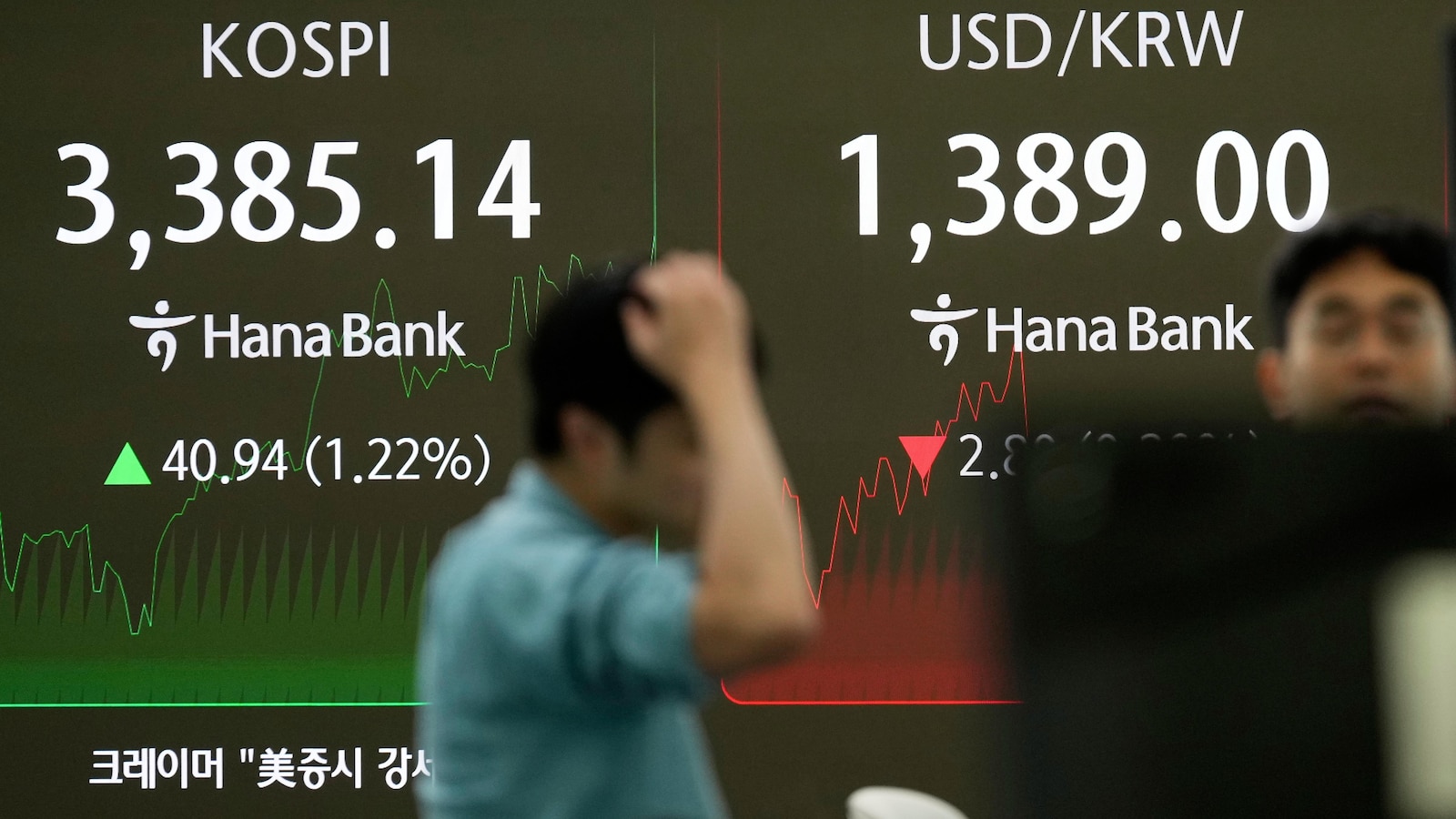
Market Overview - Asian shares rose, influenced by Wall Street's record-setting performance, as mixed U.S. data increased expectations for a Federal Reserve interest rate cut to stimulate the economy [1][3] - Japan's Nikkei 225 reached an intra-day high, rising 0.9% to 44,781.09, with notable gains in semiconductor companies like Tokyo Electron and Sony Group [2] - The S&P 500 increased by 0.8%, marking an all-time high for the third consecutive day, while the Dow Jones Industrial Average surged 617 points (1.4%) and the Nasdaq composite rose 0.7% [4] Economic Indicators - A report indicated that U.S. inflation rose by 2.9% in August compared to the previous year, slightly up from July's 2.7% rate, which may influence the Fed's decision on interest rates [6] - The job market's performance is seen as a critical factor for the Fed, with a need for it to weaken enough to justify a rate cut without triggering a recession [5] Sector Performance - Stocks of companies likely to benefit from lower interest rates, such as real estate and homebuilders, experienced rallies on Wall Street [7] - In Asian markets, Hong Kong's Hang Seng index rose 1.5% due to reports of potential state bank support for local governments, while the Kospi in Seoul climbed 1.3% [2]
世界半导体贸易统计更新 - 2026 年上半年增速将加快,2026 全年由 DRAM 引领-WFE Update_ 1H_26 Run Rate To Step Up, Full Year 2026 Led By DRAM
2025-09-11 12:11
Summary of Key Points from the Conference Call Industry Overview - **Industry**: Semiconductors and Semiconductor Equipment - **Focus**: Wafer Fabrication Equipment (WFE) market outlook for 2025-2027, particularly driven by DRAM spending Core Insights and Arguments 1. **WFE Market Growth**: - WFE is expected to reach approximately $109 billion in 2025, representing a 12% year-over-year increase, and around $118 billion in 2026, reflecting an 8% year-over-year growth [1][8] - The growth is primarily supported by increased spending in China, particularly in DRAM [1][2] 2. **DRAM Spending Projections**: - Significant increases in DRAM spending are anticipated from major suppliers: SK Hynix (+$3.6 billion), Samsung (+$3.4 billion), Micron (+$1.8 billion), and SwaySure in China (+$1.1 billion) [1] - Memory spending is projected to be $50 billion in 2026, with DRAM accounting for approximately $38 billion, a 30% year-over-year increase [8] 3. **Concerns Over US/China Tensions**: - Despite concerns that 2026 could be a down year for WFE due to US/China tensions, the outlook remains positive with expectations of an 8% year-over-year increase [2] - The potential for licenses to be granted for VEU restrictions on multinationals in China could lead to a more bullish scenario if not granted, as capacity would need to be replicated in other regions [2] 4. **Company Performance and Recommendations**: - **LRCX** is highlighted as a top pick, with projected WFE share rising to approximately 12% in 2026 [3] - **AMAT** is expected to benefit from DRAM strength but faces challenges in the Chinese market [3] - **KLAC** is anticipated to gain market share this year but may see a reversal in 2026/2027 as backlog is depleted [3] 5. **Price Target Adjustments**: - Price targets have been adjusted for several companies: KLAC to $970 (from $960), AMAT to $190 (from $180), while LRCX remains at $120 [4][6] Additional Important Insights 1. **Quarterly WFE Trends**: - The quarterly WFE for CQ2:25 is estimated at approximately $28 billion, indicating a downward bias for the remainder of 2025 [11] - A substantial increase in quarterly WFE is expected in 1H26, with a run-rate of approximately $122 billion per year, primarily driven by DRAM [11] 2. **Consensus vs. UBS Estimates**: - Consensus WFE estimates are significantly higher than UBS estimates, suggesting potential downside risks to individual company estimates for 2025 and 2026 [9] 3. **Capex and WFE Forecasts**: - The report includes detailed forecasts for capital expenditures (Capex) and WFE intensity metrics, indicating a complex landscape for memory and non-memory segments [12] 4. **China's Role in WFE**: - Domestic China WFE is projected to reach approximately $37 billion in 2025, with further growth expected in subsequent years [1][8] This summary encapsulates the key points from the conference call, focusing on the semiconductor industry, particularly the WFE market, and the implications for major players in the sector.
X @Bloomberg
Bloomberg· 2025-09-10 09:15
Market Position - Advantest's market capitalization reached ¥10 trillion for the first time [1] - Advantest surpassed Tokyo Electron to become the top Japanese chip-related stock [1]
Nikkei ends lower on yen strength, profit-taking after crossing 44,000
Yahoo Finance· 2025-09-09 00:48
Market Overview - Japan's Nikkei share average ended lower, closing at 43,459.29, down 0.4% after reaching a peak of 44,185.73 earlier in the session [1] - The broader Topix index also finished down 0.5% [1] Economic Factors - The market initially gained on expectations of increased government spending following the resignation of Prime Minister Shigeru Ishiba, with analysts predicting a more expansionary fiscal policy [2] - The yen strengthened by 0.5% to 146.82 against the U.S. dollar, negatively impacting earnings prospects for exporters [3] Trade Developments - U.S. tariffs on Japanese autos are expected to be lowered by September 16, clarifying a previously ambiguous trade deal [3] - However, the most-favoured-nation status for pharmaceuticals and semiconductors was not included in a recent executive order by U.S. President Donald Trump [4] Company Performance - Takeda Pharmaceutical, Japan's largest drugmaker, saw its shares decline by 3% [4] - Citizen Watch experienced a significant drop of 5.5% and will be removed from the Nikkei 225 index starting October [4] - Advantest, a chip-testing equipment maker and Nvidia supplier, was the biggest gainer, rising 6.5% to a new record high [5] - Other notable gainers included Screen Holdings, which increased by 2.4%, and Tokyo Electron, which added 2% [5]
X @Bloomberg
Bloomberg· 2025-09-05 01:54
The global artificial intelligence investment frenzy is fast rewriting the fortunes of companies in the semiconductor industry. One notable laggard is Tokyo Electron. https://t.co/tlyWUlX6Ar ...
股市上的“中国AI威胁论”再起
日经中文网· 2025-09-01 08:20
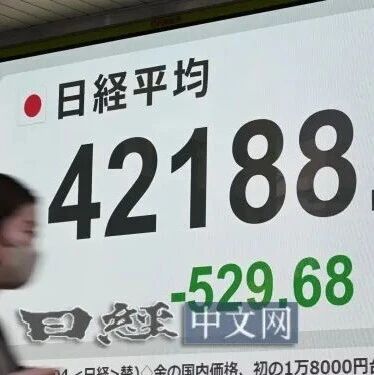
Core Viewpoint - The development of new AI semiconductors by Alibaba Group has raised concerns about the potential erosion of the United States' dominance in the semiconductor industry, leading to declines in semiconductor-related stocks in both the U.S. and Japan [2][4][5]. Group 1: Market Reactions - On September 1, the Nikkei average index in Japan fell by 529 points (1.2%), with a peak decline of 800 points, attributed to fears surrounding Alibaba's new AI semiconductor [2]. - The Philadelphia Semiconductor Index (SOX) in the U.S. dropped by 3.1%, reflecting a broader trend of declining semiconductor stocks [4]. - Major Japanese companies like Advantest and Tokyo Electron saw significant stock price drops of 9.3% and 3.1%, respectively, contributing to a decline of approximately 290 points in the Nikkei index [4]. Group 2: Comparisons to Previous Events - Investors are reminded of the "DeepSeek Shock" from January, when news of a low-cost AI developed by a Chinese startup led to a 17% drop in NVIDIA's stock, erasing about $590 billion in market value [5]. - Following the announcement of Alibaba's AI semiconductor, Chinese tech stocks surged, with Alibaba's stock rising nearly 20% and the Hang Seng Index increasing by over 2% [5]. Group 3: Diverging Opinions on Impact - Some analysts express skepticism about the potential impact of Alibaba's semiconductor, suggesting that its performance may not match NVIDIA's high-performance chips, and that the effect on Japanese semiconductor stocks will be limited [6]. - Analysts note that Alibaba's semiconductor focuses on AI "inference" rather than the "training" aspect where NVIDIA excels, indicating that NVIDIA's market position is unlikely to be significantly threatened [6]. - September is historically a month of market declines, with upcoming key economic data and meetings expected to influence market sentiment [6].
全球半导体资本设备-中国晶圆厂设备是把双刃剑
2025-08-31 16:21
Summary of Key Points from the Conference Call Industry Overview - The conference call focuses on the **Global Semiconductor Capital Equipment** industry, particularly the **Wafer Fabrication Equipment (WFE)** market, with significant emphasis on the impact of **China's semiconductor market** on global trends [2][17]. Key Forecasts and Adjustments - The WFE forecast for **2025** has been raised to **$114 billion**, reflecting a **6% year-over-year growth** from the previous estimate of **$111 billion** [2][17]. - The **2026 WFE** forecast is adjusted to **$120 billion**, a **5% increase** from the prior estimate of **$119 billion** [2][17]. - A new forecast for **2027** anticipates a **3% decline** in WFE, primarily due to normalization in China's advanced logic capital expenditures [2][17]. China Market Insights - China's WFE is expected to decline by **5%** in **2025** (previously forecasted at **-13%**) and remain flat in **2026**, but is projected to drop by **19%** in **2027** due to normalization of advanced logic capex [2][21]. - The **China foundry** segment is forecasted to remain flat year-over-year in **2025**, driven by an acceleration in capacity expansion post **DeepSeek** [3][17]. - The **DRAM** segment in China has been trimmed, with global DRAM WFE expected to grow by **6%** in **2025**, down from a previous estimate of **13%** [3][17]. Company-Specific Insights - **Applied Materials (AMAT)** and **Lam Research (LRCX)** are both rated as **Outperform** with price targets of **$195** and **$105**, respectively. Both companies are expected to benefit from leading-edge technology advancements [4][41]. - **Tokyo Electron (TEL)** is also rated **Outperform** with a price target of **¥29,400**, expected to gain market share and expand margins due to competitive pricing [9][60]. - **Kokusai** is rated **Outperform** with a price target of **¥3,570**, although there are concerns regarding the high revenue CAGR guidance of **22%** [10][60]. - **Screen** is rated **Market-Perform** with a price target of **¥12,000**, facing competitive pressures and declining revenue contributions from China [11][60]. - **Lasertec** is rated **Underperform** with a price target of **¥10,900**, anticipating a deceleration in revenue growth due to increased competition [12][60]. Investment Implications - The overall sentiment towards the **Japanese semiconductor equipment** companies is cautious due to short-term challenges in China, but long-term positions remain strong with attractive valuations [5][60]. - Local Chinese semiconductor capital equipment vendors like **NAURA**, **AMEC**, and **Piotech** are rated **Outperform** due to their increasing market share driven by domestic substitution [6][14][15][16]. Additional Insights - The semiconductor industry is experiencing a shift with increased spending on **AI-related** technologies, which is expected to drive demand for advanced logic capacity in China [6][37]. - The overall WFE market is projected to grow, with a slight adjustment in expectations for non-China WFE growth, now estimated at **13%** for **2025** [26][32]. This summary encapsulates the critical insights and forecasts discussed during the conference call, highlighting the dynamics of the semiconductor capital equipment industry and the implications for various companies involved.


半导体_SPE_从 SPE 制造商视角看中国晶圆厂设备(WFE)前景-Semiconductor_SPE_ Chinese WFE outlook from SPE manufacturers‘ perspective
2025-08-31 16:21
Summary of J.P. Morgan Semiconductor/SPE Conference Call Industry Overview - The focus is on the semiconductor production equipment (SPE) industry, particularly regarding the wafer fabrication equipment (WFE) market in China. - The outlook for WFE demand in China for calendar year 2025 is expected to show flat to single-digit growth year-over-year, which is more optimistic than the broader market expectations [1]. Key Insights - **Local SPE Growth**: The rise of local SPE manufacturers in China is gradually progressing, impacting non-Chinese SPEs depending on the type of equipment [1]. - **Demand Consistency**: There is a lack of strong consensus among SPE manufacturers regarding the outlook for Chinese demand, likely due to varying competitive environments across different equipment types [1]. - **Front-End Companies**: Demand from front-end companies in China has not declined as much as previously anticipated, indicating resilience in the market [1]. - **Investment Expectations**: Major players' investments, particularly in NAND technology, are expected to remain solid, with strong demand anticipated in areas with high exposure to major players and less competition from local SPEs [1]. Company-Specific Insights - **Disco (6146)**: Sales to China accounted for 30% of total sales in April–June, up 3 percentage points quarter-over-quarter. Memory demand from China has been robust since last year, although shipments have stabilized somewhat [5]. - **ULVAC (6728)**: Sales to China represented 34% of total sales in FY6/25, down 1 percentage point year-over-year. The company anticipates a recovery in investments in 8-inch SiC from major device manufacturers [5]. - **Advantest (6857)**: Sales to China accounted for 15% of total sales in April–June, down 4 percentage points quarter-over-quarter. The company aims to increase market share in high-end testing systems despite local competition in low-end products [5]. - **SCREEN Holdings (7735)**: Sales to China accounted for 33% of April–June SPE sales, down 5 percentage points quarter-over-quarter. The company expects demand growth for DRAM and anticipates a sales weighting of 54% in July–September [5]. - **Tokyo Electron (8035)**: Sales to China accounted for 39% of total sales in April–June, up 5 percentage points quarter-over-quarter. The company revised down its FY2025 guidance due to cautious investment from emerging manufacturers in legacy nodes [6]. - **Kokusai Electric (6525)**: Sales to China accounted for 45% of total sales in April–June, remaining flat quarter-over-quarter. The company expects demand growth in NAND technology to continue until FY2026 [6]. - **Applied Materials (AMAT)**: Sales to China accounted for 35% of total sales in May–July, down 8 percentage points quarter-over-quarter. The company expects a decline in China sales weighting due to uncertainties [8]. - **ASML**: The China sales weighting was 27% in April–June, remaining flat quarter-over-quarter, with healthy demand expected [8]. - **Lam Research (LRCX)**: Sales to China accounted for 35% of total sales in April–June, up 4 percentage points quarter-over-quarter, driven by investments in leading-edge processes [8]. - **KLA (KLAC)**: Sales to China accounted for 30% of total sales in April–June, up 4 percentage points quarter-over-quarter. The company anticipates a lean period for Chinese investments in CY2025 and CY2026 [8]. - **Teradyne (TER)**: Sales to China accounted for 16% of total sales in April–June, down 3 percentage points quarter-over-quarter, affected by export restrictions [8]. Additional Observations - The competitive landscape is evolving, with local manufacturers gaining strength in memory and power applications, although they currently do not pose a significant threat in advanced technology areas [5][6]. - The overall sentiment indicates cautious optimism regarding the Chinese semiconductor market, with expectations of continued investment and demand growth in specific segments [1][6].