Blue Owl Capital

Search documents
Blue Owl Capital: Follow The Insiders And Load Up
Seeking Alpha· 2025-12-19 14:00
Group 1 - The article promotes a subscription service called Beyond the Wall Investing, which offers high-quality analysis of Wall Street buying and selling ideas [1] - Daniel Sereda is highlighted as the chief investment analyst at a family office, emphasizing his expertise in navigating vast amounts of information to extract critical investment ideas [1] - The investing group provides access to information prioritized by institutional market participants, indicating a focus on professional-grade analysis [1] Group 2 - There is a mention of a potential beneficial long position in OBDC, suggesting an interest in initiating investments in this company within the next 72 hours [2] - The article clarifies that the author has no current stock or derivative positions in the companies mentioned, ensuring transparency in the analysis [2] - Seeking Alpha's disclosure emphasizes that past performance does not guarantee future results, highlighting the importance of independent analysis [3]



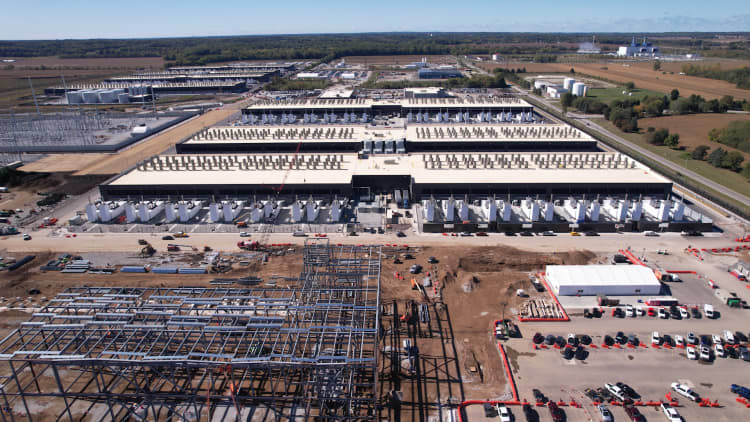
Data center deals hit record $61 billion in 2025 as AI valuation risks and funding concerns grip investors
CNBC· 2025-12-19 09:21
Core Insights - The data center market has seen over $61 billion in investment this year, a slight increase from $60.8 billion last year, amidst a "global construction frenzy" [1] - Dealmaking in global data centers has reached a record high, driven by the need for infrastructure to support energy-intensive AI workloads, with a notable increase in debt financing from private equity markets [2] - Concerns about inflated AI valuations and the sustainability of data center financing have emerged, leading to a sell-off in global stocks [1][2] Company-Specific Developments - Oracle's shares dropped 5% following reports of Blue Owl Capital withdrawing from a $10 billion data center deal in Michigan, impacting other tech stocks like Broadcom, Nvidia, and AMD [3] - Despite the recent stock pullback, analysts, including those from S&P Global, expect that market concerns regarding AI and Oracle will be temporary and will not significantly affect data center development and M&A activities in the near term [4] Market Trends - There have been over 100 data center transactions in the first 11 months of the year, surpassing the total deal value for all of 2024, with the majority occurring in the U.S. and the Asia-Pacific region [6] - The competitive landscape among AI model providers is rapidly changing, which may influence investor sentiment in public markets, but demand for AI applications is projected to continue growing strongly through 2026 [4]


甲骨文百亿项目融资突然“告吹” 美国AI泡沫恐慌来袭
Xin Lang Ke Ji· 2025-12-19 06:22
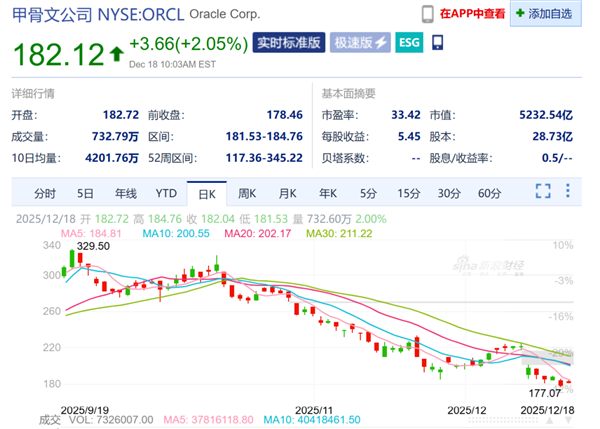
Core Viewpoint - Oracle's significant data center project in Michigan, valued at $10 billion, will not receive funding from Blue Owl Capital, raising concerns about the AI bubble and leading to a nearly 45% drop in Oracle's stock price since its peak in early September [1] Group 1: Financial Performance and Market Reaction - Oracle's stock price surged from approximately $122 on April 21 to over $320 in early September, driven by AI narratives, but has since retraced all gains as investors focus on the costs of realizing these promises [4] - Jim Chanos criticized Oracle's rapid asset expansion, indicating that the return on new capital investments is only about 8.5%, compared to nearly 40% for Microsoft, suggesting Oracle may struggle to recover its incremental capital costs [4][5] - Analysts are questioning how much Oracle is investing in AI, with management failing to provide clear financial guidance during a recent earnings call [6] Group 2: Funding and Project Viability - Blue Owl Capital, previously a key financier for Oracle's data center projects, has opted out of the Michigan project due to changing market attitudes towards AI spending and Oracle's debt levels, leading to stricter loan terms [7][9] - Concerns are growing regarding the reliability of OpenAI's commitments to Oracle, with analysts suggesting that Oracle should consider restructuring its contract with OpenAI to manage capital deployment more responsibly [11] Group 3: Competitive Landscape and Future Outlook - OpenAI's partnerships with Microsoft and Amazon indicate a diversification of its computing resources, potentially diminishing Oracle's role in OpenAI's ecosystem [12] - The competitive landscape is shifting, with stronger players like Google accelerating their AI capabilities, raising questions about OpenAI's ability to maintain its lead [13][14] - Uncertainties remain regarding a potential agreement between OpenAI and Nvidia, which could impact Oracle's future revenue from AI infrastructure [15] Group 4: Capital Structure and Investment Strategy - Oracle's traditional business model, characterized by predictable cash flows and high gross margins, is being challenged by the capital-intensive nature of AI investments, which require longer return periods [16] - The company's ability to sustain high levels of investment in AI will ultimately depend on decisions made by founder Larry Ellison, as the market shifts focus from grand AI visions to the sustainability of capital structures during prolonged return delays [16]
甲骨文百亿项目融资突然「告吹」,美国AI泡沫恐慌来袭?
Xin Lang Ke Ji· 2025-12-19 01:29
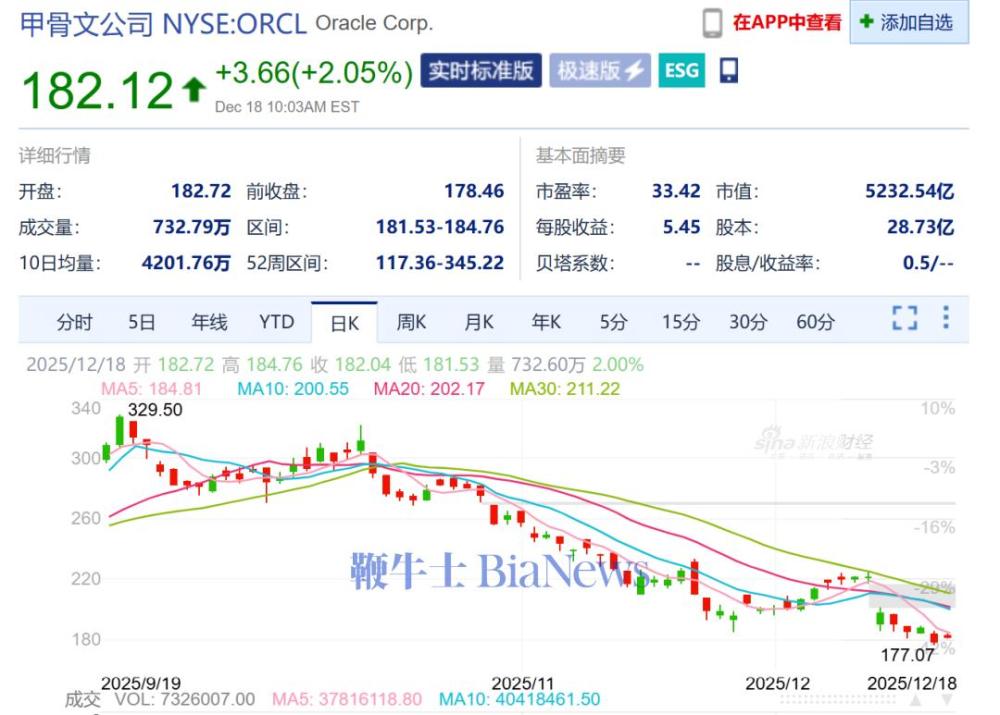
Core Viewpoint - Oracle's $10 billion data center project in Michigan has lost funding support from Blue Owl Capital, raising concerns about the AI bubble and leading to a nearly 45% drop in Oracle's stock price since its peak in early September [1][2]. Group 1: Project Financing and Market Reaction - The withdrawal of Blue Owl Capital is seen as a significant setback for Oracle, with the news amplifying market fears regarding the sustainability of AI investments [2][15]. - Oracle's stock price surged from approximately $122 on April 21 to over $320 in early September, but has since retraced all gains as investors shift focus from growth narratives to the costs of realizing those promises [8][9]. - Concerns have emerged regarding the reliability of OpenAI's commitments to Oracle, with analysts questioning whether OpenAI will fulfill its $300 billion power purchase agreement [17][18]. Group 2: Financial Performance and Analyst Concerns - Jim Chanos, a prominent short-seller, criticized Oracle's rapid asset expansion, indicating that the company's return on new capital investments is only about 8.5%, compared to Microsoft's nearly 40% [11]. - Analysts have pressed Oracle's management for clarity on AI investment costs, but the company has not provided definitive answers, leading to further skepticism [12]. - The market is reevaluating which companies can sustain prolonged delays in returns, especially as Oracle's traditional cash flow model is disrupted by heavy AI investments [22]. Group 3: Competitive Landscape and Strategic Positioning - OpenAI's partnerships with Microsoft and Amazon indicate a diversification of its computing resources, potentially diminishing Oracle's role in OpenAI's ecosystem [19]. - The competitive landscape is shifting, with Google and other well-capitalized firms accelerating their AI initiatives, raising questions about OpenAI's ability to maintain its lead [20]. - Oracle's heavy investment in AI infrastructure contrasts with its previous reliance on predictable cash flows from traditional software, making it more vulnerable to market fluctuations [22].
甲骨文百亿项目融资突然“告吹”,美国AI泡沫恐慌来袭? | 北美前哨
Xin Lang Cai Jing· 2025-12-19 00:16
Core Viewpoint - Oracle's significant data center project in Michigan, valued at $10 billion, has lost funding support from Blue Owl Capital, raising concerns about the AI bubble and leading to a nearly 45% drop in Oracle's stock price since its peak in early September [2][17]. Group 1: Oracle's AI Investment and Market Reaction - Oracle's stock price surged from approximately $122 on April 21 to over $320 by early September, driven by expectations of substantial AI-related revenue from OpenAI [7][21]. - As investors shifted focus from growth narratives to the costs of realizing these promises, Oracle's stock began to decline, indicating a critical point in the AI infrastructure cycle [22][29]. - Jim Chanos criticized Oracle's rapid balance sheet expansion, suggesting that its return on new capital investments is only about 8.5%, compared to Microsoft's nearly 40% [8][22]. Group 2: Financing and Credit Market Dynamics - The private credit market is reassessing risks, with Blue Owl Capital withdrawing from the Michigan project due to increased financing costs and stricter terms, reflecting a shift in market sentiment towards AI spending and Oracle's debt levels [10][25]. - Analysts are questioning the reliability of OpenAI's commitments, with concerns that OpenAI may not fulfill its promise of $300 billion in computing power payments to Oracle, which has a remaining performance obligation (RPO) of $523 billion as of November 30 [12][26][27]. Group 3: Competitive Landscape and Future Uncertainties - OpenAI's position in the AI market is becoming uncertain, especially with new partnerships with Microsoft and Amazon, which diversify its computing power sources and challenge Oracle's role [13][27]. - The pending agreement between OpenAI and Nvidia, which could involve up to $100 billion in investment, remains unfinalized, adding to the uncertainty surrounding Oracle's future revenue from AI [28]. - The market is increasingly focused on which companies can sustain prolonged periods of capital investment without immediate returns, with Oracle's traditional cash flow model being disrupted by the high upfront costs of AI infrastructure [14][29].
Global Markets React to BoJ Hike, Trump’s Defense Bill, and Oracle’s Rebound
Stock Market News· 2025-12-19 00:08
Group 1: Oracle Developments - Oracle shares experienced a 6% gain on December 18, reflecting renewed investor confidence following positive project updates and technical buying, which countered previous concerns over AI-related spending and data center financing [2][3] - Michigan regulators have approved utility support for Oracle's planned $10 billion data center, reducing project execution risk and indicating progress in the project [3] - Oracle's involvement in a U.S. TikTok deal as a strategic minority investor reinforces its position in large-scale tech transactions and may enhance market confidence in the company [3] Group 2: Bank of Japan Interest Rate Hike - The Bank of Japan is expected to raise interest rates to a three-decade high of 0.75% on December 19, marking a quarter percentage point increase from the current 0.5% [6][7] - This anticipated rate hike is the second tightening move of the year, driven by sustained inflation above the central bank's 2% target, with core consumer prices rising 3.0% in November [6][7]
Elliott Management takes stake in Lululemon, Hut 8 CEO talks Anthropic data center partnership
Youtube· 2025-12-18 16:07
Economic Indicators - The consumer price index (CPI) rose by 2.7% in November, which is below the expected increase of 3.1% [1][24][25] - Despite the lower CPI, consumers are still facing high costs in healthcare, rent, and food [1][24] AI Infrastructure Developments - Trump Media and Technology Group and Tay Technologies are merging in an all-stock transaction valued at over $6 billion, creating a publicly traded fusion company [3][42] - Hut 8, a cryptocurrency miner, signed a $7 billion deal to lease a data center in Louisiana, backed by Google and supported by JP Morgan and Goldman Sachs [3][14][50] Company-Specific News - Lululemon is undergoing leadership changes, with Elliot Management acquiring a $1 billion stake and pushing for Jane Nielsen as the new CEO [5][35][39] - Hut 8's CEO highlighted the importance of energy value and the company's growth potential, with a focus on scaling infrastructure for AI demands [44][52][66] Market Reactions - Hut 8's stock has seen significant gains, up over 100% year-to-date, following the announcement of its new data center deal [12][13] - The market is reacting positively to the CPI report, although there are still concerns about persistent inflation in certain sectors, such as beef [24][26]



Worried About Oracle's Downfall? Hedge With These 5 Top-Ranked Tech ETFs
ZACKS· 2025-12-18 16:01
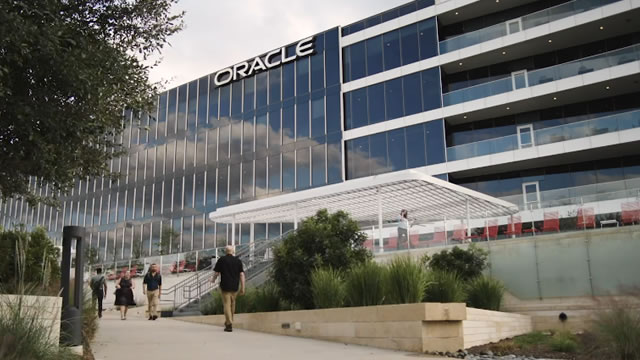
Core Insights - Oracle (ORCL) shares have experienced consecutive declines due to concerns over heavy investments in AI data centers and increasing debt [1][2] - The situation deteriorated further when Blue Owl Capital, Oracle's largest data center partner, refused to fund a $10 billion data center project, causing shares to drop another 5.4% to $178.46 [2][11] Technology Sector Overview - Despite Oracle's volatility, the technology sector remains strong, with the Nasdaq 100 Index up 17.5% year to date, outperforming the S&P 500, which is up 14.5% [3][4] - The technology sector's growth is driven by innovation and corporate investment in AI, indicating that investing in a diversified basket of tech stocks can mitigate risks associated with individual companies [4][5] AI Growth Potential - AI is projected to contribute $19.9 trillion to the global economy by 2030, accounting for 3.5% of global GDP, indicating a structural shift across various industries [6][7] - This growth is expected to benefit a wide range of companies, including semiconductor manufacturers, cloud infrastructure providers, and software developers [7][8] Investment Strategies - Investing in tech ETFs allows exposure to the entire value chain of the AI transformation, reducing the risk of individual stock volatility while participating in the sector's growth [8][9] - Several tech ETFs are highlighted for their potential to provide consistent exposure to the winners of the AI transformation, including: - Vanguard Information Technology ETF (VGT) with assets of $112 billion, up 18% year to date [12] - State Street Technology Select Sector SPDR ETF (XLK) with assets of $90.20 billion, up 20.4% year to date [13][14] - First Trust NASDAQ-100-Technology Sector ETF (QTEC) with net assets of $2.85 billion, up 20% year to date [15] - State Street SPDR NYSE Technology ETF (XNTK) with assets of $1.43 billion, up 32.7% year to date [16] - Pacer Data and Digital Revolution ETF (TRFK) with net assets of $365.8 million, up 21.9% year to date [17]
Applied Digital (APLD) Falls 9% on Investment Firms’ Growing AI Concerns
Yahoo Finance· 2025-12-18 13:15
Group 1 - Applied Digital Corp. (NASDAQ:APLD) experienced a significant decline in share price, dropping 9.24% to close at $22, amid growing investor concerns regarding the AI industry [1][3] - Blue Owl Capital withdrew from a $10 billion plan to support Oracle's data center, although Oracle confirmed that construction remains on track [2] - The negative sentiment surrounding AI funding is affecting AI-linked companies, including Applied Digital, as financial institutions appear to be more cautious about capital-intensive AI projects [3] Group 2 - Applied Digital is currently in negotiations for two or three additional data center campuses, indicating ongoing demand and potential expansion [4] - The nature of the negotiations remains unclear, whether for leasing partnerships or fundraising, but it signals the company's commitment to growth [4] - Despite the challenges, there is a belief that some AI stocks may offer better returns with limited downside risk compared to APLD [5]
Terawulf (WULF) Loses 10.9% on AI Selloff
Yahoo Finance· 2025-12-18 13:15
Core Insights - Terawulf Inc. (NASDAQ:WULF) experienced a significant decline of 10.93% on Wednesday, closing at $11.57, as investors reduced their stakes in AI-related stocks due to concerns over heavy spending in the sector [1][3] - The drop in Terawulf's stock was influenced by Blue Owl Capital's decision to withdraw its $10 billion financial support for Oracle Corp.'s data center project in Michigan, raising concerns about Oracle's substantial debt of $108 billion and its ability to manage AI expansion costs [2][3] Company Performance - In the third quarter, Terawulf reported total revenues of $50.58 million, representing an 87% increase from $27.06 million in the same period last year [4] - Digital assets were the primary revenue source, contributing $43.37 million, while HPC leasing generated $7.2 million, a notable increase from zero in the previous year [4] - However, the company faced a significant net loss of $455 million, which widened by nearly 2,000% from $22.7 million year-on-year [4] Market Context - The negative sentiment surrounding Terawulf and similar HPC stocks was exacerbated by concerns regarding Oracle's financial health and its ability to repay its debts, which has implications for the broader AI and HPC market [3] - The transition of Terawulf from a Bitcoin-mining firm to a provider of HPC and AI services reflects the growing demand for data services, although the current market conditions pose challenges [3]