
Tokyo Electron

Search documents
台积电3名前技术人员涉泄密被台检方起诉
日经中文网· 2025-08-28 03:05
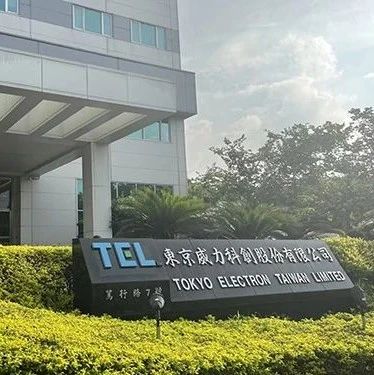
Core Viewpoint - The article discusses the legal actions taken against former TSMC employees for the improper use of trade secrets, highlighting the implications for Taiwan's semiconductor industry and national security [2][4]. Group 1: Legal Actions - Three individuals, including a former TSMC technician, have been indicted for improperly using TSMC's trade secrets outside Taiwan, with charges including violations of the National Security Law [2][4]. - One of the accused has transferred to a subsidiary of Tokyo Electron, a partner of TSMC, and allegedly solicited TSMC's technical staff for trade secrets to enhance Tokyo Electron's position as a supplier for TSMC's next-generation 2nm semiconductor equipment [2][4]. - The former TSMC technician faces a total of 14 years in prison, while the other two co-defendants face sentences of 9 years and 7 years respectively for their roles in providing trade secrets to Tokyo Electron [4]. Group 2: Implications for the Semiconductor Industry - The case is seen as a serious threat to Taiwan's semiconductor industry's international competitiveness, as it involves core technologies deemed critical to the nation's industrial lifeline [4]. - The Taiwanese authorities have expressed concerns over the potential outflow of important technologies, leading to amendments in the National Security Law in 2022 that introduced new offenses related to economic espionage and the improper acquisition of core technologies for use outside Taiwan [4].


全球半导体:《芯片法案 3》,中国资本支出持续增长,尽管面临挑战,迁移仍在推进Global Semis_ CHIPS Act 3_ China capex continues to grow; migration ongoing despite challenges
2025-08-28 02:12
Summary of Semiconductor Industry Conference Call Industry Overview - The conference call focuses on the **semiconductor industry in China**, particularly in the context of the **CHIPS Act** and its implications for capital expenditures (capex) and technology development [1][4][5]. Key Points Capital Expenditures (Capex) - China's semiconductor capex is projected to increase to **US$43 billion to US$46 billion** for the period **2025-2030**, up from previous estimates of **US$40 billion to US$44 billion** [4][16]. - A strong investment of **US$41 billion** was recorded in **2024**, representing a **19% year-over-year increase** [4][16]. - The investment focus is expected to shift towards **memory** and **advanced node technologies**, with local suppliers anticipated to contribute **26%** of wafer fabrication equipment procurement in **2025**, increasing to **36%** by **2030** [4][16]. Demand and Supply Chain Migration - The semiconductor supply chain in China is undergoing significant migration, with expansions in **CIS**, **automotive chips**, and **AI chips** [5]. - Local foundries and OSATs are enhancing their manufacturing technologies, driven by structural technology innovations and better services [5]. Lithography Demand - An estimated **2,261 additional lithography systems** will be required by **2035** to meet the projected chip demand in China, necessitating an investment of approximately **US$110 billion** [6][39]. - The breakdown of required lithography systems includes **212 EUVs**, **843 immersion DUVs**, and **2,564 dry DUV/UV systems** [39]. Market Dynamics - The semiconductor market in China is expected to see a **5% to 1%** growth in capex from **2025 to 2030**, driven primarily by foundries and memory players, which will account for about **80%** of the capex [16][22]. - Chinese semiconductor manufacturers are projected to capture **17%** of the semiconductor demand value in **2024**, increasing to **37%** by **2030** [33]. Equipment Market - The Wafer Fabrication Equipment (WFE) market in China is expected to reach **US$41 billion** by **2026**, with local suppliers increasing their market share from **17%** in **2024** to **36%** by **2027** [28][32]. - The growth in WFE revenues is attributed to the increasing semiconductor spending, with China expected to account for **37% to 38%** of global WFE spending in **2025-2027** [28]. Implications for Global Suppliers - US suppliers are expected to maintain a strong market share in China's WFE spending, despite facing challenges from local manufacturers and export controls [45]. - Japanese SPE manufacturers may see a gradual decline in their market share in China, although they will still benefit from the high capex environment [49]. Additional Insights - The semiconductor industry in China is characterized by a robust local ecosystem supported by ongoing technology development and a large home market [1][4]. - The demand for lithography systems is critical for meeting future chip production needs, highlighting the importance of investment in R&D and local manufacturing capabilities [6][39]. This summary encapsulates the key insights and projections regarding the semiconductor industry in China, emphasizing the growth in capital expenditures, the demand for advanced technologies, and the evolving dynamics of the supply chain.




先进封装设备厂商如何应对全球化市场挑战-How Do Advanced Packaging Equipment Vendors Tackle Challenges in a Globalized Market_
2025-08-27 15:20
Summary of Key Points from the Semiconductor Industry Research Industry Overview - The research focuses on the global semiconductor industry, particularly the front-end Wafer Fab Equipment (WFE) and back-end advanced packaging supply chains, highlighting the challenges posed by globalization and geopolitics [2][6][32]. Core Companies Involved - Major players in the semiconductor industry include TSMC, UMC, Samsung Electronics, Intel, ASML, Applied Materials (AMAT), Lam Research, Tokyo Electron (TEL), KLA, ASE, Amkor, JCET, Disco, Besi, ASMPT, K&S, Semes, Hanmi, Hanwha, EVG, SUSS, Teradyne, SCREEN, Canon, Nikon, and Lasertec [19][49]. Key Trends and Insights 1. **Advanced Packaging Demand**: The demand for advanced packaging technologies such as 2.5D/3D packaging, Hybrid Bonding, and CoWoS is surging due to the rise of AI and high-performance computing (HPC) applications [2][8][10]. 2. **Moore's Law and Packaging**: As Moore's Law slows, advanced packaging has become the primary pathway for sustaining semiconductor performance gains, with technologies like CoWoS and SoIC leading the way [3][38][49]. 3. **Geopolitical Challenges**: Geopolitical pressures and government policies, such as the CHIPS Act, are reshaping the supply chain dynamics, pushing companies to diversify their manufacturing and service locations [7][44][60]. 4. **Localization Trends**: There is a significant trend towards localization in the semiconductor supply chain, with companies establishing production bases in North America, Europe, Japan, and Southeast Asia to mitigate risks [7][32][60]. 5. **Material Innovation**: The shift from equipment-centric to materials-centric innovation is becoming critical, with new materials like UV resins, advanced thermal interface materials, and low-Dk dielectrics emerging as strategic differentiators [15][47][49]. Market Dynamics - The WFE market is projected to grow from approximately USD 13.3 billion in 2024 to USD 16.5 billion by 2029, with a significant portion of revenue coming from equipment shipments [49][72]. - The back-end packaging market is also expanding, with the TCB equipment market estimated at around USD 936 million and HB equipment projected at USD 397 million by 2030 [53]. Challenges and Opportunities 1. **Cost and Pricing Pressures**: Equipment suppliers face challenges related to cost, pricing, and sustainability, which are becoming critical factors in maintaining competitiveness [8][29][49]. 2. **Technological Integration**: The ability to integrate differentiated materials and technologies will increasingly define competitiveness in the semiconductor industry [39][49]. 3. **Sustainability Goals**: Companies are embedding sustainability into their operational metrics, with ESG (Environmental, Social, and Governance) goals becoming essential for process efficiency and cost competitiveness [45][49][69]. Conclusion - The semiconductor industry is undergoing significant transformations driven by technological advancements, geopolitical factors, and evolving market demands. Companies that can effectively navigate these challenges while innovating in materials and processes are likely to secure a competitive edge in the future [49][72].


半导体生产设备 - 媒体报道海外芯片制造商淘汰中国产先进制程系统,对日本半导体生产设备(SPE )的影响-Semiconductor Production EquipmentMedia Reports Elimination of China-made Advanced Process Systems by Overseas Chipmaker Implications for Japan SPE
2025-08-27 01:12
Summary of Key Points from the Conference Call Industry Overview - **Industry**: Semiconductor Production Equipment (SPE) in Japan - **Key Company Mentioned**: TSMC (Taiwan Semiconductor Manufacturing Company) Core Insights and Arguments - **Elimination of China-made SPE**: TSMC is reportedly planning to eliminate China-made semiconductor production equipment from its advanced processes, particularly the N2 process, as a response to potential US government restrictions, including the China EQUIP Act [3][7][8] - **Impact on Japanese SPE Makers**: If the report is accurate, this move could positively impact Japanese SPE manufacturers such as SCREEN Holdings and Kokusai Electric, allowing them to expand their market share against Chinese competitors like AMEC and Mattoson Technology [3][8] - **Competition Dynamics**: Tokyo Electron is highlighted as a competitor in etching systems against AMEC and Mattoson Technology. The report suggests that Japanese firms may not currently compete with Chinese manufacturers in the Taiwan market for ashing systems and wafer CVD [7][8] - **Technological Advancements**: The report acknowledges that China-made SPE, including cleaning systems and vertical heat treatment furnaces, have been improving in performance, which poses a potential threat to Japanese firms [8] Additional Important Information - **Market Sentiment**: The overall view of the semiconductor production equipment industry in Japan is considered attractive, indicating a positive outlook for investment opportunities [5] - **Analyst Coverage**: The report is prepared by Morgan Stanley MUFG Securities, with analysts Tetsuya Wadaki and Suzune Tamura providing insights into the semiconductor sector [4][5] - **Unconfirmed Reports**: The information regarding TSMC's elimination of China-made SPE has not been officially confirmed, and the analysts express caution regarding the veracity of the media reports [3][8]
X @Bloomberg
Bloomberg· 2025-08-25 22:17
Tokyo Electron supplier Marumae faces resistance to deals in Japan's fragmented supply chain https://t.co/GSHMwIpv73 ...
全球半导体资本设备:中国 7 月进口追踪(2025 年 7 月),年度月度新高,需求仍具韧性,年初至今进口增长 2%
2025-08-25 01:39
Summary of Key Points from the Conference Call Industry Overview - The conference call focuses on the **Global Semiconductor Capital Equipment** industry, specifically the **Wafer Fabrication Equipment (WFE)** imports to China for July 2025, which reached a record high for the year at **USD 3,761 million**, reflecting a **10% year-over-year (YoY)** and **11% month-over-month (MoM)** increase, with year-to-date (YTD) imports up **2% YoY** [2][27][26]. Core Insights and Arguments - **Dry Etch Segment Performance**: The Dry Etch segment showed significant growth, with imports totaling **USD 755 million**, marking a **30% MoM** and **232% YoY** increase. Notably, imports from Malaysia nearly doubled MoM to **USD 300 million** [3][28]. - **Lithography Weakness**: The Lithography segment continues to exhibit weakness, potentially indicating a normalization after previous strong demand. However, fluctuations suggest that this may be temporary, with expectations for a rebound in the second half of 2025 [3][34]. - **Regional Import Dynamics**: The import share by region indicates that the U.S. and Singapore combined account for **42%**, while Japan's share has decreased to **22%** from an average of **26%** last year. This decline is attributed to the lack of favorable foreign exchange conditions for Japanese vendors and a shift in purchasing priorities towards U.S. equipment [4][39]. - **Provincial Import Trends**: The largest buyers of WFE have shifted from Guangdong (21%) to Shanghai (32%) in July, suggesting a potential for sustained strength in these regions into the second half of 2025 and beyond [5][27]. Company-Specific Insights - **ASML**: Projected sales in China for Q3CY25 are estimated at **EUR 1.51 billion**, reflecting a **46% YoY decline** but flat compared to the previous quarter. The monthly import data is noted to be quite variable [6][65]. - **LRCX (Lam Research)**: Expected to see a **14% QoQ increase** in China revenues for the September quarter, with China exposure estimated to be in the high 30s percentage of total revenues [7][81]. - **AMAT (Applied Materials)**: Reported a **44% QoQ increase** in China revenues, aligning with regression analysis predictions of a **53% increase** [8][90]. - **Kokusai**: Anticipated to see a **41% YoY** and **37% QoQ increase** in China revenue, with a significant contribution expected in the September quarter [12]. - **Advantest**: Projected to experience a **38% YoY** and **32% QoQ decline** in China revenue, indicating potential challenges ahead [13]. Additional Important Insights - **Market Dynamics**: The overall WFE market in China is becoming increasingly significant, with global vendors still capturing approximately **84%** of the market share in 2024. The data on imports provides critical insights into demand trends [23]. - **Investment Implications**: Companies like NAURA, AMEC, and Piotech are positioned favorably due to their broad product portfolios and domestic market leadership, benefiting from the ongoing WFE domestic substitution in China [15][16][17]. - **Long-term Outlook**: The overall sentiment suggests that while there may be short-term fluctuations, the long-term growth trajectory for the WFE market in China remains positive, driven by domestic demand and technological advancements [20][22]. This summary encapsulates the key points discussed in the conference call, highlighting the current state and future outlook of the semiconductor capital equipment industry, particularly in relation to WFE imports to China.

全球半导体 - 如何解读台积电的资本支出,投资者手册_ Global Semiconductors_ How to read TSMC‘s capex_ A handbook for investors
2025-08-18 02:52
Summary of TSMC's Capex and Investment Insights Industry Overview - The report focuses on the semiconductor industry, particularly TSMC (Taiwan Semiconductor Manufacturing Company) and its capital expenditure (capex) implications for semiconductor capital equipment (semicap) stocks and the broader semiconductor market [2][15]. Key Insights on TSMC 1. **Market Share**: TSMC accounts for approximately 15-25% of the global wafer fab equipment (WFE) market, while China holds a larger share of 30-40% [3][16]. 2. **Capex Allocation**: A significant portion of TSMC's capex is directed towards infrastructure and non-wafer-based equipment, such as packaging and testing, rather than solely wafer fabrication [3][21]. 3. **Wafer-Level Packaging**: TSMC dominates the wafer-level package equipment market, contributing 60-80% of this segment, particularly in high-bandwidth memory (HBM) and logic manufacturing [4][30]. 4. **Long-Term Capex Trends**: TSMC's capex decisions are more indicative of long-term growth rather than short-term revenue spikes, with a correlation coefficient (R²) of only 0.1-0.2 for 1-2 year horizons, improving to ~0.4 for 3 years and ~0.5 for 4 years [5][36]. 5. **Efficiency Comparison**: TSMC is structurally deflationary to the WFE market, spending 30-35% less capex and 10-40% less on WFE compared to Intel for equivalent capacity, indicating a significant efficiency advantage [7][78]. Investment Implications 1. **Outperform Rating**: TSMC is rated as "Outperform" with a price target of NT$1,260.00, reflecting confidence in its long-term growth prospects [11]. 2. **Comparative Analysis**: TSMC's revenue is 3.5-6.5 times that of Intel Foundry, while its capex is only 1-2 times, suggesting a much lower capex intensity (capex/revenue ratio) of 1/4-1/3 compared to Intel [78][82]. 3. **Market Dynamics**: The report highlights the impact of technology complexity and onshoring trends, which are expected to keep the overall WFE/semi ratio elevated, with rising capex per wafer [8][86]. Additional Considerations - **Geopolitical Factors**: The report notes the influence of geopolitical factors and external shocks, such as the Global Financial Crisis and COVID-19, on TSMC's capex decisions and market conditions [5][36]. - **Infrastructure Investment**: TSMC's strategy involves building infrastructure in phases to manage risks and enhance operational efficiency, particularly in new sites like Arizona [60][68]. - **Future Capacity Planning**: TSMC's approach to capacity planning includes significant investments in advanced packaging and technology upgrades, which are crucial for maintaining its competitive edge in the semiconductor market [34][60]. This comprehensive analysis provides valuable insights for investors looking to understand TSMC's strategic direction and its implications for the semiconductor industry.
全球存储技术_7 月出口强劲,HBM4 订单推进中,第三季度指引核查-Global Memory Tech_ Weekly theme_ strong July exports, HBM4 order in progress, 3Q guidance check
2025-08-08 05:02
Summary of Key Points from the Conference Call Industry Overview - **Semiconductor Industry**: The focus is on the memory semiconductor sector, particularly in South Korea, with a notable recovery in exports in July 2025, showing a **32% YoY growth** compared to an average of **11%** from January to June 2025. The total export amount reached **US$15 billion**, nearing record highs [1][20][23]. - **Key Contributors**: The growth is attributed to increased capital expenditures (capex) from US Big Tech companies rather than inventory restocking. Analysts have raised capex forecasts for these companies by **20%** for the second half of 2025 and for 2026-2027 [1][25]. HBM4 Orders and Pricing - **HBM4 Contracts**: SK Hynix is nearing the final stages of contract negotiations for HBM4 with major US tech firms, including NVIDIA. Volume confirmations for deliveries in **4Q25** and **2026** are expected soon, with initial price requests likely exceeding **30%** above HBM3e due to low yield and small economies of scale [2]. - **Price Premium**: A **15-20% price premium** for HBM4 over HBM3e is considered reasonable, reflecting the cost increases associated with more advanced technology [2]. 3Q Guidance and ASP Trends - **ASP Expectations**: Memory chipmakers anticipate a **5-10% increase** in average selling prices (ASP) for 3Q, driven by various factors including a **10%+ increase** in legacy DRAM and a **5%** increase in DDR5. The forecast indicates a **17% QoQ growth** in DRAM sales, contrasting with an **8% growth** for NAND [3]. - **Sales Growth YoY**: DRAM sales are expected to grow **38% YoY**, while NAND is projected to decline by **6% YoY** [3]. Capex and Market Sentiment - **Capex Discipline**: Despite a **20% revenue guidance cut** for Tokyo Electron, the overall memory capex is expected to rise by **18%** in 2025 and **7%** in 2026. The industry is characterized by disciplined spending, with strong growth anticipated only in HBM and advanced packaging areas [4]. - **Market Sentiment**: There are no signs of a hard landing in memory capex, indicating a stable outlook for the sector [4]. Memory Pricing Trends - **Spot Prices**: Recent data shows a **1% increase** in DRAM spot prices for DDR5, with a **20% increase** YoY. DDR4 prices have also seen significant increases, with **8Gb DDR4** prices rising **200%+** YTD [7][61]. - **NAND Prices**: NAND spot prices have shown slight recovery, with **1% increases** observed in recent weeks, driven by production cuts and demand recovery [54]. HBM Market Forecast - **Future Growth**: The global HBM market is projected to reach **US$35.4 billion** in 2025, with a **42% YoY growth** expected in 2026. The ASP for HBM is anticipated to decline slightly, but robust bit growth is expected to offset this [75]. - **Market Share**: SK Hynix is expected to maintain a dominant position in the HBM market, with a projected market share of **60%+** by 2027, while Samsung is expected to hold around **20%** [77]. Additional Insights - **Inventory Levels**: Memory industry inventories are nearing normal levels, with expectations to stabilize by mid-2025 [10]. - **Utilization Rates**: DRAM utilization rates are expected to recover steadily to **85%+** by the second half of 2025 [11]. This summary encapsulates the key insights and projections from the conference call, highlighting the positive trends in the semiconductor memory industry, particularly in DRAM and HBM segments, while also addressing pricing dynamics and market forecasts.
台湾检察部门扣留台积电前员工,Tokyo Electron确认前员工涉事
日经中文网· 2025-08-07 08:00
Core Viewpoint - The article discusses the recent detention of three former TSMC employees by Taiwan's Intellectual Property Prosecutor's Office for allegedly attempting to illegally obtain confidential information related to the development and manufacturing of advanced semiconductors with a 2-nanometer process node [2][4][5]. Group 1: Legal and Regulatory Context - Taiwan has strengthened its legal framework against economic espionage, introducing the "economic espionage crime" in the revised National Security Law of 2022, which allows for harsher penalties for stealing core technologies [5]. - The maximum penalty for stealing important technological secrets in Taiwan can be up to 12 years in prison and a fine of 100 million New Taiwan Dollars [4][5]. - This case marks the first investigation under the revised law targeting the illegal acquisition of core technologies since its implementation [5]. Group 2: Company Responses and Implications - TSMC has initiated legal proceedings against the involved individuals and is taking strict disciplinary actions against them [4]. - Tokyo Electron confirmed that one of its former employees is involved in the investigation and has been dismissed, with the company cooperating fully with the authorities [7]. - The focus on potential information leaks and the implications for Taiwan's semiconductor industry and economic security are expected to be significant concerns moving forward [6].
X @Bloomberg
Bloomberg· 2025-08-07 02:40
Tokyo Electron says it’s fired an employee at its Taipei unit, making its first public statement since the island’s government arrested six people suspected of stealing trade secrets from TSMC https://t.co/3rRsMj926J ...