
ZIM Integrated Shipping Services Ltd.

Search documents
International Seaways (INSW) Q1 Earnings and Revenues Top Estimates
ZACKS· 2025-05-08 12:55
Group 1 - International Seaways reported quarterly earnings of $0.80 per share, exceeding the Zacks Consensus Estimate of $0.59 per share, but down from $2.92 per share a year ago, representing an earnings surprise of 35.59% [1] - The company posted revenues of $183.39 million for the quarter ended March 2025, surpassing the Zacks Consensus Estimate by 6.17%, compared to year-ago revenues of $274.4 million [2] - International Seaways has surpassed consensus EPS estimates three times over the last four quarters and topped consensus revenue estimates four times during the same period [2] Group 2 - The stock has added about 1.1% since the beginning of the year, while the S&P 500 has declined by 4.3% [3] - The current consensus EPS estimate for the coming quarter is $0.88 on revenues of $183.98 million, and for the current fiscal year, it is $3.65 on revenues of $738.08 million [7] - The Transportation - Shipping industry, to which International Seaways belongs, is currently in the bottom 11% of the Zacks industries, indicating potential challenges ahead [8] Group 3 - Ahead of the earnings release, the estimate revisions trend for International Seaways was unfavorable, resulting in a Zacks Rank 4 (Sell) for the stock, suggesting expected underperformance in the near future [6] - Empirical research indicates a strong correlation between near-term stock movements and trends in earnings estimate revisions, which can be tracked by investors [5]



摩根大通:集装箱航运-与德鲁里专家会议反馈强化我们对该行业的谨慎观点;马士基评级为减持 - 谨慎观望
摩根· 2025-04-30 02:07
Investment Rating - The report maintains a cautious view on the container shipping sector, specifically placing Maersk underweight (UW) and highlighting downside risks for ZIM and Hapag-Lloyd as well [1][7]. Core Insights - The global container shipping industry is facing increased volatility, particularly in the Asia-North America trade lane, which accounts for approximately 17% of global containerized trade. Recent booking declines from China have been noted, with Hapag-Lloyd reporting a 30% year-over-year decrease in China-US bookings [1]. - Drewry has downgraded its demand forecast for 2025 to a -1% decline in container volume throughput, contrasting with a previous forecast of +3% in January. Supply growth is expected to rise by 5.4% in 2025, leading to a significant imbalance in the market [1][5]. - Drewry anticipates a 15% year-over-year decline in global freight rates for 2025, followed by an additional 18% decline in 2026. This forecast does not yet account for the potential return of capacity to the Suez Canal, which could exert further downward pressure on rates [1][5]. - The demand-supply outlook is increasingly negative, with Drewry projecting a 1% decline in container port handling volumes for 2025, driven by a 5.7% decrease in North America and a 4.5% decrease in China [1][5]. - The report indicates that while blank sailings have increased as a form of capacity management, rates have continued to decline, highlighting the challenges carriers face in maintaining schedule reliability and customer relationships [1][5]. Summary by Sections Demand and Supply Outlook - Drewry's Global Supply/Demand Index is under gradual pressure, with expectations of increased scrapping post-2026. However, order cancellations are rare, and delivery delays may occur [1][5]. - The report notes that the Asia-US contracting season is closing, with carriers offering discounts to maintain market share, despite spot rates declining since the beginning of the year [5]. Tariff and Policy Implications - The revised USTR charges on Chinese shipbuilding are viewed as less severe than initially proposed, with fees now applied based on net tonnage. Drewry advises shippers to resist accepting surcharges related to these fees [5][6]. Market Dynamics - The report highlights that the US import cliff has not yet materialized, with potential impacts expected to be seen from mid-May onwards. Utilization rates on key trade lanes have shown a material drop, indicating further challenges ahead [7][10].
关税打压!两家知名船东宣布暂停航线
Sou Hu Cai Jing· 2025-04-29 12:02
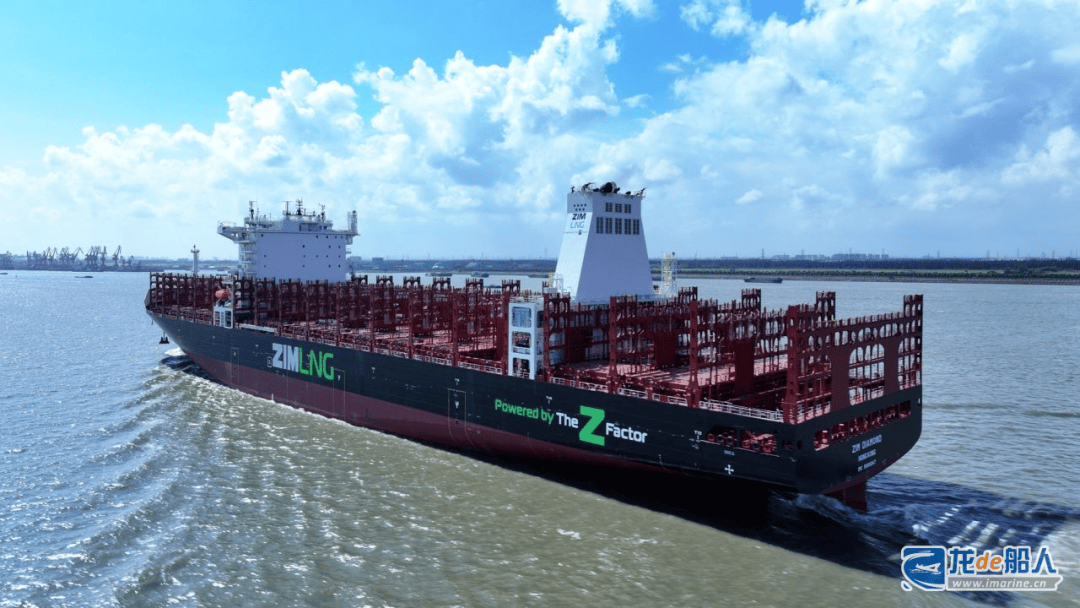
Core Viewpoint - The current market conditions, influenced by the U.S. tariffs, have led ZIM Integrated Shipping Services to temporarily suspend its route from Central China to the U.S. West Coast, which was set to commence in July 2024 [1] Group 1: Company Actions - ZIM has announced the suspension of its shipping route from Ningbo to Los Angeles, originally scheduled for July 2024, due to the impact of U.S. tariffs [1] - T.S. Lines, a Taiwanese shipping company, has also ceased its route connecting South China ports to Los Angeles due to declining trade demand [3] - ZIM is closely monitoring market developments and will propose further arrangements for the suspended route when appropriate [1] Group 2: Regulatory Impact - The U.S. Trade Representative (USTR) has announced specific restrictions following a 301 investigation into Chinese shipbuilding, maritime, and logistics, which will significantly reduce the number of Chinese-built vessels servicing major U.S. ports [4] - New fee structures have been established for various types of vessels, including a $150 fee per unit for non-U.S. built car carriers and a $50 fee per net ton for Chinese owners and operators, with annual increases planned [4] - For Chinese-built vessels not operated by Chinese owners, fees will be based on either net tonnage or container count, with maximum fees set to increase significantly by 2028 [4] Group 3: Market Outlook - The global container port throughput is expected to decline by 1% due to the direct impact of U.S. trade policies, marking the third decline since 1979, with previous declines occurring during the 2009 financial crisis and the 2020 COVID-19 pandemic [6] - ZIM's recent announcement to introduce 10 new LNG dual-fuel container ships, valued at approximately $2.3 billion, will face significant port service fees if they dock at U.S. ports, amounting to $1.38 million starting October 2025 and increasing to $2.875 million by April 2028 [5]
“对等关税”落地观察,亚洲内转口贸易与美国库存情况
2025-04-27 15:11
Summary of Conference Call Records Industry Overview - The records primarily discuss the impact of the US-China trade tensions on global shipping and trade dynamics, particularly focusing on Southeast Asia and its role in transshipment trade to the US [1][2][4][5][17][25]. Key Points and Arguments Trade Dynamics and Impact - The US-China trade friction has led to order delays and cancellations, particularly affecting shipments to the US, with Southeast Asian order volumes dropping by 20%-30% [1][2]. - Following a 90-day grace period announced by the Trump administration, Southeast Asian shipping volumes have started to recover, although this grace period does not apply to Chinese exports to North America [1][2][4]. - The NRF predicts a 10% reduction in US port cargo volumes by June 2025, with further declines of 15%-20% expected in July [6]. Shipping and Regulatory Changes - The US is tightening regulations on transshipment trade, requiring detailed documentation and compliance with origin rules, which may lead companies to relocate production to Southeast Asia or Latin America [2][11][12]. - The 301 Action Plan will impose significant fees on Chinese vessels docking at US ports starting October 14, 2025, impacting Chinese shipping companies significantly [17]. Product Margin Sensitivity - Low-margin products such as retail, textiles, and toys are more adversely affected by the trade tensions, while high-margin e-commerce products continue to ship [8][19]. - Exporters are utilizing the 90-day window to export completed products through Southeast Asia to avoid high tariffs [1][8]. Future Trends and Challenges - Southeast Asia is expected to see a recovery in orders starting from April 2025, leading to increased shipping rates due to limited vessel capacity [13]. - The region's logistics infrastructure is currently inadequate to fully replace China as a manufacturing hub, although it is becoming a significant outsourcing destination [20][34]. - The potential for compliance issues and penalties in transshipment trade poses risks for exporters, especially with the possibility of 100% inspections by US customs [9][31]. Market Sentiment and Strategic Adjustments - Companies are advised to develop strategies to adapt to the changing trade environment, including potential shifts in production and logistics to comply with new regulations [12][22]. - The demand for shipping services is expected to remain strong, but high inventory levels in the US may dampen immediate shipping needs [18]. Regional Trade Relationships - Southeast Asia is becoming a focal point for investment and trade as countries navigate the complexities of US-China relations, with a growing emphasis on infrastructure development [25][36]. - The dynamics of global trade are shifting, with countries weighing the benefits of entering the US market against the support offered by China in technology and finance [21]. Additional Important Insights - The shipping rates from Southeast Asia to the US are expected to rise due to increased demand and limited capacity, with current costs comparable to those from China [20]. - The overall trend indicates a gradual shift in manufacturing and shipping patterns, with Southeast Asia emerging as a key player in the global supply chain [34][36].
Here's Why ZIM Integrated Shipping Services (ZIM) Gained But Lagged the Market Today
ZACKS· 2025-04-22 22:55
Company Performance - ZIM Integrated Shipping Services closed at $13.02, with a daily increase of +0.54%, underperforming the S&P 500 which gained 2.51% [1] - Over the past month, ZIM's shares have depreciated by 17.09%, compared to the Transportation sector's loss of 9.55% and the S&P 500's loss of 8.86% [1] Financial Expectations - The upcoming financial results are expected to show an EPS of $1.84, representing a 145.33% increase year-over-year [2] - Revenue is projected at $1.73 billion, reflecting a 10.99% increase from the same period last year [2] - For the annual period, earnings are anticipated to be $1.11 per share and revenue at $6.53 billion, indicating declines of -93.77% and -22.54% respectively from the previous year [3] Analyst Projections - Recent shifts in analyst projections for ZIM are important to monitor, as positive estimate revisions indicate optimism about the company's outlook [4] - The Zacks Rank system, which includes estimate changes, currently ranks ZIM as 3 (Hold) [6] Valuation Metrics - ZIM has a Forward P/E ratio of 11.63, which is higher than the industry average of 8.52 [7] - The company has a PEG ratio of 0.44, compared to the industry average PEG ratio of 0.8 [7] Industry Context - The Transportation - Shipping industry is ranked 174 in the Zacks Industry Rank, placing it in the bottom 30% of over 250 industries [8]

ZIM vs. ESEA: Which Shipping Company is a Stronger Play Now?
ZACKS· 2025-04-22 15:20
Core Viewpoint - ZIM Integrated Shipping and Euroseas Limited are two prominent players in the shipping industry, with ZIM having a more favorable business model and financial outlook compared to ESEA, despite challenges posed by tariffs and declining freight rates [2][17]. Group 1: Company Overview - ZIM is a leading container liner shipping company operating in over 100 countries and serving approximately 33,000 customers at more than 330 ports globally [1]. - Euroseas is an owner and operator of container carrier vessels, providing seaborne transportation for containerized cargoes [1]. Group 2: Financial Performance - ZIM's asset-light model allows for rapid capacity adjustments, focusing on niche markets and high-margin trade routes, which helps maintain strong pricing power [3]. - ZIM declared a regular dividend of approximately $382 million or $3.17 per ordinary share in the December quarter, representing about 45% of the full year's net income [4]. - ESEA maintains a time charter equivalent rate of over $25,000 per day, with an average of $26,479 for 2024 [7]. Group 3: Challenges and Risks - ZIM faces significant challenges due to the U.S. administration's port fees on Chinese-built ships, with over 50% of its U.S. port calls made by such vessels [5]. - Declining freight rates are a concern for ZIM, with management projecting adjusted EBITDA for 2025 to be between $1.6 billion and $2.2 billion, down from $3.69 billion in 2024 [6]. - ESEA is affected by the prolonged Red Sea crisis, which has increased voyage times and caused a shortage of shipping containers [8]. Group 4: Market Performance - ZIM shares have gained 12.4% over the past year, outperforming the industry, while ESEA shares have declined by 14.8% [11]. - The Zacks Consensus Estimate for ZIM's 2025 sales and EPS indicates a year-over-year decline of 22.5% and 94%, respectively, while ESEA's sales are expected to improve by 5.3% [14][16]. Group 5: Strategic Advantages - ZIM's business model allows for flexibility in shifting capacity to more profitable routes, while ESEA's revenues are more tied to the charter market, which is sensitive to global trade volumes [17]. - Elevated spot rates and contracted rates suggest that ZIM may perform well in 2025 despite tariff-induced uncertainties [18].


ZIM (ZIM) Stock Jumps 14.9%: Will It Continue to Soar?
ZACKS· 2025-04-10 15:30
Company Overview - ZIM Integrated Shipping Services (ZIM) shares increased by 14.9% to close at $13.45, following a significant volume of trading, contrasting with a 42.3% loss over the past four weeks [1] - The stock's rise was influenced by President Donald Trump's announcement of a 90-day pause on most tariffs that had negatively impacted stocks [1] Earnings Expectations - ZIM is projected to report quarterly earnings of $1.95 per share, reflecting a year-over-year increase of 160% [2] - Expected revenues for ZIM are $1.91 billion, which is a 22% increase compared to the same quarter last year [2] Earnings Estimate Revisions - The consensus EPS estimate for ZIM has been revised down by 1.9% over the last 30 days [3] - A negative trend in earnings estimate revisions typically does not lead to price appreciation, indicating potential caution for future stock performance [3] Industry Context - ZIM is part of the Zacks Transportation - Shipping industry, where Euroseas Ltd. (ESEA) also operates [3] - ESEA's consensus EPS estimate has increased by 0.9% to $3.41, representing a year-over-year change of 28.2% [4] - ESEA currently holds a Zacks Rank of 4 (Sell), indicating a less favorable outlook compared to ZIM's Zacks Rank of 3 (Hold) [3][4]

ZIM Announces New Long-Term Chartering Agreements for Ten 11,500 TEU LNG Dual-Fueled Vessels
Prnewswire· 2025-04-07 12:00
Core Insights - ZIM Integrated Shipping Services Ltd. has announced long-term charters for ten 11,500 TEU LNG dual-fuel container vessels, with a total charter hire consideration of approximately $2.3 billion [1][2][3] - The vessels are expected to be delivered between 2027 and 2028, enhancing ZIM's fleet strategy and commercial agility [1][2][3] - The expansion of the LNG fleet aligns with ZIM's decarbonization objectives and positions the company as a leader in carbon intensity reduction within the shipping industry [3] Company Overview - ZIM, founded in 1945, operates globally in over 100 countries, serving approximately 33,000 customers across more than 330 ports [4] - The company focuses on digital strategies and ESG values to provide innovative transportation and logistics services [4] - ZIM's strategy emphasizes agile fleet management and deployment, targeting major trade routes where it holds competitive advantages [4]
Why Transportation Stocks Are Falling Today


The Motley Fool· 2025-04-03 16:30
Group 1: Market Reaction to Tariffs - A comprehensive overhaul of U.S. trade policy, including broad tariffs, is causing significant market volatility, particularly affecting transportation companies like Union Pacific, Forward Air, and Zim Integrated Shipping Services, which have seen declines of 4.13%, 21.55%, and 14.20% respectively [1] - The extent of the tariffs was unexpected, and they are designed to shift manufacturing back to the U.S., which could fundamentally impact global shippers like Zim and Forward [2] Group 2: Impact on Union Pacific - Union Pacific's railway, which connects West Coast ports to the U.S. heartland, may lose value due to significant changes in import values resulting from the tariffs [3] - The uncertainty surrounding tariffs and consumer demand may lead to reduced inventories, impacting the volume of goods transported, with Union Pacific already forecasting flat growth in 2025, which is now at risk [5] Group 3: Long-term Outlook - For investors with a long-term perspective, there is optimism as tariffs may alter trade patterns but do not eliminate the need for transportation of goods, suggesting that companies like Union Pacific possess irreplaceable assets that will be utilized over time [4]

ZIM Integrated Shipping Services .(ZIM) - 2024 Q4 - Earnings Call Transcript
2025-03-12 15:20
Financial Data and Key Metrics Changes - ZIM reported a net income of $2.2 billion for 2024, a significant recovery from a net loss of $2.7 billion in 2023, which included a $2.1 billion non-cash impairment charge [37] - Revenue for 2024 reached $8.4 billion, representing a 63% increase compared to the previous year [30] - Adjusted EBITDA was $3.7 billion with an adjusted EBITDA margin of 44%, while adjusted EBIT was $2.5 billion with an adjusted EBIT margin of 30% [37] - Free cash flow in Q4 2024 totaled $1.1 billion, compared to $128 million in Q4 2023, and for the full year, free cash flow was $3.6 billion compared to $919 million in 2023 [32] Business Line Data and Key Metrics Changes - ZIM carried 980,000 TEUs in Q4 2024, a 25% increase from 786,000 TEUs in Q4 2023, and for the full year, the company carried 3.8 million TEUs, a 14% increase compared to 2023 [38] - Freight revenue from non-containerized cargo totaled $497 million for 2024, down from $535 million in 2023 due to a partial reclassification within revenue types [31] Market Data and Key Metrics Changes - The average freight rate per TEU for 2024 was $1,888, a 57% increase from 2023, while Q4 2024 saw an average freight rate of $1,886, a 71% increase year-over-year but 24% lower than Q3 2024 [30] - The overall market growth was less than 6%, while ZIM's volume growth of 14% significantly outperformed the market [18] Company Strategy and Development Direction - ZIM aims to maintain its competitive position by focusing on a modern, fuel-efficient fleet, with 40% of its capacity now LNG-powered [15][20] - The company plans to continue investing in technology and digital tools to enhance operational excellence and customer experience [25] - ZIM is exploring opportunities in growth markets in Asia and Latin America, anticipating further growth in these regions [22][23] Management's Comments on Operating Environment and Future Outlook - Management highlighted a high level of uncertainty in the operating environment due to geopolitical factors, trade dynamics, and economic policies, which could impact supply and demand [12] - The company expects a significant decline in freight rates in 2025 compared to 2024, with guidance for adjusted EBITDA between $1.6 billion and $2.2 billion [40][41] - Management remains confident in their strategy and competitive position, despite the uncertainties ahead [11][20] Other Important Information - ZIM declared a dividend of $3.17 per share for a total of $382 million, bringing the total dividend payout for 2024 to $7.98 per share or $961 million, representing approximately 45% of annual net income [9][10] - The company has completed its fleet transformation program, securing all 46 new builds, which enhances its operational capacity and efficiency [34][37] Q&A Session Summary Question: Clarification on guidance related to Red Sea reopening - Management indicated that the guidance range includes scenarios for both early and late reopening of the Red Sea, with the lower end assuming an early reopening [50] Question: Exposure to Chinese-built ships and potential management buyout - Management confirmed that their exposure to Chinese-built tonnage is between 25% and 50% and is monitoring the situation closely [52][55] Question: Outlook for EBIT in the first and second half of 2025 - Management acknowledged that the first half of 2025 is expected to be stronger than the second half, influenced by current market conditions [61] Question: Capex and renewal strategy for vessels - Management explained that they plan to renew about 50% of the vessels coming up for renewal, maintaining flexibility based on market conditions [65] Question: Current spot rates and market activity - Management noted a material drop in spot rates in February and is monitoring the situation closely, with ongoing negotiations with long-term customers showing encouraging signs [88][99]