Neuralink

Search documents
X @Tesla Owners Silicon Valley
Tesla Owners Silicon Valley· 2025-06-13 16:55
Technology & Innovation - Neuralink enables telepathic computer control using only the brain [1] - ALS cyborg shares experience of brain-computer interface [1]
临床试验加速推进,脑机接口处于应用落地的关键窗口期
Sou Hu Cai Jing· 2025-06-13 11:47
Core Insights - The global market for brain-computer interfaces (BCIs) in the medical field is projected to reach between $40 billion and $145 billion from 2030 to 2040, indicating significant growth potential [1][6] - China's BCI industry is experiencing a surge in startups, with a notable increase in patent applications and funding events, as well as over a hundred products entering clinical stages [1][6] - Elon Musk's Neuralink has raised $650 million in a new funding round, with a pre-money valuation soaring to $9 billion, reflecting strong market enthusiasm [1] Industry Development - BCIs have evolved from a scientific fantasy to a promising technological innovation, with applications in medical and research fields [2] - The current BCI technology landscape includes non-invasive, semi-invasive, and invasive methods, with invasive techniques showing the most promise for medical applications [2][4] - The establishment of clinical BCI facilities, such as the first BCI clinical ward at Beijing Tiantan Hospital, marks a significant step in applying BCI technology in clinical settings [3] Clinical Advancements - The first closed-loop spinal cord nerve interface surgery in China has been successfully completed, demonstrating significant functional recovery in the patient [3][4] - Clinical trials are underway, with teams aiming to make their BCI devices the first approved implantable medical devices globally [5] Market Trends and Government Support - McKinsey forecasts a substantial market for BCIs in the medical sector, with various regions in China, including Beijing and Shanghai, implementing plans to accelerate BCI product development and clinical trials [6][7] - Policies are being introduced to support the BCI industry, aiming to establish a robust ecosystem and promote the commercialization of innovative products [6][7] Challenges and Future Outlook - The BCI industry faces challenges such as high funding requirements, lengthy clinical validation periods, and the need for improved industry standards and regulations [8][9] - Experts emphasize the importance of collaboration among researchers, clinical institutions, and government to foster innovation and overcome existing barriers [8][9]
出海速递 | 陈茂波:欢迎更多中概股回流港股/TikTok移动端海外月活用户首次突破10亿
3 6 Ke· 2025-06-13 10:48
Group 1 - The article discusses the competitive landscape of the home improvement retail sector in the U.S., focusing on giants Home Depot and Lowe's, and explores their market strategies and differences [2] - It highlights the challenges faced by the company "追觅" in retaining talent despite successfully training them, and notes the trend of "追觅系" companies venturing into the robotics sector [2] - The overseas revenue of "劢微机器人" has rapidly increased from less than 10% in 2022 to 40% currently, indicating significant growth in international markets [2] Group 2 - The Chinese Ministry of Commerce reports that China's foreign trade has shown resilience in a complex environment, with policies aiding enterprises leading to a rise in both quantity and quality of goods traded [3] - Sensor Tower data reveals that TikTok's overseas monthly active users have surpassed 1 billion for the first time, showcasing the app's strong growth in the global market [3] - Hong Kong's Financial Secretary Chen Maobo expresses a desire to attract more Chinese companies to list in Hong Kong, aiming to support their international expansion and enhance offshore RMB business [3][4] Group 3 - Chery's chairman, Yin Tongyue, emphasizes the company's intention to use Hong Kong as a new starting point for entering international capital markets, aiming to establish it as a global financial and logistics hub [4] - European Central Bank President Christine Lagarde's visit to China and her experience with autonomous driving technology signals potential expansion of such technologies into the European market [4] - Cainiao has opened its second self-operated overseas warehouse in Canada, expanding its logistics network across North America to enhance cross-border e-commerce solutions [4] Group 4 - Transsion Holdings' TECNO brand has formed a strategic partnership with Spain's MCR Group to introduce AIoT smart ecosystem products to the Spanish market [5] - Scale AI has announced a significant investment from Meta Platforms, raising its valuation to over $29 billion and expanding their commercial collaboration [5] - Mattel, the manufacturer of Barbie dolls, is collaborating with OpenAI to develop AI-powered toys and games, with plans to launch the first product later this year [5] Group 5 - Neuralink has successfully raised $649 million through equity financing, as disclosed in a filing with the U.S. Securities and Exchange Commission [6]


脑机接口领域多点突破开启牵引新程,微美全息(WIMI.US)抢占脑机技术应用新局
Zhong Guo Chan Ye Jing Ji Xin Xi Wang· 2025-06-13 02:21
Group 1 - The 11th China (Shanghai) International Technology Import and Export Fair focuses on "open cooperation: empowering new quality productivity and sustainable development" and covers the entire chain of the technology trading ecosystem [1] - The fair will highlight "hard technology" and future industries, showcasing nearly a hundred breakthrough achievements in fields such as brain-computer interfaces, embodied intelligence, quantum technology, and synthetic biology [3] - Brain-computer interface (BCI) technology is experiencing significant advancements, moving from laboratory research to clinical applications, marking a critical transition towards commercialization [4][9] Group 2 - The global brain-computer interface market is projected to reach $12.4 billion by 2034, with a compound annual growth rate (CAGR) of 17.4% from 2025 to 2034 [6] - In the domestic market, the BCI market is expected to exceed 3.8 billion yuan by 2025 and surpass 5.5 billion yuan by 2027, maintaining an annual growth rate of around 20% [6] - Companies like Neuralink and Meta are making significant strides in BCI technology, with Neuralink receiving FDA approval for human clinical trials and Meta unveiling a non-invasive wristband prototype [6] Group 3 - WIMI (Micro Beauty Hologram) is a leading BCI company focusing on applications that restore patients' self-care abilities, exploring the integration of BCI with quantum, optoelectronic, and AI technologies [8] - WIMI is actively establishing a long-term development strategy in the BCI field, promoting interdisciplinary collaboration and achieving several cutting-edge results [8] - The company is building a technology innovation platform to accelerate the clinical application of frontier scientific achievements [8]

马斯克旗下脑机接口公司Neuralink在向美国证券交易委员会提交的文件中披露,已通过股权融资筹集了6.49亿美元。
news flash· 2025-06-12 20:26
马斯克旗下脑机接口公司Neuralink在向美国证券交易委员会提交的文件中披露,已通过股权融资筹集了 6.49亿美元。 ...
X @Tesla Owners Silicon Valley
Tesla Owners Silicon Valley· 2025-06-12 20:25
Technological Advancement - Neuralink implant enables ALScyborg to play Mario Cart on Nintendo Switch with his kids, showcasing the potential of brain-computer interfaces [1] - The advancement highlights the transition of science fiction into science reality in the field of neurotechnology [1]
The Government's Power Over Innovation
ARK Invest· 2025-06-12 20:18
Well, that big beautiful bill is causing a bit of a ruckus out there, as I'm sure you all know, with President Trump and Elon Musk uh having having different points of views. I think the way this is evolving is Elon, Tesla, and investors understand, are beginning to understand more and more just how much the government has control here. SpaceX has $22 billion in contracts, government contracts.Regulation will impact the transportation sector. We are hoping that the regulation for autonomous taxi platforms t ...


国外价格近百万的“科技腿”,浙江让它免费走进100个家庭
Zhong Guo Xin Wen Wang· 2025-06-12 07:42
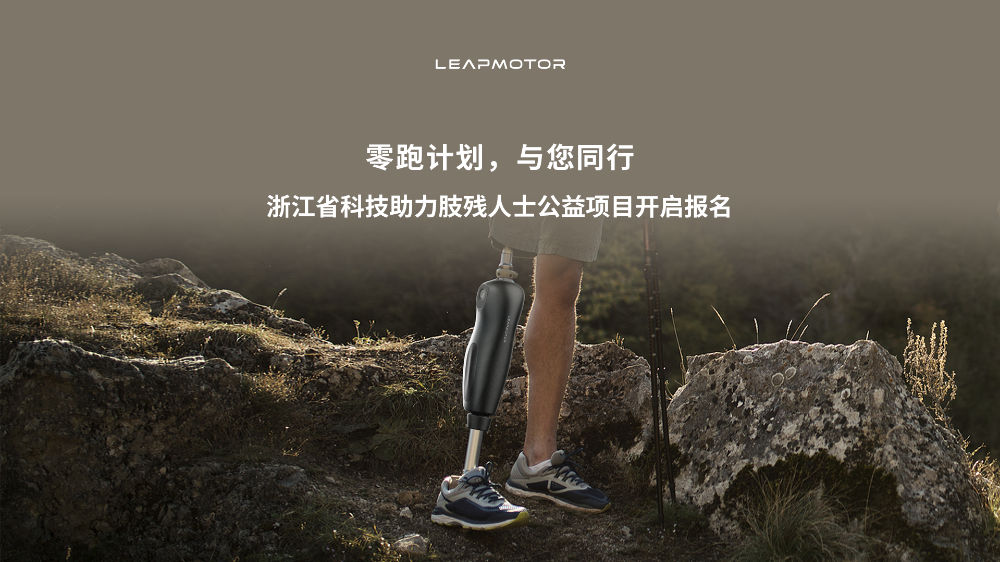
Core Viewpoint - The article highlights the launch of the third phase of the Zhejiang Province Technology Assistance Project for the disabled, which aims to provide free smart bionic legs to 100 lower-limb disabled individuals, expanding its reach from Zhejiang to a national level [1][3]. Group 1: Project Overview - The Zhejiang Technology Assistance Project, initiated in late 2023, has gained significant recognition among lower-limb disabled individuals, becoming a "star project" after two years of exploration [1]. - The smart bionic legs used in the project are produced by Qiangnao Technology, a leading company in the global innovation landscape [1][3]. - Leap Motor, a local private enterprise, has contributed 5 million yuan to support the construction of the Zhejiang innovation ecosystem, becoming the second company to do so after Alibaba [1]. Group 2: Technological Innovation - Technological advancements have made smart bionic devices more accessible, allowing for greater mobility for disabled individuals, which reflects China's rapid progress in emerging fields like brain-machine interfaces and humanoid robots [3][5]. - Qiangnao Technology has reduced the price of its smart bionic products to one-seventh to one-fifth of similar foreign products, making them more affordable in China [6]. - Leap Motor aims to redefine the value standard of electric vehicles by making high-end technologies available in lower-priced models [6]. Group 3: Corporate Values and Achievements - Both Qiangnao Technology and Leap Motor share a commitment to making technological innovations accessible to ordinary people, emphasizing the importance of affordability in innovation [5][8]. - Leap Motor's founder, Zhu Jiangming, has been recognized as a leading entrepreneur in science in Zhejiang Province, highlighting the company's focus on technological innovation and quality control [10][12]. - Leap Motor has achieved significant sales milestones, leading the new energy vehicle market in China with sales of 37,095 units in March, 41,039 units in April, and 45,067 units in May 2025 [16]. Group 4: Social Responsibility and Impact - The collaboration model of government, charitable enterprises, and technology companies in the Zhejiang assistance project aims to help millions of disabled individuals reintegrate into society [13][15]. - Leap Motor's commitment to cost-effective pricing and social responsibility is evident in its approach to providing high-quality electric vehicles while maintaining affordability for consumers [15]. - Qiangnao Technology's founder aims to assist 1 million disabled individuals in regaining mobility and support 10 million people with brain-related diseases over the next 5 to 10 years [17].
Elon Musk's Neuralink vs Apple's Vision Pro
Neura Pod – Neuralink· 2025-06-11 23:07
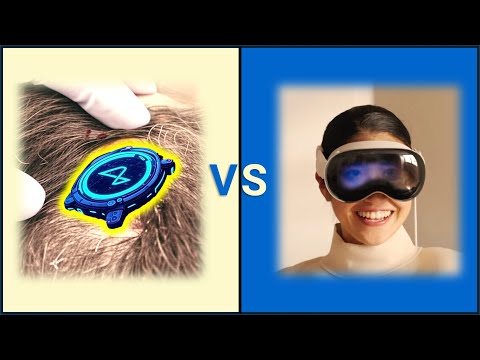
Technology Comparison - Neuralink's brain-computer interfaces (BCIs) are positioned to potentially make external devices like Apple's Vision Pro obsolete due to fundamental advantages in bandwidth, integration, and sensory capabilities [20][23][26][27] - Apple's Vision Pro, priced at $3,500 before upgrades and taxes, is considered a spatial computer with 23 million pixels of resolution and 13 cameras, but its fundamental architecture is viewed as an extension of existing technology rather than a reinvention [4][9][16] - Neuralink's technology involves implanting a tiny chip into the brain using a custom robot to place thousands of electrode threads, each thinner than a human hair, into specific areas [10][11] - While Vision Pro is available now, Neuralink is in early stages of human testing, focusing on medical applications for individuals with paralysis [43][44] Neuralink's Potential and Advantages - Neuralink aims to solve brain and spine problems and enable humans to merge with artificial intelligence [38][39] - The company's technology could allow users to control devices with their thoughts, potentially achieving communication speeds faster than typing [12][13][26] - Neuralink's approach could bypass biological limitations, potentially creating new senses or enhancing existing ones beyond their limits [27][28] - The company is valued at around $8 billion to $9 billion, indicating significant investment and commitment to its mission [57] Challenges and Future Outlook - Neuralink faces technical, regulatory, and ethical hurdles, including ensuring device security, data privacy, and addressing psychological barriers related to brain surgery [36][37][38] - Elon Musk estimates that non-medical applications of Neuralink may be 5 to 10 years away, with more widespread adoption in 15 to 20 years [62] - The company is expanding human trials to Miami, Florida; Toronto, Canada; the UK; New Zealand; and the UAE [63][64]
20万一台的“人脑计算机”,可能是人类战胜AI的唯一方式?
虎嗅APP· 2025-06-10 23:59
Core Viewpoint - The article discusses the emergence of a new technology, the CL1, developed by Cortical Labs, which is the first commercial biological computing platform that integrates live human neurons with silicon chips, creating a hybrid intelligence system that can learn and adapt [6][10][12]. Group 1: Technology Overview - CL1 consists of 800,000 live human neurons connected to a silicon chip, allowing it to process information and exhibit certain "quasi-conscious" characteristics [6][8]. - The technology is not about mimicking the brain but directly integrating parts of the brain into the chip, creating a system that learns like a human brain while processing information efficiently like a computer [9][10]. - The system operates with low power consumption, with a total power requirement of only 850 to 1000 watts, significantly lower than traditional GPU clusters used for AI tasks [15]. Group 2: Market Potential - The initial price for a CL1 unit is $35,000, which can drop to $20,000 for bulk purchases, targeting neuroscience researchers, pharmaceutical companies, and AI research teams [18]. - Cortical Labs has introduced a "Wetware as a Service" (WaaS) model, allowing researchers to rent access to a live neuron computing node for $300 per week, making it accessible without the need for physical ownership [19][20]. Group 3: Philosophical Implications - The article raises questions about the potential for human brain functions to be commodified and whether consciousness can be reshaped or utilized in new ways through technology [21][22]. - It contrasts the approaches of Cortical Labs and Neuralink, highlighting the different philosophies regarding the integration of human cognitive abilities with technology [20][21].