Nestlé

Search documents
In the age of AI, CEOs quietly signal that layoffs are a badge of honor
Yahoo Finance· 2025-11-14 09:42
Core Insights - Recent layoffs across major companies indicate a significant shift in the business environment, particularly influenced by advancements in AI technology [1][3] - The scale of layoffs is unprecedented, with companies like Amazon, Target, UPS, Verizon, and Nestlé announcing substantial job cuts, totaling over 100,000 jobs [2][3] Company Layoffs - Amazon plans to eliminate 14,000 jobs, with further reductions anticipated as AI is integrated for efficiency [2][3] - Target is cutting 1,800 corporate jobs, marking its largest layoff in a decade, citing excessive layers and the need to accelerate technology [2][3] - UPS has reported a staggering 48,000 job eliminations this year, while Verizon and Nestlé will lay off 15,000 and 16,000 employees, respectively [2][3] Economic Context - The recent wave of layoffs does not correlate with a significant economic downturn, as growth is expected to increase next year according to economists [2] - Traditional layoff seasons typically occur in December and January, suggesting that the current trend may be driven by factors beyond seasonal adjustments [2] AI Influence - The integration of AI is a primary driver behind the layoffs, with executives openly discussing the need for efficiency gains and reduced workforce [3] - Companies are adopting a "Human Capital Lite" model, where having fewer employees is increasingly viewed as a positive attribute among Fortune 500 CEOs [3]



IZEA(IZEA) - 2025 Q3 - Earnings Call Transcript
2025-11-12 23:00
Financial Data and Key Metrics Changes - Total revenue for Q3 2025 decreased by 8% to $8.1 million due to shedding unprofitable project work and softness in government and retail accounts [4] - Managed service revenue excluding Hoozu increased by 5% [4] - Total operating expenses decreased by 67% [4] - Net income totaled $0.1 million compared to a net loss of $8.8 million during Q3 2024 [4] - Cash increased by $0.8 million to $51.4 million [4] - Year-to-date managed services revenue is up 14% with net income totaling $1.2 million [4][12] Business Line Data and Key Metrics Changes - Managed services bookings, excluding Hoozu, declined by 26% to $18.2 million for the nine months ended September 30, 2025 [10] - Revenue from managed services, excluding Hoozu, increased by 14% for the nine months ended September 30, 2025 [11] - Cost of revenue totaled $4.2 million, or 51% of revenue in Q3 2025, compared to $5.2 million, or 59% of revenue in the same quarter of the prior year [11] Market Data and Key Metrics Changes - Enterprise accounts are growing at double-digit rates, with some at triple-digit rates [5] - The pipeline reached a new high for the year, with invitations to larger pitches growing [6] Company Strategy and Development Direction - The company is focusing on fortifying, simplifying, and concentrating on managed services [5] - A new account management model was implemented to focus on larger, more profitable recurring accounts [9] - The company is investing in its technology platform, infusing it with AI-powered features [8] Management's Comments on Operating Environment and Future Outlook - Management expressed optimism about the future and the ability to deliver additional value to stakeholders [8] - The strategic focus on higher quality recurring accounts is expected to improve profitability and support sustainable growth [10] Other Important Information - The company achieved profitability for the third quarter, marking only the second quarter in its history to do so through operating performance [12] - Cumulative stock repurchases totaled 561,950 shares for an aggregate investment of $1.4 million [14] Q&A Session Summary - There were no questions in the queue during the Q&A session [16]
Tweedy, Browne Mutual Funds Q3 2025 Commentary
Seeking Alpha· 2025-11-12 01:25
Core Insights - Global equity markets experienced significant growth in Q3, with the S&P 500 rising 8.12% for the quarter and 14.83% year-to-date, while the MSCI EAFE Index increased by 4.77% for the quarter and 25.14% year-to-date [2][3] Market Performance - The S&P 500 achieved back-to-back annual returns of 26% and 25% in 2023 and 2024, respectively, with valuation metrics like the "Buffett Indicator" and CAPE-Shiller P/E at or near record highs [2] - Non-US equities, particularly European stocks, outperformed the S&P 500 year-to-date, benefiting from a weaker US dollar and a resurgence in value recognition [3][11] Fund Performance - Tweedy, Browne Funds reported year-to-date returns ranging from 15.98% for the Value Fund to 23.17% for the International Value Fund II, with the Worldwide High Dividend Yield Value Fund outperforming its benchmark [3][5] - The International Value Fund II had a return of 23.17%, trailing its benchmark, the unhedged MSCI EAFE Index, by 197 basis points [3] Portfolio Activity - The company made strategic adjustments to its portfolio, trimming or selling holdings that reached estimated value and adding to companies perceived as attractively priced, such as Berkeley Group Holdings and Breedon Group [8] - New positions were initiated in Santec Holdings and additional investments were made in companies like Dentium and Azelis Group, reflecting a focus on growth potential and reasonable valuations [8] Outlook - The company is optimistic about the resurgence of non-US equity returns and believes its funds are well-positioned for future market conditions, whether they favor non-US equities or face broader market challenges [11]


Frank Talk: Stocks have history on their side heading into year-end
Proactiveinvestors NA· 2025-11-07 16:33
Economic Impact - The ongoing government shutdown is projected to cost the U.S. economy up to $14 billion, equivalent to a 2 percentage point hit to GDP [2] - U.S. businesses and consumers are facing an average tariff rate of 18%, the highest in about 90 years, leading to an estimated income loss of around $1,800 per household this year [3] - Consumers are shouldering most of the tariffs, with American households responsible for about 55% of the new levies [4] Consumer Spending Trends - Record spending on Halloween is anticipated, with Americans expected to spend $13.1 billion this year, up from $11.6 billion last year [5] - Preliminary data suggests U.S. households will spend 4% less on gifts and 12% less on other items for Christmas compared to last year due to tariffs [6] Cocoa Market Dynamics - Cocoa prices have spiked due to plant disease and drought in West Africa, with futures prices reaching as high as $12,000 per metric ton [6] - Major chocolatiers have announced higher prices for chocolate products and have reformulated recipes to reduce cocoa content [7][8] - European chocolate manufacturers are expected to see a decline in operating margins this year due to increased competition and reduced demand for cocoa-containing products [10] Market Performance and Investor Sentiment - The S&P 500 has spent over 125 trading sessions above its 50-day moving average, the longest stretch since 2011, driven by enthusiasm over artificial intelligence [12] - Historical data suggests that stocks tend to outperform from November to April, with an average return of 7% during this period since 1945 [13] - If the S&P 500 is up more than 15% year-to-date by the end of October, stocks have finished higher in November and December 95% of the time [14]


食品业的“终极目标”:个性化营养方案
Hua Er Jie Jian Wen· 2025-11-07 01:27
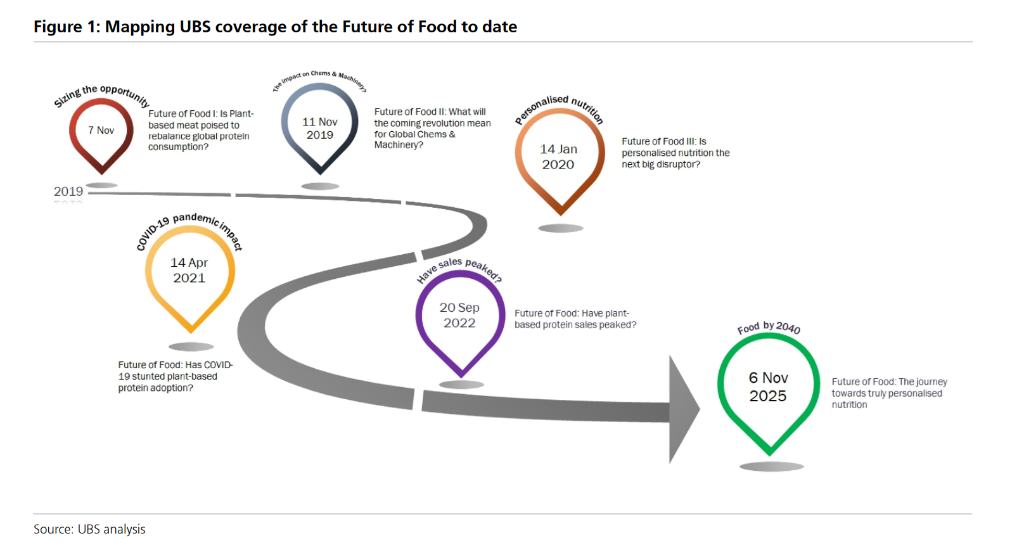
Core Insights - The personalized nutrition market is projected to reach $64 billion by 2040, representing a significant growth opportunity within the larger $6.1 trillion global food and beverage market, where it currently accounts for less than 1% [3] - The rapid advancement of artificial intelligence (AI) is expected to be a key catalyst for the growth of the personalized nutrition industry by enabling the analysis of vast amounts of continuous data from wearable devices [3] Industry Transformation - The food industry is undergoing a profound transformation driven by two main forces: supply-side constraints and demand-side consumer awareness [7] - Supply-side pressures include limited arable land, high water consumption in agriculture, and the need for sustainable practices due to environmental concerns [7] - Demand-side factors reflect a heightened consumer focus on health and wellness, with a desire for balanced nutrition without compromising on taste, creating a challenging "impossible triangle" for the industry [7] Disruptive Technologies - Various disruptive technologies are emerging as part of the journey towards personalized nutrition, but they are only part of the solution and not the endpoint [8] Investment Insights - A new cross-industry ecosystem is forming around personalized nutrition, where investors should focus on companies that can collaborate within this ecosystem rather than isolated entities [9] - Key players include genetic testing and analysis companies, wearable tech firms, ingredient manufacturers, and food delivery services, all of which are essential for the realization of personalized nutrition [11] Market Dynamics - The plant-based protein market is experiencing stagnation due to taste issues, while cell-cultured meat and precision fermentation face challenges related to cost and consumer perception [11] - GLP-1 weight loss drugs are reshaping consumer eating habits, leading to reduced calorie intake and increased demand for healthier food options, which will impact various food categories [11] Traditional Players' Impact - The report suggests that personalized nutrition is not only the future of the food industry but also a cross-industry revolution affecting technology, healthcare, and consumer sectors [12] - Traditional food producers and retailers must adapt to the shift towards customized services or risk obsolescence, while companies that embrace this change may benefit from the growing health consciousness among consumers [14]

How regenerative agriculture – and funding – is slowly taking root
Yahoo Finance· 2025-11-05 11:49
Core Insights - The transition to regenerative agriculture in Europe is significantly underfunded, with only 2-6% of the required funding currently available [1] - Global agri-food systems need annual investments of $1.1 trillion over the next five years, but current investment flows account for barely 5% of that amount [2] - Major food companies are increasingly recognizing the need for collaborative financing structures to support the transition to sustainable practices [3][4] Investment and Financial Models - Food companies are shifting from a payment-for-services model to an investment model, focusing on leveraging financial resources to create more investment opportunities [4] - The financial services industry is encouraged to invest in food systems transformation, but unlocking large-scale action has proven challenging [12] - New financing models are emerging, including de-risking strategies that lower risk exposure for capital providers and enhance the business case for farmers [29][30] Corporate Initiatives and Commitments - Companies like PepsiCo and Cargill are setting ambitious targets for regenerative farming, with PepsiCo increasing its target from seven million acres to ten million [5] - Nestlé has invested SFr1.2 billion ($1.48 billion) since 2020 into regenerative approaches, initiating hundreds of pilot projects [16] - McDonald's has announced a $200 million initiative to promote regenerative grazing practices across four million acres in the US [33] Challenges and Market Dynamics - Farmers face significant financial shortfalls when transitioning to regenerative practices, with potential payback periods still leaving them with a shortfall of €1,400 to €4,100 ($1,608 to $4,708) per hectare [7] - The current agricultural system is described as "badly broken," necessitating urgent changes to avoid long-term systemic failures [6][9] - There is a growing recognition among food companies of the need for long-term contracts and collaborative approaches to ensure shared environmental responsibility [23] Regulatory and Policy Environment - Governments are slowly introducing subsidies for sustainable practices, but critics argue these measures are insufficient [20] - The European Commission has projected significant agricultural losses due to climate change, highlighting the urgency for a shift to regenerative practices [9] - Political resistance remains a barrier to accelerating regenerative production, with some industry groups still hesitant to embrace necessary changes [19]
Nestlé upgrades ERP system to set stage for AI, automation
Yahoo Finance· 2025-11-04 14:52
Core Insights - Nestlé is implementing a more AI-focused ERP system to enhance order fulfillment and align supply with demand in real time for both in-store and online retailers [3][4] - The company plans to reduce costs by cutting 16,000 jobs, which represents 6% of its global workforce, with a significant portion of cuts affecting corporate roles [4] - The upgrade involves transitioning from the legacy SAP ECC system to SAP S/4HANA, with the first phase already completed across 112 countries and 50,000 employees [5][8] Company Strategy - The CEO of Nestlé indicated that the company has not been efficient historically and aims to improve decision-making through increased digitization and automation [4] - The deployment of the new ERP system is expected to provide more flexibility, capabilities, and insights, facilitating faster global product rollouts to meet customer needs [8] Technological Transition - Nestlé migrated its entire SAP ERP to the SAP Private Cloud in 2022, with plans to complete the S/4HANA installation over the next two years [5][8] - The new system will incorporate SAP's AI-powered assistant to enhance procurement, supply chain management, and order fulfillment efficiency [8]

Stocks Have History On Their Side Heading Into Year-End
Forbes· 2025-11-03 17:56
Economic Impact of Government Shutdown - The ongoing government shutdown is projected to cost the U.S. economy up to $14 billion, equivalent to a 2 percentage point hit to GDP [1] - Most negative effects of the shutdown could be reversed once the government reopens [1] Tariff Effects on Consumers and Businesses - U.S. businesses and consumers face an average tariff rate of 18%, the highest in about 90 years, leading to an estimated income loss of around $1,800 per household this year [2] - Consumers are shouldering most of the tariffs, with American households responsible for about 55% of the new levies, while companies pay 22% [3] Halloween Spending Trends - Americans are expected to spend a record $13.1 billion on Halloween this year, up from $11.6 billion last year, with nearly 80% of consumers anticipating higher prices due to tariffs [4] - Tariffs are also influencing consumers to plan for reduced spending on Christmas gifts and other items [5] Cocoa Market Dynamics - Cocoa prices have spiked due to plant disease and drought in West Africa, leading to increased chocolate prices from major chocolatiers like Hershey and Lindt [8] - Many chocolatiers are reformulating their products by reducing cocoa content, which has led to changes in product labeling [9] European Chocolate Manufacturers - European sweets manufacturers are expected to see a decline in operating margins this year due to increased cocoa prices and reduced demand for cocoa-containing products [11] - A recovery in margins is anticipated in 2026 as cocoa prices continue to fall [11] Stock Market Trends - The S&P 500 has spent over 125 trading sessions above its 50-day moving average, driven by investor enthusiasm over artificial intelligence [13] - Historically, stocks tend to outperform from November to April, with an average return of 7% during this period [14] - The S&P 500 has gained over 16% year-to-date, suggesting a strong chance of a year-end rally [16]

Hershey (NYSE:HSY) Sees Positive Outlook Despite Recent Price Drop
Financial Modeling Prep· 2025-10-31 23:06
Core Insights - Hershey's recent third-quarter earnings report exceeded expectations in both earnings and sales, attributed to increased sales offsetting profit pressure from rising costs [2][5] - David Palmer from Evercore ISI set a price target of $215 for Hershey, suggesting a potential increase of about 28.06% from its current trading price of $167.89 [1][5] - Despite a recent price drop, Hershey's raised outlook for 2025 and strong market capitalization of approximately $34.06 billion indicate potential for future growth [4][5] Company Performance - Currently, HSY is priced at $167.99, reflecting a decrease of 1.85% or $3.17, with fluctuations showing a daily low of $166.41 and a high of $171.71 [3] - Over the past year, HSY has reached a high of $208.03 and a low of $140.13, indicating significant volatility in its price [3] Market Position - Hershey's market capitalization is approximately $34.06 billion, indicating its substantial size in the market [4] - The trading volume for HSY is 1,401,647 shares, reflecting active investor interest [4]


Is Your Portfolio Diversified Enough to Handle Inflation and Rate Cuts?
The Smart Investor· 2025-10-30 09:30
Core Insights - Investors are navigating a complex environment characterized by elevated inflation and central banks cutting rates to support softening labor markets [1][4] - The article emphasizes the importance of diversifying portfolios to mitigate risks associated with inflation and interest rate changes [2][21] Impact of Inflation and Rate Cuts on Stocks - Inflation affects all sectors, but companies with sufficient pricing power, particularly in essential goods and services, can maintain shareholder value [3][5] - The Federal Reserve's rate cuts on September 17, 2025, are aimed at addressing labor market weaknesses, creating opportunities for rate-sensitive sectors like property and technology [4][10] Defensive Sectors and Companies - Essential services and goods are considered "recession-proof," making them attractive during economic downturns [5][6] - Companies like Sheng Siong and Nestlé can pass rising costs to consumers, protecting profit margins during inflation [6][7] - The healthcare sector, exemplified by Johnson & Johnson, can also manage rising costs effectively due to non-discretionary demand [8] Opportunities in Low Interest Rates - Low interest rates stimulate borrowing, benefiting property developers and REITs, which can access cheaper financing [9][10] - City Developments Limited (CDL) is highlighted for its diversified assets and strong demand for residential properties, recently divesting a stake for S$834.2 million [11][12] - Growth stocks, particularly in technology, are well-positioned to leverage low interest rates for expansion [13][14] Blue-Chip Stocks as Stability - Blue-chip companies like DBS Group and Unilever provide stability and potential for capital appreciation, even in bearish markets [15][16][17] - DBS Group's strong fundamentals and regional presence have sustained investor confidence, with shares surpassing S$50 [16] Building a Balanced Portfolio - Diversification is crucial, combining inflation-resistant sectors (consumer staples, utilities, healthcare) with rate-sensitive opportunities (tech stocks, REITs, property developers) [19][22] - A multi-scenario approach allows investors to be prepared for varying economic conditions, ensuring no single shock derails the portfolio [20][21]