上海交通大学

Search documents
2025年国家杰青、优青名单,最新公布!
仪器信息网· 2025-08-04 03:58
Core Insights - The National Natural Science Foundation has announced the funding results for the 2025 Youth Science Fund projects, including Category A (including continuation funding, formerly known as National Outstanding Youth Fund) and Category B projects [2][3]. Funding Results Summary - The number of approved projects by various universities is as follows: - Peking University: 24 (A) - Tsinghua University: 22 (A), 9 (B) - Shanghai Jiao Tong University: 21 (A), 41 (B) - Zhejiang University: 21 (A), 25 (B) - Nanjing University: 16 (A), 15 (B) - Huazhong University of Science and Technology: 16 (A), 14 (B) - Fudan University: 12 (A) - University of Science and Technology of China: 11 (A) - Beihang University: 10 (A), 14 (B) - Sichuan University: 5 (A), 12 (B) - Tianjin University: 5 (A) - Sun Yat-sen University: 4 (A), 20 (B) - Nankai University: 6 (A), 9 (B) - Harbin University of Science and Technology: 4 (A), 8 (B) - Beijing Institute of Technology: 4 (A), 9 (B) - Shenzhen University: 3 (A), 9 (B) - Southwest University of Science and Technology: 3 (A), 5 (B) [3]. Project Funding Details - Category A projects receive funding of 4 million yuan (approximately 400 million) for a duration of 5 years, while Category B projects receive 2 million yuan (approximately 200 million) for a duration of 3 years [4]. Notable Projects - Professor Song Yongfeng from Shandong First Medical University received funding for his project on "Mechanisms and Intervention Strategies of Lipid Metabolism Disorders," with a grant of 4 million yuan [6]. - Professor Wang Hanxiao from Shenzhen University successfully obtained funding for the project "Stochastic Optimal Control Theory" under Category B [10]. - Professor Chen Miaomiao from Hubei University received funding for the project "Food Safety Sensing Detection," with a grant of 2 million yuan [11]. - Professor Chen Jing from Anhui Agricultural University received funding for the project "Molecular Mechanism of Natural Disease Resistance Protein L3 in Chili Peppers" under Category B [14].


超57亿,48所高校科研院所仪器采购意向汇总(2025年7月)
仪器信息网· 2025-08-03 04:06
Core Insights - The total budget for instrument procurement intentions from various universities in China exceeds 5.7 billion [1][2] Group 1: Procurement Intentions Overview - A total of 48 universities and research institutions have announced their procurement plans for July, reflecting a significant investment in equipment updates [2] - The procurement intentions are part of a larger trend initiated in 2024, focusing on large-scale equipment updates across universities [2] Group 2: Detailed Procurement Amounts - Notable procurement amounts include: - Tsinghua University: 2.13 billion - China Academy of Sciences: 1.15 billion - Shanghai University of Science and Technology: 1.35 billion - China Agricultural University: 1.06 billion - South China University of Technology: 1.08 billion [3][4] - Other universities such as Zhejiang University and Nanjing University of Science and Technology also have significant procurement budgets, indicating a widespread investment across the educational sector [4]

高校博物馆离破圈还差几步
Zhong Guo Qing Nian Bao· 2025-07-28 04:00
Core Viewpoint - The article highlights the increasing public interest in museums during the summer, particularly in popular museums, while emphasizing the need for university museums to engage more actively with the community and address key questions about their exhibitions and audience [1][5]. Group 1: University Museums' Role - There are approximately 450 university museums in China, representing a significant force within the museum industry [3]. - University museums serve as important venues for inquiry-based learning and participatory teaching, evolving from their origins as specimen or artifact rooms [1][5]. Group 2: Community Engagement - The "breaking the circle" concept refers to transforming university museums from exclusive collections into accessible community spaces [1][5]. - The Ministry of Education has emphasized the importance of university museums serving both educational and public needs, indicating that their openness is a measure of a university's social responsibility [5][7]. Group 3: Challenges and Opportunities - Despite some successes, university museums face challenges such as a lack of alignment with educational standards, uneven development compared to public museums, and limited engagement with the public [7]. - There is a call for universities to invest resources, update their operational philosophies, and collaborate with social entities to enhance the capabilities and outreach of their museums [7][10]. Group 4: Examples of Collaboration - Collaborative efforts, such as the partnership between Sichuan University and the Chengdu government, aim to establish university museums as cultural landmarks [10]. - Jilin University has developed a new museum in collaboration with Changchun city, featuring various exhibitions to enrich the cultural life of the public [10].
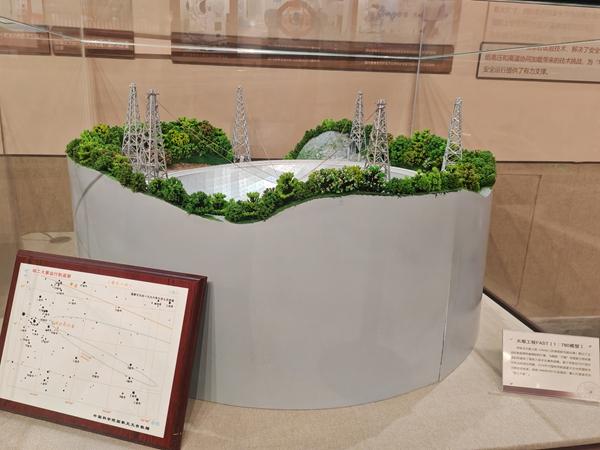
在校博里看见“大学之大”
Zhong Guo Qing Nian Bao· 2025-07-28 03:53
Core Viewpoint - The articles collectively highlight the enduring spirit and contributions of Chinese universities and their educators throughout history, particularly during challenging times such as the Anti-Japanese War and the establishment of New China, showcasing their commitment to education and national development [2][3][4][5][9][10]. Group 1: Historical Contributions of Universities - Tsinghua University, along with Peking University and Nankai University, formed the National Southwest Associated University during the war, demonstrating resilience in maintaining educational standards [3]. - The establishment of the National Southwest Associated University is commemorated by a monument in Kunming, symbolizing the dedication of its faculty and students to preserve Chinese educational heritage during turbulent times [4]. - The stories of various educators, such as Tong Dizhou, who conducted groundbreaking research under dire conditions, exemplify the commitment to scientific advancement despite hardships [5][6]. Group 2: Legacy of Educators - The achievements of educators like Qi Faren, who played a pivotal role in China's space program, reflect the significant impact of university faculty on national technological advancements [6][7]. - The contributions of researchers like Yin Xiangchu in entomology and the establishment of new classification systems highlight the importance of academic research in addressing national challenges [7][8]. Group 3: Student Activism and National Spirit - The May Fourth Movement, led by students from Peking University, is a historical example of youth activism that shaped national consciousness and resistance against imperialism [9]. - The "December 1" movement, which involved student protests against the Kuomintang's authoritarian rule, illustrates the role of universities in fostering political awareness and activism among youth [10][11]. Group 4: Modern Educational Initiatives - The "Hundred Universities Museum Exhibition Plan" aims to showcase the rich history and contributions of Chinese universities, emphasizing the importance of preserving and sharing educational legacies [3][12]. - Institutions like Yunnan Normal University continue to honor the spirit of the National Southwest Associated University by focusing on teacher education and community service, reflecting a commitment to social responsibility [13].

预算1.05亿元!上海交通大学近期大批仪器采购意向
仪器信息网· 2025-07-23 03:37
Core Viewpoint - Shanghai Jiao Tong University has announced procurement intentions for 33 items of laboratory equipment, with a total budget of 105 million yuan, scheduled for procurement between May and August 2025 [1][2]. Summary by Categories Procurement Overview - The procurement includes various advanced instruments such as small animal live Micro CT imaging systems, high-sensitivity full-spectrum cell sorters, superconducting magnet systems, and high-temperature high-pressure turbulent combustion experimental platforms [2][5]. Instrument Descriptions - **High-Sensitivity Full-Spectrum Cell Sorter**: Used for precise analysis and classification of cells in biological research and clinical diagnostics, integrating optical technology and flow cytometry [3]. - **Multi-Functional Enzyme Labeling Instrument**: Applicable in life sciences, drug development, and clinical diagnostics, capable of various detection modes including absorbance and fluorescence [3]. - **High-Resolution High-Contrast Transmission Electron Microscope**: A powerful tool for material characterization, providing nanometer-level resolution for observing fine structures [3]. - **High-Throughput Spotting Instrument**: Designed for efficient and precise distribution of micro-volumes of liquid, widely used in genomics and proteomics [4]. Detailed Procurement List - The procurement list includes specific instruments with their respective budgets and intended functionalities, such as: - Small Animal Micro CT Imaging System: 3.5 million yuan for research on lung diseases and metabolic disorders [5]. - High-Sensitivity Full-Spectrum Cell Sorter: 5 million yuan for high-parameter analysis of cell populations [5]. - Superconducting Magnet System: 1.6 million yuan for generating stable high magnetic fields [5]. - Magnetic Sputtering Equipment: 1.3 million yuan for thin film deposition [5]. - High-Temperature High-Pressure Turbulent Combustion Experimental Platform: 3.5 million yuan for aviation engine and gas turbine combustion research [5]. Additional Instrument Specifications - **Solid Oxide Electrolysis Cell Testing System**: Aimed at renewable synthetic fuel preparation, with a budget of 3.8 million yuan [6]. - **Real-Time Cell Analysis System**: Designed for non-invasive detection of various cellular behaviors, enhancing research capabilities [8]. - **High-Throughput Single-Cell Library Construction System**: For high-throughput analysis of gene expression and immune function [9]. Future Implications - The procurement of these advanced instruments is expected to significantly enhance research capabilities in various fields, including biomedical research, drug development, and clinical diagnostics, thereby contributing to advancements in personalized medicine and precision healthcare [2][3][4].
中国聚变能源有限公司在沪成立
news flash· 2025-07-22 12:25
Group 1 - The establishment of China Fusion Energy Co., Ltd. was officially announced on July 22 in Shanghai, marking a significant step in advancing fusion engineering and commercialization in China [1] - China Fusion Energy Co. is a subsidiary of China National Nuclear Corporation (CNNC) and will focus on overall design, technology verification, and digital R&D, while also building a technology research platform and a capital operation platform [1] - The company signed a deepening cooperation agreement with several local institutions, including Shanghai Jiao Tong University and China Electrical Equipment Group, to form a fusion innovation consortium [1] Group 2 - China Fusion Energy Co. has entered into a capital increase agreement with various stakeholders, including CNNC, China National Petroleum Kunlun Capital, and others, to support its growth and development [1]
Cell子刊:上海交大孙加源/熊红凯/戴文睿团队开发肺病诊断AI系统,准确率媲美专家
生物世界· 2025-07-22 07:02
Core Viewpoint - The article discusses the development and potential of the AI-CEMA system, a deep learning-assisted diagnostic tool for intrathoracic lymphadenopathy and lung lesions, which demonstrates diagnostic accuracy comparable to experienced experts [3][5][6]. Group 1: Background on Intrathoracic Lymphadenopathy - Intrathoracic lymphadenopathy is a common challenge faced by pulmonologists, characterized by abnormal enlargement of mediastinal and hilar lymph nodes [2]. - The most common malignant cause of intrathoracic lymphadenopathy is lung cancer, which is the leading cancer globally and the primary cause of cancer-related deaths, with an estimated 2.5 million new cases and 1.8 million deaths in 2022 [2]. Group 2: AI-CEMA System Development - The AI-CEMA system was developed by a team from Shanghai Jiao Tong University and published in Cell Reports Medicine, focusing on the detection and diagnosis of intrathoracic lymphadenopathy using endobronchial ultrasound multimodal videos [3]. - The system utilizes convex probe endobronchial ultrasound (CP-EBUS) multimodal videos to automatically select representative images, identify lymph nodes, and differentiate between benign and malignant nodes [5]. Group 3: Performance and Validation - AI-CEMA was trained on a dataset of 1,006 lymph nodes and validated through a retrospective study, achieving an area under the curve (AUC) of 0.8490, comparable to the expert level AUC of 0.7847 [5]. - The system also successfully applied to lung lesion diagnosis, achieving an AUC of 0.8192, indicating its versatility and effectiveness in clinical settings [5]. Group 4: Clinical Implications - The AI-CEMA system offers a non-invasive diagnostic approach, providing automated and expert-level diagnosis for intrathoracic lymphadenopathy and lung lesions, showcasing significant potential in clinical diagnostics [6][8].

AI人才缺口超500万 近五年超400所高校新设人工智能专业
Di Yi Cai Jing· 2025-07-18 11:32
Group 1 - From 2020 to 2024, four popular undergraduate majors have seen over 200 new program points, including Artificial Intelligence, Digital Economy, Intelligent Manufacturing Engineering, and Big Data Management and Applications, with Artificial Intelligence having the highest increase of over 400 new program points [1][4] - The "2025 Talent Supply and Demand Insight Report" indicates that emerging industries like Artificial Intelligence and New Energy Vehicles are driving strong job demand, particularly for technology roles, with AI-related positions showing significant growth [2][3] - In the first half of 2025, AI technology job demand grew significantly by 36.82%, with a current talent gap in AI exceeding 5 million, indicating a high demand for technical talent [3] Group 2 - A McKinsey report predicts that by 2030, the demand for AI professionals in China will increase to six times that of 2022, with strong recruitment growth in fields like low-altitude economy, embodied intelligence, and semiconductor engineering [4] - The domestic robotics industry has seen a rapid increase in both job openings and job seekers, with job postings up by 6% and job seekers up by 32% in the first five months of 2025 [4] - Higher education institutions are accelerating the adjustment of their programs to align with the rapid development of emerging industries, with new colleges being established to support interdisciplinary studies in robotics and integrated circuits [5][6]
构建多元化的新商学生态圈 上海交大安泰经管学院行业社群班研修基地揭牌
Sou Hu Cai Jing· 2025-07-14 06:38
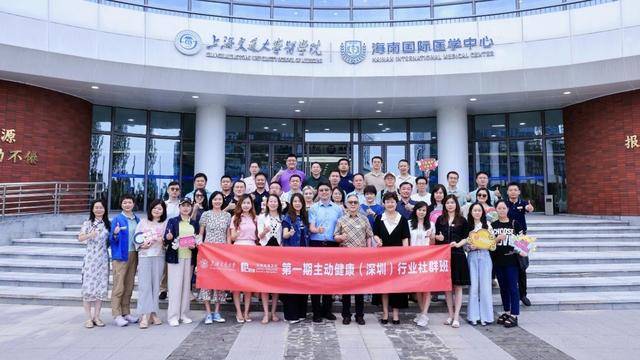
深圳商报·读创客户端记者 吴素红 日前,"上海交通大学安泰经济与管理学院行业社群班研修基地"在海南博鳌乐城揭牌。 上海交大安泰行业社群班是在学院"纵横交错,知行合一"战略指引下,深度融合行业实践,通过跨院 系、跨项目、跨学科、跨产学研的方式,为学院和校友之间提供一个供需对接的路径,促进实践、学 术、教学的良性循环,构建多元化的新商学生态圈。自2019年正式启动至今,行业社群已成功开设共六 期。 编辑:陈溶冰 活动中,来自上海交大安泰经管学院主动健康(深圳)行业社群班的50余位企业家学员齐聚海南博鳌乐 城,走进上海交通大学医学院海南国际医学中心(以下简称海南国际医学中心),上海交大行业研究院 副院长、深圳研究院执行院长田新民与海南国际医学中心副主任童天朗共同为"上海交通大学安泰经济 与管理学院行业社群班研修基地"揭牌。 活动期间,学员们参观了海南国际医学中心。海南国际医学中心是海南省政府与上海交通大学医学院合 作共建的公益二类事业单位,依托海南自贸港政策优势和上海交大医学院学科资源,以"小型化、精英 化、国际化"为定位,致力于建设教育科技人才产业融合中心、国际学术文化交流中心、医学高端人才 聚集中心。 (主办方 ...
超45亿,37所高校科研院所仪器采购意向汇总(2025年6月)
仪器信息网· 2025-07-14 03:33
Core Viewpoint - In June 2025, major universities and research institutions in China announced their intention to procure scientific instruments, with a total budget exceeding 4.5 billion yuan [1][2]. Summary by Sections Procurement Intentions - A total of 37 universities and research institutions have released procurement plans, reflecting a significant push for equipment updates initiated since 2024 [2]. - The procurement budget from these institutions collectively amounts to over 4.5 billion yuan [2]. Detailed Procurement Plans - The following are some of the notable procurement amounts from various institutions: - Shenyang Institute of Automation, Chinese Academy of Sciences: 161 million yuan - Chinese Academy of Medical Sciences: 221 million yuan - Wuhan University of Technology: 156 million yuan - Southeast University: 121 million yuan - Tsinghua University: 100 million yuan - Wuhan University: 199 million yuan - Chongqing Medical University: 215 million yuan [3][4]. Historical Context - Previous months have seen varying procurement intentions, with amounts ranging from 235 million yuan in February to 460 million yuan in March, indicating a growing trend in investment in scientific instruments [5].