
Tokyo Electron

Search documents
美国屈服于现实,豁免手机和半导体设备关税
日经中文网· 2025-04-14 03:18
美国特朗普政府将智能手机、半导体制造设备等电子相关产品排除在对等关税的对象之外。接受了国内 科技企业的要求。走一步算一步的政策未能克服国际分工高度发展的供应链的现实。 现有关税累计达到145%的对华加征关税将导致智能手机大幅涨价,特朗普政府寻求避免这种状况。特 朗普政府似乎认为,推进的国内半导体工厂和人工智能(AI)数据中心建设离不开半导体制造设备和 存储设备等的进口。 美国海关和边境保护局(CBP)在美国东部时间4月11日晚发布的通知中宣布了这一消息。随后,美国白 宫公布了特朗普总统签署的文件。特朗普在该文件中以原本排除在外的"半导体"定义中包括智能手机和 半导体制造设备为由,将其排除在对等关税对象之外。 豁免措施的适用将追溯到启动作为对等关税第一阶段的一律征收10%的4月5日。特朗普4月12日针对有 关半导体的关税措施向记者表示,"将在周一(14日)回答,做出明确解释"。 豁免措施的适用将追溯到启动作为对等关税第一阶段的一律征收10%的4月5日。有分析认为,成为对等 关税豁免对象的项目占美国从中国进口总量的23%…… 中国商务部4月13日针对称将智能手机等商品排除在外发表发言人谈话,称这是修正错误做法的一 ...


阿斯麦在日本增聘5倍维护员,以支持Rapidus投产
日经中文网· 2025-04-11 05:00
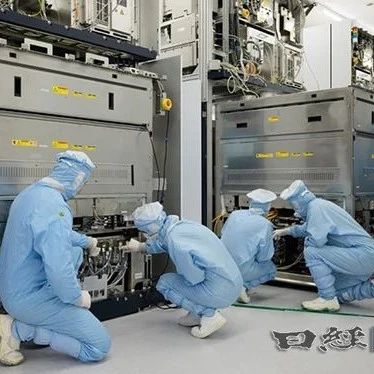
阿斯麦的技术人员正在保养光刻机 EUV光刻机已引入Rapidus于4月1日开始试产的北海道千岁市工厂。美光科技计划2026年在广岛工厂 开始量产最尖端内存半导体。阿斯麦将加强维护团队,以应对日本运行设备数量的增加…… 世界上唯一生产最尖端半导体制造设备的荷兰阿斯麦控股(ASML Holdings)计划到2027年将负责 日本尖端设备维护的人员增至现在的5倍,达到100人。目的是应对要量产最尖端半导体的 Rapidus等在日本投产的需求。 阿斯麦生产极紫外线(EUV)光刻机。EUV光刻机被称为"地球上最复杂的机器",其零部件数量 多达约10万个。由于光刻机由多种系统组合而成,维护时需要各个技术领域的专家。 EUV光刻机已引入Rapidus于4月1日开始试产的北海道千岁市工厂。美国美光科技计划2026年在 广岛工厂开始量产最尖端内存半导体。阿斯麦将加强维护团队,以应对日本运行设备数量的增 加。 日本国内相继新建半导体工厂,比如台积电(TSMC)的熊本工厂等,各半导体设备公司也在增 加人手。 日本半导体设备制造商Tokyo Electron计划到2027年三年内在日本招聘3000人。KOKUSAI ELECTRIC ...

台积电美国制芯片成本,仅比台湾高10%?
半导体行业观察· 2025-03-26 01:09
Core Viewpoint - TSMC's wafer production costs in Arizona are only about 10% higher than those in Taiwan, contrary to the belief that U.S. production is prohibitively expensive [1][2]. Cost Factors - Equipment costs account for over two-thirds of semiconductor production costs, and prices for tools from leading manufacturers are similar in both Taiwan and the U.S., mitigating location-based cost differences [2]. - Labor costs in the U.S. are approximately three times higher than in Taiwan; however, due to advanced automation, labor constitutes less than 2% of total costs in wafer manufacturing [2]. TSMC's Production and Logistics - TSMC's wafers produced in Arizona are sent back to Taiwan for cutting, testing, and packaging, complicating logistics but not significantly increasing costs. TSMC plans to build packaging capacity in the U.S. [2]. - TSMC reportedly charges a 30% premium for chips produced in the U.S. [2]. Revenue Distribution by Node - In 2024, nearly 50% of TSMC's revenue will come from nodes that are five years old or older, such as 7nm and above, contrasting with Intel's strategy of shutting down older nodes [3][4]. - Advanced nodes (3nm and 5nm combined) contribute 52% of revenue but only 27% of profit, indicating that profitability is still developing for these newer technologies [6][9]. Profitability Insights - The 3nm and 5nm nodes were reported to be operating at a loss in 2023, but profitability is expected to improve as production ramps up [9]. - TSMC's financial health is bolstered by older nodes that have fully depreciated, while newer nodes still carry depreciation costs [11]. Methodology - The analysis of TSMC's profitability by node involves estimating costs based on revenue shares and accounting for depreciation, R&D, and operational expenses [12].

从日本股市里的中国概念股股价说起
日经中文网· 2025-03-12 03:22
Core Viewpoint - Japanese companies with significant revenue from China are facing challenges, as indicated by a decline in their market capitalization index from 100 to 67 since March 7, 2024, due to intensified competition from Chinese firms and economic concerns stemming from US-China tensions [1][2]. Group 1: Market Performance - The weighted average market capitalization of ten major Japanese companies with high revenue from China has dropped significantly, while companies like SUBARU and Takeda Pharmaceutical, which have higher revenue from the US, remain relatively stable at 91 [2]. - The Japanese stock market is particularly affected by the performance of Chinese concept stocks, which are struggling amid fears of economic slowdown and increased competition from Chinese enterprises [2]. Group 2: Economic Policies and Expectations - The Japanese market is closely watching China's National People's Congress for policies aimed at stimulating domestic demand, with a notable increase in the mention of "consumption" in the government work report [1]. - There are expectations that China's economic stimulus measures starting in 2024 could positively impact Japanese companies' performance [1]. Group 3: Competitive Landscape - Chinese companies, particularly in the automotive sector, are gaining market share through cost reductions and innovations, with BYD's electric vehicle sales projected to grow by 40% in 2024, while Japanese automakers like Honda and Nissan are experiencing declines in sales [2][3]. - The rise of Chinese firms is attributed not only to government subsidies but also to significant improvements in production efficiency, with labor productivity in China increasing by 30% from 2017 to 2022, compared to a 7% increase in Japan [3]. Group 4: Strategic Responses - Despite the competitive pressures, some Japanese companies are investing in China, such as Toyota's plan to build a Lexus factory in Shanghai and launch a budget EV [4]. - Pigeon Corporation, a baby products giant, is implementing aggressive marketing strategies to recover its lost market share in China, aiming for a 20% increase in sales [4][5]. Group 5: Future Outlook - The competitive landscape in China is described as overly competitive, raising questions about the prospects for Japanese companies [5]. - There is a belief that Japanese firms, known for their quality and price balance, may have opportunities to regain market share, especially in sectors like AI and hardware [5].


PDF Solutions(PDFS) - 2024 Q4 - Earnings Call Transcript
2025-02-14 04:15
Financial Data and Key Metrics Changes - For Q4 2024, total revenues reached $50.1 million, representing a 22% year-over-year growth, exceeding the long-term growth target [20] - Full-year 2024 total revenues were $179.5 million, an 8% increase from $165.8 million in 2023, with significant growth occurring in the second half of the year [20][21] - Gross margin for Q4 was 72%, while the full-year gross margin was 74%, moving closer to the target model of 75% [24] Business Line Data and Key Metrics Changes - Analytics revenue grew 22% in Q4 compared to the same period last year and accounted for 96% of total revenue for the quarter [20][22] - The DFI eProbe systems showed strong momentum, with successful conversions from evaluations to sales for leading-edge customers [21] - Exensio modules, including process control and ML ops, are expected to drive most bookings in 2025 [15] Market Data and Key Metrics Changes - Customers in advanced logic, high bandwidth memory, and advanced packaging are investing, while other sectors exhibit a more cautious outlook [12][13] - The semiconductor industry is projected to experience mixed growth, with total revenues expected to grow at a rate approaching 15% year-over-year [17] Company Strategy and Development Direction - The company aims to expand applications for the eProbe in advanced logic and DRAM, anticipating shipment of over four machines in 2025 [14][28] - The strategy includes a shift towards a model where customers can purchase machines and optionally subscribe to application services and software [66] - The company is committed to achieving a long-term target model of 20% year-over-year revenue growth, 75% gross margin, and 20% operating margin [27] Management's Comments on Operating Environment and Future Outlook - Management expressed optimism about growth returning in the second half of 2024 and highlighted customer interest in products and solutions [12] - The outlook for 2025 reflects both short-term weaknesses in the semiconductor industry and a strong pipeline driven by macro trends such as distributed manufacturing and AI [27][28] - Management noted that while some customers are cautious, others are accelerating investments, indicating a diverse customer base [73] Other Important Information - The company reported positive operating cash flow of approximately $10 million and spent about $18 million on CapEx related to the DFI ecosystem [26] - The accounts receivable balance was elevated due to timing and billing, but management is confident in collections [60][62] Q&A Session Summary Question: Can you provide more color on the eProbe pipeline? - The eProbe sales will include both repeat sales to existing customers and new sales to new customers, with a focus on advanced logic and DRAM applications [35] Question: What is the status of the backlog? - The backlog decreased from $239 million in Q3 to $221 million, attributed to the nature of the new machine sales model [34][39] Question: How has customer receptivity to model ops been? - Customer receptivity has been high, with ongoing pilots and increased sales and marketing efforts related to model ops and guided analytics [52][53] Question: What is the impact of elevated accounts receivable on cash flow? - The elevated accounts receivable is a matter of timing and billing, with no significant concerns regarding collections [60][62] Question: How will the new sales model for DFI work? - The new model allows customers to take title of the machine while subscribing to software and application services, impacting accounts receivable [66][67] Question: Are management changes at key customers affecting business? - There is no significant impact from management changes; the business remains diverse, reducing dependency on any single customer [73][79] Question: Is there increased activity in advanced packaging? - Yes, there has been increased activity in advanced packaging, driven by the complexity of new assembly technologies [80][82] Question: Are there opportunities in HBM DRAM with Exensio? - The company is starting to penetrate HBM DRAM accounts, particularly through the eProbe, which has opened new opportunities [87][89]
