DeepSeek

Search documents
X @Bloomberg
Bloomberg· 2025-08-11 06:05
AI Development - A Malaysian company designed an AI large language model for Muslims [1] - The AI model is based on open-source AI knowhow from China's DeepSeek [1]
SoftBank founder Son makes his biggest bet by staking the Japanese giant's future on AI
CNBC· 2025-08-11 01:29
Core Viewpoint - Masayoshi Son, CEO of SoftBank, is betting on artificial intelligence (AI) to revolutionize technology, predicting the arrival of artificial superintelligence (ASI) within the next decade [2][5]. Group 1: SoftBank's AI Strategy - SoftBank has made significant investments in AI firms, aiming to position itself at the forefront of a technological shift [3][5]. - The company acquired chip designer Arm for approximately $32 billion in 2016, which is now valued at over $145 billion, and is focusing on AI infrastructure [6]. - SoftBank plans to invest around 4.8 trillion Japanese yen (approximately $32.7 billion) in OpenAI, among other AI-related companies [7]. Group 2: Historical Context and Vision - Son's vision for AI dates back over a decade, with early discussions about "brain computers" and robotics [11][12]. - The Vision Fund, launched in 2017 with $100 billion in capital, aimed to capitalize on AI advancements but faced challenges due to investments in companies like Uber and WeWork [13][14]. - Despite setbacks, Son remains committed to establishing a robust AI ecosystem that integrates various components of AI technology [9][10]. Group 3: Market Dynamics and Future Outlook - The AI sector is characterized by rapid advancements and high competition, particularly between U.S. and Chinese firms [21][22]. - SoftBank acknowledges the early stage of AI investment and believes there are still significant opportunities ahead [19][23]. - Son's long-term vision includes positioning SoftBank for sustained success over the next 300 years, reflecting his willingness to take substantial risks in pursuit of AI leadership [24][25].



三位90后,估值700亿
3 6 Ke· 2025-08-10 23:32
Core Insights - Mistral AI is raising approximately $1 billion in a new funding round, which will bring its valuation to $10 billion, marking a nearly 50-fold increase in valuation since its inception two years ago [1] - The founders, all in their 30s, are highly educated individuals with backgrounds from top institutions and experience in leading AI companies [2][4] - Mistral AI aims to lead the generative AI wave through open-source models, contrasting with closed models from competitors like OpenAI and Anthropic [4][5] Company Overview - Mistral AI was founded by three young scholars who returned to Paris from Silicon Valley to capitalize on the AI revolution [4] - The company launched its first open-source large model, Mistral 7B, which outperformed competitors in benchmark tests [4] - Mistral has received significant backing from prominent venture capital firms and wealthy individuals, achieving record seed funding and subsequent rounds [7][10] Funding and Valuation - Mistral AI's initial funding round raised $1.13 billion, setting a record for seed funding in Europe, with a valuation exceeding $2.6 billion [7] - Subsequent funding rounds have seen Mistral's valuation soar to $20 billion and then to $60 billion, with major investments from firms like a16z and Nvidia [9][10] - The latest funding round aims to secure $1 billion, potentially increasing the company's valuation to $10 billion [1][10] Competitive Landscape - The AI open-source landscape is becoming increasingly competitive, with companies like DeepSeek gaining traction and being referred to as "the Chinese version of Mistral" [5] - Mistral has launched several products, including a chatbot and an inference model, to compete directly with emerging players [5] - Despite initial success in France, Mistral's international market performance has been mixed, prompting a focus on commercialization and partnerships with industry giants [5][10] Industry Trends - The rise of AI has led to a surge of young entrepreneurs entering the field, with many achieving significant funding and rapid growth [11][12] - Companies like Perplexity and Anysphere have also seen remarkable valuations and funding, indicating a broader trend of youth-driven innovation in AI [12][13] - The current generation of entrepreneurs is characterized by a strong educational background and a global perspective, positioning them well to leverage opportunities in the AI sector [14]

提升人工智能产业技术创新力
Jing Ji Ri Bao· 2025-08-10 21:54
Group 1 - The new generation of artificial intelligence is a crucial strategic tool for gaining global technological competitiveness and driving economic transformation [1] - China's artificial intelligence industry has achieved rapid development driven by policy guidance and technological breakthroughs, with significant industry clusters emerging [1][2] - By 2024, Beijing's core AI industry scale has surpassed 300 billion yuan, while Zhejiang's AI industry scale has exceeded 570 billion yuan, showcasing the growth of AI enterprises [1] Group 2 - The top-level design policy system for advancing the AI industry is becoming increasingly refined, with specific targets set for digitalization in manufacturing [2] - The 20th National Congress has classified AI as a strategic industry, and a comprehensive standardization system for AI is being developed [2] - Despite rapid advancements, challenges remain in high-end AI chip development, cybersecurity risks, and the lagging ethical and regulatory frameworks [2][3] Group 3 - The government aims to leverage the national system advantages to enhance the technological layout and reform in AI, focusing on foundational research and infrastructure [3] - There is a need for increased investment in critical areas such as high-end chips and algorithms to strengthen the AI industry [3] - The industry should focus on breakthroughs in core technologies to enhance innovation and global competitiveness [3] Group 4 - Companies are encouraged to activate their innovation capabilities and take responsibility in AI development, fostering a culture of internal innovation [4] - Enterprises should pursue a blend of economic and social benefits, engaging in ethical standards and risk management [4] - There is an emphasis on the role of AI companies in contributing to national development and improving people's lives [4]
🚨Gavin Baker: DeepSeek employees are being tailed by CCP Agents
All-In Podcast· 2025-08-10 14:07
AI Development & Geopolitical Implications - The AI industry believes there is an "existential race" for humanity to win the AI race with China [1] - Deep Seek employees in China face restrictions, including being prohibited from being in the same room as Americans and having a CCP minder present [1] - Xi Jinping met with entrepreneurs, prioritizing manufacturers and Deep Seek, potentially deemphasizing social networks [2]

这才是美国惧怕、打压中国AI的真正原因
Hu Xiu· 2025-08-10 11:37
Core Viewpoint - The release of GPT-5.0 has sparked discussions on the importance of open-source AI, highlighting the tension between innovation and control in the AI industry [1][3]. Group 1: Open Source vs. Closed Source - OpenAI's shift from open-source to closed-source with GPT-4 reflects broader uncertainties in the AI landscape, indicating a dynamic adjustment of productivity and production relations [3]. - The debate over open-source AI has evolved beyond technical governance to become a critical issue regarding the future direction of AI technology [3][20]. Group 2: Value of Open Source - Open-source software is estimated to provide a value of $8.8 trillion, significantly contributing to digital transformation [2]. - The open-source philosophy, emphasizing the "four freedoms," is increasingly recognized as essential for continuous innovation in software development [2][4]. Group 3: Challenges of Open Source in AI - Open-source AI faces criticism for being less transparent than traditional open-source software, with limitations on resource sharing that hinder technical replication and community learning [4][5]. - The licensing agreements for open-source AI often include restrictive clauses, contrasting with the traditional open-source spirit that promotes maximum inclusivity [5][6]. Group 4: Legal and Ethical Implications - The definition of "open-source AI" is contentious, with implications for legal responsibilities and protections under regulations like the EU's AI Act [7][20]. - The ongoing debate over the definition of open-source AI reflects deeper issues of public versus private interests and the evolving power dynamics in international relations [20]. Group 5: Geopolitical Context - The discourse surrounding open-source AI is increasingly intertwined with geopolitical considerations, as it can either foster international cooperation or exacerbate competition among nations [17][18]. - The U.S. government's approach to regulating open-source AI has shifted, indicating a complex interplay between national security and technological advancement [15][18]. Group 6: Future of Open Source in AI - The ongoing controversies surrounding open-source AI are not merely technical disagreements but are indicative of broader societal impacts and the future trajectory of AI development [20].
欧洲版DeepSeek,估值700亿
Hu Xiu· 2025-08-10 08:16
Core Viewpoint - Mistral AI, founded by three young graduates, has achieved a staggering valuation of $10 billion within two years, reflecting the rapid growth and potential of the AI industry [2][16]. Group 1: Company Overview - Mistral AI was established by three 90s graduates who previously worked at top AI firms and recognized the opportunity in the AI revolution [5][6]. - The company raised $1 billion in its latest funding round, increasing its valuation to approximately $10 billion [2][26]. - Mistral's first product, the open-source model Mistral 7B, outperformed competitors in benchmark tests, quickly gaining attention in the developer community [7][8]. Group 2: Investment and Growth - Mistral AI has attracted significant investment from notable venture capital firms, achieving a record seed funding of $113 million shortly after its inception [17][18]. - The company’s valuation skyrocketed from $2.6 million to $20 million within six months, marking its entry into the unicorn club [23]. - Recent partnerships with major players like Nvidia and Microsoft have further solidified Mistral's position in the AI landscape [24][14]. Group 3: Competitive Landscape - The AI sector is becoming increasingly competitive, with Mistral facing challenges from other open-source models like DeepSeek, which has gained global popularity [10][11]. - Despite initial success in France, Mistral's international performance has been mixed, prompting the company to enhance its product offerings [13][12]. - The emergence of other young AI startups, such as Perplexity and Anysphere, highlights the growing trend of young entrepreneurs in the AI space [30][32]. Group 4: Future Outlook - Mistral aims to lead the AI industry over the next decade, emphasizing the importance of open-source models for global AI development [8][28]. - The founders express a strong commitment to maintaining their ambitious vision as they navigate the evolving AI landscape [15].

奥特曼预期管理失败,GPT-5让人失望了?
Hu Xiu· 2025-08-09 10:17
Core Viewpoint - OpenAI has launched GPT-5, which includes multiple versions aimed at being the "smartest, fastest, and most practical" model, with a focus on affordability for users [2][3]. Group 1: Model Launch and Features - GPT-5 was officially released on August 8, 2023, and includes versions such as GPT-5 mini, GPT-5 nano, and GPT-5 Pro [2]. - The pricing strategy for GPT-5 is significantly lower, with API costs reduced to $1.25 per million tokens for input and $10 for output [2]. - The model is perceived as a response to competitive pressures from companies like Anthropic and Google, which have also launched their models [5][6]. Group 2: Performance and Expectations - Experts have noted that while GPT-5 shows improvements in reasoning and tool invocation, it has not met the high expectations set by its predecessors, leading to a consensus that the advancements are incremental rather than revolutionary [3][10][12]. - The model's reliance on synthetic data and a structured data quality assessment system has helped address the scarcity of high-quality data, but there are still concerns regarding its reasoning capabilities [11][29]. Group 3: Safety and Usability - GPT-5 introduces a "safe completion" mechanism that aims to balance safety and usability, moving away from strict refusal to answer potentially harmful queries [9][41]. - The model's ability to dynamically adjust its responses based on user intent is seen as a positive development, indicating that safety and innovation can coexist [43][44]. Group 4: Industry Implications - The launch of GPT-5 signifies a strategic shift for OpenAI towards a more affordable and open model, which could influence the broader AI industry by making advanced models more accessible [8][18]. - The competitive landscape is evolving, with companies like Claude and DeepSeek gaining traction, suggesting a potential shift towards a more diverse ecosystem of AI models [34][36]. Group 5: Future Directions - The introduction of a multi-model routing capability in GPT-5 is viewed as a step towards more flexible and efficient AI applications, although it is not considered a groundbreaking innovation [17][22]. - The ongoing challenges related to reasoning and data quality highlight the need for further research and development in the AI field, particularly in understanding the mechanisms behind reasoning capabilities [27][28].
X @The Economist
The Economist· 2025-08-09 04:00
Xi Jinping’s handshake with DeepSeek’s founder, Liang Wenfeng, broadcast earlier this year into the country’s living rooms, helped transform how ordinary Chinese view AI https://t.co/EEsMAVuXdR ...
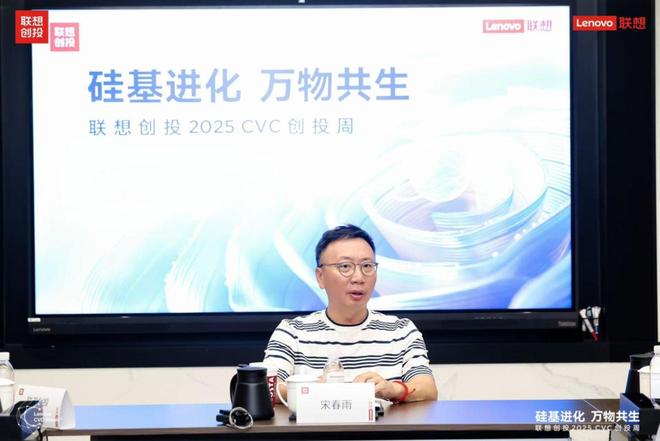
宋春雨:下一代颠覆性巨头,不会出现在大模型里
Tai Mei Ti A P P· 2025-08-09 01:43
Group 1 - The core viewpoint is that the AI industry is at a critical juncture, with the potential for the emergence of "super applications" akin to TikTok, driven by intelligent agents [2][8] - The landscape of large models is consolidating, with a few major players dominating, while new startups are emerging in the AI space [3][4] - The demand for computing power remains high, particularly for inference chips, which are crucial for the operation of intelligent agents and AI applications [4][5] Group 2 - The Chinese chip market is expected to undergo consolidation, leading to significant merger and acquisition opportunities, with some AI chip startups likely to go public [5][6] - The focus on intelligent agents is seen as a major investment opportunity, with the potential for hundreds of unicorns in China and thousands globally [8][10] - The evaluation of AI projects emphasizes the importance of user willingness to pay and the product's ability to deliver tangible results, distinguishing AI products from traditional SaaS tools [13][14]