
OPPO

Search documents
AI眼镜要爆发了?Meta想通吃消费级AI眼镜
3 6 Ke· 2025-10-10 13:04
Core Insights - Meta has launched three differentiated AI smart glasses targeting various user needs, emphasizing the importance of smart glasses in enhancing user experience without interrupting reality [1][12] - The introduction of a developer platform allows third-party developers to create applications utilizing the glasses' sensors and AI capabilities, expanding the ecosystem [9][11] Product Overview - The flagship product, Meta Ray-Ban Display, features a high-resolution display priced at $799, with a transparent heads-up display (HUD) that is visible only to the wearer and has a brightness of 5000 nits [2][4] - The second-generation Ray-Ban Meta is priced at $379, offering improved battery life of 8 hours and a 12-megapixel camera capable of 3K video recording [6] - The Oakley Meta Vanguard, priced at $499, is designed for durability and sports use, featuring IP67 water resistance and a battery life of up to 9 hours [8] AI and Developer Platform - Meta's smart glasses incorporate advanced AI features, including real-time translation and environmental recognition to assist users, particularly those with visual impairments [11][12] - The "Wearables Device Access Toolkit" enables developers to create applications that leverage the glasses' capabilities, with initial partnerships including Twitch and Disney [9][12] Market Position and Competition - Meta's smart glasses represent a transition towards augmented reality (AR), with plans for a more advanced AR headset, Orion, expected in 2027 [12] - Chinese brands like Huawei and Xiaomi are emerging in the smart glasses market, offering competitive pricing and localized features, which may challenge Meta's market position [12][13] - The supply chain for smart glasses is heavily concentrated in China, with over 80% of manufacturers located there, providing local brands with cost advantages and faster technology iterations [13]



被降价整破防,大疆用户还是太年轻了
3 6 Ke· 2025-10-10 12:47
Core Viewpoint - DJI has significantly reduced prices on several products, including a nearly 20% drop for the Osmo Pocket 3 and up to 1500 yuan for the Mini series drones, leading to consumer outrage and accusations of betrayal due to the timing of the price cuts [1][2][4]. Group 1: Price Reduction Impact - The price cuts were labeled as a "Double Eleven regular promotion," but the timing and magnitude of the reductions angered recent buyers who felt deceived [2][4]. - Consumers who purchased products just before the price drop found themselves facing significant price differences, with some unable to take advantage of price protection policies due to the timing of their purchases [4][5]. - The price drop has sparked discussions about the brand's pricing strategy and the implications for consumer trust, particularly among those who bought products through offline channels [5][7]. Group 2: Market Dynamics - The release of the "legendary new product" Pocket 4 has created anticipation among users, with some opting to wait rather than purchase the current model [3][19]. - The price drop is seen as a strategic move by DJI to clear inventory before the launch of new products and to set a competitive price point that raises barriers for potential new entrants in the market [19][20]. - The competitive landscape is intensifying, with new players like Insta360 and established smartphone manufacturers like OPPO and vivo planning to enter the handheld imaging device market, posing a significant challenge to DJI [15][16][20]. Group 3: Consumer Sentiment and Brand Perception - The drastic price reduction has led to a loss of perceived value for the Pocket 3, which was previously viewed as a scarce and desirable product [8][10][14]. - Consumers who experienced the scarcity and high demand for the Pocket 3 now feel their investment has been undermined by the sudden price drop, leading to frustration and disappointment [12][14]. - The complexity of DJI's distribution channels has resulted in varying customer experiences regarding price protection and returns, further complicating consumer sentiment towards the brand [6][7].
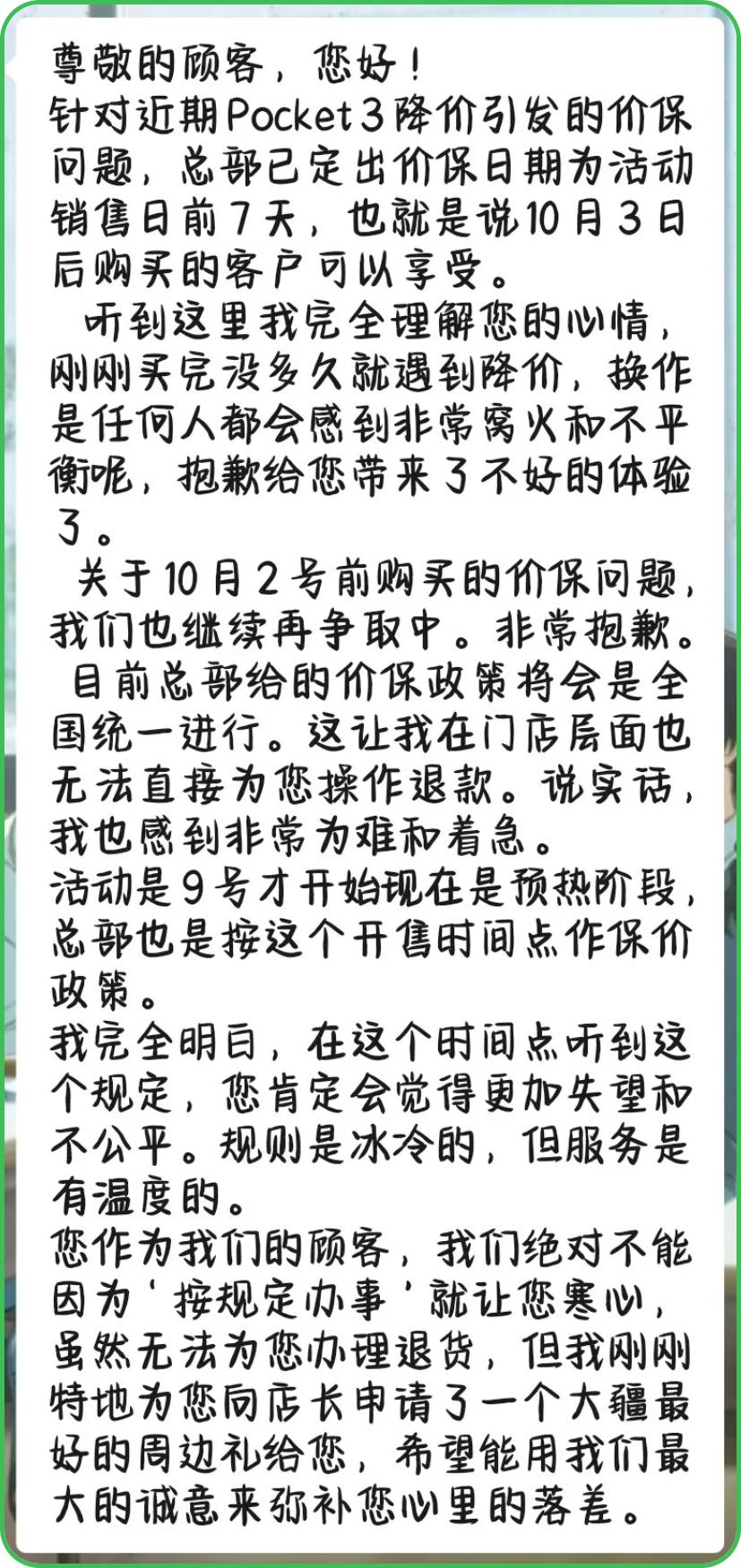
大疆降价风暴背后,藏着一场生死攻防战
虎嗅APP· 2025-10-10 09:44
Core Viewpoint - DJI's recent price cuts on its products, including the Pocket 3 series, are seen as a necessary move in response to competitive pressures in the consumer imaging device market, rather than a simple promotional strategy [6][24][38]. Group 1: Price Cut Events - DJI launched a promotional campaign in October 2025, offering discounts of up to 900 yuan on various products, including the Pocket 3 series and action cameras [4][16]. - Consumers expressed frustration over the timing of the price cuts, with some reporting that they had just purchased products at higher prices only to see significant reductions shortly after [10][14]. - The price cuts have led to a surge in consumer complaints and discussions on social media, with many feeling misled by the company's pricing strategy [14][22]. Group 2: Market Competition - DJI's market share in the global consumer imaging device sector has declined from 19.1% in 2023 to 13.2% in 2024, while competitors like Insta360 have increased their share from 28.4% to 35.6% during the same period [25][27]. - The entry of smartphone manufacturers into the imaging device market poses a significant threat to DJI, as these companies leverage their existing technology and supply chains to offer competitive products [33][34]. - DJI's price cuts are part of a broader strategy to maintain its market position against both traditional competitors and new entrants from the smartphone industry [38][39]. Group 3: Strategic Implications - The price reductions are not merely for clearing inventory but are aimed at establishing a "price moat" to deter new competitors from entering the market with higher-priced products [36][38]. - DJI's approach reflects a tactical decision to trade short-term profits for market share and customer loyalty in anticipation of future competition [38][39]. - The company is also preparing for the launch of the next-generation Pocket 4, which is expected in early 2026, making the current price cuts a strategic move to boost user adoption of the older model [35][38].
中塑股份创业板IPO:研发人员专科及以下占比56% 毛利率超同行均值9.6个百分点
3 6 Ke· 2025-10-10 07:10
Core Viewpoint - Guangdong Zhongsu New Materials Co., Ltd. (Zhongsu Co.) has received approval for its IPO on the ChiNext board, focusing on the research, production, and sales of modified engineering plastics, with applications in various industries including consumer electronics, energy storage, automotive, and home appliances [1][2]. Financial Performance - In 2024, Zhongsu Co. achieved a revenue of 700 million yuan and a net profit of 92.57 million yuan after deducting non-recurring gains and losses [1][2]. - The company's revenue for the years 2022 to 2024 was 493 million yuan, 537 million yuan, and 700 million yuan, with a compound annual growth rate (CAGR) of 19.11% and 37.79% for net profit during the same period [2]. Gross Margin - Zhongsu Co.'s gross margin for its main business was 31.03% in 2024, significantly higher than the industry average of 21.42%, representing a difference of 9.61 percentage points [1][2][3]. - The gross margins for the years 2022 to 2024 were 26%, 31.97%, and 31.03%, respectively, compared to industry averages of 21.15%, 24.31%, and 21.42% [2]. Research and Development - The R&D expense ratios for Zhongsu Co. from 2022 to 2024 were 3.12%, 2.93%, and 3.62%, which were below the industry averages of 4.40%, 4.71%, and 3.92% for the same periods [4]. - As of March 31, 2025, the company had 66 R&D personnel, with 56.06% holding a diploma or lower [4]. Funding and Projects - Zhongsu Co. plans to raise approximately 645.49 million yuan through its IPO to fund projects including the construction of a high-performance engineering materials intelligent production base, expansion of the Jiangxi Zhongsu production base, establishment of a new materials engineering technology research center, and to supplement working capital [1].

运营商还在博弈?采用eSIM的最薄iPhone内地上市仍无时间表
Guan Cha Zhe Wang· 2025-10-10 05:57
Core Viewpoint - The launch of the "thinnest iPhone," the iPhone Air, in mainland China is delayed due to issues with eSIM support from local telecom operators, despite its global release in nearly 100 countries [1][3]. Group 1: Product Details - The iPhone Air, released on September 10, features a thickness of only 5.6 mm and eliminates the physical SIM card slot, adopting eSIM technology instead [1]. - Apple announced that the iPhone Air would be available in China on September 19, with support from over 500 global operators, including China Unicom [1]. Group 2: Telecom Operators' Issues - The delay in the iPhone Air's launch in mainland China is attributed to conflicts among telecom operators, with China Unicom prepared but China Mobile and China Telecom facing issues [3]. - China Mobile and China Telecom have indicated readiness for eSIM services, but have not yet launched them, leading to uncertainty regarding the iPhone Air's availability [3]. Group 3: Market Competition - The competition in the Chinese smartphone market is intensifying, with Apple facing challenges from domestic brands. From January to July, Apple's market share in the 4000 to 6000 yuan price segment dropped from 23.4% to 17%, while Huawei, Xiaomi, Vivo, OPPO, and Honor gained shares [6]. - The future pricing strategies of the three major telecom operators regarding eSIM services will significantly influence user migration and market dynamics [6].




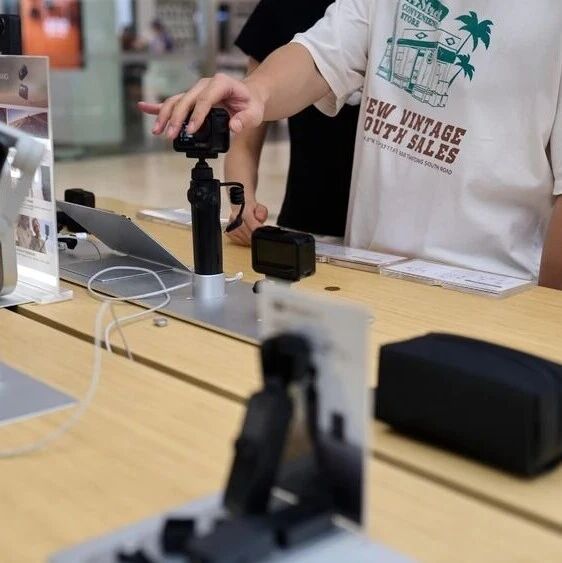
大疆降价风暴背后 藏着一场生死攻防战
Feng Huang Wang· 2025-10-10 04:42
Core Viewpoint - DJI's recent price drop on multiple products, including the Pocket 3 series, has sparked significant consumer backlash and discussions about pricing policies, indicating a strategic response to competitive pressures in the consumer imaging market [2][12][21]. Group 1: Consumer Reactions - Consumers expressed frustration over the abrupt price drop shortly after purchase, with some feeling deceived by the lack of price protection for activated products [4][5][11]. - Social media has seen a surge of complaints from consumers who feel they have been unfairly treated, coining terms like "big loser" to describe their experiences [9][11]. - The price drop has led to confusion regarding return policies, with significant discrepancies between online and offline purchasing channels [11]. Group 2: Pricing Strategy - The price reduction is part of a broader promotional strategy leading up to the "Double 11" shopping festival, with discounts reaching up to 900 yuan on various products [10][21]. - DJI's decision to lower prices is not merely a promotional tactic but a strategic move to counteract declining market share, which fell from 19.1% in 2023 to 13.2% in 2024 [13][21]. - The company aims to create a "price moat" to deter new entrants, particularly smartphone manufacturers entering the imaging device market [20][21]. Group 3: Competitive Landscape - The consumer imaging market is becoming increasingly competitive, with DJI facing pressure from both professional competitors and smartphone giants like OPPO and vivo [16][21]. - DJI's recent product launches, such as the Osmo360, are direct responses to competitive threats, with aggressive pricing strategies to capture market share [15][21]. - The upcoming release of the Pocket 4 in early 2026 necessitates a price drop for the Pocket 3 to clear inventory and maintain customer loyalty [18][21]. Group 4: Market Implications - The significant price cuts signal a shift in the consumer imaging market dynamics, indicating a potential long-term battle for market share among established brands and new entrants [22]. - DJI's approach reflects a calculated risk to maintain relevance and competitiveness in a rapidly evolving market landscape [21][22].
大疆降价风暴背后,藏着一场生死攻防战
Feng Huang Wang Cai Jing· 2025-10-10 03:44
Core Viewpoint - DJI's recent price drop on multiple products, including the Pocket 3 series, has sparked significant consumer backlash and raised questions about pricing strategies in a competitive market [1][3][22]. Group 1: Price Drop Impact - The price reduction of up to 900 yuan on products like the Pocket 3 series has led to consumer frustration, particularly for those who purchased items shortly before the announcement [1][15]. - Consumers reported being misled about price stability, with some receiving conflicting information regarding price protection policies from different sales channels [7][10][20]. - The promotional event, labeled as a "pre-sale" for Double 11, has been criticized for its lack of clear communication and consistency across online and offline channels [22][23]. Group 2: Competitive Landscape - DJI's market share in the global smart imaging device sector has declined from 19.1% in 2023 to 13.2% in 2024, while competitors like Innosilicon have increased their share from 28.4% to 35.6% during the same period [25][26]. - The entry of smartphone manufacturers into the imaging device market poses a significant threat to DJI, as these companies leverage their existing technology and supply chains to offer competitive products [29][30]. - DJI's aggressive pricing strategy is seen as a defensive move to maintain market share against both traditional competitors and new entrants from the smartphone industry [30][34]. Group 3: Strategic Pricing Decisions - The price cuts are part of a broader strategy to clear inventory ahead of the anticipated launch of the new Pocket 4 model in early 2026, which is a common practice in the industry [31][32]. - DJI aims to create a "price moat" to deter new entrants from pricing their products competitively, thereby slowing their market penetration [33][34]. - The decision to implement significant price reductions reflects a calculated risk to trade short-term profits for long-term market positioning and customer retention [34].
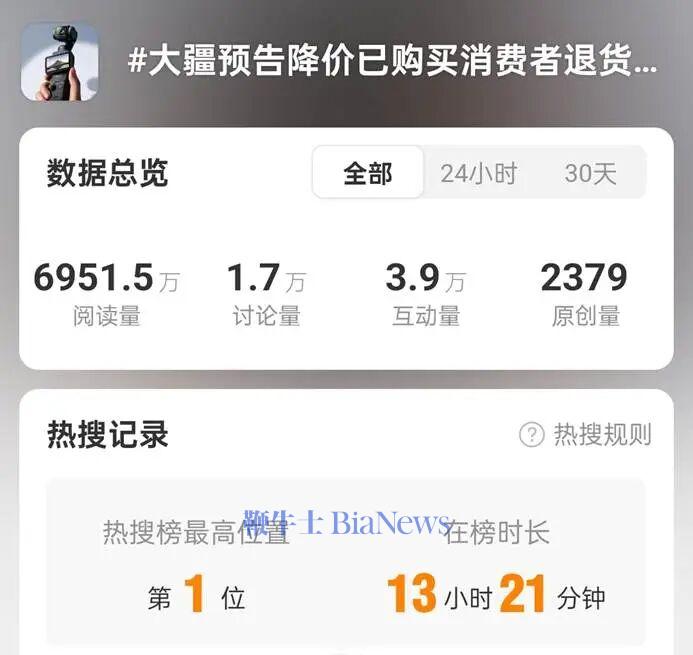
大疆降价风暴背后,藏着一场生死攻防战
凤凰网财经· 2025-10-10 03:27
Core Viewpoint - DJI's recent price drop on multiple products, including the Pocket 3 series, is seen as a necessary move in response to competitive pressures rather than a simple promotional strategy [24][44]. Group 1: Price Drop Incident - On October 5, 2025, a customer purchased the DJI Pocket 3 for 3519 yuan, only to find out the next day that the price would drop by up to 900 yuan starting October 9 [4][12]. - Customers expressed frustration over the lack of price protection for activated products, leading to a wave of complaints on social media [2][12]. - The price drop affected various products, including the Osmo Pocket 3 and Action 4, with significant reductions announced as part of a promotional event [15][13]. Group 2: Consumer Reactions - Many consumers felt deceived, with some humorously labeling themselves as "big losers" after experiencing immediate price drops post-purchase [12][22]. - The disparity in return and price protection policies between online and offline channels led to confusion and dissatisfaction among customers [20][17]. - DJI's customer service responses varied, with some customers being told that offline purchases did not qualify for price protection [9][22]. Group 3: Competitive Landscape - DJI's market share in the global smart imaging device market has declined from 19.1% in 2023 to 13.2% in 2024, while competitors like Innosilicon have increased their share from 28.4% to 35.6% [25][27]. - The entry of smartphone manufacturers into the imaging device market poses a significant threat to DJI, as these companies leverage their existing technology and supply chains [32][33]. - DJI's aggressive pricing strategy is seen as a defensive move to maintain market share against both traditional competitors and new entrants [24][44]. Group 4: Strategic Implications - The price cuts are part of a broader strategy to clear inventory ahead of the anticipated launch of the Pocket 4 in early 2026 [36][41]. - DJI aims to create a "price moat" to deter new entrants from pricing their products competitively, thereby slowing their market penetration [39][40]. - While this strategy carries risks, including potential damage to brand perception, it is viewed as a necessary step to retain customers and adapt to a rapidly changing market [42][43].

9月底,“企莞家”平台已上线政策兑现事项267个
Nan Fang Du Shi Bao· 2025-10-10 02:37
Core Insights - The "Qiguanjia" platform in Dongguan has launched 267 policy implementation items as of the end of September this year, aiming to enhance enterprise services and stimulate development vitality [1][2] - The platform integrates various enterprise service resources, allowing for policy inquiries and feedback through a mobile interface, thus promoting a seamless service experience for businesses [1][2] - Dongguan has established a full-process closed-loop management mechanism for policy implementation, making it the first in the province to do so, which includes a unified entry for enterprise benefits [1] Group 1 - As of September 30, the "Qiguanjia" platform has recorded over 450,000 visits, with 6,029 online policy applications and 42,231 offline applications [2] - The platform has provided intelligent policy matching services to 4,661 enterprises, with a total of 6,503 instances of service [2] - The "Guanjia Daiban" service team has supported 534 projects, enabling an average of 40 days earlier project commencement [2] Group 2 - The "Lithium Battery Export One-Stop" review module was trialed on the "Qiguanjia" platform, allowing businesses to submit materials online for a zero-run process, with customs using AI for expedited processing [2] - Localized enterprise services have been tailored to meet specific needs, such as fixed service windows in industrial clusters and "barrier-free" on-site assistance for special business types [3]
产品直降千元后,大疆往何处去?
Mei Ri Jing Ji Xin Wen· 2025-10-10 01:27
Core Insights - DJI's recent announcement of significant price cuts on multiple products, including the Pocket 3 camera and Mini 4K drone, has sparked considerable consumer reaction, with price reductions around a thousand yuan [1][2] - The price drop is seen as a response to growing market pressures and competition, indicating underlying growth anxiety within the company [3][4] Industry Trends - The growth rate of the Chinese civil drone market is projected to decline from 32% in 2023 to 20% by 2025, highlighting a slowdown in industry expansion [5] - Increased competition is evident as new entrants, such as影石创新 and GoPro, are targeting DJI's market share, with DJI's share in handheld imaging devices expected to drop from 19.1% in 2023 to 13.2% in 2024 [5] Company Challenges - DJI faces criticism for its lack of innovation, with products being described as "incremental" rather than groundbreaking, leading to concerns about its competitive edge [5][6] - The company is attempting to diversify its product offerings, such as entering the sweeping robot market, but initial results have not met expectations [6] Strategic Response - The price cuts are viewed as a short-term strategy to attract hesitant consumers and expand market share, but they may also lead to reduced profit margins and potential price wars within the industry [6][7] - DJI needs to transition from being a hardware-centric company to an ecosystem builder focused on user value, emphasizing deeper customer relationships rather than just market coverage [7][8] Future Outlook - For sustained growth, DJI must innovate beyond current product iterations and address significant pain points in drone technology, such as payload capacity and battery life [7] - The long-term success of the company will depend on its ability to establish a technological moat and maintain consumer trust and brand value [8]
