Samsung

Search documents
$3,500 American Made IPhone May Slash Apple Sales By $153 Billion
Forbes· 2025-05-25 15:00
Core Viewpoint - Apple's iPhone faces significant challenges due to potential production shifts to the U.S. and rising costs, which could lead to a drastic increase in prices and a substantial loss in revenue if consumers switch to competitors like Samsung [3][4][5][16]. Group 1: Production and Cost Implications - Apple has primarily manufactured iPhones in China, with some production recently moved to India to mitigate tariffs [6][8]. - A shift to U.S. production could require an investment of $30 billion over three years to produce only 10% of iPhones domestically, leading to a potential price increase to $3,500 for consumers [4][16]. - The all-in cost of producing an iPhone in the U.S. could rise significantly, with estimates suggesting costs could be five times higher than in China [13][15]. Group 2: Revenue Impact and Consumer Behavior - If iPhone prices were to triple, Apple could face a revenue loss of up to $153 billion, assuming 70% of customers switch to lower-priced alternatives [5][17]. - In a best-case scenario, where only 10% to 20% of consumers switch, the revenue loss could still range between $23.6 billion and $47.2 billion [19]. - Apple's iPhone sales in 2024 are projected at 232 million units, with an average price of $1,018, totaling $236.2 billion in revenue [18].



Google has a massive mobile opportunity, and it's partly thanks to Apple
Business Insider· 2025-05-24 09:00
Core Insights - Google is leveraging AI advancements to enhance its devices, positioning itself to capitalize on a significant market opportunity, as highlighted by Bank of America analysts who referred to these developments as a "Trojan horse" for Google's device business [1][12]. Device Competition - The competition between Apple's iOS and Google's Android continues, with Apple leading in the US phone sales but trailing globally. Both platforms are evolving, with iOS becoming more customizable and Android focusing on user-friendliness [2]. - Apple's AI initiatives have not resonated well with users, and the company is reportedly working on a complete overhaul of Siri using large language models, falling behind Google and OpenAI [3][10]. AI Features and Innovations - At the recent Google I/O conference, the company showcased new AI features, including "Project Astra," which demonstrated advanced capabilities that outshine Apple's Siri [4]. - Analysts emphasize that Android will be crucial for deploying these new AI capabilities, as Google's Pixel phone line currently has a minimal impact on global smartphone shipments [5][9]. Market Dynamics - Google's partnerships with major manufacturers like Samsung allow it to extend its AI features to a broader audience, while iPhone users will only experience these features through Google's iOS apps [9]. - The diminishing returns on hardware upgrades have shifted the focus to software enhancements, with analysts predicting that the gap between Android and iOS capabilities will continue to widen without significant changes from Apple [10][11]. Future Prospects - Google is strategically positioned to seize the AI opportunity by merging its Pixel, Chrome, and Android teams, aiming to innovate rapidly in the smartphone market [12]. - The company is also investing in XR glasses, which could represent the next generation of computing platforms, competing with Meta and Apple's upcoming products [14][15].


Report: Apple to Introduce AI-Enhanced Smart Glasses in Late 2026
PYMNTS.com· 2025-05-23 01:33
Core Viewpoint - Apple is planning to introduce AI-enhanced smart glasses to compete with Meta's Ray-Bans, with prototypes expected by the end of 2023 and a release targeted for late 2026 [1][2]. Group 1: Product Features - The smart glasses are anticipated to include cameras, microphones, speakers, and the Siri voice assistant, enabling functionalities such as phone calls, music playback, live translations, and turn-by-turn directions [2]. - Future iterations of the glasses are expected to incorporate augmented reality capabilities [2]. Group 2: Broader Strategy - The smart glasses initiative is part of Apple's larger strategy to develop a "breakthrough AI product" [2]. - Apple is also exploring the integration of cameras into its Apple Watch and AirPods to enhance data collection, although work on the smartwatch has been halted [3]. Group 3: Industry Context - A new wave of next-generation smart glasses driven by AI is emerging, with companies like Meta, Amazon, Snap, Samsung, Baidu, Xiaomi, and Google investing in this market [4]. - Google is developing smart glasses with its Android XR operating system and AI model, Gemini, aiming to create a convenient AI assistant [4][5].

Exclusive look at the making of High NA, ASML's new $400 million chipmaking colossus
CNBC· 2025-05-22 12:11
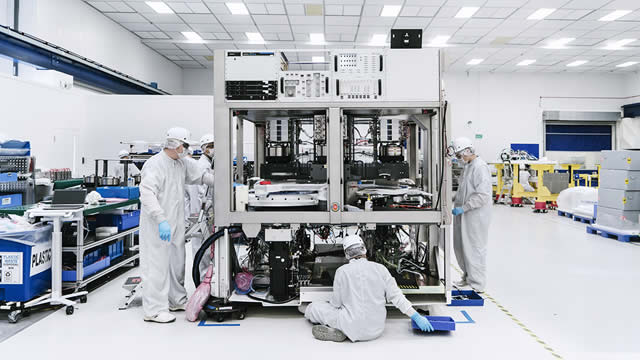
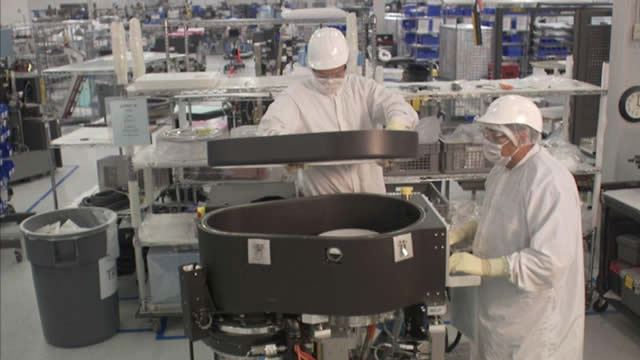
Core Insights - ASML has developed the High NA machine, the world's most advanced and expensive chipmaking machine, with a cost exceeding $400 million, which is set to transform microchip production [1][4][12] - The first commercial installation of High NA occurred at Intel's Oregon chip fabrication plant in 2024, with only five machines shipped to date [3][4] - High NA is expected to be utilized by all ASML's EUV customers, including major chipmakers like TSMC, Samsung, and Micron, enhancing chip production efficiency and yield [4][21] Technology and Development - High NA machines are larger than a double-decker bus and consist of four modules manufactured in different locations, requiring significant logistics for delivery [2] - The technology behind High NA allows for higher resolution projections of chip designs, reducing the need for multiple patterning and improving yield [7][13] - ASML's High NA machines have shown significant improvements over previous EUV machines, with Intel reporting a 100% increase in reliability and Samsung noting a 60% reduction in cycle time [6][7] Market Position and Strategy - ASML holds a dominant position in the EUV lithography market, being the exclusive manufacturer of these machines, which are essential for producing advanced microchips [4][5] - The company sold 44 EUV machines in 2024, with a starting price of $220 million, while its older DUV machines accounted for 60% of its business [16][17] - ASML's sales to China peaked at 49% of its business in Q2 2024, but are expected to normalize to 20%-25% in 2025 due to U.S. export controls on EUV technology [17][18] Future Outlook - ASML plans to ship at least five more High NA systems in the current year and aims to ramp up production capacity to 20 machines in the coming years [24] - The company is also developing the next generation of machines, Hyper NA, expected to be needed between 2032 and 2035, with draft optical designs already in progress [23][24] - ASML is establishing a training center in Arizona to train 1,200 individuals annually on EUV and DUV technologies, addressing the growing demand for skilled labor in the semiconductor industry [23]

Counterpoint 2025年Q1各地区市场智能手机数据报告
Counterpoint Research· 2025-05-22 09:41
Core Insights - The global smartphone market saw a 3% year-on-year revenue growth in Q1 2025, driven primarily by Apple, vivo, and non-top five brands [2][3] - The average selling price (ASP) increased by 1% to $364, marking the highest Q1 record, attributed to a continued trend towards high-end devices [3] Regional Market Performance - **China**: Smartphone sales increased by 2.5% year-on-year in Q1 2025, supported by government subsidies [7] - **United States**: Smartphone sales revenue declined by 2% year-on-year, primarily due to weakness in the high-end market, where sales dropped by 4% [15] - **India**: Smartphone shipments decreased by 7% year-on-year, but Apple achieved a 29% growth, marking its highest Q1 shipment record in India [19][20] - **Vietnam**: Smartphone shipments fell by 5% year-on-year, with Apple experiencing a 37% increase in shipments, maintaining a strong market presence [24] Brand Performance - Among the top five smartphone brands, only Apple and vivo reported revenue growth [3] - Huawei led the market with a 28.5% year-on-year revenue increase, achieving its highest market share since 2021 [14] - Xiaomi also saw double-digit growth, benefiting from a broader product range and government subsidies [14]


ACMR vs. AMAT: Which Semiconductor Equipment Stock Has the Edge?
ZACKS· 2025-05-21 20:00
Core Insights - Demand for advanced chipmaking equipment is rapidly increasing due to advancements in semiconductors for AI, electric vehicles, and high-performance computing, leading investors to focus on companies like ACM Research (ACMR) and Applied Materials (AMAT) [1] Company Overview - Applied Materials has a market capitalization exceeding $134 billion and is a leader in materials engineering, focusing on innovations such as gate-all-around transistors and advanced memory [2] - ACM Research, with a market cap of $1.37 billion, is expanding in wafer cleaning and advanced packaging, particularly in Asia, while also scaling globally [2] Stock Performance - In 2025, ACM Research's shares have increased by 60.8%, significantly outperforming Applied Materials' 2.1% gain, reflecting ACMR's strong revenue momentum and growing influence in the Chinese market [3] - AMAT's slower stock performance is attributed to U.S. export controls affecting its China business, despite its leadership in advanced technologies [3] Strategic Positioning - ACM Research is strategically positioned in the Chinese semiconductor market, benefiting from local manufacturing and customer relationships amid China's push for self-reliance in chipmaking [5] - ACMR's gross margin for Q1 2025 was 48.2%, exceeding its long-term target range of 42% to 48%, supported by a favorable product mix and disciplined cost controls [6] Financial Health - ACMR's net cash increased to $271 million in Q1 2025, up from $259 million at the end of 2024, with positive operating cash flow of $5.3 million compared to a negative $9 million a year earlier [7] - Applied Materials reported an adjusted EPS of $2.39 in Q2 2025, exceeding estimates, with a gross margin of 49.2%, the highest in over two decades [11] Market Challenges - The Trump administration's 25% semiconductor tariffs pose significant challenges for both AMAT and ACMR, potentially inflating costs and disrupting supply chains [13] Valuation Comparison - ACM Research is trading at a forward P/E of 17.09X, below its 5-year median of 21.70X, indicating it is attractively valued compared to Applied Materials, which is trading at a forward P/S of 17.09X, aligning with its historical average [14] Price Targets - Analysts project an average price target of $199.33 for Applied Materials, suggesting a 20.1% upside, while ACM Research has an average price target of $34.43, implying a 45.45% upside [15][19] Investment Outlook - ACMR is gaining momentum with strong margins and relevance in China's chip self-reliance, while AMAT benefits from AI-driven demand and shareholder returns, though its slower growth and higher valuation limit near-term upside [21]


ASML Holding Stock Soars 17% in a Month: Should You Bet on It Now?
ZACKS· 2025-05-21 14:16
Core Viewpoint - ASML Holding N.V. has experienced a significant share price increase of over 17% in the past month, outperforming the S&P 500 index which rose by 12.1% during the same period [1][2]. Market Dynamics - The recent rally in ASML's stock is attributed to broader market optimism stemming from progress in U.S.-China trade negotiations, which have improved market sentiment since late April [2][4]. - A recent trade deal between the U.S. and China has led to a temporary reduction in tariffs, with the U.S. lowering tariffs on Chinese imports from 145% to 30%, and China reducing duties on U.S. imports from 125% to 10% for 90 days [3][4]. Industry Performance - The positive market sentiment has also benefited other semiconductor companies, with Lam Research, KLA Corporation, and Applied Materials seeing share price increases of 32.5%, 24%, and 19.6% respectively over the past month [5]. Technological Leadership - ASML holds a near-monopoly in extreme ultraviolet (EUV) lithography, essential for producing advanced chips at 3nm and below, positioning the company as a key player in semiconductor manufacturing [6][9]. - The introduction of High-NA EUV technology, designed for sub-2nm nodes, represents a significant advancement in chip manufacturing, although its adoption has been slower than anticipated [7][9]. Growth Drivers - The ongoing AI revolution is expected to drive demand for advanced semiconductors, with ASML's EUV and High-NA EUV machines being critical for manufacturing these chips [10][11]. - As cloud providers and tech giants expand their AI infrastructure, the demand for ASML's lithography tools is anticipated to increase, providing long-term growth opportunities [11]. Financial Performance - ASML's first-quarter 2025 financial results showed resilience, with net sales of €7.74 billion, a 46% year-over-year increase, and net income rising 92% to €2.36 billion [12]. - The company's gross margin expanded by 300 basis points year-over-year to 54%, reflecting strong cost management and productivity improvements [13]. - ASML expects a 15% revenue growth for 2025, driven by rising demand for EUV and DUV lithography systems, along with a forecasted 70-basis-point margin expansion [14]. Valuation - ASML's stock trades at a premium with a forward 12-month price-to-earnings (P/E) ratio of 26.2, higher than the sector average of 25.5, justified by its technological dominance and growth prospects [15][17]. - Compared to other semiconductor players, ASML's P/E ratio exceeds those of KLA Corporation, Lam Research, and Applied Materials, which trade at 24.1X, 21.25X, and 17.09X respectively [17]. Investment Recommendation - Given ASML's technological leadership, robust financials, and strong long-term growth potential, the stock is considered a compelling buy [18].
Google to Partner With Eyewear Brands on AI-Equipped Smart Glasses
PYMNTS.com· 2025-05-20 23:50
Core Insights - Google anticipates that its smart glasses, powered by the Android XR operating system and Gemini AI model, will serve as a convenient and omnipresent AI assistant [1] - The company has partnered with eyewear brands Gentle Monster and Warby Parker to develop stylish and comfortable Android XR-equipped glasses, with plans to add more partners in the future [1] Group 1 - The vision for Android XR is to create an AI assistant that can see the world from the user's perspective and provide hands-free assistance [2] - Android XR is described as the first Android platform developed in the Gemini era, supporting a range of devices including headsets and glasses [2] - The smart glasses will feature a camera, microphone, and speakers, allowing users to access apps without needing to hold their phones [3] Group 2 - Android XR-equipped smart glasses will offer private information through an optional in-lens display, understand user context, provide live language translation, and assist with various tasks [4] - Google has expanded its partnership with Samsung to include the development of smart glasses, creating a software and hardware platform for the ecosystem [5] - Developers will be able to start building applications for the Android XR platform later this year [5] Group 3 - The rise of AI is driving a new wave of next-generation smart glasses, with companies like Meta, Amazon, Snap, Baidu, and Xiaomi also investing in this connected wearable technology [6]

Google turns to Warby Parker to develop smart glasses, competing with Meta's Ray-Bans
Business Insider· 2025-05-20 23:15
Core Insights - Google is launching a new line of AI eyewear to compete with Meta's Ray-Ban glasses, emphasizing personal style and customization [1][4] - The new glasses will be part of Google's Android XR platform, developed in partnership with Samsung, and will support augmented reality and AI features [2][3] Product Development - The first line of smart glasses featuring multimodal AI is expected to launch after 2025, with additional products planned in collaboration with Warby Parker [3] - Google has committed up to $150 million to this partnership, with $75 million allocated for product development and commercialization [4] Market Context - Warby Parker's stock rose nearly 15% following the announcement of the collaboration with Google [4] - Meta's Ray-Ban smart glasses have seen sales triple over the past year, with prices ranging from $300 to $500, and a new version with a built-in display is expected to launch later this year [6][7] Competitive Landscape - Meta is also developing a more advanced line of AR glasses, codenamed "Artemis," aimed for release by 2027, while Google is working on its own "Project Aura" glasses [8] - Google has been exploring smart glasses for over a decade, with previous attempts like Google Glass being discontinued in 2023 [9] Technology Demonstration - A live demo of the Project Aura glasses showcased features such as messaging, appointment scheduling, and live language translation, although the demo experienced some glitches [10]


Google commits $150M to develop AI glasses with Warby Parker
TechCrunch· 2025-05-20 21:37
Investment Commitment - Google will commit up to $150 million to Warby Parker to develop AI-powered smart glasses based on Android XR [1] - Google has already invested $75 million in Warby Parker's product development and will invest an additional $75 million contingent on meeting certain milestones [1] Partnerships and Collaborations - At Google I/O 2025, Google announced partnerships with several companies, including Samsung and Gentle Monster, to develop smart glasses with Gemini AI and AR capabilities [2] Strategic Approach - Google appears to be adopting a strategy similar to Meta's by partnering with Warby Parker, leveraging the eyewear company's popular frame designs and retail presence [3] - The first line of eyewear from the collaboration is expected to launch "after 2025" and will feature multimodal AI with both prescription and non-prescription options [4]