Panasonic

Search documents
Lucid to Buy US-Made EV Batteries from Panasonic
Bloomberg Technology· 2025-07-14 18:35
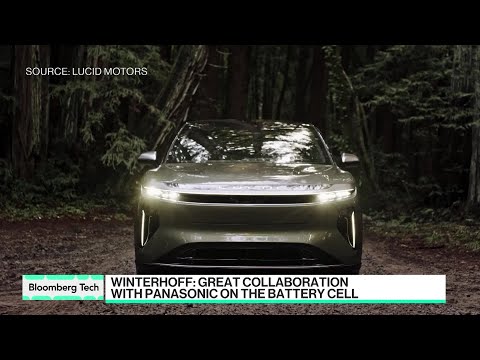
Battery Supply Chain & Localization - Lucid initially sourced battery supplies from Japan and Korea, but has since invested in localizing production with Panasonic in the US [1] - The collaboration with Panasonic involves co-engineering to optimize battery cell performance based on Lucid's real-world experience and Panasonic's chemistry expertise [2] - Localizing the supply chain, including raw materials like graphite, is crucial to mitigate the impact of tariffs [6][7] - The company is working on further localizing the supply chain for battery cells to avoid tariffs on imported raw materials [6] Production & Scaling - Lucid is ramping up production of the Gravity model and expects significantly higher numbers than in the past [9] - The company aims to reach 20,000 vehicles this year, with efforts focused on resolving supply chain bottlenecks and optimizing plant operations [9][14][16] - The mid-size platform, targeting a $50,000 price range, is on track for next year and is expected to be a key inflection point for volume scaling [8][9][16] - The de plant will supply cells for vehicles sold or delivered starting next year [10] Market Position & Strategy - Lucid Air is the best-selling EV in its segment in the United States, even outperforming ICE vehicles at the beginning of the year [12] - The company is primarily appealing to the higher price segment, as achieving economies of scale in automotive manufacturing is a long-term process [14][15] - Lucid is experiencing increased interest from potential partners motivated by the effort to onshore industry in the US [19] - Lucid is seeing increased interest from Tesla owners [23] External Factors & Challenges - Tariffs increase costs and necessitate rethinking the supply chain, prompting localization efforts [5][25] - The company is less impacted by cost increases compared to other players because it builds everything in the United States [26] - The company believes that vehicles will become more expensive for American consumers under the tariff regime [28]


Panasonic Opens Kansas EV Battery Plant
Bloomberg Technology· 2025-07-14 17:57
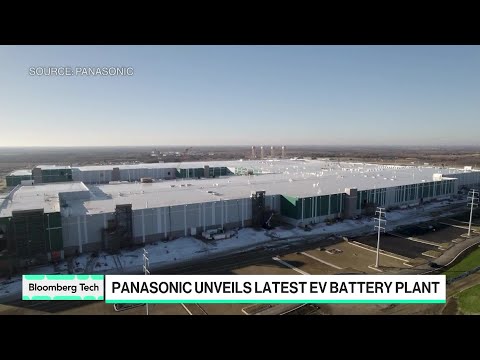
Production & Expansion - Panasonic aims for full production at its DeSoto, Kansas facility this year, with sales already underway [2] - The company invested $4 billion in the DeSoto facility and is eligible for nearly $7 billion in incentives from the Inflation Reduction Act [15] - Panasonic plans to localize 50% of its supply chain within North America by 2030 to enhance resilience [19] Customer & Market Strategy - Panasonic is diversifying its customer base beyond Tesla to include other established OEMs and startups [8][9] - The company is "very bullish" and not currently experiencing a slowdown in orders from key customers [6] - Panasonic acknowledges the hybrid market's continued relevance alongside EV growth, with EV sales rising by 114% [23] Location & Partnership - Kansas was chosen for its available workforce, infrastructure, and the supportive attitude of state officials [11][12] - Panasonic collaborated with local schools and community colleges to create curriculums to ensure a skilled workforce [14] Supply Chain - Panasonic is actively working to diversify its supply chain to ensure resilience, addressing issues highlighted during COVID-19 [18][20] - The refining process for raw materials is a key focus to ensure the quality needed for battery production [21] Future Outlook - Panasonic's next priority after the DeSoto facility reaches smooth operation is yet to be determined (TBD), focusing on producing quality batteries [22] - The company is hopeful that the 45X manufacturing credit will remain intact, supporting job creation and technology advancement in the US [17]
X @Bloomberg
Bloomberg· 2025-07-14 16:20
Panasonic Aims for Full Output at Kansas Battery Plant in 2025 https://t.co/rUuIMPRQwg ...
松下北美主管Lee:美国堪萨斯电池工厂将在2025年全负荷运转。特斯拉仍然是关键性的战略伙伴。
news flash· 2025-07-14 15:13
Core Insights - Panasonic's North American head, Lee, announced that the Kansas battery factory is expected to operate at full capacity by 2025 [1] - Tesla remains a key strategic partner for Panasonic in this venture [1] Company Summary - The Kansas battery factory is a significant investment for Panasonic, aimed at meeting the growing demand for electric vehicle batteries [1] - Full operational capacity by 2025 indicates a strong commitment to scaling production and enhancing supply chain capabilities [1] Industry Summary - The partnership with Tesla highlights the importance of collaboration in the electric vehicle battery sector [1] - The development of the Kansas facility aligns with industry trends towards increased battery production to support the expanding electric vehicle market [1]
松下推迟在美国新工厂生产电动汽车电池。
news flash· 2025-07-14 07:30
Group 1 - Panasonic has delayed the production of electric vehicle batteries at its new factory in the United States [1] - The decision is influenced by various factors, including supply chain issues and market conditions [1] - The company aims to ensure a stable supply of materials before commencing production [1] Group 2 - The delay may impact Panasonic's partnerships with major automakers who rely on its battery technology [1] - This situation reflects broader challenges in the electric vehicle industry, particularly in scaling up production to meet demand [1] - Panasonic's strategic adjustments may lead to shifts in competitive dynamics within the battery manufacturing sector [1]
中国经济圆桌会丨松下(电器)中国:坚定看好中国市场
Xin Hua She· 2025-07-14 02:51
Group 1 - Panasonic is optimistic about the Chinese market and plans to increase R&D investment to launch more products and solutions tailored to local demand [1][2] - Recent policies aimed at deepening the reform and innovation of national economic development zones will provide a higher level of policy platform for foreign enterprises in China [1] - The Ministry of Commerce has issued a work plan that includes 16 specific measures to support major industrial technology innovation platforms and promote the integration of the digital economy with the real economy [1] Group 2 - The rapid development of the Chinese market and the shortening technology update cycles require companies to remain sensitive and responsive to market changes [1] - There is a growing demand for personalized and high-quality products and services, which poses a challenge for Panasonic [1] - Panasonic aims to strengthen strategic cooperation with local companies to build a more complete industrial ecosystem and seize opportunities in the Chinese market [2]
松下推迟美国电池工厂的满负荷生产
news flash· 2025-07-11 09:05
Core Viewpoint - Panasonic Holdings Corporation is adjusting its production plans for the new electric vehicle (EV) battery factory in Kansas, USA, delaying the original target of achieving approximately 30 gigawatt-hours (GWh) of full production capacity by the end of fiscal year 2026 [1] Group 1 - The company initially aimed for full production capacity of about 30 GWh by the end of fiscal year 2026 [1]
据日本共同社报道,松下集团将为40至50多岁的员工提供提前退休方案,作为公司重组的一部分。
news flash· 2025-07-11 05:43
Group 1 - Panasonic Group will offer early retirement options for employees aged 40 to over 50 as part of its restructuring efforts [1]
据日经新闻报道,松下将推迟其在堪萨斯州新建电动车电池工厂的生产计划。
news flash· 2025-07-11 02:35
Core Viewpoint - Panasonic is delaying the production schedule for its new electric vehicle battery plant in Kansas [1] Company Summary - Panasonic's decision to postpone the production plan indicates potential challenges in the execution of its expansion strategy in the electric vehicle battery sector [1] Industry Summary - The delay in Panasonic's battery production could impact the overall electric vehicle battery supply chain, reflecting broader trends and challenges within the industry [1]
松下在长期亏损中退出印度冰箱、洗衣机市场
Sou Hu Cai Jing· 2025-07-01 02:38
Group 1 - Panasonic has officially terminated its refrigerator and washing machine business in India, responding to ongoing operational losses and a market share below 2% over the past six years [1][3] - The decision aligns with Panasonic's global restructuring plan aimed at divesting non-profitable business units and focusing on high-value areas such as smart home systems and commercial HVAC solutions [1][3] - Despite the cessation of traditional appliance operations, Panasonic's Indian subsidiary is projected to achieve revenues of ₹1,150 billion in the fiscal year 2024-25, driven by a 25% growth in the air conditioning product line and increased penetration in the smart kitchen market [3] Group 2 - The restructuring has led to a dual-track operational model for Panasonic's Indian segment, retaining core businesses in smart home systems, digital audio-visual products, and smart kitchen ecosystems while strategically nurturing industrial IoT solutions and building automation systems [4] - The business transformation highlights a strategic shift for multinational companies in emerging markets, moving from consumer-oriented segments to industrial empowerment, leveraging technological collaboration to build differentiated competitive advantages [5]