
战略伙伴关系

Search documents
启程访华前,默茨祝福并感谢中国
Xin Jing Bao· 2026-02-25 06:25
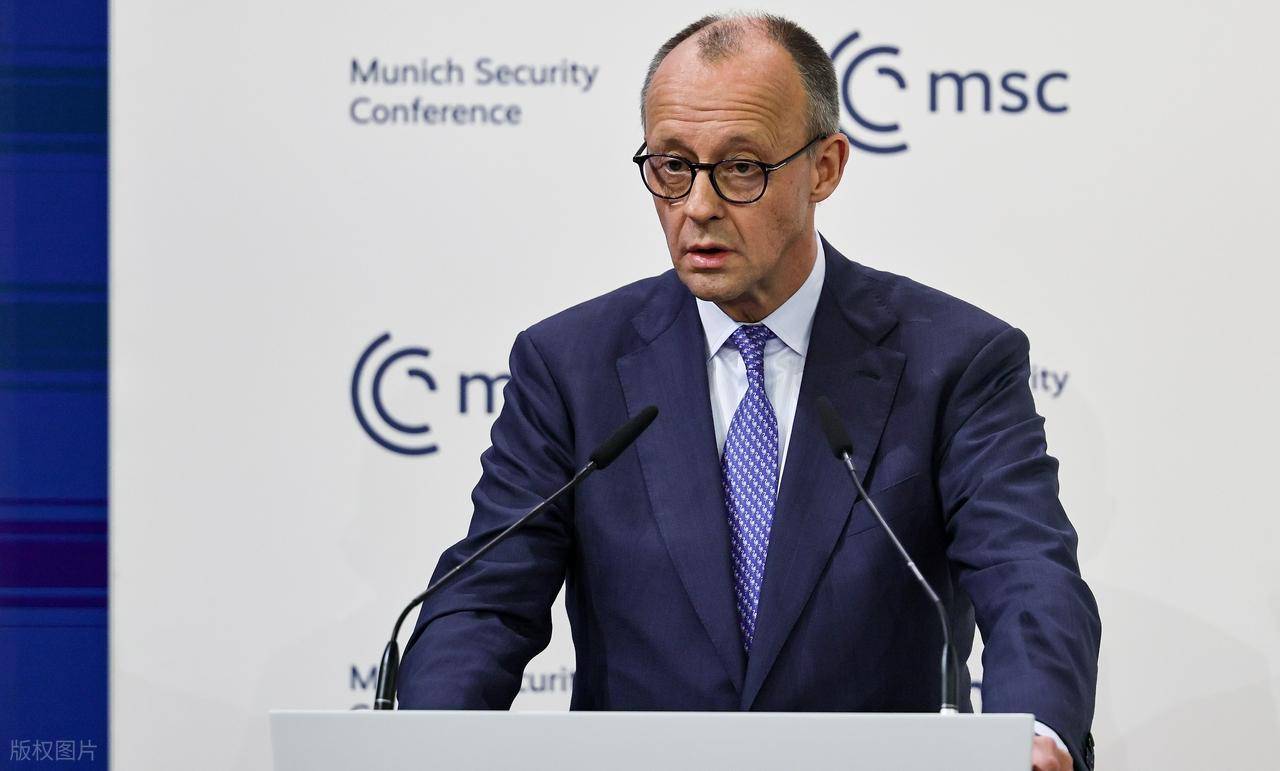
Group 1 - German Chancellor Merz's visit to China marks a significant shift in Germany's foreign policy towards pragmatic cooperation with China, moving away from earlier strategies of "systemic confrontation" and "de-risking" [2][4] - The visit is accompanied by a high-profile economic delegation from Germany, including executives from approximately 30 leading companies in sectors such as automotive, chemicals, and machinery, indicating a strong desire to deepen bilateral economic relations [2][6] - The bilateral trade volume between China and Germany is projected to reach €251.8 billion by 2025, with Germany importing €170.6 billion worth of goods from China, highlighting the importance of this relationship [6] Group 2 - Merz's government is facing internal challenges, including rising political fragmentation and the need to balance welfare state commitments with reform investments, which could impact the stability of the federal government [4][5] - The ongoing Ukraine conflict has exacerbated Germany's energy, economic, and social crises, prompting Merz to seek China's assistance in navigating these challenges [7][8] - The emphasis on cultural exchanges and people-to-people connections is seen as essential for stabilizing and enhancing the long-term strategic partnership between China and Germany [9]
卢拉到访韩国 “韩妆”或在巴西更流行
Xin Hua She· 2026-02-24 02:31
Group 1 - The core point of the article is the strengthening of bilateral relations between South Korea and Brazil, highlighted by the signing of multiple cooperation agreements in various sectors including agriculture and commerce [1][2] - Brazil is identified as South Korea's largest trading partner in South America, with a bilateral trade volume exceeding $10 billion annually [1] - A memorandum of understanding on enhancing regulatory cooperation in the health sector was signed, which may help reduce trade barriers for South Korean beauty products entering the South American market [2] Group 2 - Brazil's population exceeds 210 million, making it one of the largest markets for beauty products globally [2] - South Korea's cosmetic exports are projected to reach $11.43 billion by 2025, with a 12.3% increase compared to 2024, and the number of countries and regions receiving these exports is expected to rise to over 200 [2] - The bilateral relationship has been elevated to a strategic partnership, accompanied by the signing of a "four-year action plan for strategic partnership" [2]


阿联酋总统会见巴林王储
Shang Wu Bu Wang Zhan· 2026-02-23 15:30
Core Viewpoint - The meeting between the President of the UAE and the Crown Prince of Bahrain emphasizes the commitment to deepen bilateral cooperation, promote economic diversification, and enhance regional stability, reflecting the long-standing friendship and close collaboration between the two nations [1] Group 1 - The leaders discussed enhancing bilateral cooperation [1] - Economic diversification was a key topic of discussion [1] - The meeting reaffirmed the mutual desire to strengthen strategic partnerships [1]
中德贸易数据出炉了!德总理真没开玩笑,德国有反制美国的硬实力
Sou Hu Cai Jing· 2026-02-22 07:10
Group 1 - Germany's trade with China reached €253 billion in 2025, marking a 2.7% year-on-year increase, while trade with the US fell by 4.4% to €241.6 billion [3] - German exports to the US saw a significant decline of 9.3%, indicating that tariffs have negatively impacted core German exports such as automobiles, machinery, and chemical products [3][5] - The strong trade relationship with China is attributed to the compatibility of Chinese goods with German consumer needs, leading German companies to favor collaboration with China amid US tariffs [5][6] Group 2 - German companies are deeply embedded in the Chinese industrial chain, with significant investments in R&D and production, such as Volkswagen's new R&D center in Hefei and BASF's €8.7 billion investment in Zhanjiang [5][6] - A survey indicated that 93% of German companies in China plan to continue investing in the market, with 53% intending to increase their investments in the next two years [5][6] - The cooperation between Germany and China is characterized as a win-win relationship based on mutual needs and innovation, with both countries relying on each other for market access and technological advancements [7][8]
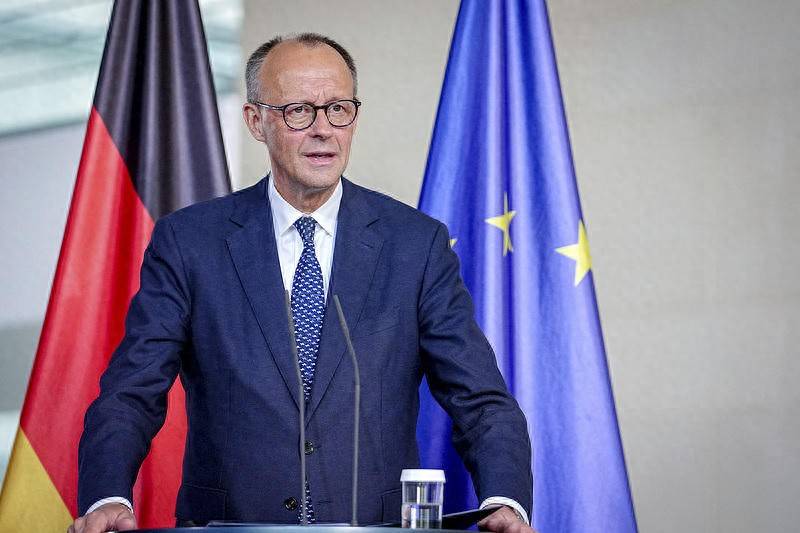
对美发起警告,德总理通告全球,下周访问中国,默克尔重返政坛?
Sou Hu Cai Jing· 2026-02-21 11:41
Group 1 - Germany is shifting its focus towards China amid rising tariffs from the US and internal political pressures, with Chancellor Friedrich Merz announcing a visit to China [1][3] - The German economy is facing challenges, including declining GDP growth, high energy costs, and a drop in manufacturing orders, prompting a need for strategic partnerships [5][9] - Merz's delegation to China includes representatives from major German companies, indicating a strong reliance on the Chinese market despite recent declines in exports [9][11] Group 2 - The visit to China is framed as a strategic move for self-preservation rather than a pro-China stance, as Germany seeks alternatives to US economic policies [22] - The political landscape in Germany is marked by anxiety, with calls for former Chancellor Merkel to return, reflecting a desire for stability amid rising far-right influence and governance challenges [15][17] - Structural challenges such as energy transition, digital lag, and immigration pressures are identified as critical issues that cannot be resolved by a ceremonial president, highlighting the need for substantial reforms [19][20]
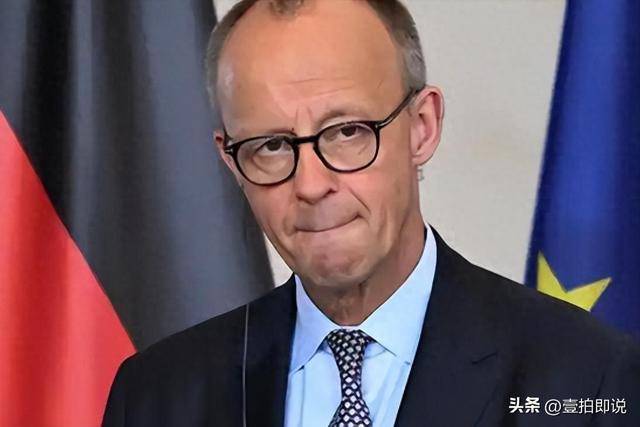
美国加征关税之际,德国总理急了,下周访华求建战略伙伴关系
Sou Hu Cai Jing· 2026-02-21 08:06
Group 1 - The core message of the news is that German Chancellor Merz plans to visit China to establish a strategic partnership, aiming to explore future cooperation between China and Europe amidst the challenges posed by U.S. tariff policies [1][6][8] - Merz's visit is a response to the adverse effects of U.S. tariffs on Germany's export-driven economy, particularly impacting key industries such as automotive, machinery, and chemicals [1][3][6] - The strategic partnership with China is seen as crucial for Germany's economic recovery, as the country seeks to diversify its markets and reduce reliance on the U.S. [3][6][8] Group 2 - The concept of a strategic partnership involves long-term cooperation in political, economic, and diplomatic fields, indicating Germany's recognition of China's key role in its future strategy [3][6] - There is a growing consensus among German businesses and the public that deepening cooperation with China is essential for economic growth and job creation [6][8] - Despite existing cooperation, challenges remain, including differing attitudes within Europe towards China and the need for dialogue to resolve any disputes [6][8] Group 3 - The U.S. tariff policy, while intended to protect domestic industries, is seen as damaging to global trade and allies like Germany, prompting a rational response through seeking partnerships with China [8] - Merz's upcoming visit is anticipated to be a focal point for global attention, with expectations for substantial cooperation outcomes and advancements in China-Europe relations [8] - The collaboration between China and Germany is positioned as a significant driver for global economic recovery and a counter to U.S. protectionism [8]
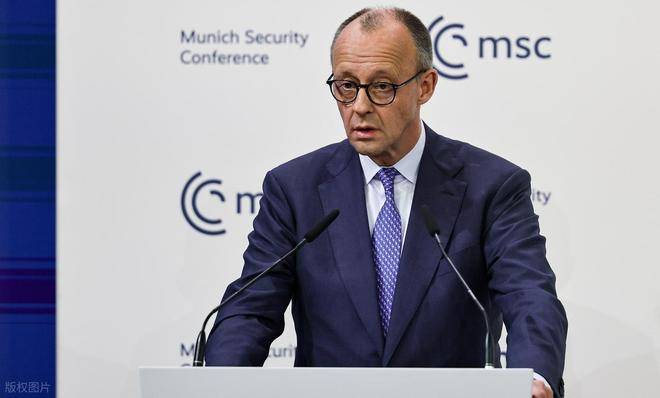
首次访华前,德国总理默茨找中国问题专家吃饭,想问这个问题
Xin Lang Cai Jing· 2026-02-20 08:22
Group 1 - German Chancellor Merz is preparing for his first visit to China from February 24 to 27, aiming to establish connections with Chinese leadership and discuss future cooperation between Europe, Germany, and China [1][3] - Merz has engaged with six China experts, including scholars and business figures, to gather insights on how to effectively communicate with Chinese leaders and to advocate for a fairer trade environment for German industries [3][4] - Approximately 30 business executives from major companies such as Bayer, Volkswagen, Siemens, Adidas, and BMW are expected to accompany Merz on his visit, indicating strong interest from the German business community in enhancing ties with China [3][4] Group 2 - German companies are facing increasing competition from Chinese counterparts, leading to heightened concerns about the "China impact" within Germany, while there are diverging interests between the political and business sectors regarding China policy [4] - Despite concerns, many German firms are expanding their investments in China and relocating production capacities there, benefiting from the growing exports of Chinese companies [4] - The current economic relationship between Germany and China is marked by significant friction, and establishing a "new normal" in bilateral relations could lay the groundwork for future cooperation [5][6]
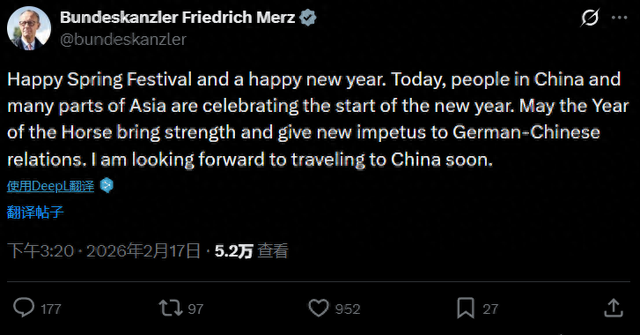
重磅!美国加征关税之际,德国总理急了,下周访华求建战略伙伴关系
Sou Hu Cai Jing· 2026-02-19 18:47
Core Viewpoint - The upcoming visit of German Chancellor Merz to China aims to establish a "strategic partnership" with China, reflecting Germany's need to seek new economic opportunities amid the challenges posed by U.S. tariff policies [1][3][4]. Group 1: Economic Context - The U.S. has been implementing tariff policies that significantly impact global trade, with Germany being one of the affected countries, facing increased costs and reduced sales in key export sectors such as automotive and machinery [1][4]. - Germany's economy is heavily reliant on exports, and the U.S. market has traditionally been a crucial destination for German goods. The recent tariffs have led to a sharp decline in exports, particularly in the automotive industry, which is vital for Germany's economic health [4][5]. Group 2: Strategic Partnership - The concept of a "strategic partnership" involves long-term, stable cooperation across political, economic, and diplomatic fields, which Germany seeks to establish with China to counterbalance U.S. pressures [3][9]. - Merz's emphasis on this partnership indicates a significant shift in Germany's foreign policy, prioritizing deeper cooperation with China as a strategic necessity [3][10]. Group 3: Broader European Implications - Merz's visit is not solely about bilateral relations; it aims to enhance cooperation between Europe and China, as many European nations face similar economic challenges due to U.S. tariffs [5][14]. - The German government is under pressure to act decisively to prevent further economic decline, and strengthening ties with China is seen as a critical step in this direction [5][11]. Group 4: Public and Business Support - There is considerable support among German businesses and the public for strengthening ties with China, as many view the Chinese market as essential for future growth and recovery from current economic difficulties [8][12]. - Business leaders express optimism that Merz's visit could lead to enhanced cooperation and better conditions for German companies operating in China [8][12]. Group 5: Challenges Ahead - Establishing a strategic partnership with China will not be without challenges, including differing opinions within Europe and existing tensions between China and some European nations influenced by U.S. policies [9][15]. - The potential for U.S. interference in the form of increased tariffs or diplomatic pressure poses a significant challenge to the success of Merz's visit and the broader goal of enhancing EU-China relations [11][15].
宝马CEO警告:忽视中国或危及未来经济成功,合作是关键
Xin Lang Cai Jing· 2026-02-19 14:49
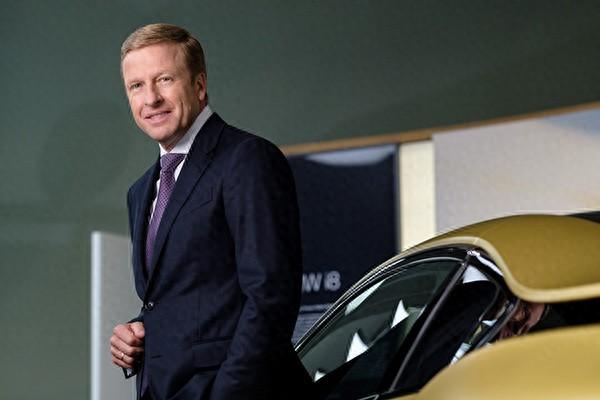
Group 1 - The chairman of BMW Group, Zipse, emphasized the importance of cooperation with China, the world's largest automotive market, to ensure future economic success [1][3] - German automakers, including BMW, Volkswagen, and Mercedes-Benz, are facing declining sales in China and are lagging in the development of electric motors, software platforms, and autonomous driving systems [1][3] - Zipse stated that ignoring China's vast market and innovative potential would result in missing significant opportunities for global growth and economic success [1][3] Group 2 - German Chancellor Merz is set to visit China, accompanied by CEOs from major German automotive companies, signaling a strategic partnership and a shift in Europe's approach to its largest trading partner [3][4] - Merz aims to establish a "strategic partnership" with China during his visit, addressing future cooperation and responding to U.S. tariff pressures [3][4] - The visit is seen as a move to diversify economic and diplomatic relationships in response to U.S. protectionism, indicating a potential shift in Germany's strategic positioning [4][6]
沙特-德国经济技术合作联合委员会第21届会议举办
Shang Wu Bu Wang Zhan· 2026-02-12 15:51
Core Insights - The 21st meeting of the Saudi-German Joint Committee for Economic and Technical Cooperation was held in Riyadh to strengthen the strategic partnership between Saudi Arabia and Germany, focusing on economic and technical collaboration, particularly in the energy sector [1] Group 1: Economic and Technical Cooperation - The meeting aimed to advance cooperation in industrial, energy, and investment sectors, with a specific emphasis on renewable energy, hydrogen, technology, and healthcare opportunities [1] - A memorandum of understanding regarding cooperation in the energy sector was signed during the meeting [1] Group 2: Agreements and Discussions - Multiple agreements and memoranda of understanding were signed between public and private sector entities from both countries [1] - An energy roundtable was held, inviting representatives from leading energy companies in both nations to explore investment opportunities and enhance collaboration in the energy field [1]