南京银行

Search documents
最后2小时!不操作或亏30%,批量来了
中国基金报· 2025-07-14 05:36
Core Viewpoint - Three convertible bonds, Z Nan Yin (南银转债), Z Ling (陵转债), and Z Heng (恒转债), are approaching their last trading day on July 14, with significant potential losses if not sold or converted before the redemption price is enforced [2][6][17]. Summary by Sections Z Nan Yin Convertible Bond - Z Nan Yin's last trading day is July 14, with a closing price of 145.56 yuan and a redemption price of 100.1537 yuan [3][4]. - If not sold or converted, investors could face a loss of approximately 31.19% based on current prices [2]. Z Ling Convertible Bond - Z Ling's last trading day is also July 14, with a closing price of 124.003 yuan and a redemption price of 101.726 yuan [9][11]. - Investors risk a loss of about 18.77% if they do not act before the redemption [2]. Z Heng Convertible Bond - Z Heng's last trading day is July 14, with a closing price of 133.803 yuan and a redemption price of 101.397 yuan [13][14]. - The potential loss for investors not selling or converting is around 24.97% [2]. Market Context - The recent market recovery has led to an increase in convertible bonds triggering redemption clauses, with many companies announcing strong redemptions [17]. - Investors are advised to act promptly to avoid significant losses, as the redemption prices are generally lower than current market prices [17].





“科技板”用好“稳定器” 金融基础设施协同推进信用风险缓释工具创新
Xin Hua Cai Jing· 2025-07-14 04:43
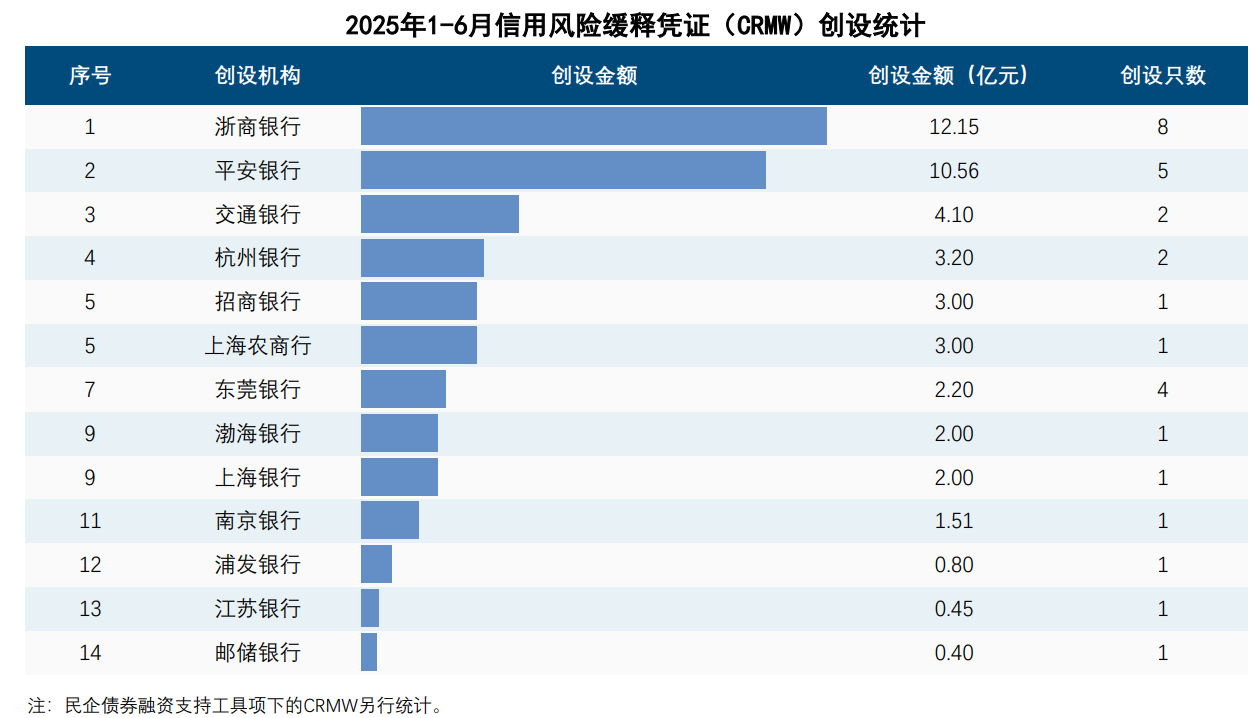
Core Viewpoint - The development of credit risk mitigation tools (CRM) in China's financial market infrastructure is enhancing the innovation and effectiveness of credit derivatives, particularly benefiting the financing needs of technology enterprises [1][2][7]. Group 1: Credit Risk Mitigation Tools and Technology Board - The integration of CRM tools with the "Technology Board" is helping to increase debt financing scale and reduce costs, addressing the financing difficulties faced by private enterprises [2][10]. - Since the launch of the "Technology Board," credit risk mitigation certificates (CRMW) have supported the issuance of technology innovation bonds, with a total of 6 registrations amounting to 395 million yuan, facilitating the issuance of 1.25 billion yuan in technology innovation bonds [1][7]. Group 2: Market Infrastructure and Business Models - The CRMW creation and bond issuance model has created approximately 150 billion yuan in support for over 340 billion yuan in bond issuances since its introduction in 2018 [3][6]. - Major banks such as Zheshang Bank, Ping An Bank, and Bank of Communications have been leading in CRMW creation, with amounts of 1.215 billion yuan, 1.056 billion yuan, and 410 million yuan respectively in the first half of 2025 [4][3]. Group 3: Regulatory and Operational Enhancements - Recent revisions to the CRM business guidelines have streamlined processes and improved operational efficiency, allowing for a more comprehensive regulatory framework for CRM activities [6][7]. - The Shanghai Clearing House has enhanced its services for CRM, enabling online processing for credit events and early termination of CRMW, significantly improving operational convenience [6][7]. Group 4: Broader Economic Impact - CRM tools are increasingly recognized as effective financing aids, helping to mitigate credit risks in the bond market and ensuring smooth financing for the real economy [10][11]. - Local financial institutions are expected to play a crucial role in the creation of CRMW, leveraging their regional knowledge to provide credit risk protection for local enterprises [10][11].
可持续信息披露:迈向量化与数字化转型之路
Jin Rong Shi Bao· 2025-07-14 03:10
Group 1 - The core viewpoint of the articles emphasizes that sustainable information disclosure is crucial for promoting green finance and addressing global climate change challenges, enhancing market transparency, and fostering sustainable economic development [1][2][7] - Experts at the forum highlighted the importance of accurate, complete, and timely disclosure of sustainable information to guide capital towards green and low-carbon sectors, mitigate financial risks, and achieve coordinated economic, social, and environmental development [1][2] Group 2 - A unified disclosure standard is being developed in China, with the Ministry of Finance and nine other departments issuing the "Basic Standards for Corporate Sustainable Disclosure (Trial)" in November 2024, marking the beginning of a unified sustainable disclosure standard system [3] - The implementation of the Basic Standards will be voluntary initially, with a gradual approach to expand from listed companies to non-listed companies and from large enterprises to small and medium-sized enterprises [3] Group 3 - Commercial banks are transitioning from "formal compliance" to "value extraction" in information disclosure, with increasing mandatory requirements and clearer specific demands [4][6] - The importance of quantitative data in sustainable information disclosure is growing, with core indicators such as total energy consumption, clean energy usage ratio, and water resource usage intensity becoming essential [5] Group 4 - Sustainable information disclosure is viewed as an opportunity for financial institutions to enhance governance capabilities and extract business value, rather than merely a regulatory compliance measure [7] - Key challenges in sustainable information disclosure include dual materiality assessment (financial and impact significance) and climate risk analysis, which require gradual improvement in disclosure quality [7]
广东17家银行跻身世界银行千强榜
Nan Fang Du Shi Bao· 2025-07-13 23:07
Core Viewpoint - The "2025 World Bank 1000 Strong" ranking by the British magazine "The Banker" highlights the performance of Chinese banks, with 143 banks from mainland China making the list, including 17 from Guangdong province, showcasing the region's financial strength and competitiveness [2][4][6]. Group 1: Rankings of Major Banks - The top four banks in the ranking are Industrial and Commercial Bank of China (1st), China Construction Bank (2nd), Agricultural Bank of China (3rd), and Bank of China (4th) [2][4]. - China Merchants Bank improved its ranking to 8th, while Bank of Communications ranked 9th, with both banks being part of the top ten [4][5]. - Among the 12 national joint-stock banks, the largest improvement was seen in Hengfeng Bank, which moved up from 121st to 118th [4][5]. Group 2: Performance of Guangdong Banks - Guangdong has 17 banks on the list, accounting for 11.89% of the total, with notable improvements in rankings for over half of these banks [6][8]. - Guangdong Huaxing Bank made the most significant leap, advancing 40 places to 336th, while WeBank improved by 28 places to 227th [6][7]. - However, some banks in Guangdong experienced declines, with Zhuhai Huaren Bank dropping 20 places to 358th [7]. Group 3: Financial Growth in Guangdong - In 2024, Guangdong's financial industry added value reached 12.4 trillion yuan, representing 8.8% of the province's GDP, with total assets of financial institutions exceeding 47 trillion yuan [8][9]. - As of May 2025, the balance of loans in Guangdong was 29.5 trillion yuan, a year-on-year increase of 4.7%, while deposits reached 37.4 trillion yuan, growing by 4.3% [8][9]. - The province is focusing on high-quality development, with initiatives aimed at enhancing financing accessibility and expanding credit in key sectors [9].







银行见顶还是中场休息?
格隆汇APP· 2025-07-13 08:54
Core Viewpoint - The recent volatility in the banking sector raises concerns about whether the sector has peaked, despite a strong performance in the first half of the year, with a nearly 17% increase in the Shenwan primary banking sector index and some individual stocks rising by as much as 38% [3][4]. Group 1: Dividend Yield and Policy Support - The weighted average dividend yield of the five major banks is 4.07%, significantly higher than the 10-year government bond yield of approximately 1.65%, resulting in a spread of 2.42%, which is at a notable 49.10% percentile level over the past decade, indicating a strong safety margin [5]. - Some high-quality city commercial banks, such as Jiangsu Bank and Nanjing Bank, have even higher dividend yields of 4.7% and 4.8%, respectively, making them attractive to investors [5]. - The central bank's commitment to increasing monetary policy adjustments suggests potential for further interest rate cuts, which would enhance the attractiveness of high-dividend banking stocks [5]. Group 2: Capital Inflows - Since the beginning of 2025, southbound capital has been aggressively purchasing Hong Kong banking stocks, with a net inflow of nearly 716.2 billion yuan into Hong Kong stocks, of which over 150 billion yuan has gone into banking stocks [6]. - Active public funds have also been gradually increasing their allocation to A-share banking stocks, with the allocation ratio rising to 3.75% by the end of the first quarter of 2025, indicating room for further investment in the banking sector [6]. Group 3: Earnings Stability - The stability of banking stock earnings is supported by substantial bond floating profits and ample provisioning reserves, providing a "double insurance" for profits [7]. - As of the end of the first quarter of 2025, the overall non-performing loan ratio for listed banks remained stable at 1.23%, with a high provisioning coverage ratio of 238%, indicating strong risk resilience [8]. - The net interest margin has shown signs of stabilization, with some banks experiencing improvements, supported by regulatory measures aimed at stabilizing interest margins [8]. Group 4: Market Sentiment and Future Outlook - The recent pullback in banking stocks is viewed as a normal market reaction following significant gains, rather than a signal of an end to the sector's performance [9]. - With strong dividend support, incoming insurance capital, stable earnings from floating profits and provisions, and policies aimed at stabilizing interest margins, the banking sector is likely to continue its positive trajectory [9].

茂莱光学: 关于部分募集资金账户注销的公告
Zheng Quan Zhi Xing· 2025-07-11 16:17
Fundraising Overview - The company, Nanjing Maolai Optical Technology Co., Ltd., successfully completed its initial public offering (IPO) by issuing 13.2 million shares at a price of RMB 69.72 per share, raising a total of RMB 920.304 million, with a net amount of RMB 811.342 million after deducting issuance costs [1][2]. Fund Management and Usage - The raised funds have been fully deposited and managed in a dedicated account as per the regulations set forth by relevant laws and guidelines, including the Company Law and Securities Law of the People's Republic of China [2][3]. - The company has established a fundraising management system to ensure proper storage, usage, and oversight of the funds, which includes signing tripartite or quadripartite supervision agreements with banks and sponsors [3][4]. Account Closure - The company has completed the closure of certain fundraising accounts as the projects funded by these accounts, namely the "High-end Precision Optical Product Production Project" and "High-end Precision Optical Product R&D Project," reached their intended usable state by June 2025 [4][5]. - The accounts at Bank of China and China Merchants Bank, which contained surplus funds, have been closed following the full utilization of the funds [5][6]. - As of the announcement date, the company has finalized the closure of the fundraising accounts and terminated the corresponding supervision agreements with the banks and sponsors [6][7].
南京银行(601009) - 南京银行股份有限公司关于实施“南银转债”赎回暨摘牌的第十九次提示性公告
2025-07-11 09:02
| 证券简称: | 南京银行 | 证券代码: | 601009 | 编号: | 2025-050 | | --- | --- | --- | --- | --- | --- | | 优先股简称:南银优 | 1 | | | 优先股代码:360019 | | | 南银优 | 2 | | | 360024 | | | 可转债简称:南银转债 | | | | 可转债代码:113050 | | 南京银行股份有限公司 关于实施"南银转债"赎回暨摘牌的 第十九次提示性公告 特别提示: 本公司董事会及全体董事保证本公告内容不存在任何虚假记载、误导性陈述或 者重大遗漏,并对其内容的真实性、准确性和完整性承担法律责任。 重要内容提示: 截至 2025 年 7 月 11 日收市后,距离 2025 年 7 月 14 日("南银转债"最后交易 日)仅剩 1 个交易日,2025 年 7 月 14 日为"南银转债"最后一个交易日。 根据《南京银行股份有限公司公开发行 A 股可转换公司债券募集说明书》(以下 简称"《募集说明书》")的相关约定,自 2025 年 5 月 13 日至 2025 年 6 月 9 日期间, 公司股票已有 15 个交易 ...
触发可转债强赎条款 缓解资本补充压力
Jin Rong Shi Bao· 2025-07-11 01:41
Core Viewpoint - The recent strong performance of bank stocks has led to multiple convertible bonds triggering mandatory redemption clauses, which can alleviate repayment pressure and enhance core tier 1 capital for banks [1][2][3]. Group 1: Mandatory Redemption of Convertible Bonds - Qilu Bank has decided to exercise its early redemption rights for its convertible bonds due to a significant increase in its stock price, which has risen nearly 70% since the beginning of 2024 [1]. - Other banks, such as Hangzhou Bank and Nanjing Bank, have also seen their convertible bonds trigger mandatory redemption clauses due to their stock prices exceeding the required thresholds for consecutive trading days [2]. - The mandatory redemption of convertible bonds is becoming a trend among banks, with several already completing this process in 2024 [2][3]. Group 2: Impact on Capital Structure - The triggering of mandatory redemption clauses is expected to facilitate the conversion of bonds into equity, thereby effectively supplementing banks' core tier 1 capital [1][4]. - The unique property of convertible bonds allows banks to optimize their capital structure, making them an increasingly important option for capital supplementation [4][5]. - The redemption process sends a positive signal to the market regarding the financial health and stability of banks, potentially attracting more investors [5]. Group 3: Market Dynamics and Future Outlook - The banking sector has shown strong performance in the secondary market, with the Shenwan Primary Bank Industry Index rising over 17.77% year-to-date, ranking second among 31 primary industry indices [3]. - A decrease in the issuance of new convertible bonds has led to a rapid decline in the market's existing convertible bond scale, creating favorable conditions for mandatory redemptions [3]. - Analysts predict that the ongoing trend of mandatory redemptions will further highlight the supply-demand imbalance in the convertible bond market, providing support for their valuations [3].
价值重估的下半场——银行业2025年度中期投资策略
2025-07-11 01:13
Summary of Key Points from the Conference Call Industry Overview - The conference call focuses on the banking industry, particularly in the context of the Chinese market, with insights into A-shares and H-shares performance and investment strategies for 2025 [1][2][4]. Core Insights and Arguments - **Valuation Recovery**: The banking sector is experiencing a valuation recovery due to stable earnings and established risk bottom lines, particularly for large banks and China Merchants Bank since 2023 [1][2][4]. - **Macroeconomic Context**: The backdrop of an asset shortage has led to a reassessment of dividend values and earnings stability in the banking sector, which has been crucial for the valuation recovery [3][4]. - **Regulatory Support**: Regulatory policies have provided a safety net for major risks in urban investment and real estate, enhancing market expectations for banks' earnings resilience [5][6]. - **Funding Dynamics**: Three key funding dynamics are identified: high dividend yields due to asset shortages, expansion of passive index funds (ETFs), and public funds correcting their historical under-allocation to bank stocks [6][15]. - **Net Interest Margin (NIM) Trends**: A significant decline in deposit costs is expected starting in 2025, which will alleviate pressure on net interest margins. This trend is anticipated to continue into 2026 [8][9][10]. - **Loan Growth Projections**: The year 2025 is projected to see a slowdown in loan growth to approximately 7.1% year-on-year, with expectations of further declines by year-end [12]. Additional Important Content - **Asset Quality Stability**: Overall asset quality in the banking sector remains stable, with a slight increase in non-performing loan rates in retail lending, but this remains manageable due to the low proportion of retail loans [13][14]. - **Investment Strategies**: Future investment strategies focus on undervalued large state-owned banks and high-performing city commercial banks, which are expected to benefit from strong return on equity (ROE) and earnings growth [19][20][21]. - **Market Dynamics**: The increase in financial capital's stake in bank stocks is driven by local state-owned assets recognizing the value of bank equity amid asset shortages [15][16][17]. - **Public Fund Adjustments**: Public funds are increasingly focusing on stock quality and performance trends, leading to a rise in the valuation of certain city commercial banks [18]. This summary encapsulates the key points discussed in the conference call, providing a comprehensive overview of the banking industry's current state and future outlook.
可转债队伍密集减员 “固收+”新出路在哪?
2 1 Shi Ji Jing Ji Bao Dao· 2025-07-10 12:12
Core Viewpoint - The convertible bond market is experiencing a significant reduction in supply, leading to increased scarcity and heightened interest from investors, particularly in bank convertible bonds [1][2][3]. Group 1: Market Dynamics - Since July, there has been a concentrated redemption and conversion of bank convertible bonds, resulting in a shrinking asset pool. As of July 10, the total market for convertible bonds has decreased to 668.08 billion yuan, down 65.54 billion yuan from the beginning of the year [1]. - The current market is undergoing a period of intensive adjustment, with 456 convertible bonds entering redemption and conversion phases, representing 95.36% of the total market size [1]. - The convertible bond market has shown strong upward momentum this year, with the Wind convertible bond index rising by 18.17% year-to-date as of July 10 [2]. Group 2: Performance of Bank Convertible Bonds - Bank convertible bonds are particularly attractive due to the strong credit quality of the issuing banks and the performance of bank stocks, which have seen significant increases due to institutional investments [2][3]. - Several bank convertible bonds have successfully triggered mandatory redemption and conversion, achieving high conversion rates, such as Chengdu Bank and Suzhou Bank with rates of 99.94% and 99.93% respectively [3]. Group 3: Investor Sentiment and Strategy - There is a growing concern among investors regarding the high valuation of convertible bonds, with some analysts suggesting that entering the market at this stage may not be wise [2][4]. - Despite the high valuations, there remains a demand for convertible bonds, particularly from institutional investors seeking to enhance their fixed-income portfolios [5][6]. - Investment strategies are shifting, with a preference for large-cap convertible bonds linked to major stocks, especially in sectors like banking, photovoltaic, and agriculture [6].