Cerebras

Search documents
微软投资AI芯片公司,挑战英伟达
半导体行业观察· 2026-02-14 01:37
Core Viewpoint - The article discusses the emerging potential of d-Matrix, a chip startup supported by Microsoft, which aims to revolutionize AI inference by creating chips that are faster, cheaper, and more efficient than current GPU-based solutions, potentially reducing inference costs by about 90% [2][5][7]. Group 1: d-Matrix's Approach - d-Matrix focuses on designing chips specifically for inference rather than repurposing training hardware, emphasizing the architectural differences between training and inference tasks [3][5]. - The company aims to reduce latency and increase throughput by integrating memory and computation more closely, which contrasts with traditional GPU architectures that separate these functions [4][5]. - d-Matrix's chip design is modular, allowing for scalability based on workload requirements, similar to Apple's unified memory design [5][6]. Group 2: Market Dynamics - NVIDIA currently dominates the AI chip market, with a market capitalization of $4.5 trillion, but there is growing interest in alternatives as companies seek to hedge against NVIDIA's dominance [7][8]. - Several startups, including Groq and Positron, are gaining traction in the inference space, indicating a shift in the market dynamics as companies explore different memory types for faster responses [8][9]. - The competition is intensifying, with major players like OpenAI and Anthropic exploring partnerships with various chip manufacturers to enhance their AI capabilities [9][10]. Group 3: Future Outlook - d-Matrix plans to ramp up production significantly, aiming for millions of chips by the end of the year, which could position it as a key player in the AI inference market [6][9]. - The article suggests that while NVIDIA remains a formidable leader, the rapid growth of dedicated hardware for AI inference could lead to a more fragmented market where multiple players thrive [10].




OpenAI unveils first AI model running on Cerebras chips
CNBC Television· 2026-02-13 19:31
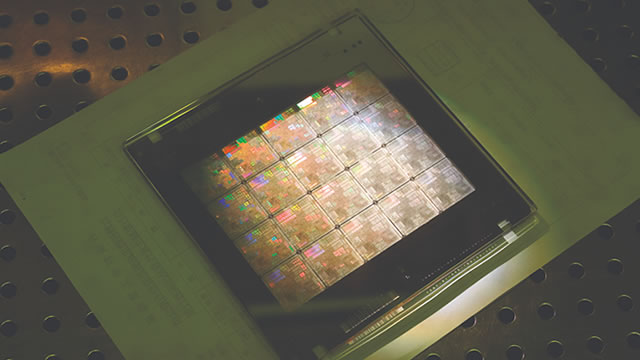
Open AAI is unveiling its first model to run entirely on chips from the startup Cerebras. It's a sign of companies diversifying beyond Nvidia's GPUs. Dear Jabosa has more in today's tech check.Very important story here. Deerra. Yeah.So, Kelly, this look, this is not OpenAI's flagship model. This is GPT 5.3% Codex Spark. It's a stripped down coding model built for speed.But an AI speed and cost that can beat raw power. And if the high volume everyday workloads, if they're moving off of Nvidia hardware, that ...

OpenAI unveils first AI model running on Cerebras chips
Youtube· 2026-02-13 19:31
Open AAI is unveiling its first model to run entirely on chips from the startup Cerebras. It's a sign of companies diversifying beyond Nvidia's GPUs. Dear Jabosa has more in today's tech check.Very important story here. Deerra. Yeah.So, Kelly, this look, this is not OpenAI's flagship model. This is GPT 5.3% Codex Spark. It's a stripped down coding model built for speed.But an AI speed and cost that can beat raw power. And if the high volume everyday workloads, if they're moving off of Nvidia hardware, that ...

AI firms like OpenAI seek Nvidia alternatives
Youtube· 2026-02-13 17:37
AI now unveiling its first model to run entirely on chips from the startup Cabus. It's a sign a company's diversifying beyond Nvidia GPUs. Our Dur Debosa has more on that in today's tech check.Morning D. >> Hey, good morning Carl. So never mind that OpenAI is one of Nvidia's largest customers.This is also part of a larger trend. Google shipped Gemini 3 in December trained and served on its own custom AI chips TPUs. Then you got Chinese AI lab GPU releasing GLM trained on Huawei chips and we know that others ...
AI需求仍强却带不动股价!英伟达四季度至今仅涨1%,市场观望情绪转浓
Hua Er Jie Jian Wen· 2026-02-13 14:23
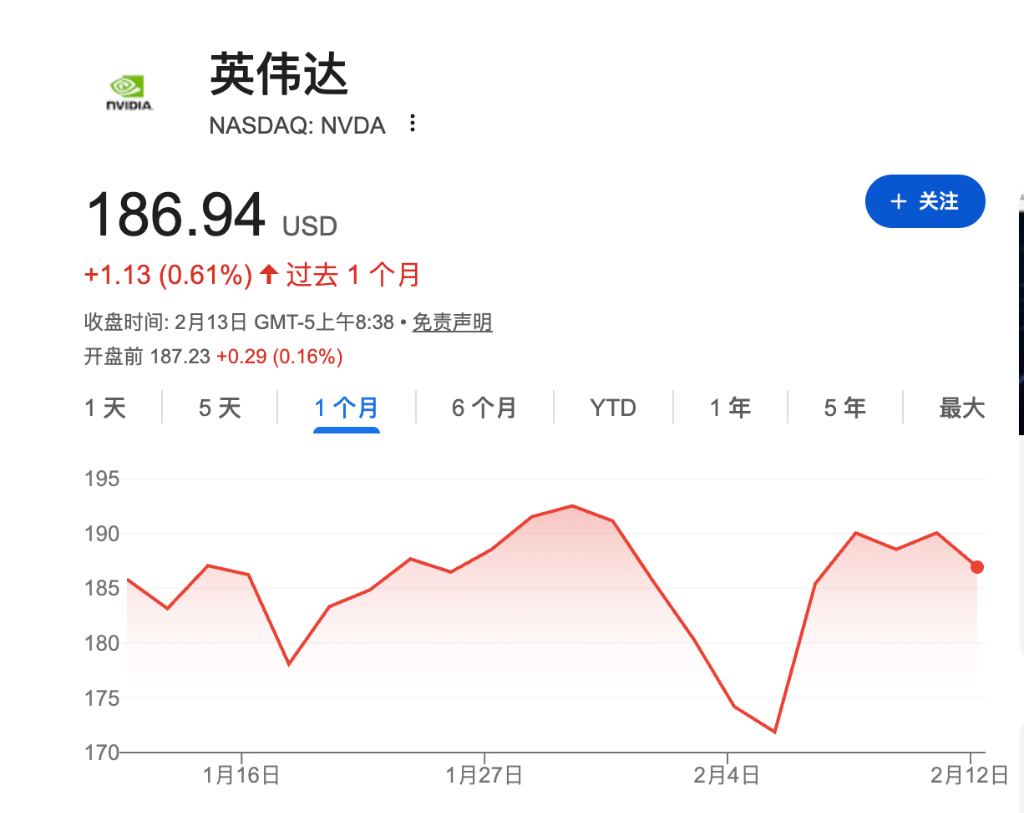
尽管人工智能领域资本支出持续膨胀,英伟达的股价表现却趋于冷却。这家AI芯片巨头自四季度以来仅上涨约1%,目前市盈率约为24倍,与纳 斯达克100指数大致持平,显示市场正重新评估其估值溢价。 竞争格局的变化成为观望情绪的核心驱动。英伟达首席执行官黄仁勋本月以约200亿美元收购推理硬件初创公司Groq的技术授权并招募其大部分 芯片团队,这一举动本身即印证了其他公司在特定领域的竞争力。与此同时,Cerebras与OpenAI签署了100亿美元的快速推理芯片供应协议, Anthropic也与多家非英伟达芯片供应商达成合作。 这些交易正在重塑市场对AI芯片格局的认知。多家初创企业表示,自Groq交易以来,潜在投资者的兴趣明显上升。SambaNova甚至放弃了以远低 于上轮估值出售公司的讨论,转而寻求新一轮融资。 对投资者而言,这一系列信号意味着:尽管英伟达仍是AI芯片领域无可争议的领导者,但其垄断地位可能不再像过去那样牢不可破。市场正 从"押注单一龙头"转向"重新定价竞争风险"。 推理芯片市场成为竞争焦点 微软支持的AI芯片公司D-Matrix首席执行官Sid Sheth指出,自去年初DeepSeek亮相以来,市场对快 ...
Vibe coding is about to get so fast
Matthew Berman· 2026-02-13 14:00
GPT 5.3% just came out about a week ago and it changed the world of coding. But it had a major flaw. It was extremely slow.But not anymore. Today, OpenAI just announced GPT 5.3% Spark. This is a smaller version of GPT 5.3% codecs and the first time they're deploying a model on the Cerebrris chipset.Cerebrus and OpenAI partnered together to deliver the fastest inference speeds on Earth. Cerebras makes wafer scale chips that are faster than any other chip on the planet. GPT 5.3% Codeex Spark is tuned for spee ...
OpenAI史上最快模型降临,每秒1000Token,代码从此「炸出来」
3 6 Ke· 2026-02-13 11:27
【导读】OpenAI深夜突袭,GPT-5.3-Codex-Spark正式炸场。核心卖点只有一个:快!每秒1000个token,让代码生成告别加载条。联手Cerebras怪兽级 硬件,物理外挂直接拉满。这不再是简单的工具升级。而是一场关于速度的暴力美学。 OpenAI又深夜炸场了。 GPT-5.3-Codex-Spark正式发布! 这次不讲大道理,只讲一个字:快。 到底有多快,看一下官方的演示: 它是GPT-5.3家族里的「闪电侠」。 也是OpenAI首个专为实时编程设计的模型,OpenAI称之为「超高速模型」。 芯片巨头Cerebras。 它的生成速度超过每秒1000个token! 这是什么概念? 你刚敲完回车,代码已经写完了。 体感接近「瞬时响应」。 这次OpenAI找了个强力外援。 大家写代码最烦什么?肯定是等待。 Spark的出现就是为了干掉等待。 Spark跑在Cerebras的Wafer Scale Engine 3上。 这不是普通的GPU堆叠。 这是专为低延迟设计的顶级硬件。 为了配合这股怪力,OpenAI还重写了底座。 他们引入了持久的WebSocket连接。 往返开销降低了80%。 首个字符出 ...
X @Bloomberg
Bloomberg· 2026-02-12 18:03
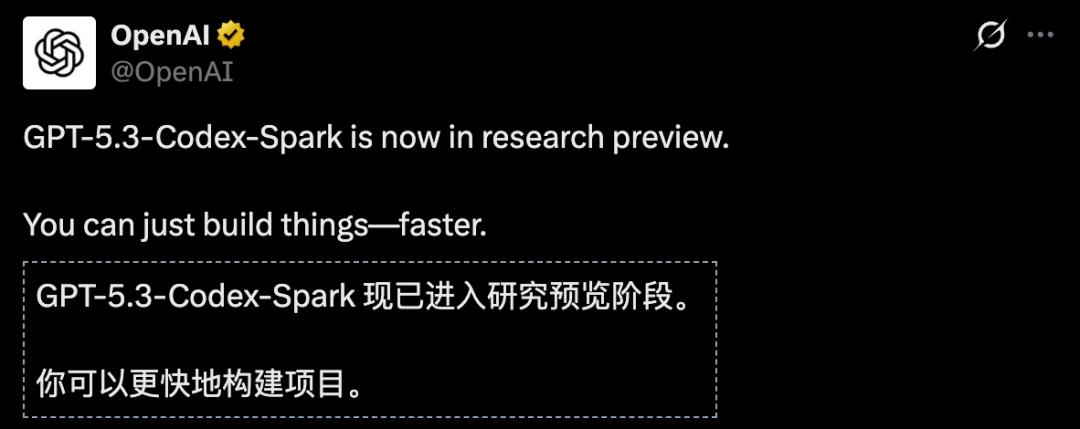
OpenAI is releasing its first AI model that runs on chips from semiconductor startup Cerebras https://t.co/IAt2AB15fl ...
OpenAI发布第一款采用Cerebras芯片的模型
Hua Er Jie Jian Wen· 2026-02-12 18:01
市场有风险,投资需谨慎。本文不构成个人投资建议,也未考虑到个别用户特殊的投资目标、财务状况或需要。用户应考虑本文中的任何 意见、观点或结论是否符合其特定状况。据此投资,责任自负。 风险提示及免责条款 OpenAI发布第一款采用Cerebras芯片的模型。 ...
OpenClaw 启示录:Agent 的扩散速度取决于入口与社区 | Jinqiu Select
锦秋集· 2026-02-12 12:25
Core Insights - OpenClaw has gained significant traction since its launch in early 2026, achieving high visibility in the global developer community, including over 180,000 stars on GitHub, and leading to the emergence of social experiments like Moltbook, showcasing a new trend in interactive AI agents [3][15] - The creator, Peter Steinberger, emphasizes that the success of OpenClaw is not solely due to technology but rather its community engagement and low entry barriers, allowing users to modify the software easily [6][9] - The project has sparked discussions about the future of AI agents, the redefinition of traditional applications, and the evolution of human-agent interactions, which many entrepreneurs have yet to fully grasp [5][6] Project Origin - The inception of OpenClaw began with Peter's personal need for an AI assistant in April 2024, leading to a series of early experiments that culminated in the project's creation due to frustration over its absence [9][10] - The first working prototype was developed in just one hour, demonstrating the core functionality of interacting with a computer through a chat application [11][12] - The project experienced viral growth after an unexpected feature emerged, showcasing the agent's ability to autonomously handle tasks without prior instruction [12][13] Technical Architecture - OpenClaw's architecture includes several sophisticated components, such as a chat client gateway for decentralized access, a core decision engine, and a skills system for functionality expansion [16][17] - The agent's self-awareness allows it to read and modify its own source code, which is a significant advancement in software engineering [17][18] - The project has faced challenges related to security and brand protection, particularly after its rapid rise in popularity, highlighting the need for integrated security measures [6][27] Community and Social Impact - MoltBook, a social network for AI agents, has emerged as a phenomenon, where agents interact in a Reddit-like environment, leading to discussions that sometimes cause public concern [27][28] - The term "AI psychosis" was coined by Peter to describe the mix of genuine concern and sensationalism surrounding AI developments, reflecting societal fears about AI's role in the digital age [28][29] - OpenClaw represents a balance between freedom and responsibility, as users gain control over their data while also being accountable for its security [30][31] Business Model and Future Outlook - Despite the project's popularity, Peter has chosen to reject significant funding offers, prioritizing the open-source ethos and community engagement over commercial pressures [32][33] - The current financial status shows monthly revenues between $10,000 and $20,000, with ongoing discussions for partnerships with major tech labs, provided the project remains open-source [33][34] - Peter envisions a future where traditional applications may be replaced by AI agents, fundamentally altering the app market landscape [39][40]