
推理芯片

Search documents
「AI新世代」从GPU到LPU:英伟达大举进攻推理芯片,黄仁勋再落关键一子
Hua Xia Shi Bao· 2026-03-17 12:44
Core Insights - NVIDIA is making a significant move into the inference chip market with the introduction of the Groq 3 LPU, as announced by CEO Jensen Huang at GTC 2026 [1] - The AI industry is shifting focus from model training to inference, with NVIDIA aiming to capture this market opportunity [1][6] - By the end of 2027, NVIDIA's Blackwell and Rubin product lines are projected to generate annual revenues of $1 trillion, doubling previous forecasts [1] Group 1: Product Launch and Features - NVIDIA has officially launched the Vera Rubin platform, which includes seven chips, such as Rubin GPU, Vera CPU, and the new Groq 3 LPU, designed to enhance AI inference capabilities [2] - The Groq LPU is expected to increase token throughput from 100 tokens per second to over 1500 tokens, supporting interactive AI agent scenarios [2] - A new rack, Groq LPX, has been introduced to accommodate the Groq accelerator, enhancing decoding performance for AI models [2] Group 2: Market Trends and Strategic Positioning - NVIDIA's interest in the inference chip market has been long-standing, highlighted by its $20 billion acquisition of Groq's core technology assets in December 2025 [3] - The market share of non-GPGPU chips in AI servers is expected to rise from 36% in 2024 to 45% by 2027, while GPGPU chip share will decline from 64% to 55% [3] - The shift in AI computing demand from training to inference is a strategic response by NVIDIA to market changes and competitive pressures [3][8] Group 3: Ecosystem and Infrastructure Development - NVIDIA is addressing the growing demand for inference with new initiatives, including a partnership with OpenAI for specialized inference chips [4] - The company has introduced the Vera Rubin DSX AI Factory reference design, which outlines how to build and operate AI factory infrastructure for optimal performance [7] - NVIDIA's advancements in AI infrastructure aim to maximize productivity and energy efficiency in generating AI tokens [7] Group 4: Competitive Landscape and Future Outlook - The introduction of the LPU does not imply a decline in NVIDIA's GPU business; rather, it is expected to create broader market opportunities through synergy [7] - The ASIC market is becoming increasingly competitive, with several challengers emerging, including Cerebras and Chinese companies like Cambricon and Huawei [8] - The entry of NVIDIA into the inference chip sector is seen as both a challenge and a catalyst for domestic manufacturers, potentially accelerating industry reshuffling and technological upgrades [8]

纽约时报:英伟达开创了AI时代,现在要“守江山”
Feng Huang Wang· 2026-03-17 00:35
Core Insights - Nvidia has established a dominant position in the AI chip market due to its early advantage with GPUs, but it now faces rapid industry changes and rising competition, necessitating efforts to maintain its leadership [1] - The company has integrated technology from startup Groq to enhance the efficiency of its chips, reflecting its adaptability to evolving market demands [1][3] Group 1: Industry Dynamics - Over the past year, AI companies have shifted focus towards "inference," which emphasizes low-cost and rapid data generation, making chips optimized for this process more valuable [2] - Competitors like Google's Tensor Processing Units (TPUs) and emerging firms such as Cerebras have gained an edge in inference, winning business from Nvidia's long-term clients like OpenAI and Meta [2] Group 2: Product Developments - Nvidia announced a $20 billion licensing agreement with Groq to produce custom chips designed specifically for inference, aiming to accelerate the inference process and reduce costs [3] - The company introduced new products, including NemoClaw, to assist software companies in utilizing AI agents, showcasing its commitment to innovation in response to market needs [4] Group 3: Market Position and Projections - Nvidia's chips currently hold over 90% of the AI market share, and the company aims to maintain this dominance by integrating new technologies [4] - Projections indicate that sales for Nvidia's Blackwell and Rubin chips could reach at least $1 trillion from 2025 to 2027, a significant increase from previous forecasts of $500 billion [4] Group 4: Customer Acquisition and Supply Chain - The ability to attract new customers will be crucial for Nvidia's share in the inference market, where it is expected to hold about one-third of the market compared to its 90% share in AI development chips [6] - The partnership with Groq is also seen as a strategic move to address manufacturing challenges, as Groq's chips are produced by Samsung, alleviating pressure on Nvidia's primary manufacturer, TSMC [6][7]


英伟达(NVDA.US)GTC大会前瞻:AI霸主能否守住江山,市场紧盯“后训练时代”新战略
Zhi Tong Cai Jing· 2026-03-13 12:31
Core Insights - The upcoming NVIDIA GTC developer conference is expected to showcase the company's strategies to maintain its leadership in the AI chip market amidst increasing competition [1] - Analysts anticipate that NVIDIA will introduce new products optimized for inference workloads, particularly a chip integrating technology from the recently acquired AI startup Groq [2] - The rise of custom ASIC chips from major clients like OpenAI and Meta poses a long-term threat to NVIDIA's dominance in the GPU market, especially in inference applications [3] Group 1: Conference Highlights - The GTC conference serves as a critical platform for NVIDIA to present advancements in chips, data centers, and AI software, while investors seek reassurance on the effectiveness of the company's AI ecosystem strategy [1] - Market research indicates that NVIDIA will likely update its full-stack roadmap and emphasize areas such as inference, AI agents, and AI factory infrastructure [1] Group 2: Competitive Landscape - The transition from AI model training to inference is reshaping the competitive landscape, with NVIDIA currently holding over 90% market share in both training and inference but expected to face market share erosion, particularly in inference [1][3] - The CEO of d-Matrix highlights that while NVIDIA will maintain its lead in training, the inference market presents different challenges, as developers can easily switch to competitors for running AI models [2] Group 3: Strategic Responses - To counteract competition, NVIDIA is enhancing its defenses through acquisitions and investments, including a $2 billion investment in optical communication companies to advance co-packaged optics technology [3] - Analysts predict that co-packaged optics will be a key breakthrough for NVIDIA's next-generation chip architecture [3][4] Group 4: Market Trends - The resurgence of CPUs in AI tasks is noted, with analysts suggesting that NVIDIA may showcase server products utilizing only its CPUs to address new performance bottlenecks [4] - The potential of AI agents and robotics is seen as a significant driver for future growth, with NVIDIA reporting approximately $6 billion in robotics-related revenue last quarter [6] Group 5: Geopolitical Factors - Geopolitical factors are increasingly influencing NVIDIA's future, with U.S. export restrictions on AI chips and limited access to key markets like China reshaping its global sales strategy [7] - The investment in AI infrastructure in regions like the Middle East is crucial for NVIDIA, although uncertainties related to regional conflicts and energy costs may impact demand [7]
英伟达“龙虾”乐园即将开张
3 6 Ke· 2026-03-13 11:43
Core Insights - Nvidia will hold its annual GTC conference next week, featuring new product launches and interactive sessions, including a unique activity where attendees can build an AI assistant called "Lobster" [1][4] - The event is expected to attract over 30,000 participants from more than 190 countries, with a significant number being professional developers, indicating a strong focus on AI advancements [6] Product Announcements - Nvidia's CEO Jensen Huang will deliver a keynote speech, which is anticipated to cover the latest product roadmap, including new chips and technologies [8] - Key areas of focus include the latest products extending to the Feynman architecture, new collaborative designs, and proprietary optical interconnect technologies for large-scale systems [8] - Speculation surrounds a "never-before-seen chip" that may be a collaboration with Groq, aimed at enhancing AI inference capabilities, which is crucial for the widespread adoption of AI applications [9] Strategic Developments - Nvidia is expected to discuss its partnership with Groq, which involves a $20 billion investment for patent licensing and integration of Groq's team into Nvidia [9] - The company plans to launch an open-source platform named NemoClaw, designed for enterprises to build and deploy AI agents capable of executing multi-step tasks [12] Industry Trends - The theme of this year's roundtable discussion led by Huang will focus on the current state and future of open models in AI, featuring industry leaders from various innovative companies [13] - Nvidia has committed to investing $26 billion over the next five years in open-source AI model development, significantly surpassing the costs associated with training models like GPT-4 [16]

英伟达拟发布“神秘芯片” 或是专为推理设计的新架构
2 1 Shi Ji Jing Ji Bao Dao· 2026-03-11 05:47
Core Insights - NVIDIA is set to unveil a groundbreaking chip at the GTC conference in mid-March, which is expected to integrate Groq's LPU technology for a new inference product [1][4] - The shift in global computing demand is moving from training to inference, with predictions indicating that by 2026, inference will account for two-thirds of all AI computing power [3] - The new chip is anticipated to enhance decoding efficiency, addressing the limitations of current GPU architectures in handling large model parameters [5][6] Group 1: Chip Development and Technology - The upcoming chip is likely to be a new inference chip system that incorporates Groq's LPU technology, marking a significant integration of external architecture into NVIDIA's core AI computing product line [4] - The Groq LPU is designed specifically for inference acceleration, utilizing SRAM for model parameter storage, which offers significantly higher memory bandwidth compared to traditional GPU architectures [6] - NVIDIA may adopt a 3D stacking approach similar to AMD's V-Cache technology, integrating LPU units directly on top of GPU cores to enhance performance [7][8] Group 2: Market Trends and Predictions - The market is expected to see the emergence of specialized inference chips worth billions, which will be deployed in data centers and enterprise servers, with some chips potentially having power consumption comparable to general AI chips [3] - The industry is witnessing a trend where advanced manufacturing processes are becoming increasingly critical, with a focus on achieving high interconnect density and energy efficiency in chip designs [10] - There is a potential risk for domestic packaging and testing companies to be pushed out of the high-end market as the value of advanced chips concentrates on front-end manufacturing and advanced packaging [10]

周鸿祎,最新发声!
Zhong Guo Ji Jin Bao· 2026-02-27 07:29
Group 1 - The core focus of Zhou Hongyi, founder of 360, during the National People's Congress is on AI empowerment in security, the implementation of AI in China, and how enterprises and individuals can quickly utilize AI [2][3] - Zhou emphasizes the importance of AI agents, citing examples like Anthropic, which can address security issues through AI programming and vulnerability detection [2] - The development of reasoning computing power is highlighted as having unlimited potential, while training computing power still has room for growth [2] Group 2 - Zhou advocates for a shift in national industrial policy towards reasoning chips, which are strategically important and should not solely focus on high-end training chips like those from Nvidia [2] - The necessity for private deployment of AI models and agents within companies is stressed, as local computing power is essential for affordability and practicality [2] - Zhou points out that AI assistants are currently being used broadly, but there is a need for more specialized AI agents that can deliver direct value to enterprises, encouraging them to pay for such services [3]


微软投资AI芯片公司,挑战英伟达
半导体行业观察· 2026-02-14 01:37
Core Viewpoint - The article discusses the emerging potential of d-Matrix, a chip startup supported by Microsoft, which aims to revolutionize AI inference by creating chips that are faster, cheaper, and more efficient than current GPU-based solutions, potentially reducing inference costs by about 90% [2][5][7]. Group 1: d-Matrix's Approach - d-Matrix focuses on designing chips specifically for inference rather than repurposing training hardware, emphasizing the architectural differences between training and inference tasks [3][5]. - The company aims to reduce latency and increase throughput by integrating memory and computation more closely, which contrasts with traditional GPU architectures that separate these functions [4][5]. - d-Matrix's chip design is modular, allowing for scalability based on workload requirements, similar to Apple's unified memory design [5][6]. Group 2: Market Dynamics - NVIDIA currently dominates the AI chip market, with a market capitalization of $4.5 trillion, but there is growing interest in alternatives as companies seek to hedge against NVIDIA's dominance [7][8]. - Several startups, including Groq and Positron, are gaining traction in the inference space, indicating a shift in the market dynamics as companies explore different memory types for faster responses [8][9]. - The competition is intensifying, with major players like OpenAI and Anthropic exploring partnerships with various chip manufacturers to enhance their AI capabilities [9][10]. Group 3: Future Outlook - d-Matrix plans to ramp up production significantly, aiming for millions of chips by the end of the year, which could position it as a key player in the AI inference market [6][9]. - The article suggests that while NVIDIA remains a formidable leader, the rapid growth of dedicated hardware for AI inference could lead to a more fragmented market where multiple players thrive [10].


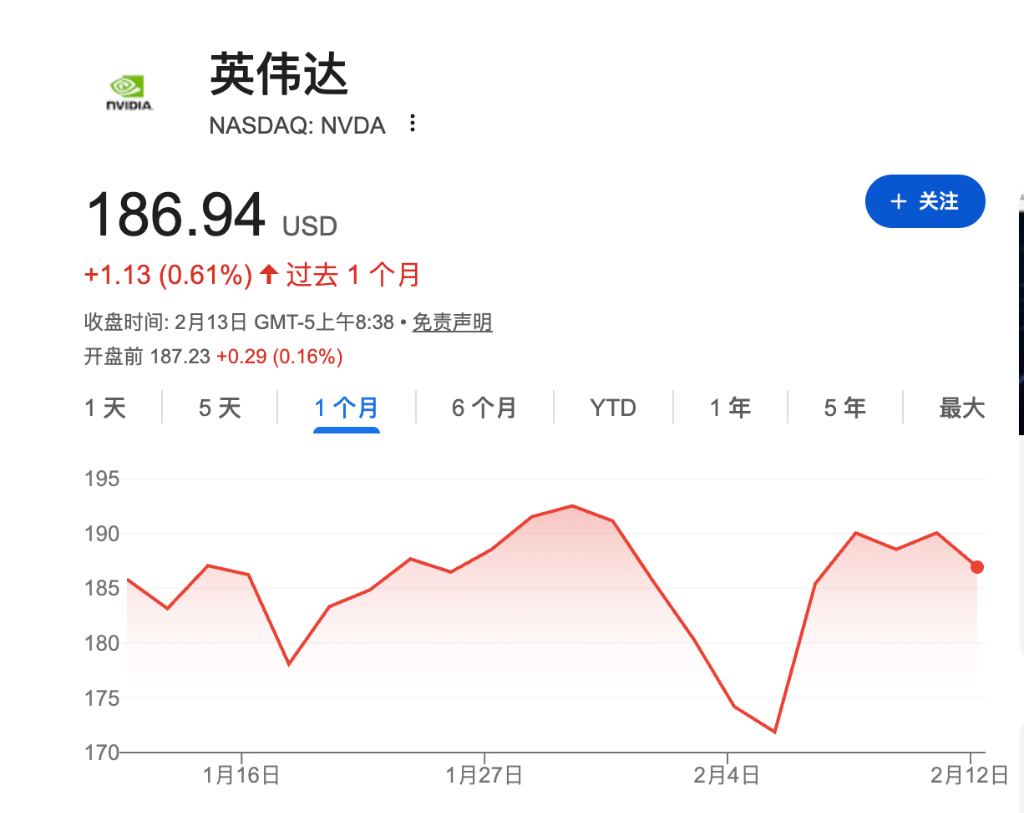
AI需求仍强却带不动股价!英伟达四季度至今仅涨1%,市场观望情绪转浓
Hua Er Jie Jian Wen· 2026-02-13 14:23
Core Insights - Despite the ongoing capital expenditure growth in the AI sector, Nvidia's stock performance has cooled, with only a 1% increase since Q4, and a current P/E ratio of approximately 24, aligning with the Nasdaq 100 index, indicating a market reassessment of its valuation premium [1][3] Competitive Landscape - The changing competitive landscape is driving market sentiment, highlighted by Nvidia's CEO Jensen Huang's $20 billion acquisition of Groq's technology and team, signaling the competitive strength of other companies in specific areas [3] - Cerebras signed a $10 billion supply agreement with OpenAI for rapid inference chips, while Anthropic has partnered with several non-Nvidia chip suppliers, reshaping market perceptions of AI chip dynamics [3] - Investor interest in startups has surged since the Groq deal, with SambaNova shifting from discussions of a low-value sale to seeking new funding rounds, indicating a shift from betting on a single leader to reassessing competitive risks [3] Focus on Inference Chips - The inference chip market is becoming a focal point, with startups and investors targeting this critical phase of running models post-training, viewed as a potential challenge to Nvidia's dominance [4] - Jump led a $230 million financing round for inference chip startup Positron, with its CTO noting a significant industry shift away from Nvidia's training and inference dominance [4] - New startups are exploring different memory architectures for faster response times in inference scenarios, blurring the lines between training and inference, thus creating opportunities for new chip architectures [4] Major Tech Companies' Chip Development - Major tech companies are accelerating the development of proprietary AI chips to reduce reliance on Nvidia, with OpenAI launching models on Cerebras chips and Anthropic partnering with Amazon's Trainium and Google's TPU [6] - Microsoft introduced its second-generation proprietary AI chip, Maia, and has rights to use OpenAI's chip IP, while startups like Etched raised approximately $500 million to challenge Nvidia's market position [6] - Despite the push for self-developed chips, companies like Amazon, Google, and Microsoft continue to heavily procure Nvidia GPUs for their AI products and cloud services, underscoring Nvidia's strong market leadership [6] Nvidia's Market Position and Future Outlook - Nvidia remains a powerful market leader with diverse product lines and a commitment to annual chip redesigns, with the Groq deal providing further expansion opportunities [7] - Expectations are set for Nvidia to announce measures addressing the demand for rapid inference chips at its flagship conference in March [7] - Historical patterns suggest that while many companies have claimed they could compete with Nvidia, most have struggled to do so at scale, indicating emerging cracks in Nvidia's previously unassailable position [7]
旋极信息:公司目前未在脑机方面进行布局
Zheng Quan Ri Bao Wang· 2026-01-29 01:52
Group 1 - The company, Xuanji Information (300324), has stated that it is currently not engaged in brain-computer interface (BCI) initiatives [1] - The company possesses technical capabilities in investment, construction, and operation related to reasoning chips and computing power centers [1]

旋极信息(300324.SZ):目前未在脑机方面进行布局
Ge Long Hui· 2026-01-28 13:39
Group 1 - The company, Xuanji Information (300324.SZ), has stated that it is currently not engaged in brain-computer interface (BCI) development [1] - The company possesses technical capabilities in investment, construction, and operation related to inference chips and computing power centers [1]