JFrog Ltd.

Search documents
AI vs SaaS:先卖再问,市场“卖对了一半”?
Hua Er Jie Jian Wen· 2026-02-12 08:24
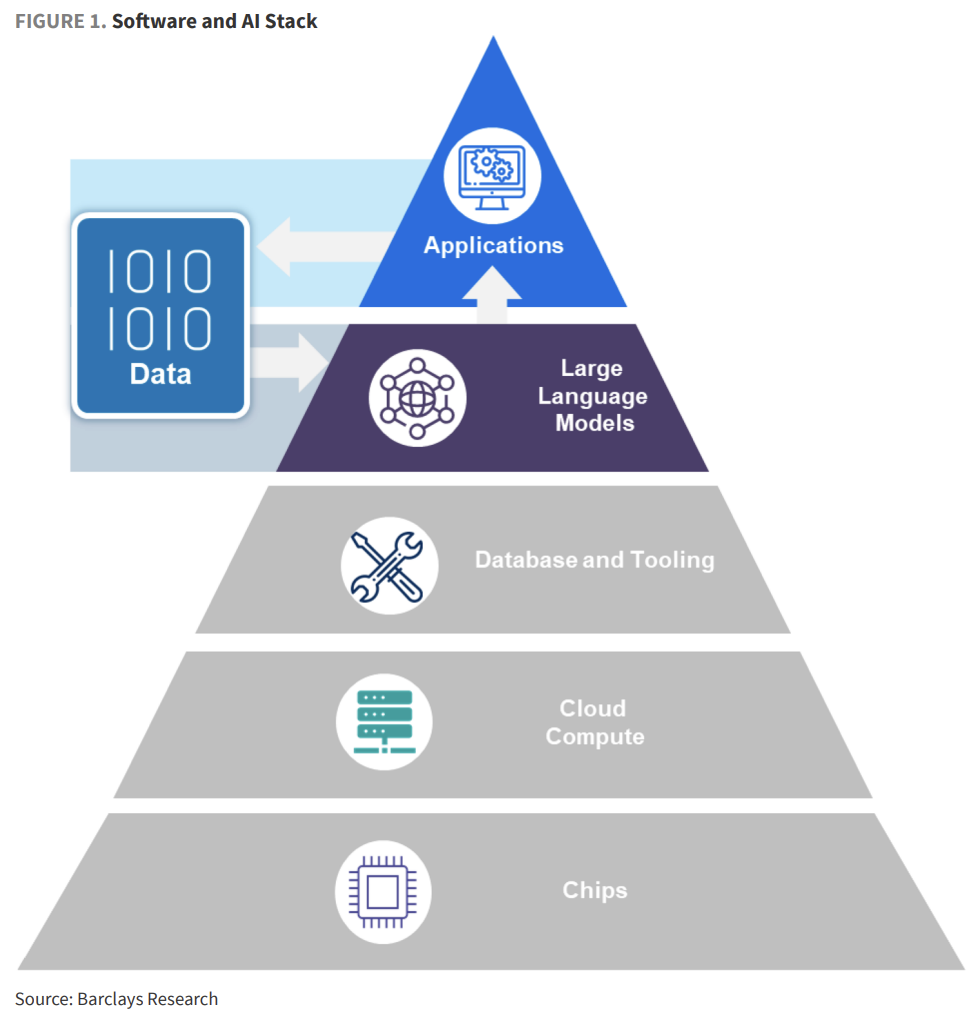
Core Insights - The recent release of Anthropic's products has triggered a significant sell-off in enterprise software stocks, revealing an overreaction in the market regarding AI threats [1][3] - Barclays highlights that while AI tools are encroaching on the application layer of SaaS companies, they do not threaten the foundational "system of record" infrastructure, which is crucial for companies like Salesforce and SAP [1][3] Group 1: Market Reaction and Misunderstandings - The release of Claude Cowork by Anthropic has been described as the tipping point for the decline in enterprise software stocks, with Salesforce and Workday seeing over a 40% drop in the past year [3] - Investors are confused about the capabilities of AI, mistakenly believing that new AI tools will completely replace traditional SaaS software, leading to a devaluation of established companies [3][12] - Barclays' report argues that the simplistic view of AI as a total replacement for software does not apply to most enterprise software companies [3] Group 2: AI Capabilities and Limitations - Generative AI excels in pattern recognition and initial draft generation but has fundamental limitations due to its probabilistic nature, making it less effective in scenarios requiring absolute accuracy [4][5] - Traditional software operates on deterministic rules, ensuring consistent outputs, while AI software functions probabilistically, lacking guaranteed consistency [5][6] Group 3: System of Record Companies - Barclays identifies three categories of enterprise software companies that have been mispriced during the sell-off, starting with system of record companies like Salesforce and SAP, which provide critical data requiring certainty [7][8] - SAP's position is particularly strong, as it manages essential business data and workflows that generative AI cannot handle effectively [7][8] - The report suggests that AI will not replace these systems but will instead increase their importance as AI creates more data touchpoints [8] Group 4: Misjudged Investment Opportunities - Besides system of record companies, Barclays points out two other categories that are misjudged: beneficiaries of AI agents and AI computing providers, which may see increased demand due to AI expansion [9] - There is a contradiction in the market logic; if AI is powerful enough to disrupt the software industry, the demand for computing power should rise, yet companies like Oracle and CoreWeave have also faced sell-offs [9] Group 5: Application Layer Challenges - The market's panic is not entirely unfounded, as SaaS companies have struggled with poor user interfaces, high prices, and security vulnerabilities, leading to customer dissatisfaction [10] - Companies like Klarna are moving away from traditional SaaS products in favor of smaller firms, utilizing AI tools to build their own applications, which highlights a genuine threat to the SaaS model [10] Group 6: Future Market Dynamics - The current market correction is seen as necessary, as SaaS companies have enjoyed inflated valuations by controlling both infrastructure and interface [11] - The emergence of AI technologies that can operate above system records may erode the pricing power of SaaS companies, indicating a shift in the profitability landscape [11] - As understanding of AI capabilities and SaaS business models deepens, the market may begin to re-evaluate companies incorrectly labeled as "AI victims," while those relying on poor application layers may face continued valuation pressure [12]

What Makes JFrog Ltd. (FROG) an Investment Choice?
Yahoo Finance· 2026-02-03 13:33
Baron Funds, an investment management company, released its “Baron Discovery Fund” fourth-quarter 2025 investor letter. A copy of the letter can be downloaded here. The Fund focuses on long-term, competitively positioned companies that are well-managed and have significant potential in untapped markets. The letter also addressed the advancements in AI and how humans define themselves in the changing landscape. In Q4, the fund generated a return of 0.19% (Institutional Shares), underperforming the Russell 2 ...

2026,是个“AI多模态大年”!普通人如何看懂十万亿美金的变局?
混沌学园· 2026-02-02 12:47
Core Insights - The article discusses the evolving landscape of the global AI industry, focusing on the competition among leading companies like OpenAI, Google, and Anthropic, and the potential of the next technological paradigm, Continual Learning, to disrupt the current market dynamics [2][7][15]. Group 1: AI Labs Competition - AI Labs are expected to exhibit a pattern of "alternating leadership" and "differentiation" in their competition, with the top three players—OpenAI, Anthropic, and Google—dominating the market and capturing approximately 90% of total AI revenue [7][8]. - OpenAI maintains a significant lead in consumer-facing applications with ChatGPT, boasting around 480-500 million daily active users, which is approximately 5.6 times that of Google's Gemini [9][10]. - Anthropic focuses on business applications and coding, with its Claude model being recognized as a state-of-the-art (SOTA) in software development [9][10]. Group 2: Technological Differentiation - Different AI labs have made strategic choices leading to clear technological differentiation, with OpenAI focusing on consumer applications, Anthropic on business and coding, and Google prioritizing multimodal capabilities [9][10][11]. - The competition between GPU and TPU architectures is forming two distinct camps, with Google leveraging its TPU technology to create a self-contained ecosystem, while NVIDIA continues to support OpenAI and Anthropic with GPU technology [11][12]. Group 3: Future Trends and Predictions - Continual Learning is identified as a critical future paradigm that could significantly enhance AI capabilities by allowing models to learn in real-time from interactions, moving away from static knowledge storage [17][21]. - The article predicts that by 2026, advancements in Continual Learning will lead to significant breakthroughs in AI, enabling models to become more adaptive and efficient [21][22]. - The AGI race is characterized as a long-term battle requiring sustained cash flow and investment, with companies needing to address commercial viability and efficiency concerns [23][26]. Group 4: Market Dynamics and Business Models - OpenAI's financial obligations raise questions about its business model, with estimates suggesting that its future revenue may only reach $200-300 billion, insufficient to cover its substantial capital expenditures [28][30]. - The article emphasizes the importance of new revenue streams and the potential for AI to create new economic value, particularly in sectors like SaaS and consumer applications [32][33]. - The competition in the AI market is not merely about technology but also about establishing sustainable business models that can withstand market pressures and capitalize on new opportunities [35][36]. Group 5: Emerging AI Applications - The article highlights the emergence of proactive agents that can provide services autonomously, requiring models to possess real-time learning capabilities [60][62]. - Voice agents are becoming a new interface for operating systems, with advancements in real-time speech-to-speech solutions expected to reshape user interactions [66][68]. - The rapid decline in LLM inference costs is noted, although the complexity of interactions may offset these savings, leading to a nuanced understanding of cost dynamics in AI applications [74][75].



How To Play AI Beta:拾象 2026 AGI 投资思考开源
海外独角兽· 2026-02-02 01:14
Core Insights - The rapid evolution of AI is outpacing market expectations, with significant shifts in consensus and narratives occurring almost monthly [2] - The report aims to recalibrate the understanding of the current AI competitive landscape and identify key technological and product trends that may dominate by 2026 [2] Current Landscape - The leading AI models are dominated by OpenAI, Anthropic, and Google, forming a top tier where slight advantages in model capabilities translate into substantial commercial value [6] - The competitive state among AI labs is characterized by alternating leadership and differentiation [4] Trends in AI Development - **Trend 1: Differentiation in Technical Approaches** - OpenAI focuses on consumer applications, maintaining a significant lead with ChatGPT, which has around 480-500 million daily active users, compared to Gemini's approximately 90 million [7] - Anthropic targets business applications and coding, with Claude Opus 4.5 being a strong performer in software development [7] - Google prioritizes multimodal capabilities, with Gemini 3 leading in this area but still catching up in text and coding capabilities [8] - **Trend 2: Two Major Computing Camps** - The industry is forming two camps: GPU (NVIDIA) and TPU (Google), with Google creating an integrated ecosystem while NVIDIA supports a broader alliance [10] - Current performance favors GPUs, but TPUs show potential for better cost control [10] Future Predictions - **Prediction 1: Continued Learning as a Key Paradigm** - Continual Learning is emerging as a critical paradigm, with expectations for significant advancements by 2026 [15] - This approach emphasizes models' ability to learn autonomously from interactions, moving from static to dynamic learning [16] - **Prediction 2: AGI Competition as a Long-term Battle** - The race for AGI resembles a marathon, requiring extensive data collection and long-term investment [21] - Companies like Google and ByteDance are positioned as strong contenders due to their cash flow and talent density [23] Business Model Considerations - The market is questioning the sustainability of AI investments, particularly regarding OpenAI's projected $1.4 trillion financial obligations [24] - OpenAI's revenue potential is estimated to be between $200-300 billion, which may not cover its capital expenditures [25] Key Investment Strategies - The ideal AGI investment strategy involves betting on the most promising model companies, necessary computing infrastructure, and the benefits of leading model technologies [32] - A recommended AGI basket includes OpenAI, ByteDance, Google, Anthropic, NVIDIA, and TSMC [32] Emerging Trends - **Trend 1: Models as Products** - The concept of "models as products" highlights that significant product improvements often stem from advancements in underlying models [36] - **Trend 2: Voice Agents as New OS Interfaces** - Voice agents are evolving into a new operating system layer, with a shift towards real-time speech-to-speech solutions [53] - **Trend 3: LLM Cost Deflation** - The cost of LLM inference is rapidly decreasing, with a reported 1000-fold reduction since GPT-3's launch [60] Competitive Dynamics - The release of Gemini 3 has altered the competitive landscape, leading to a decline in ChatGPT's user engagement, although ChatGPT maintains higher user retention and engagement metrics [62][63]

摩根士丹利-新年-仍是同样的AI叙事
摩根· 2026-01-19 02:29
Investment Rating - The report indicates an upgrade in the rating for Datadog to "Buy" due to improvements in core business after excluding OpenAI operations and the expected acceleration in growth from cloud migration and digital transformation projects [13][14]. Core Insights - The AI sector is rapidly evolving, with Anthropic's Claude Co-Work showcasing the capabilities of general intelligence agents in handling information work, marking a shift from prompt-driven interfaces to task-oriented models [1][3]. - Despite the enthusiasm for generative AI, the overall IT budget growth expectations have not significantly changed, with hardware, communication, and IT services spending expected to slow down [1][6]. - Snowflake is projected to have the highest growth acceleration expectations in 2026 among surveyed vendors, alongside Microsoft, indicating a strong position in the cloud data warehouse market [8]. Summary by Sections AI Development and Market Trends - The transition from prompt-driven interfaces to task-oriented models is highlighted by the capabilities demonstrated by Claude Co-Work [1][3]. - CIO surveys indicate that generative AI remains a top priority, but overall IT budget growth expectations have not improved significantly, with a slight downward adjustment noted [6]. Company Performances - Snowflake is leading in growth expectations for 2026, with a continued rise in the adoption of third-party cloud data warehouses [8]. - Datadog's core business is improving, with a notable increase in observability spending expected to become a core priority in enterprise budgets starting in 2026 [13][14]. - Atlassian is noted for its resilience and growth opportunities, with an expected 20% continuous revenue growth [21]. Competitive Landscape - The report discusses the competitive dynamics between Microsoft and Anthropic, with CIOs favoring Microsoft 365 Copilot for its comprehensive features [5]. - Akamai's collaboration with NVIDIA aims to leverage its distributed edge network for enhanced inference capabilities, which is expected to drive revenue growth [18][19].
After More Than Doubling In 2025, JFrog Dips Near Key Support Level Ahead Of Earnings
Investors· 2026-01-09 13:00
Group 1: Market Performance - The Medical-Biomed/Biotech industry group of Investor's Business Daily experienced a significant surge in 2025, achieving nearly a 34% gain by the end of the year [4] - JFrog (FROG) stock more than doubled in 2025 but has since retreated to a key support level ahead of its fourth-quarter earnings report [5] - Snowflake's Relative Strength Rating improved to over 80, indicating strong market performance [6] Group 2: Company Insights - JFrog's Composite Rating has jumped to 98, reflecting renewed technical strength in the stock [8] - JFrog's Relative Strength Rating has seen a rise to 91, showcasing its improving market leadership [10] - The stock of JFrog recently broke out to its highest level since February 2021 before experiencing a sharp pullback [5]
Five Israeli cos record triple digit Wall Street gains in 2025
En.Globes.Co.Il· 2025-12-25 10:29
Core Insights - 2025 marked the third consecutive year of double-digit increases on Wall Street, with a notable performance from Israeli stocks, although only about a quarter outperformed Wall Street indices [1] Company Performance - **Enlight Renewable Energy (Nasdaq: ENLT; TASE: ENLT)**: The company saw a stock increase of 162% in 2025, with a market cap rising from $2 billion at its IPO in 2023 to over $6 billion. It is recognized as one of the top companies in solar energy projects in the US [2] - **Pagaya (Nasdaq: PGY)**: The stock price increased by 143% in 2025, with a current market cap of $1.8 billion. The company turned a net profit earlier than expected this year, following a significant financial recovery [3][4] - **Tower Semiconductor Ltd. (Nasdaq: TSEM; TASE: TSEM)**: The chipmaker's stock rose by 135% in 2025, reaching a market cap of $13.6 billion, largely driven by the AI boom [5] - **JFrog (Nasdaq: FROG)**: The company experienced a 127% stock increase, with a market cap of $7.9 billion. The growth was fueled by strong third-quarter results and positive forecasts [6] - **Elbit Systems Ltd. (Nasdaq: ESLT; TASE: ESLT)**: The defense company saw a 125% increase in stock price, achieving a record market cap of $27 billion, supported by a significant order backlog and large international contracts [7]




Here are 3 top tech-stock picks that can outperform without help from the AI trade, according to a Wall Street analyst
Yahoo Finance· 2025-11-27 18:15
Core Viewpoint - The AI trade has been a significant driver in the stock market, but recent volatility has led investors to explore alternative opportunities outside the core AI theme [1][7]. Group 1: Analyst Insights - DA Davidson analyst Gil Luria remains bullish on AI overall but highlights strong potential in smaller tech stocks that are often overlooked [2][6]. - Luria emphasizes the focus on infrastructure software stocks as they are clear beneficiaries of AI usage without the perceived risks associated with application software companies [3][6]. Group 2: Recommended Stocks - Luria identifies three tech stocks: Snowflake, Datadog, and JFrog, which operate in the AI infrastructure and software space [2][4]. - Year-to-date performance for these stocks includes Snowflake at +62%, Datadog at +11%, and JFrog at +113%, with JFrog outperforming its peers and the Magnificent Seven [3][4]. Group 3: Market Dynamics - Luria believes that regardless of how enterprise customers build AI tools, they will require more data lakehouse capacity (Snowflake), more applications and infrastructure for observation (Datadog), and more binary code management (JFrog) [5][6]. - The continued growth of AI will benefit these companies as larger enterprises will always need their services to scale AI tools effectively [6].


Booking, Carvana upgraded: Wall Street's top analyst calls
Yahoo Finance· 2025-11-24 14:41
Core Insights - The article compiles significant research calls from Wall Street, highlighting upgrades and downgrades of various companies that investors should be aware of [1] Upgrades - Wells Fargo upgraded Merck (MRK) to Overweight from Equal Weight with a price target of $125, increased from $90, citing business development and pipeline progress as key factors for revenue growth in the early 2030s [2] - Wolfe Research upgraded Morgan Stanley (MS) to Outperform from Peer Perform with a price target of $198, anticipating accelerated revenue growth from investment banking share gains and organic growth in wealth management [3] - HSBC upgraded Flutter Entertainment (FLUT) to Buy from Hold with a price target of $228, reduced from $265, viewing the recent share selloff as a buying opportunity [3] - BofA upgraded Booking Holdings (BKNG) to Buy from Neutral with an unchanged price target of $6,000, believing that concerns regarding disintermediation risks from Google and OpenAI are overstated [4] - Wedbush upgraded Carvana (CVNA) to Outperform from Neutral with a price target of $400, increased from $380, suggesting that the recent share pullback is overdone [5] Downgrades - UBS downgraded JFrog (FROG) to Neutral from Buy with a price target of $65, up from $48, indicating that while AI-related benefits are significant, the larger revenue impact is likely 12-18 months away [6] - Jefferies downgraded Exact Sciences (EXAS) to Hold from Buy with a price target of $105, up from $90, due to the pending acquisition by Abbott, which is seen as a win for Exact Sciences [6] - Evercore ISI downgraded QuantumScape (QS) to In Line from Outperform with a price target of $12, up from $8, citing valuation concerns as shares have risen 200% year-to-date [6] - UBS downgraded Jazz Pharmaceuticals (JAZZ) to Neutral from Buy with a price target of $188, up from $163, stating that the stock appears fairly valued after a strong Phase 3 GEA update and a 25% stock increase [6] - TD Cowen downgraded PureCycle Technologies (PCT) to Hold from Buy with a price target of $9, down from $16, due to delays in orders and growth plans, prompting a more cautious stance [6]




Is Appian (APPN) Stock Outpacing Its Computer and Technology Peers This Year?
ZACKS· 2025-11-11 15:41
Group 1 - Appian (APPN) has shown strong year-to-date performance, returning approximately 28.3%, outperforming the average return of 27.5% for the Computer and Technology sector [4] - The Zacks Rank for Appian is currently 1 (Strong Buy), indicating a favorable outlook based on earnings estimate revisions and improving earnings outlooks [3] - The Zacks Consensus Estimate for Appian's full-year earnings has increased by 48.5% in the past quarter, reflecting improved analyst sentiment [4] Group 2 - Appian is part of the Internet - Software industry, which consists of 168 companies and currently ranks 61 in the Zacks Industry Rank [6] - The Internet - Software industry has gained an average of 10.4% this year, indicating that Appian is performing better than its industry peers [6] - Another notable stock in the Computer and Technology sector is JFrog Ltd. (FROG), which has returned 118.7% year-to-date and has a Zacks Rank of 2 (Buy) [5]