DeepMind

Search documents
人工智能、气候与能源 -超越 “单纯” 电力的机遇-AI, Climate & Energy — Opportunities Beyond 'Just' Power
2025-11-10 03:34
Summary of Key Points from the Conference Call Industry Overview - The focus is on the intersection of AI, climate action, and energy transition, highlighting how AI is reshaping infrastructure and creating new opportunities across various sectors, particularly in energy [1][2]. Core Insights and Arguments 1. **AI's Impact on Emissions Reduction**: - AI applications in power, food, and mobility sectors could reduce emissions by 3.2–5.4 GtCO2e annually by 2035, significantly outweighing the projected increase of 0.4–1.6 GtCO2e from AI-related data center emissions [2][119]. 2. **Electricity Demand Projections**: - Data centers are projected to consume approximately 415 TWh of electricity in 2024, potentially doubling to 950 TWh by 2030, which would account for about 3% of global electricity demand [6][27]. 3. **Data Center Flexibility**: - Flexibility from data centers can create significant value, with the IEA suggesting that if US data centers are flexible just 1% of the time, they could integrate 70% of all data capacity through to 2035 [7]. 4. **Efficiency Opportunities**: - Improvements in software, hardware, and cooling technologies can drastically reduce energy consumption in data centers, with current energy use breakdown showing 71% for servers/hardware, 19% for cooling, and 10% for other uses [8][76]. 5. **Corporate Clean Energy Procurement**: - The voluntary market for clean energy procurement has reached 100 GW of total deal capacity, indicating a strong trend towards corporate sustainability despite challenges [10]. 6. **Grid-Enhancing Technologies**: - There is a growing interest in technologies that enhance grid management, such as dynamic line rating and virtual power plants, to support clean energy integration [11]. 7. **Agricultural Emissions**: - Innovations in agriculture, particularly in meat and dairy sectors, could significantly reduce emissions, with AI playing a role in improving the adoption of alternatives [12]. 8. **AI in Climate Innovation**: - AI is being utilized to proactively identify and respond to climate-driven risks, enhancing resilience and adaptation strategies [9][107]. Additional Important Insights - **Data Center Clustering**: - Data centers tend to cluster in specific regions, which can create local grid constraints, with about 50% of US capacity concentrated in five regions [3][15]. - **Uncertainty in Demand Forecasting**: - The outlook for data center electricity demand is highly uncertain, influenced by efficiency improvements, AI uptake, and potential energy sector bottlenecks [35][68]. - **AI's Role in Climate Resilience**: - AI applications are enhancing early warning systems for extreme weather events, which is critical for proactive disaster response [111]. - **Investment in R&D**: - Public intervention is necessary to create enabling conditions for AI deployment and to ensure that AI applications are directed towards public goods [121]. This summary encapsulates the key points discussed in the conference call, focusing on the transformative role of AI in the energy sector and its implications for emissions reduction, efficiency, and corporate sustainability efforts.
上帝视角,DeepMind提前5天锁定Melissa,强度预报不再靠天
3 6 Ke· 2025-11-07 03:18
它没有情感,也不懂信仰,却能在飓风尚未成形时,预言灾难的走向。 DeepMind的模型预言——Melissa将快速增强。 这一次,风暴的预告,不再来自上帝,而来自算法。 风暴初声:当机器预见狂暴 10月21日,加勒比海上空的卫星云图逐渐浮现暗影。海面温度暖意仍在,气压只是轻微下降。 但在伦敦的DeepMind机房中,一条飓风强度预测曲线骤然上扬——模型显示,一场还未来得及命名的风暴将有50%–60%的概率升级为五级。 在古老的神话里,掌控风暴的是神。 他们掀起海浪、放下雷霆,让人类在恐惧中祈祷。 两千年后,一台AI在伦敦的机房里静默运算。 10月23日,该模型将这一概率提升至80%以上。 那时,人们还未意识到,这场被命名为Hurricane Melissa的风暴,将横扫牙买加、撕裂海岸。 从气象学视角看,「路径预测」虽有进展,但「强度变化」长期被视为难题——气旋内部涡旋、海温、气压、湿度等多重微妙交互,令传统数值模型疲于 奔命。 而DeepMind的模型这次在强度预测上交出亮眼答卷:训练中采用两套数据集──一是全球气象观测数据库,二是45年约5000场气旋专属观测数据。 这样的气旋记忆库被认为是其突破的关键点 ...


X @Decrypt
Decrypt· 2025-11-06 19:19
AI Development - Google DeepMind's AlphaEvolve AI 发现解决未解数学难题的新方法 [1]
马斯克最新采访:5 年后手机和APP都没了,工作也变成“想干就干”
3 6 Ke· 2025-11-03 23:24
Group 1 - Musk predicts that in 5 to 6 years, traditional smartphones and apps will disappear, replaced by AI-driven devices that serve as communication tools between local and server-side AI [3][4][6] - The future will see most content consumed by users, such as music and videos, being generated by AI, with tools like Grok Imagine already capable of creating coherent videos [7][8] - Musk emphasizes that AI will take over most physical labor, transforming work from a necessity for survival to a personal choice, potentially leading to high incomes for everyone [28][33] Group 2 - Musk raises concerns about the training of AI, highlighting that current mechanisms embed ideological biases, which can lead to dangerous outcomes, such as AI being forced to output false information [13][20] - He cites the example of Google's Gemini, which generated a misleading image of "Founding Fathers" as a diverse group of women, illustrating the systemic risks of AI's "cognitive dissonance" [2][13] - Musk argues that the core principle of AI safety should be the pursuit of truth, warning against programming AI with false narratives that could lead to dystopian scenarios [13][33] Group 3 - The conversation touches on the potential for a universal basic income or similar solutions as AI and automation displace jobs, with Musk suggesting that while demand for work will change, many traditional roles will be lost [28][30] - He believes that AI will rapidly take over digital jobs, such as coding and documentation, while physical jobs may persist longer due to the nature of the work [30][32] - Musk envisions a future where work becomes optional, leading to a scenario of "universal high income," allowing individuals to pursue their passions rather than work for survival [33][43]
腾讯研究院AI速递 20251104
腾讯研究院· 2025-11-03 16:01
Group 1: Generative AI Developments - Cambricon has launched the Cambricon NeuWare foundational software platform, fully compatible with the latest version of PyTorch and Triton operator development language, enabling rapid migration of user models and custom operators [1] - OpenAI has tightened its usage policy, stating that ChatGPT will no longer assist in providing professional advice in high-risk fields such as healthcare, law, and finance, due to rising legal risks and global compliance pressures [2] - Meituan has open-sourced its multimodal model LongCat-Flash-Omni, which has a total parameter count of 560 billion and an active parameter count of 27 billion, achieving state-of-the-art results in multimodal benchmark tests [3] Group 2: AI Applications and Innovations - Baidu's Wenxin app has introduced a "Magic Comic" feature that allows users to generate multi-page AI comics from a single sentence or photo within two minutes, supporting custom character designs and various artistic styles [4] - Cartesia has launched the new Sonic-3 voice model, supported by a $100 million investment from Nvidia, which can generate voice in 42 languages and over 500 tones, with a response time of under 190 milliseconds [5][6] - Turbo AI, founded by two 20-year-old college dropouts, has seen its user base grow from 1 million to 5 million in six months, generating annual recurring revenue in the eight figures while serving clients like Goldman Sachs and McKinsey [7] Group 3: AI Tools and Market Trends - A review of mainstream AI browsers indicates a division between progressive browsers (Chrome/Edge) and radical browsers (ChatGPT Atlas/Perplexity Comet/Dia), each with unique strengths and weaknesses [8] - Rokid has partnered with BOLON to launch the BZ5000 AI smart glasses, which weigh only 38 grams and feature a 12-megapixel camera, emphasizing localized services through its YodaOS system [9] - AI expert Fei-Fei Li has called for universities and non-profit organizations to reclaim the mission of advancing AI as a public good, highlighting the shift from open research to closed commercial competition [10][11] Group 4: Data and Market Opportunities - a16z partners emphasize the importance of building "data moats" in fragmented, sensitive, or hard-to-access fields, with examples like VLex and OpenEvidence showcasing proprietary data systems as competitive advantages [12]

Demis Hassabis带领DeepMind告别纯科研时代:当AI4S成为新叙事,伦理考验仍在继续
3 6 Ke· 2025-11-03 10:45
Core Insights - Demis Hassabis, CEO of Google DeepMind, has been featured on the cover of TIME100 for 2025, highlighting his influence on AI technology and ethics as the field evolves [1][2] - DeepMind is shifting its focus from general artificial intelligence (AGI) to a strategy centered on scientific discovery, termed "AI for Science (AI4S)" [10][11] - The company has made significant advancements, including the development of AlphaGo and AlphaFold, which have had a profound impact on AI and life sciences [6][9] Group 1: Achievements and Recognition - Hassabis has been recognized for his contributions to AI, particularly in deep learning and its applications in scientific research [2][4] - The acquisition of DeepMind by Google in 2014 for approximately £400 million (around $650 million) provided the company with enhanced resources and computational power [6] - AlphaFold's success in predicting protein structures has been acknowledged as one of the most influential scientific achievements, earning Hassabis the 2024 Nobel Prize in Chemistry [9][10] Group 2: Strategic Direction - DeepMind is now prioritizing AI4S, aiming to leverage AI to accelerate scientific discoveries rather than merely mimicking human intelligence [10][11] - The launch of Gemini 2.5 and the Project Astra digital assistant are part of DeepMind's efforts to advance its AI capabilities while maintaining a focus on scientific applications [11][12] - Hassabis emphasizes that the goal of AGI should be to enhance human understanding and address global challenges, rather than to replace human roles [10][11] Group 3: Ethical and Controversial Aspects - Despite the accolades, Hassabis and DeepMind face scrutiny regarding the ethical implications of their work, particularly concerning military applications and the concentration of AI technology within a few corporations [12][16] - Internal dissent has emerged within DeepMind regarding its partnerships with military entities, with employees expressing concerns over the potential ethical ramifications [16][19] - The balance between technological advancement and ethical responsibility remains a critical issue for Hassabis and the broader AI community [20]


前OpenAI灵魂人物Jason Wei最新演讲,三大思路揭示2025年AI终极走向
3 6 Ke· 2025-11-03 03:02
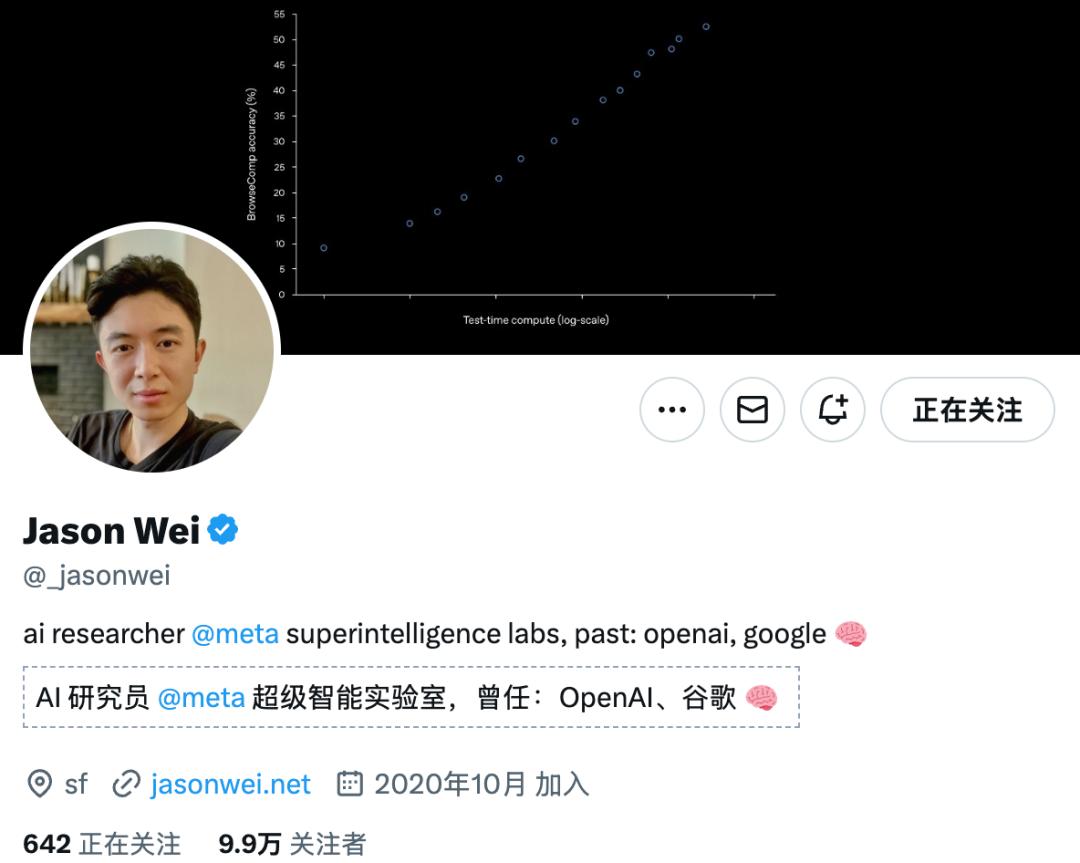
Core Insights - The core viewpoint of the article is that while AI has made significant advancements, it will not instantaneously surpass human intelligence, and its development can be categorized into two phases: breakthrough and commoditization of intelligence [1][5][42]. Group 1: AI Development Phases - AI development can be divided into two stages: the first stage focuses on unlocking new capabilities when AI struggles with certain tasks, while the second stage involves the rapid replication of these capabilities once AI can perform them effectively [5][30]. - The cost of achieving specific performance benchmarks in AI has been decreasing over the years, indicating a trend towards commoditization [5][12]. Group 2: Knowledge Accessibility - AI is facilitating the democratization of knowledge, making previously high-barrier fields like programming and biohacking accessible to the general public [15]. - The time required to access public knowledge has been significantly reduced, moving from hours in the pre-internet era to seconds in the AI era [14][12]. Group 3: Verifiability and AI - The "Verifier's Law" states that any task that can be verified will eventually be solved by AI, leading to the emergence of various benchmarking standards [16][41]. - Tasks that are easy to verify but difficult to generate will be prioritized for AI automation, creating new entrepreneurial opportunities for defining measurable goals for AI [30][41]. Group 4: Asymmetry in Task Difficulty - There exists an asymmetry in task difficulty where some tasks are easy to verify but hard to generate, such as Sudoku puzzles versus website development [17][18]. - The development speed of AI varies significantly across different tasks, influenced by factors such as digitization, data availability, and the nature of the task [35][36]. Group 5: Future Implications - The future of AI will see a jagged edge of intelligence, where different tasks will evolve at varying rates, and there will not be a singular moment of "superintelligence" emergence [31][42]. - The flow of information will become frictionless, and the boundaries of AI will be determined by what can be defined and verified [43].
微软AI新天团曝光,只有1位华人,「谷歌系」超1/3
3 6 Ke· 2025-11-03 01:55
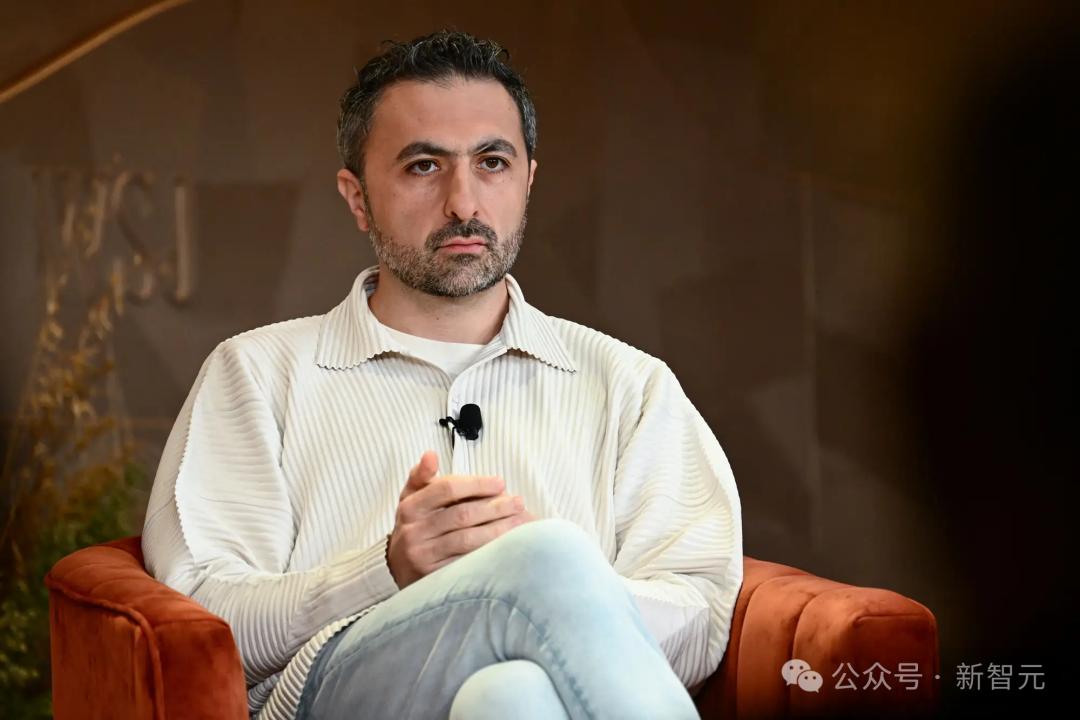
Core Insights - Microsoft AI has expanded its leadership team under CEO Mustafa Suleyman, adding nine new core members, five of whom are from Google/DeepMind, reflecting a competitive talent acquisition landscape in the AI sector [1][3][45] Team Composition - The new team includes 17 direct reports to Suleyman, up from 12, indicating rapid growth and restructuring within the Microsoft AI division [3][45] - Notable new hires include Amar Subramanya, who previously worked at Google for 16 years, and Dominic King, a founding member of DeepMind Health [6][8] Talent Acquisition - Microsoft has recruited at least 20 employees from DeepMind in the past six months, showcasing a strategic focus on acquiring top talent in AI [3][45] - The new hires come from various backgrounds, including engineering, product growth, commercialization, and legal expertise, enhancing the team's overall capabilities [45] Organizational Changes - Among the original 12 executives, eight remain, with some receiving promotions, while four have left the core team [27][45] - Key figures like Zhang Qi have seen their roles elevated, reflecting internal recognition and the importance of their contributions to the AI strategy [30][45] Competitive Landscape - The restructuring at Microsoft AI mirrors similar changes at other AI companies like Meta and OpenAI, highlighting the intense competition for top-tier talent in the industry [3][45] - The formation of this new core team positions Microsoft to challenge the leading positions of OpenAI and Google in the AI market [45]

Meta裁员、OpenAI重组:万字复盘谷歌起笔的AI史诗,如何被「群雄」改写剧本?
机器之心· 2025-11-02 01:37
Core Insights - The AI industry is transitioning from a phase of rapid investment and growth to a more competitive and cost-conscious environment, as evidenced by layoffs and restructuring among major players like Meta, OpenAI, and AWS [1][2]. Group 1: Historical Context of AI Development - Google was founded with AI as a core principle, influenced by co-founder Larry Page's background in machine learning [5][9]. - The term "Artificial Intelligence" was first coined in 1956, but the field faced significant setbacks due to limitations in computing power and data, leading to two major "AI winters" [8]. - Larry Page's vision for Google included the belief that AI would be the ultimate version of their search engine, aiming to understand everything on the web [9][10]. Group 2: Key Innovations and Breakthroughs - Google's early AI efforts included the development of the PHIL language model, which significantly improved search functionalities and contributed to the company's revenue through AdSense [14][15][16]. - The introduction of neural networks and deep learning at Google was catalyzed by the arrival of key figures like Geoff Hinton, who advocated for the potential of deep learning [19][21]. - The "cat paper," which demonstrated a deep learning model's ability to recognize images without supervision, marked a significant milestone for Google Brain and had profound implications for YouTube's content understanding [30][34]. Group 3: Competitive Landscape and Strategic Moves - The success of AlexNet in 2012 revolutionized deep learning and established GPU as the core hardware for AI, leading to a surge in interest and investment in AI talent [35][39]. - Google acquired DNN Research, further solidifying its leadership in deep learning, while Facebook established its own AI lab, FAIR, to compete in the space [41][43]. - The acquisition of DeepMind by Google in 2014 expanded its AI capabilities but also led to internal conflicts between DeepMind and Google Brain [56][57]. Group 4: Emergence of OpenAI and Market Dynamics - OpenAI was founded in 2015 with a mission to promote and develop friendly AI, attracting talent from Google and other tech giants [66][68]. - The launch of ChatGPT in late 2022 marked a pivotal moment in the AI landscape, rapidly gaining users and prompting a competitive response from Google [97][99]. - Google's response included the rushed launch of Bard, which faced criticism and highlighted the challenges of adapting to disruptive innovations [102][103]. Group 5: Future Directions and Challenges - Google is now focusing on the Gemini project, aiming to unify its AI efforts and leverage its extensive resources to compete effectively in the evolving AI landscape [105][106]. - The competitive dynamics in the AI industry are shifting, with emerging players in China and the ongoing evolution of established companies like OpenAI and Meta [109][110].


OpenAI前副总裁携DeepMind科学家创业:20余精英科学家+3亿美元押注「AI做科学」
3 6 Ke· 2025-10-31 08:28
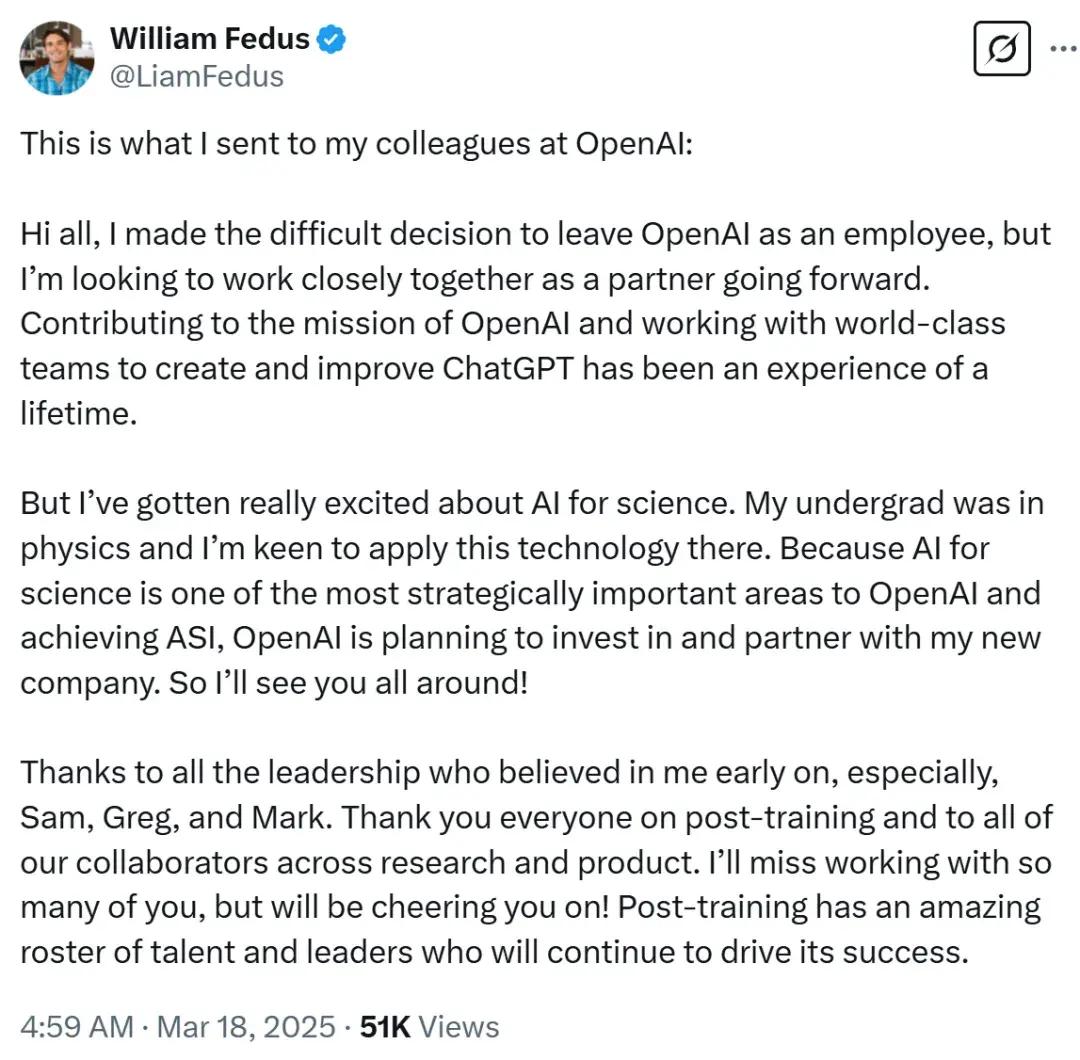
Core Insights - Periodic Labs aims to revolutionize scientific discovery by integrating AI with experimental processes, allowing AI to not only analyze data but also design experiments and discover new materials [6][10][25] Group 1: Founders and Vision - Liam Fedus and Ekin Doğuş Cubuk, both prominent figures in AI research, left their respective positions to establish Periodic Labs, driven by the belief that generative AI can significantly accelerate scientific discovery [1][2][5] - The founders recognized the limitations of current AI applications in science and sought to create a platform that combines AI with physical experimentation to generate new data [5][6] Group 2: Technological Framework - Periodic Labs is developing an "AI-driven scientific platform" that integrates automation, high-fidelity simulations, and large language models to create a closed-loop system for scientific experimentation [6][10][11] - The company emphasizes the value of "failure data," arguing that unsuccessful experiments provide critical insights for training AI models, which contrasts with traditional scientific practices that prioritize successful outcomes [7][11] Group 3: Funding and Market Impact - In September 2025, Periodic Labs raised $300 million in seed funding, setting a record for AI startups and attracting investments from top-tier venture capital firms and notable angel investors [12][15][20] - The funding reflects a broader consensus in Silicon Valley that Periodic Labs has the potential to compress decades of research into a few years, particularly in high-stakes fields like semiconductor materials [15][24] Group 4: Talent Acquisition - Following the funding, Periodic Labs successfully recruited over 20 top researchers from leading tech companies, creating a diverse team that combines expertise in AI and various scientific disciplines [20][21] - The company’s advisory board includes Nobel laureates and experts from prestigious institutions, enhancing its research capabilities and innovative potential [21][24] Group 5: Research Focus - Periodic Labs is initially focusing on discovering new high-temperature superconductors, which could have transformative implications for technology and energy efficiency [24][25] - The company is also collaborating with semiconductor manufacturers to optimize thermal materials, addressing critical challenges in chip design [24][25]