Panasonic

Search documents
高端卫浴新范式:松下京东达成战略合作
Sou Hu Wang· 2025-05-28 09:39
Core Insights - The 29th China International Kitchen and Bathroom Exhibition showcased Panasonic's innovative approach to smart bathroom solutions, emphasizing the integration of technology and Japanese craftsmanship to enhance health-oriented living systems [1][9] - Panasonic's strategic partnership with JD.com aims to address the growing demand for smart toilets in China, particularly focusing on the limitations posed by traditional toilet installation requirements [4][9] Product Innovation - Panasonic launched the V8 Family Edition smart toilet, which features a no-pit distance technology that eliminates traditional installation constraints, allowing for easier installation in both new and renovated homes [2][9] - The V8 toilet incorporates "dynamic swirling bubble" technology for self-cleaning and offers multiple intelligent flushing modes to cater to individual family needs [2] Strategic Collaboration - The strategic cooperation between Panasonic and JD.com is designed to tackle the pain points in the existing market, particularly the low replacement rates of traditional toilets due to pit distance limitations [4] - This partnership marks a significant milestone in the electrification of bathroom products, aligning with JD.com's future strategic focus [4] Service Model Enhancement - Panasonic and JD.com introduced a comprehensive "one-stop service" that includes delivery, old product removal, new product installation, and waste disposal, addressing consumer concerns about the renovation process [6] - The upgraded "bathroom renovation service" offers tailored solutions for various consumer needs, including 24-hour full bathroom renovation and 48-hour elderly-friendly modifications [6] Brand Value and Experience - Celebrating 67 years of innovation, Panasonic's bathroom division has evolved significantly, contributing to the enhancement of health and quality of life for Chinese consumers [7] - The introduction of the "five-sense comfort experience" concept aims to redefine bathroom functionality beyond cleanliness, promoting a holistic sensory experience that enhances well-being [7][9] Market Positioning - Panasonic's advancements in technology and service models position the company to lead the shift in the bathroom industry from product-centric competition to comprehensive solution offerings, catering to the increasing urbanization and health-conscious consumer trends in China [9]


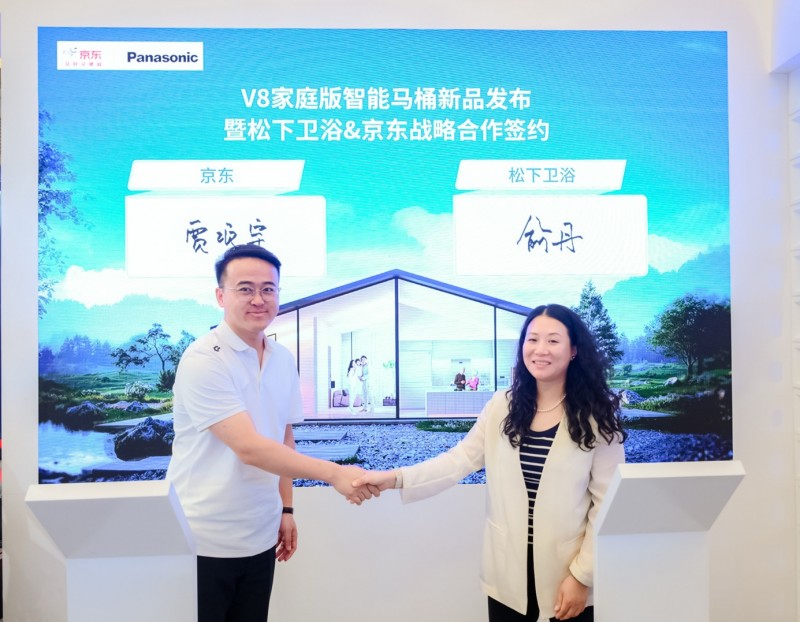
京东618发布首款无坑距限制智能马桶松下V8 新品叠加国补立减25%
Zhong Guo Chan Ye Jing Ji Xin Xi Wang· 2025-05-28 08:51
Core Insights - JD.com and Panasonic have formed a strategic partnership to enhance the bathroom appliance market, focusing on product innovation and service upgrades to meet consumer demands for a more comfortable and healthy bathroom experience [1][2] Product Development - The collaboration aims to accelerate product iteration and service upgrades, with the launch of the JD-exclusive Panasonic V8 Family Smart Toilet, which features adjustable pit distance technology, marking a significant advancement in the smart toilet sector [1][2] - The new V8 model caters to diverse household needs, incorporating features such as anti-splash, odor control, antibacterial properties, and a self-cleaning function, along with a special mode for children [2] Sales and Marketing Strategy - The JD-exclusive Panasonic smart toilet cover PQTK10 has achieved a sales milestone of over one million units, showcasing the demand for innovative bathroom solutions [2] - During the launch period, consumers can enjoy a 25% discount from national subsidies, along with free delivery, installation, and a five-year warranty [2] Service Enhancement - JD.com and Panasonic have introduced a one-stop delivery and installation service for smart toilets, covering 236 cities, allowing for efficient replacement and installation in a single visit [3] - The companies plan to engage in diverse content marketing strategies to enhance consumer awareness and promote new bathroom appliances [3] Future Plans - JD.com will continue to collaborate with Panasonic to launch more smart toilet products, including the upcoming Q6 model during the 618 shopping festival, aiming to cover a full range from basic to fully functional smart toilets [2]
迎客松下的笑脸:31名罕见病儿童圆梦登黄山
Zhong Guo Xin Wen Wang· 2025-05-28 01:57
Core Viewpoint - The event "I Am Amazing: Embrace the Welcoming Pine" is a charity activity aimed at helping children with rare diseases experience the beauty of Huangshan, showcasing the power of community support and volunteerism [1][4]. Group 1: Event Overview - The fourth charity event for children with rare diseases took place on May 27, with 31 children successfully reaching the summit of Huangshan [1]. - The children, suffering from conditions like osteogenesis imperfecta and spinal muscular atrophy, were assisted by volunteers and staff during the climb [2][3]. Group 2: Community and Volunteer Support - The Huangshan Scenic Area implemented a special plan to ensure the event's success, including opening green channels and providing wheelchair assistance and guided tours [4]. - Volunteers expressed admiration for the children's perseverance and encouraged more people to join the cause to support special groups [4]. Group 3: Organizer and Future Plans - The event was initiated by Cheng Jian, a high-level paraplegic, who has previously helped over a thousand wheelchair users visit Huangshan through similar activities [4]. - This year's event is noted to be the largest in scale, with plans for additional activities to enhance the children's social integration, including visits to Tunxi Old Street and a science museum [4]. Group 4: Collaborative Efforts - The charity event was guided by multiple organizations, including the China Disabled Persons' Federation and the Huangshan Scenic Area Management Committee, highlighting a collaborative effort among various public and private entities [7].

日本松下电池工厂在美扩张被迫“急刹车”
Jin Tou Wang· 2025-05-22 10:32
Group 1 - Panasonic plans to establish a second battery factory in the U.S., facing significant challenges in Kansas due to local work culture and natural disasters [1] - The Kansas factory's production is expected to start as early as July, but this timeline has been affected by multiple delays and uncertainties, including tariffs imposed by the Trump administration [1] - Panasonic is adjusting the installation of production equipment at the Kansas factory, aiming for mass production readiness in the first half of the fiscal year 2026 [1] Group 2 - Due to rising demand for electric vehicles, Panasonic initially planned a third battery production facility in the U.S., but this has been postponed due to issues with charging infrastructure and battery costs [2] - The company announced a significant workforce reduction of 10,000 employees, approximately 4% of its global workforce, indicating a major strategic shift [2] - Panasonic is focusing on restructuring its business, divesting from loss-making segments, and shifting its strategic emphasis towards electric vehicle batteries and artificial intelligence [2]
降息传导至存贷款,稳息差信号明确
citic securities· 2025-05-21 02:49
Market Overview - Chinese markets experienced a rebound, with the Hang Seng Index ending a three-day decline, driven by a surge in the pharmaceutical sector and a 16.4% increase in Ningde Times on its debut[3][11] - European stocks continued to rise, supported by easing tariff concerns and a reduction in geopolitical tensions, with the Stoxx 600 index up 0.73%[9] - U.S. stocks fell, with the S&P 500 halting a six-day winning streak, as economic concerns weighed on dollar assets[9] Interest Rates and Monetary Policy - The one-year Loan Prime Rate (LPR) in mainland China was lowered to 3.0%, and the five-year LPR to 3.5%, both down by 10 basis points from the previous month[5] - Major Chinese banks collectively reduced deposit rates, with savings rates cut by 5 basis points and term deposit rates by 15-25 basis points, indicating a clear signal of stabilizing interest margins[5] - The recent interest rate cuts are expected to maintain stable loan demand, with social financing growth potentially rising due to government bonds[5] Commodity and Currency Movements - WTI crude oil futures surged by 3.5% amid uncertainties surrounding U.S.-Iran negotiations and potential Israeli military actions against Iran's nuclear facilities[4][26] - The Japanese yen appreciated against the dollar, reflecting market reactions to geopolitical developments[4] - Gold prices rose by 1.6%, reaching $3,284.6 per ounce, as traders covered short positions[26] Stock Performance - In the U.S., the Dow Jones fell by 114 points (0.27%) to 42,677, while the S&P 500 dropped 0.39% to 5,940[9] - The Hang Seng Index and the National Enterprises Index both increased by approximately 1.5%[11] - Notable stock movements included a 32% rise in Sanofi Pharmaceuticals following a licensing agreement with Pfizer, marking a record for Chinese innovative drug licensing[15] Bond Market Insights - U.S. Treasury yields showed mixed results, with the yield curve steepening significantly, while long-term bonds in Japan, Canada, and Europe faced selling pressure[4][29] - Asian bond markets showed improved sentiment, with spreads narrowing by 1-3 basis points[4][29] - The upcoming auction of 30-year U.S. Treasuries is anticipated to attract attention amid ongoing market uncertainties[4][29]
Gilat Satellite Networks .(GILT) - 2025 Q1 - Earnings Call Transcript
2025-05-19 14:02
Financial Data and Key Metrics Changes - Q1 2025 revenues reached $92 million, a 21% increase year over year from $76.1 million in Q1 2024 [8][28] - Adjusted EBITDA for Q1 2025 was $7.6 million, with an organic adjusted EBITDA of $11.2 million, representing a 20% year over year increase [8][33] - GAAP net loss for Q1 2025 was $6 million, or a loss per share of $0.10, compared to a net income of $5 million, or diluted income per share of $0.09 in Q1 2024 [32][33] Business Line Data and Key Metrics Changes - Commercial segment revenues for Q1 2025 were $64.2 million, a 56% increase from $41.2 million in Q1 2024, primarily due to the acquisition of Stellar Blue [28] - Defense segment revenues increased by 34% to $23 million in Q1 2025 from $17.2 million in Q1 2024, driven by high deliveries to defense customers in the U.S. and Asia [29] - Peru segment revenues declined to $4.8 million in Q1 2025 from $17.7 million in Q1 2024, attributed to delays in project renewals and slower progress on existing projects [29][30] Market Data and Key Metrics Changes - The company is seeing increased demand from diverse geographical markets, including North America, Europe, and Asia Pacific, particularly in the defense sector [12][13] - In Europe, there is a growing demand for secure high-performance communication over satellites, driven by increased defense budgets [12][13] Company Strategy and Development Direction - The company is focused on accelerating revenues in 2025, capitalizing on the acquisition of Stellar Blue and strong demand for Gilat Defense Solutions [7][23] - Increased investment in R&D and sales and marketing for Gilat Defense is planned for 2025 to enhance product offerings and market presence [16][24] - The company aims to leverage its diverse product portfolio to support the evolution of satellite communications and address the digital divide [21][22] Management's Comments on Operating Environment and Future Outlook - Management acknowledged the impact of global economic uncertainty and shifting international trade policies on business operations, indicating proactive adjustments to raw material sourcing [9][10] - The company reiterated its 2025 annual guidance, projecting revenues between $415 million and $455 million, representing year-over-year growth of 42% at the midpoint [35] Other Important Information - Stellar Blue is expected to contribute between $120 million and $150 million in revenue for the year, with a target of achieving a 10% adjusted EBITDA margin in the second half of 2025 [9][49] - The company secured a $100 million credit line to finance the acquisition of Stellar Blue, utilizing $60 million of it [34] Q&A Session Summary Question: Is the defense business expected to benefit from increases in European defense spending? - Management indicated that there is traction from increased defense budgets in Europe, with expectations for decent business growth in the mid-term [38] Question: What milestones need to be achieved for the Boeing line fit program? - Management stated that adaptations to the terminal are in progress, with certification expected within the next two to three quarters [39] Question: How should revenue linearity in Peru be viewed over the next few quarters? - Management expects a revenue run rate of $45 million to $50 million for Peru, with delays in project renewals impacting current revenues [40][41] Question: How is the integration of Stellar Blue progressing? - Management reported good progress, with significant market acceptance and feedback, and expects to resolve supply chain issues soon [47][48] Question: What is the anticipated revenue structure for primary and secondary aviation markets? - Management indicated that 100% of revenues in 2025 will come from retrofit, with expectations for a 50-50 split between retrofit and line fit by mid to late 2026 [60] Question: What is the impact of tariffs on the business? - Management noted that the effect of tariffs is currently not significant, and proactive measures have been taken to shift sourcing to lower tariff countries [102]

Gilat Satellite Networks .(GILT) - 2025 Q1 - Earnings Call Transcript
2025-05-19 14:00
Financial Data and Key Metrics Changes - Q1 2025 revenues reached $92 million, a 21% increase year over year from $76.1 million in Q1 2024 [7][26] - Adjusted EBITDA for Q1 2025 was $7.6 million, with an organic adjusted EBITDA of $11.2 million, representing a 20% year over year increase [7][31] - GAAP net loss in Q1 2025 was $6 million, or a loss per share of $0.10, compared to a net income of $5 million, or $0.09 per share in Q1 2024 [30] Business Line Data and Key Metrics Changes - Commercial segment revenues in Q1 2025 were $64.2 million, a 56% increase from $41.2 million in Q1 2024, primarily due to the acquisition of Stellar Blue [26] - Defense segment revenues increased by 34% to $23 million in Q1 2025 from $17.2 million in Q1 2024, driven by high deliveries to U.S. and Asia defense customers [27] - Peru segment revenues decreased to $4.8 million in Q1 2025 from $17.7 million in Q1 2024, attributed to delays in project renewals and slower progress on existing projects [27][28] Market Data and Key Metrics Changes - Demand for Gilat Defense solutions is increasing, particularly in North America, Europe, and Asia Pacific, with a notable rise in European defense budgets [12][11] - The company secured multiple contracts in Q1 2025, including over $5 million for U.S. DoD connectivity and $23 million for satellite transportable terminals [13][14] Company Strategy and Development Direction - The company is focusing on its newly aligned organizational structure, emphasizing growth in defense, VHTS, and NGSO constellations, as well as in-flight connectivity [6][10] - Gilat plans to increase investment in R&D and sales for its defense segment in 2025, launching several new products to enhance its market position [15][19] - The company aims to leverage its diverse product portfolio to support the growing demand for mission-critical defense connectivity and satellite communications [22][23] Management's Comments on Operating Environment and Future Outlook - Management acknowledged the challenges posed by global economic uncertainty and shifting trade policies but expressed confidence in the company's proactive adjustments to sourcing and production [9][10] - The company reiterated its 2025 revenue guidance of $415 million to $455 million, representing a year-over-year growth of 42% at the midpoint [33] Other Important Information - The acquisition of Stellar Blue was completed on January 6, 2025, contributing approximately $25 million to Q1 revenues but also incurring an adjusted EBITDA loss of $3.6 million [7][26] - The company secured a $100 million credit line to finance the acquisition, utilizing $60 million for this purpose [32] Q&A Session Summary Question: Is the defense business expected to benefit from increases in European defense spending? - Management indicated that there is significant traction from increased European defense budgets, with expectations for decent business growth in the mid-term [37] Question: What milestones need to be achieved for the Boeing line fit program? - Management stated that adaptations to the terminal are ongoing, with certification expected within the next two to three quarters [38] Question: How should revenue linearity in Peru be viewed over the next few quarters? - Management expects a revenue run rate of $45 million to $50 million for Peru, with significant revenue anticipated in Q2 and Q3 due to project renewals and hardware deliveries [39][40] Question: How is the integration of Stellar Blue progressing? - Management reported good progress, with strong market acceptance and feedback, and expects to meet revenue goals for Stellar Blue [46][49] Question: What is the anticipated production rate for Sidewinder by the end of the year? - Management expects to reach a production rate of about 100 units per month by the end of the year [56] Question: What is the impact of tariffs on the business? - Management noted that the effect of tariffs is currently not significant, as proactive sourcing adjustments have been made [101][102]
百年松下方法论
Zhong Guo Jing Ying Bao· 2025-05-16 21:12
Core Viewpoint - Panasonic announced a global layoff of 10,000 employees, reflecting its struggle and transformation in the face of changing market dynamics and a 17.5% year-on-year decline in net profit for the fiscal year 2024 [2][13]. Group 1: Company Performance and Strategy - The net profit for Panasonic in the fiscal year 2024 was 360 billion yen, significantly impacted by underperforming consumer electronics segments such as televisions and kitchen appliances [2]. - The company is shifting its focus towards high-growth areas, with its home appliance business now accounting for only 40% of total revenue, while 60% comes from B2B sectors like electric vehicle batteries and residential security [7][19]. - Panasonic's proactive adjustments indicate a commitment to optimizing its business philosophy in response to contemporary challenges [2][18]. Group 2: Historical Context and Business Philosophy - Panasonic was founded by Konosuke Matsushita, who emphasized a philosophy of "selfless service" and "water-like" pricing strategies, aiming to provide affordable products to enhance societal well-being [6][20]. - Matsushita's principles, including the "self-creation" philosophy and the importance of nurturing talent, have been foundational to Panasonic's growth from a small workshop to a global giant [4][9]. - The company has historically prioritized employee welfare, exemplified by its commitment to not laying off workers during economic downturns, fostering a strong organizational culture [10][11]. Group 3: Corporate Culture and Social Responsibility - Panasonic's corporate culture is built on principles such as social responsibility, integrity, teamwork, and continuous improvement, which guide its operations and employee relations [14][15]. - The company promotes a philosophy of "coexistence and co-prosperity," emphasizing the importance of mutual benefit among stakeholders [14][20]. - Matsushita's legacy continues to influence modern corporate practices, highlighting the significance of human-centric management and corporate social responsibility in achieving long-term success [20].
松下电视业务持续亏损,CEO 誓言将推进改革
Sou Hu Cai Jing· 2025-05-15 08:25
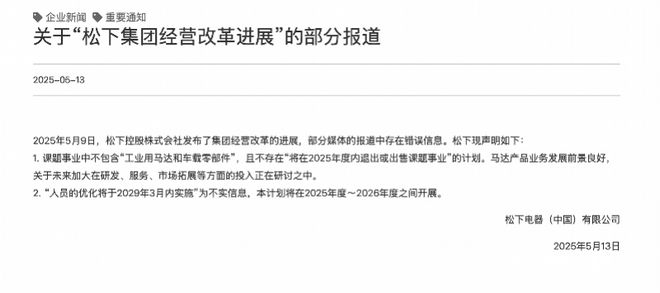
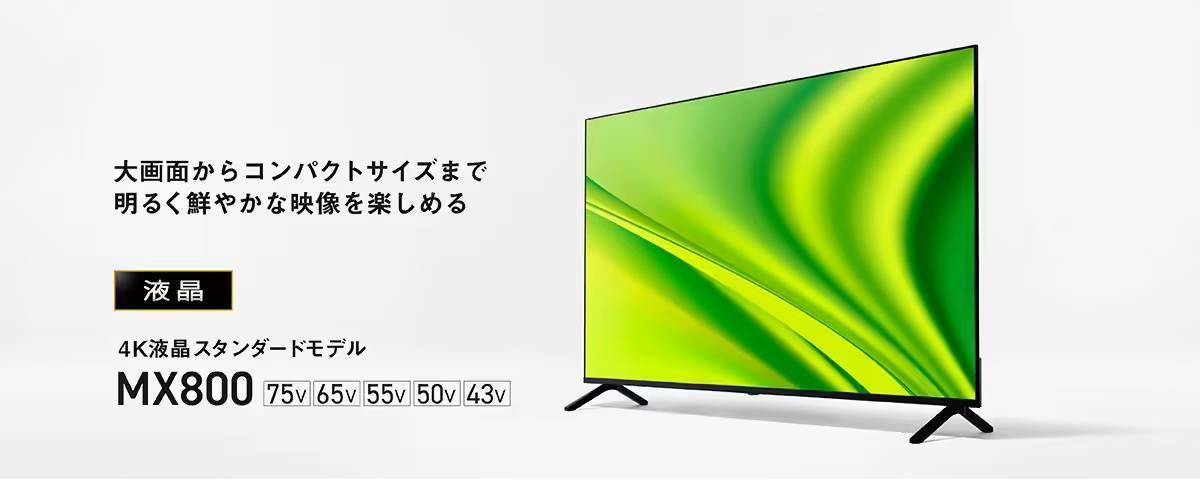
松下上周公布的重组计划包括削减或关闭表现不佳的业务,并整并过多的部门与办公室。据IT之家此前报道,裁员将主要在未来 10 个月内完成,涉及全球 范围的 1 万个岗位。 过去五年,松下试图通过转型提升盈利能力,但收效不彰,其营业利润率长期徘徊在 3.4% 到 5% 之间,明显落后于索尼、日立等日本同行。 在日本及东南亚市场,松下的冰箱、微波炉等标志性消费电子产品也面临高品质中国产品的强劲竞争,市场份额不断被蚕食。松下强调并未退出消费电子领 域,而是计划通过深化改革,使该业务成为利润核心。 此外,楠见还表示,公司将积极布局企业服务市场,包括供应链管理和能源管理等新领域。他进一步表示,中国的产品开发效率也更高,"我们应该把在中 国积累的成本优势,逐步反哺至日本的业务体系。"松下此前曾表示,将增加中国研发的产品对东南亚的出口,同时减少当地定制型号。 IT之家 5 月 15 日消息,据日经亚洲今日报道,松下控股将对持续亏损的电视业务采取更果断的改革措施,这是其大规模重组计划的一部分,该计划将裁撤 1 万个岗位。 松下首席执行官楠见雄规本周对媒体表示,公司一直在推动电视业务向轻资产模式转型,生产则由合作伙伴承担。他坦言, ...
万人裁员背后的松下电器:营收净利均下滑,“困境非常明显”
Nan Fang Du Shi Bao· 2025-05-14 04:53
Core Viewpoint - Panasonic is undergoing significant restructuring, planning to optimize over 10,000 employees, which represents approximately 4.4% of its global workforce of 228,000. This restructuring aims to enhance flexibility and competitiveness across its various business segments [2][5]. Group 1: Restructuring Plans - Panasonic plans to optimize a total of 10,000 employees, with equal distribution between domestic and international operations, to be implemented by the end of the fiscal year 2026 [2]. - The company intends to dissolve Panasonic Electric Company by the end of fiscal year 2025 and create three new subsidiaries: "Smart Living Company" for home appliances, "Air Quality and Food Distribution Company" for air conditioning, and "Electrical Engineering Company" for lighting [2][5]. - The restructuring is designed to allow each business unit to respond more flexibly to market changes and prevent challenges in one segment from affecting the entire group [5]. Group 2: Clarifications and Statements - Panasonic issued a statement clarifying that there are no plans to exit or sell its "industrial motors and automotive components" business, and that the optimization of personnel will occur between fiscal years 2025 and 2026, not by March 2029 as previously reported [3]. - The company emphasized that the restructuring is a response to significant challenges, particularly in the television sector, which is no longer profitable [4][5]. Group 3: Financial Performance - For the fiscal year 2024, Panasonic reported revenues of 8.46 trillion yen, a decrease of 0.5% from the previous year, and a net profit of 366.2 billion yen, down 17.5% year-on-year. However, operating profit increased by 18.2% to 426.49 billion yen [8]. - The company anticipates a loss of approximately 130 billion yen in the fiscal year 2025 due to the restructuring efforts, despite hopes for profit growth by fiscal year 2026 [8]. Group 4: Market Context - Panasonic, founded in 1917, has seen its television business decline significantly due to increased competition from Chinese brands, which now dominate the market. In 2024, Chinese brands accounted for over 70% of the market share in Japan, while Japanese brands' share fell to 18.7% [6][7].