
Xiaomi

Search documents
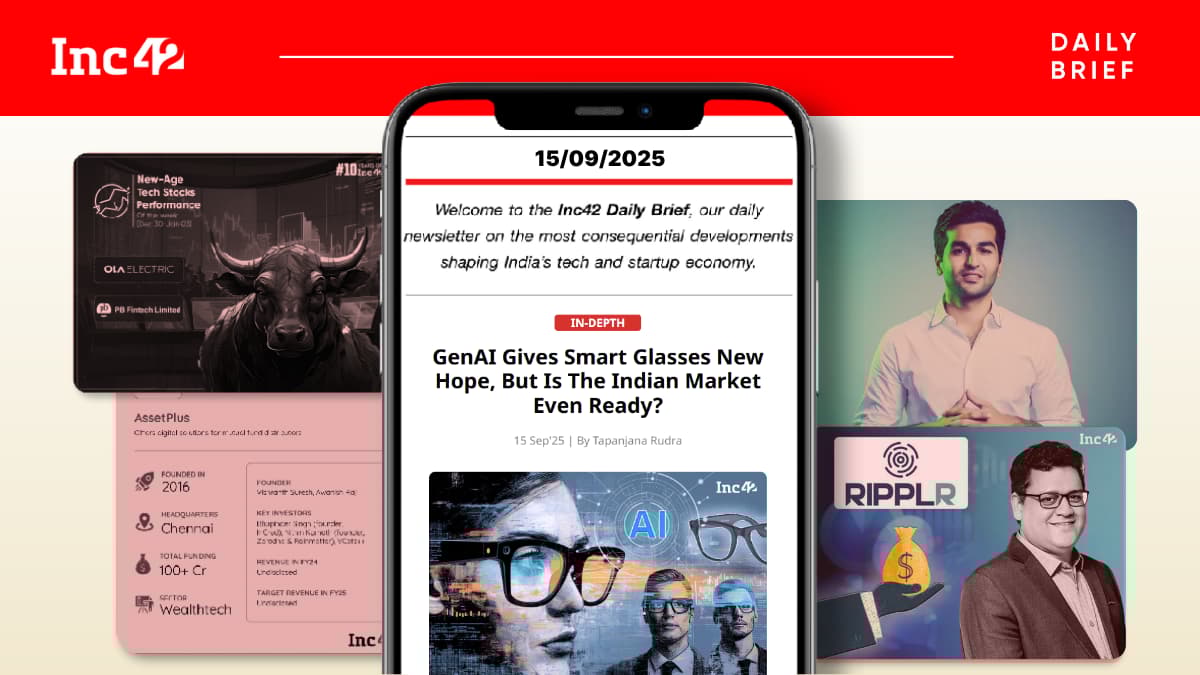
The Return Of Smart Glasses, Hike Shuts Shop & More
Inc42 Media· 2025-09-15 02:30
Mixed Reality and Smart Glasses - Smart glasses are experiencing a resurgence in India, with major players like Reliance and Lenskart entering the market, driven by advancements in technology and design [1][2] - Today's smart glasses are lighter and more compact compared to earlier models, featuring improved processors that enhance image quality and power efficiency [1] - Generative AI has transformed smart glasses into practical assistants, allowing users to perform about 35% of typical smartphone functions through voice commands [2] Competitive Landscape - Homegrown companies are differentiating themselves from global giants by focusing on vernacular capabilities and affordability, with products like QWR's Humbl glasses supporting Indic languages [3] - Jio Frames are expected to offer multi-language support and cloud storage integration, enhancing their appeal in the Indian market [3] Market Challenges - Premium pricing remains a significant barrier, positioning smart glasses as luxury items rather than mass-market products [4] - Privacy concerns are prevalent, as smart glasses operate in a gray area between everyday eyewear and potential surveillance tools, compounded by the lack of robust AI regulations in India [4] Future Outlook - The potential for smart glasses to become a billion-dollar wearable category hinges on overcoming privacy concerns, proving their AI capabilities, and delivering value for their premium pricing [5]

亚洲策略组合_人工智能与政策催化下的阿尔法机会-Asia Strategy Baskets_ Alpha Opportunities Around AI and Policy Catalysts
2025-09-15 01:49
Summary of Key Points from the Conference Call Industry Overview - The focus is on the Asia equity market, particularly in relation to AI themes and policy-driven catalysts amid macro uncertainties [2][7]. Core Insights and Arguments 1. **Market Performance and Recommendations** - The Asia equity market (MXAPJ) has rebounded 34% from April's low without any significant pullbacks, suggesting a focus on AI and policy-driven themes is prudent [2][7]. - The Regional Asia Drawdown Risk model indicates a potential moderate correction of 10-20% due to macro volatility [7]. 2. **Investment Strategy Baskets** - 46 strategy baskets have been rebalanced, allowing investors to track Asian equities through various lenses such as macroeconomic factors, geographic exposure, and thematic focuses [1][5]. - Key themes include: - **Value to Growth Rotation**: Growth has outperformed Value recently, supported by expectations of Fed easing [4][8]. - **Shareholder Yield**: Enhancements in dividends and buybacks are recommended, particularly focusing on High Dividend Yield with Growth [4][8]. - **Tech vs. Macro Divergence**: Optimism around AI capital expenditures supports AIGC Hardware and Semiconductors over US exposure [4][8]. 3. **Earnings Momentum** - Dynamic revision factors have shown consistent alpha across market cycles, with notable performance in Consensus Revision Winners vs. Losers and Strong vs. Weak Earnings Revisions [4][8]. 4. **Structural Themes** - **Power Up Asia**: Focus on nuclear and renewable energy, supported by China's policies [4][8]. - **AI Applications**: Accelerated adoption of AI technologies is expected to drive growth in related sectors [4][8]. - **Defense Spending**: Increased geopolitical risks are expected to boost defense-related investments [4][8]. - **China POEs Comeback**: Chinese prominent companies are positioned to extend their market leadership amid regulatory easing [4][8]. - **Korea Value Up**: Governance reforms in Korea are expected to enhance market performance [4][8]. - **Indian Consumption**: Recent GST cuts are anticipated to benefit consumer-sensitive sectors [4][8]. Additional Important Insights - The report highlights 50 GS Buy-Rated names that align with preferred factors within recommended themes, indicating a diverse range of investment opportunities across sectors [3][9]. - The performance of Taiwan's Apple suppliers is expected to benefit from new product launches, particularly the iPhone [13][14]. - The analysis emphasizes the importance of monitoring macroeconomic indicators and market conditions, as they can significantly impact investment strategies [36]. This summary encapsulates the key points discussed in the conference call, providing a comprehensive overview of the current investment landscape in the Asian equity market.
拓普集团_新能源汽车市场增长放缓,汽车业务处于转型期;评级下调至中性
2025-09-12 07:28
Summary of Ningbo Tuopu Group (601689.SS) Conference Call Company Overview - **Company**: Ningbo Tuopu Group - **Industry**: Automotive components supplier - **Current Rating**: Downgraded to Neutral - **12-Month Price Target**: Rmb68, implying a 2% downside from current price of Rmb69.14 Key Financial Highlights - **2Q25 Results**: Revenue and net profit were 14% and 13% below expectations, respectively, primarily due to a 13% year-over-year decline in global sales volume from Tesla, a key customer [1][30] - **Revenue Growth**: Revenue growth in 1H25 was +6% year-over-year, down from +33% in 1H24 [4] - **Net Income Estimates**: Adjusted net income estimates for 2H25E-2027E were cut by 4%-13% due to expected continued decline in Tesla sales [1][30] - **Market Performance**: Tuopu's share price increased by 50% from August 15 to September 10, driven by auto subsidy resumption and Tesla humanoid robot updates [2] Industry Dynamics - **NEV Market**: The growth in the New Energy Vehicle (NEV) market is slowing, with expectations of a decline in wholesale/retail growth from over 30% in 2023-2024 to 20%+ in 2025E-2026E [11][30] - **Tesla's Sales Volume**: Tesla's global sales volume is projected to decline by 9% year-over-year in 2H25E, impacting Tuopu's revenue significantly [1][30] Customer Insights - **Key Customers**: Despite Tesla's decline, Tuopu reported resilient growth from other domestic customers like Geely, BYD, and Li Auto, with wholesale volumes growing by +47%, +31%, and +8% year-over-year in 1H25 [11] - **Revenue Contribution**: Tesla's revenue contribution to Tuopu is expected to decrease from 35% in 2024 to 27% in 2025E [6] Risks and Opportunities - **Key Risks**: - Sales volume from key customers may be better or worse than expected [3][26] - Pricing pressure from OEM customers could impact revenue and margins [3][28] - Adoption pace of new products may vary, affecting long-term revenue growth [3][27] - **Opportunities**: - Expansion to overseas customers, including partnerships with European and US automakers, is seen as a potential growth area, although it may take time to realize [12][30] Valuation and Market Sentiment - **Current Valuation**: Trading at 30x 12-month forward P/E, in line with historical averages, but further re-rating is considered difficult due to slowing NEV growth [15][30] - **Market Expectations**: Post-results, Bloomberg's consensus for 2025E and 2026E revenue and EPS was revised down by 3%-7% and 4%-6%, indicating that market expectations may be peaking [15][30] Conclusion - **Investment Thesis**: The company is facing challenges due to declining sales from its key customer, Tesla, and a slowing NEV market. While there are stable revenue streams from domestic customers and potential overseas expansion, the overall outlook remains cautious with a Neutral rating [30][32]

Lear (NYSE:LEA) FY Conference Transcript
2025-09-11 18:02
Lear (NYSE:LEA) FY Conference Summary Company Overview - **Company**: Lear Corporation - **Industry**: Automotive Seating and E-Systems Key Points and Arguments Market Update and Financial Performance - Lear is optimistic about the second half of the year, expecting full-year revenue to track towards the high end of guidance, with second half revenues projected just below $11.5 billion, including $5.7 billion in Q3 and $5.8 billion in Q4 [9][10] - Operating income for Q3 is expected to be in the range of $230 to $240 million, influenced by production downtimes at JLR and GM [10][11] - The company has increased its net performance target from $125 million to $150 million for earnings expansion through operational improvements [7][22] Automation and AI Integration - Lear has been on a decade-long journey to establish itself as a leader in integrated automation and digital manufacturing, differentiating itself through strategic acquisitions and partnerships, notably with Palantir [13][14] - The company has acquired eight companies in seven years to enhance product and process innovation in automation [13] - Lear's automation strategy includes building 80% of its capital at a 20% to 30% cost advantage, focusing on purpose-built capital for specific automation needs [15][16] - An advanced manufacturing and integration center is being established in Michigan to showcase "lights out" manufacturing capabilities [16][17] - AI is being integrated across all business aspects, including product engineering, material purchasing, and manufacturing processes, with proprietary algorithms like LearView and Thagora enhancing operational efficiency [18][19][20] Growth Opportunities - Lear is focusing on conquest opportunities, particularly in the Chinese market, where it aims to increase revenue from domestic automakers from 40% to 50% by 2027 [51][52] - The company has successfully launched new seating facilities for BMW and is pursuing additional contracts with other automakers, leveraging its cost and quality advantages [48][50] - Lear's vertical integration and strong relationships with local suppliers in China position it well against competition [59][60] Financial Outlook and Shareholder Returns - Free cash flow is projected to exceed $500 million for the year, enabling accelerated share buyback programs, with $100 million planned for Q3 and a similar amount for Q4 [24][25] - The company anticipates a modest annual savings of $65 million from automation efforts, expected to ramp up to $75 million in subsequent years [22][24] Competitive Landscape - Lear competes with companies like Autoliv and has studied their automation practices as benchmarks [40] - The company holds approximately 18% market share in China, competing effectively against local suppliers [60] Strategic Focus - Lear emphasizes the importance of speed and cost in competing with Chinese domestic OEMs, highlighting its innovative product portfolio and vertical integration as key competitive advantages [58][59] - The company is also exploring opportunities in urban air mobility and eVTOLs, indicating a forward-looking approach to emerging technologies [76] Additional Important Insights - The partnership with Palantir has been transformative, allowing Lear to leverage live data for operational efficiencies and rapid decision-making [34][36] - Lear's focus on automation not only reduces costs but also enhances revenue potential by improving reliability and scalability for customers [47][48] This summary encapsulates the key insights from Lear's FY conference, highlighting the company's strategic initiatives, financial outlook, and competitive positioning within the automotive industry.

中国硬件与半导体 - 2025 年第二季度业绩总结及库存追踪 人工智能光学产业链超预期,把握下半年轮动机会-China Hardware and Semiconductors-2Q25 Results Wrap and Inventory Tracker Beats from AIOptics Chain, Picking Rotation Opportunities in 2H
2025-09-11 12:11
Summary of Conference Call Records Industry Overview - **Industry**: China Hardware and Semiconductors - **Quarter**: 2Q25 Key Points and Arguments 1. Performance Highlights - 35% of 2Q25 results beat expectations, an increase from 20% in 1Q25, primarily driven by AI, optics, and tariff pull-in demand [1] - Among 37 tech hardware and semiconductor stocks, 13 reported results that beat expectations, 8 were in-line, and 16 missed [2] 2. Inventory Levels - The China tech inventory tracker indicates healthy inventory levels for consumer electronics hardware in 2Q25, while AI hardware remains high due to strategic stocking [1] - Downstream hardware showed low Days Inventory Outstanding (DIO) for passive components and optical fiber, while optical communications and networking saw high DIO [3] 3. Market Dynamics - AI continues to be a high-growth vertical, with expectations of rotation within the AI supply chain in 2H25 [2] - The Apple supply chain may experience profit-taking post-iPhone launch, but foldable iPhone beneficiaries are expected to remain resilient [2] - The camera supply chain is anticipated to see new edge device launches in 2H25 [2] 4. Company-Specific Insights - **Sunny Optical**: Expected to benefit from multiple growth engines including automotive multi-cam trends and AI smart glasses [10] - **Lens Tech**: Anticipated to gain from iPhone cover glass upgrades and new product rollouts [10] - **Xiaomi**: Positioned as a long-term structural growth name with promising EV growth and a recovering smartphone landscape [10] - **FII**: Expected to see significant revenue growth from AI server deployments, with a target price based on strong profitability metrics [10] 5. Semiconductor Sector - Chinese semiconductor makers are improving inventory balance due to demand pull-in ahead of tariffs and industry recovery [11] - Localization efforts are increasing, particularly in smartphone and automotive sectors, driven by geopolitical tensions and supply uncertainties [11] 6. Future Outlook - Global smartphone shipments grew by 1.4% YoY, with expectations of flat growth in 3Q25 due to pull-forward demand [7] - AI infrastructure demand is expected to drive multi-year growth, particularly in datacenters and servers [11] - The semiconductor sector is seeing strong demand growth, particularly in AI-related applications [11] 7. Risks and Challenges - Power discrete components face challenges due to industry oversupply and increasing local competition [2] - Smartphone makers may experience margin pressure due to rising memory prices [7] - The semiconductor industry is still grappling with uncertainties related to tariffs and geopolitical tensions [11] 8. Analyst Recommendations - **Upgrades**: BYDE upgraded to Buy; Goodix upgraded to Buy due to anticipated ASP and margin upside [2][11] - **Downgrades**: BOEVx downgraded to Sell due to macro uncertainties and profitability concerns [2] 9. Key Metrics - AI server revenue is expected to grow by over 170% YoY in 3Q25, with significant contributions from rack shipments [8] - Sunny Optical's target price set at HK$103.0 based on a 23x 2026E EPS [10] 10. Conclusion - The overall sentiment in the China hardware and semiconductor industry remains positive, with strong growth prospects in AI and consumer electronics, despite facing challenges from inventory management and geopolitical factors [1][11]



Apple's ecosystem in China lags behind, DeepSeek's software-led AI approach reshapes global AI race
Youtube· 2025-09-10 08:22
Group 1: Apple in the Chinese Market - Apple is facing challenges in the Chinese market due to the lack of a local AI model partner, which is crucial for enhancing its AI capabilities [1][2][4] - The Greater China business segment of Apple grew by 4% according to the last quarterly report, indicating a stable fan base, but growth may be limited without AI advancements [2] - Competing Chinese brands like Huawei and Xiaomi have developed larger ecosystems that integrate smartphones with other smart devices, making it difficult for Apple to compete effectively [4] Group 2: AI Competition in China - There were rumors earlier this year about a potential partnership between Apple and Alibaba for AI model development, but no significant product developments have emerged from this [3] - The recent release of Deep Seek's new model has sparked interest in the Chinese stock market, indicating a shift towards software-led AI development in China [5][6] - Companies like Camrycon and others have experienced significant stock price increases following the announcement related to Deep Seek, highlighting a structural shift in the AI race towards software solutions [6][7]


中国互联网行业:A 股行业会议前调研核心要点-China Internet Sector_ Key takeaways from pre A-share conference tour
2025-09-07 16:19
Summary of Key Takeaways from the China Internet Sector Conference Tour Industry Overview - **Industry**: China Internet Sector - **Companies Covered**: JD, EDU, BILI, China Literature, Weibo, Boss Zhipin, Kingsoft Cloud Core Insights 1. Games Sector - **Domestic Growth**: The game sector is experiencing healthy domestic growth, supported by resilient consumer spending and a favorable regulatory environment [3][20] - **Global Opportunities**: Chinese game developers are expanding their global presence, particularly in PC and mini games [3] - **Performance Drivers**: Strong performance in evergreen games is attributed to improved operational capacity, low customer acquisition costs, and AI adoption for content updates [3] 2. Advertising and E-commerce - **Ad Revenue Growth**: Kuaishou and Bilibili expect acceleration in domestic ad revenue in H2, driven by AI and ad-tech improvements [4] - **E-commerce Trends**: Merchants reported sequential growth in GMV, supported by platform subsidies and promotions, although user loyalty and conversion rates remain uncertain [4][17] - **AI Tools**: Alibaba is leading in AI advancements, which may enhance long-term monetization opportunities [4][17] 3. Video Generative AI - **Competitive Landscape**: Kuaishou's Kling is recognized as a leader in monetization and model quality, with ByteDance's Seedance scaling quickly but lagging in monetization [5][21] - **Market Dynamics**: The video generative AI market is competitive, with a three-horse race among major players, and proprietary video libraries serve as a competitive moat [5][21] 4. Company-Specific Insights - **JD**: Focused on ROI in food delivery, with a 40% YoY increase in active customers and a 22% top-line growth in Q2 [8] - **Bilibili**: Positive outlook on ad growth with a 20% increase in advertiser base and a 10% rise in eCPM [9] - **China Literature**: Strong growth in IP merchandise, with H125 GMV reaching Rmb480 million, and a focus on expanding into designer toys [10] - **Weibo**: Anticipates flat-to-mildly-declining revenue in 2025, with growth drivers from DAU increases and AI initiatives [12] - **Boss Zhipin**: Expects revenue growth acceleration in Q3 and Q4, with a market share of about 50% in MAU [15] - **Kingsoft Cloud**: Robust AI cloud revenue growth expected, driven by collaboration with Xiaomi [16] Additional Considerations - **Regulatory Environment**: A more favorable regulatory environment for long-form video content is anticipated, which could enhance content supply [11] - **Market Risks**: Key risks include evolving competition, technology trends, uncertain monetization, and regulatory changes [22][23][24][26] Investment Preferences - **Preferred Sectors**: The report emphasizes a preference for online games, AI exposure, and vertical leaders, with top picks including Tencent, Kuaishou, and NetEase [6]
Why Samsung, Google And Possibly Apple Are Investing In Folding Smartphones
CNBC· 2025-09-06 15:00
Market Trends & Dynamics - Foldable smartphones are gaining traction, with Samsung's Galaxy Z Fold and Flip series breaking preorder records, indicating growing consumer interest in the foldable form factor [2] - The foldable phone market, while still niche, is evolving, with more brands entering the space, including Google, Motorola, Huawei, and Xiaomi, and Apple reportedly planning to join in 2026 [3][4][5] - Foldable smartphones currently account for less than 2% of global smartphone shipments in 2024, highlighting their limited market share compared to traditional smartphones [12] Technological Advancements & Challenges - Early foldable phones faced durability issues, particularly with screen creases and hinge design, but recent models have made significant improvements in these areas [9][10][11] - Samsung's latest foldable phones have reduced thickness and improved battery life, addressing previous concerns and bringing them closer to flagship phone standards [11][12] - Apple's potential entry into the foldable market is contingent on solving durability and usability challenges, aiming for a user experience-focused approach [15][16] Pricing & Accessibility - The high price of foldable phones, ranging from $1500 to $2000, remains a barrier to mass adoption, positioning them as a niche product in the premium smartphone market [12][13] - Samsung is starting to lower prices, with models like the Flip seven launching under $1000, suggesting a trend towards more accessible pricing as the technology matures [24][25] - Industry anticipates that for foldable phones to become mainstream, the price premium needs to be in the 10-20% range relative to a normal phone [23] AI & User Experience - Samsung and Google are positioning foldables as AI-first devices, leveraging the larger screen for enhanced multitasking, immersive tools, and content creation [19][20] - The larger screen of foldable phones facilitates AI-driven use cases, enhancing productivity and creativity by reducing friction in phone usage [20][21]

Tesla is stalling in China just as its rivals pick up speed
Business Insider· 2025-09-03 11:02
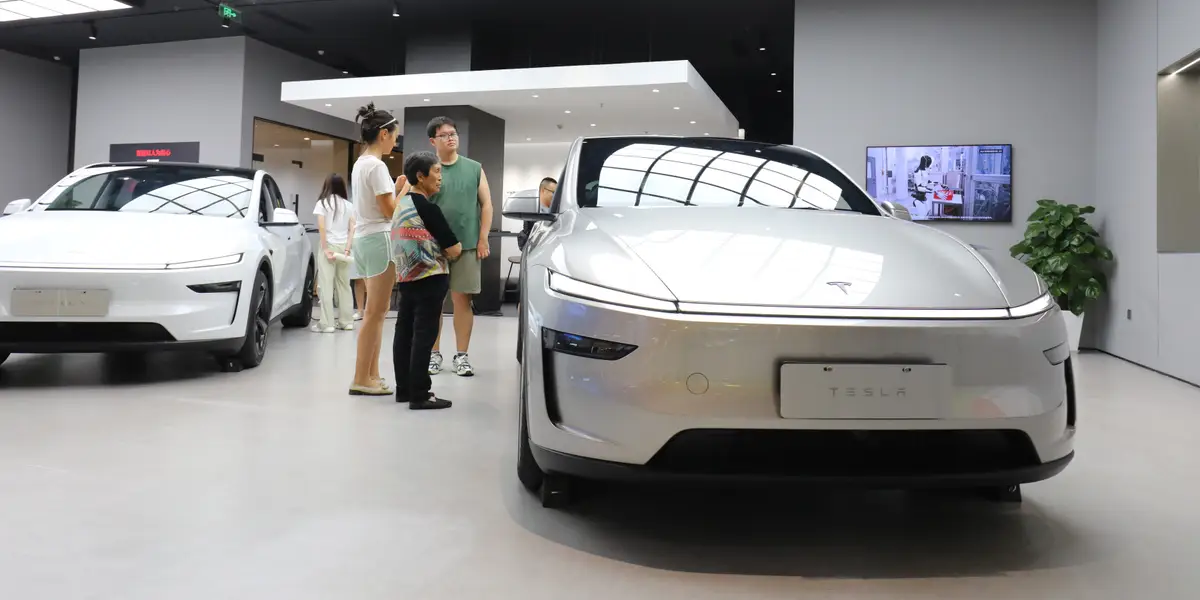
Core Insights - Tesla's sales in China have declined, with 83,200 cars sold in August, representing a 4% decrease year-over-year [1] - Local EV startups such as Nio, Leapmotor, and Xpeng are experiencing significant growth, with record monthly sales reported in August [2] - Geely's sales surged by 38% in August, reaching nearly 150,000 vehicles, highlighting the competitive nature of China's EV market [2] Company Performance - Xpeng launched the G7 SUV priced at $27,320, while Nio introduced the L90 six-seater at $36,940, both undercutting Tesla's Model Y [3] - Xiaomi's YU7 electric car received over 240,000 preorders within 24 hours of its launch, indicating strong demand for new entrants in the market [3] - Xiaomi sold over 30,000 cars in August and is working to increase production to meet high demand, with waiting times for the YU7 exceeding a year [8] Market Dynamics - Tesla's sales challenges are attributed to a stale product lineup, prompting the introduction of an extended six-seater version of the Model Y [9] - BYD, another major player in the EV market, reported flat sales in August, indicating that the competitive pressure is affecting multiple companies [9]

中国-一位股票策略师的日记(HA)-(8 月 25 - 29 日):在流动性驱动的上涨与基本面间平衡
2025-09-02 14:24
Summary of Key Points from the Conference Call Industry Overview - The conference call primarily discusses the **Chinese equity market** and its recent performance, particularly focusing on the **HSCEI** and **CSI 300** indices, along with macroeconomic factors affecting these markets [1][2]. Core Insights and Arguments - **Market Performance**: The HSCEI decreased by **1.5%**, while the CSI 300 increased by **2.7%** during the week of August 25-29. This reflects a pullback in offshore markets after regulatory changes by Sinolink Securities and domestic mutual funds [1]. - **Regulatory Changes**: Sinolink Securities raised its margin deposit ratio to **100%** for new client financing contracts, and banks warned against using credit card funds for investments, indicating tighter liquidity conditions [1]. - **Geopolitical Tensions**: Former President Trump stated that China must provide concessions to the US or face a **200% tariff**, highlighting ongoing trade tensions [1]. - **Government Initiatives**: The National Development and Reform Commission (NDRC) is drafting new rules to regulate internet platform pricing and is promoting coordinated AI development across provinces. The State Council aims to accelerate 'AI Plus' integration across six key sectors by **2027** [1]. - **Sector Performance**: Materials, IT, and Communication Services sectors outperformed, while Healthcare, Real Estate, and Consumer Discretionary sectors underperformed during the week [1]. - **Wax & Wane Indicator**: The W&W indicator reached **38**, indicating a marginally bullish sentiment, with weekly and monthly averages at **39** and **37**, respectively [1]. Additional Important Content - **Macro Economic Indicators**: The State Council is calling for enhanced domestic demand and high-quality development in services trade. The Ministry of Commerce (MOC) plans to unveil measures to boost services consumption and exports [2]. - **Industrial Profits**: Year-to-date industrial profits have decreased by **1.5% YoY**, a decline from **4.3%** in June, indicating a challenging economic environment [2]. - **Sector-Specific Updates**: - **Automotive**: Chinese carmakers are resisting government calls to end aggressive price competition [3]. - **Telecommunications**: China aims to open up satellite communication services and achieve over **10 million users** by **2030** [3]. - **Real Estate**: Shanghai has eased housing purchase restrictions, and Suzhou has removed the two-year holding period on new homes [3]. Investment Opportunities - The report highlights potential investment opportunities in high dividend yield stocks and local champions with significant exports to non-US/EU markets. Notable companies include: - **CCB** (China Construction Bank) with a market cap of **$258.3 billion** and a dividend yield of **5.7%** [12]. - **PetroChina** with a market cap of **$218.3 billion** and a dividend yield of **6.5%** [12]. - Companies less impacted by US/EU tariffs, such as **BYD** and **Great Wall Motor**, are also identified as potential investment targets [12]. This summary encapsulates the key points discussed in the conference call, providing insights into the current state of the Chinese equity market, regulatory environment, and potential investment opportunities.