
MercadoLibre

Search documents
金十图示:2025年05月27日(周二)全球主要科技与互联网公司市值变化
news flash· 2025-05-27 03:05
| | 1737 | | 407.69 | | --- | --- | --- | --- | | ROOKIng Holdings | 1735 | -0.17% | 5332.8 | | (Booking.com) | | | | | DD Holdings (Pinduoduo) | 1692 | -0.47% | 119.24 | | 德州仪器 | 1601 | 2.17% | 176.3 | | 高通 | 1596 | + -1.35% | 145.38 | | S 索尼 | 1540 | 1 0.79% | 25.53 | | Schneider Electric | 1431 | 1.82% | 252 | | arm Arm Holdings | 1344 | -1.62% | 127.18 | | Spotify | 1340 | 2.68% | 653.82 | | Shopify | 1302 | .72% | 101.51 | | 22 自动数据处理 | 1303 | -0.17% | 321.09 | | MercadoLibre | 1271 | -3.77% | 2507.83 ...


MercadoLibre Rises 47% YTD: Should You Buy, Sell or Hold the Stock?
ZACKS· 2025-05-26 15:46
Core Viewpoint - MercadoLibre (MELI) has shown strong performance in 2023, with a year-to-date return of 47.4%, significantly outperforming the Zacks Retail-Wholesale sector and the S&P 500 index [1][2]. Group 1: Financial Performance - Total revenues in Q1 2025 were driven by a 32.3% year-over-year growth in commerce revenues and a 43.3% growth in fintech revenues [3]. - Unique Active Buyers in the marketplace grew by 25%, while Monthly Active Users in fintech rose by 31% [3]. - The Zacks Consensus Estimate for Q2 2025 earnings is $11.70 per share, reflecting a 12.28% upward revision and an 11.64% year-over-year growth [8]. Group 2: Business Expansion - MercadoLibre launched the Mercado Play app on smart TVs, expanding its advertising reach to over 70 million devices and offering more than 15,000 hours of free content [6][7]. - This initiative is seen as beneficial for consumers, content studios, and Mercado Ads, enhancing ad inventory and reach [7]. Group 3: Valuation and Risks - MELI is trading at a premium with a forward 12-month Price/Sales ratio of 4.32, compared to the industry average of 2, indicating high growth expectations from investors [9]. - The company's credit portfolio profitability has declined, with Net Interest Margin After Losses (NIMAL) dropping to 22.7% from 31.5% year-over-year, attributed to increased reliance on lower-return credit card products [11][12]. - MercadoLibre faces intense competition from global players like Amazon, Walmart, and Alibaba, which could threaten its market share and pricing power [13][14]. Group 4: Strategic Outlook - Despite its leading position in Latin America, the company faces significant challenges that warrant a cautious outlook, particularly regarding profitability and competitive positioning [17][18].


MercadoLibre Is Soaring—Should You Wait for a Better Entry?
MarketBeat· 2025-05-26 13:46
Core Insights - MercadoLibre has emerged as a leading e-commerce and fintech player in Latin America, showcasing significant growth and a strong international profile [1][2][4][14] - The company's stock has surged 53% year-to-date in 2025, driven by robust earnings and increasing investor confidence [2][11] Company Overview - MercadoLibre operates a comprehensive digital ecosystem that addresses logistics, financial services, and digital commerce gaps in Latin America [4][5] - The company has established a strong presence in Brazil, Mexico, and Argentina, benefiting from rising internet penetration and underdeveloped financial infrastructure [6] Financial Performance - In Q1 2025, MercadoLibre reported earnings per share of $9.74, exceeding estimates by nearly 18%, with revenue of $5.93 billion, a 37% year-over-year increase [8][10] - Gross merchandise volume rose 17% to $13.3 billion, while total payment volume increased by 43% to $58.3 billion, reflecting strong demand for e-commerce and fintech services [9][10] - The fintech division's revenue climbed 43%, with credit card transaction volume surging 166%, indicating increased engagement with its financial ecosystem [10] Market Position and Valuation - MercadoLibre's stock currently has a P/E ratio of 66.52, with a forward P/E of 38, suggesting a premium valuation despite strong growth [2][13] - The company recently ranked No. 50 on Kantar's 2025 list of the most valuable global brands, highlighting its rising brand value [2] Investment Considerations - Analysts maintain a consensus Moderate Buy rating for MercadoLibre, indicating positive sentiment towards the stock [11] - A potential pullback in stock price could present a favorable entry point for new investors, particularly if it retraces to the $2,400 level [12][13]

Are These 3 Top-Performing Tech Stocks in the Nasdaq-100, Up 33% to 64% in 2025, Still a Buy Now?
The Motley Fool· 2025-05-25 14:30
Group 1: Palantir Technologies - Palantir Technologies has seen a remarkable stock increase of 64% year-to-date and over 1,800% since 2023, driven by its focus on artificial intelligence (AI) [4][5] - The company specializes in custom software that utilizes AI for data analysis, helping organizations identify trends and optimize processes [5] - Following the launch of its AIP platform in mid-2023, Palantir has entered a new growth phase, with significant market opportunities ahead [6] - Despite strong business performance, Palantir's stock is considered overvalued, trading at an enterprise value of nearly $280 billion against $3.1 billion in trailing-12-month revenue [7][8] Group 2: MercadoLibre - MercadoLibre has experienced a 54% stock increase in 2025, with potential for further growth due to its strong position in Latin America [9] - The company operates in e-commerce, fintech, and logistics, leveraging these sectors to enhance its competitive advantage [9] - With minimal exposure to the U.S. market, MercadoLibre is less affected by tariffs, allowing it to thrive in the region's challenging economic environment [10] - The company reported $5.9 billion in revenue for Q1 2025, a 37% increase year-over-year, with net income rising by 44% to $494 million [13] - Despite a P/E ratio of 63, which may seem high, this valuation is consistent with growth rates seen in similar companies like Amazon [14] Group 3: Netflix - Netflix's stock has risen 33% year-to-date, recovering from a 19% drop earlier in the year, and is currently trading at nearly $1,200 per share [15] - The company's profit margin reached 23% in its most recent quarter, the highest in its history, nearly double that of two years ago [16] - Netflix's large global audience of over 700 million, with more than 450 million outside the U.S., enhances its attractiveness to advertisers [17] - The company has raised prices for its service, reflecting confidence in subscriber retention due to an expanded content offering [18] - Overall, Netflix's strong fundamentals and stock performance position it as a compelling investment opportunity within the Nasdaq-100 [19]



3 Monster Growth Stocks That Could Soar 31% to 116%, According to Wall Street
The Motley Fool· 2025-05-24 12:00
Group 1: RH (Restoration Hardware) - RH is an upscale furniture retailer aiming to become a top luxury brand, despite challenges in the real estate market and consumer spending [3][4] - The company launched 42 new collections recently and is developing a new concept to expand market opportunities [5] - For fiscal Q4 2025, RH reported a 10% year-over-year revenue increase and a 9% increase in operating income, with demand up 17% overall and 21% for the RH brand [6] - The average Wall Street analyst price target for RH is 20% higher than its current price, with Barclays analyst predicting a 116% upside to $436 [9][10] Group 2: Cava Group - Cava Group is focusing on a Mediterranean-based menu and reported a 28% year-over-year revenue increase [12] - The company has a restaurant-level profit margin of 13.7%, surpassing Chipotle's margin, contributing to its stock's strong performance [13] - Wall Street has a consensus overweight buy recommendation for Cava, with an average price target of $116, indicating a 36% upside from the current price [14] Group 3: Coupang - Coupang, a leading e-commerce company in South Korea, reported an 11% year-over-year revenue increase to $7.9 billion, with a gross margin improvement to 29.3% [18] - The company is expanding into new categories, with Developing Offerings rising 67%, and announced a $1 billion stock repurchase authorization [19] - Analysts see significant upside for Coupang, with one predicting a 31% increase in stock price following a raised target from $35 to $36 [20][21]




中国大厂,争夺巴西「互联网下半场」
创业邦· 2025-05-24 10:33
Core Viewpoint - Brazil is emerging as a significant destination for Chinese companies seeking to expand globally, driven by its large market size, digital habits, and relatively lower competition compared to other Latin American countries [3][5][6]. Group 1: Investment and Expansion - Chinese companies are making substantial investments in Brazil, with Meituan planning to invest $1 billion in its food delivery service Keeta over the next five years [3]. - Didi has relaunched its food delivery service "99 Food" in Brazil, indicating a strategic move to integrate various services [3][4]. - Mixue Ice Cream plans to open its first store in Brazil and establish a supply chain factory, with an investment of no less than 4 billion RMB in local agricultural products over the next 3-5 years [4]. Group 2: Market Potential - Brazil is viewed as the "last blue ocean" for many Chinese companies, with a population of 210 million and a projected GDP per capita of approximately $11,178 in 2024 [5][6]. - The average consumer spending in Brazil is around $6,800, which is higher than in China, indicating a strong consumer willingness to spend [6]. - The internet penetration rate in Brazil is high, with approximately 86.2% of the population being internet users, and 99.1% of respondents owning smartphones [8]. Group 3: E-commerce and Competition - Brazil's e-commerce sales surged from approximately 126 billion BRL in 2020 to 169.6 billion BRL in 2022, attracting various Chinese e-commerce platforms [10]. - Local giants like Mercado Livre dominate the e-commerce market, contributing 51.7% of the new GMV in 2023-2024, making it challenging for new entrants [24][25]. - The food delivery market in Brazil is highly competitive, with local platform iFood holding over 80% market share, making it difficult for Didi's 99 Food to gain traction [23][24]. Group 4: Challenges and Risks - Brazil's complex tax system poses significant challenges for foreign companies, with compliance costs exceeding 1% of revenue [12][13]. - The logistics and payment infrastructure in Brazil is underdeveloped, with a significant portion of the population relying on cash transactions [16]. - Recent tax reforms have increased the burden on cross-border e-commerce, complicating the operational landscape for companies like SHEIN and Shopee [13][15].





Why I'm Not Selling MercadoLibre After a 100% Gain
The Motley Fool· 2025-05-23 21:15
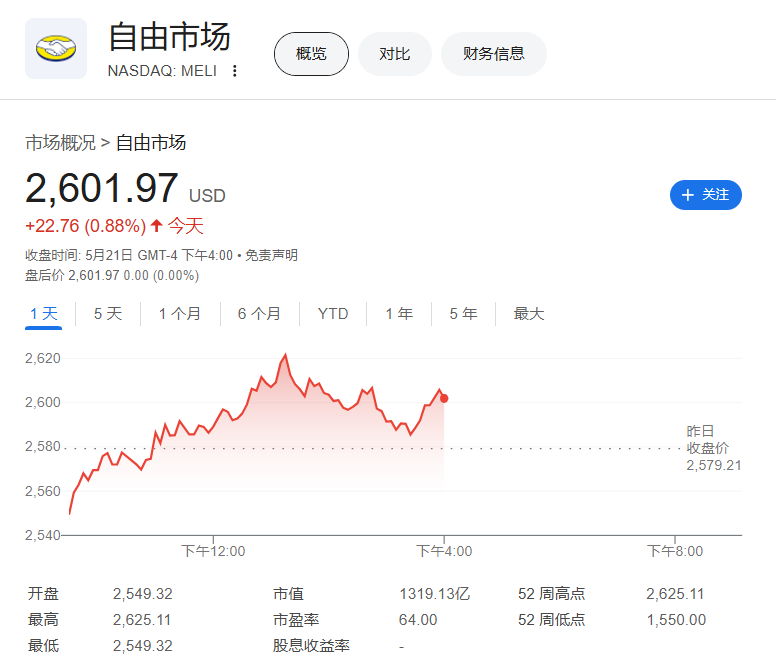
Core Viewpoint - MercadoLibre is positioned as a strong long-term investment in the Latin American e-commerce and fintech sectors, with significant growth potential and favorable market conditions. Group 1: Growth Potential - MercadoLibre operates in 19 Latin American countries, primarily serving customers in Argentina, Brazil, and Mexico, and has room for further expansion [4] - The company has established a logistics network that provides a competitive advantage over rivals like Amazon, allowing it to capture market share early [5] - From 2021 to 2024, MercadoLibre's revenue is projected to grow at a compound annual growth rate (CAGR) of 43%, with over 100 million annual unique active buyers and 60 million fintech monthly active users by the end of 2024 [6] - The Latin American e-commerce market is expected to grow at a CAGR of 16.7% from 2024 to 2030, while the fintech market is projected to expand at a CAGR of 15.9% from 2025 to 2033 [7][8] Group 2: Profitability and Economies of Scale - After a period of unprofitability from 2018 to 2020 due to heavy investments, MercadoLibre returned to profitability in 2021, with net income growing at a CAGR of 185% over the next three years [9][10] - Analysts expect MercadoLibre's earnings per share (EPS) to grow at a CAGR of 34% from 2024 to 2027, driven by higher-margin products and services [10] Group 3: Valuation and Market Position - MercadoLibre's stock trades at approximately $2,579 per share, with a valuation of 52 times this year's earnings and 4.8 times this year's sales, which is reasonable compared to slower-growing competitors like Amazon [12] - With a market capitalization of $131 billion, MercadoLibre remains smaller than e-commerce giants like Amazon and Alibaba, suggesting potential for upside growth [13] - Despite market volatility and macroeconomic concerns, MercadoLibre is considered one of the best growth stocks for long-term investment in the booming e-commerce and fintech markets in Latin America [14]

中国大厂,争夺巴西“互联网下半场”
Hu Xiu· 2025-05-22 04:44
Group 1 - Brazil is becoming an important destination for Chinese companies looking to expand globally, with significant investments announced by companies like Meituan and Didi [1][2] - Meituan plans to invest $1 billion in Brazil over the next five years for its food delivery service, while Didi has relaunched its food delivery service "99 Food" [1][2] - Other companies like Mixue Ice City and GAC Group are also making significant investments in Brazil, indicating a growing interest in the market [1] Group 2 - Brazil is viewed as the "last blue ocean" for many Chinese companies, with its large market size and mature digital habits making it an attractive entry point into Latin America [2][3] - The country has a population of 210 million and a GDP per capita of approximately $11,178, indicating strong market potential [3] - Brazilian consumers have a high willingness to spend, with an average per capita consumption expenditure of about $6,800, which aligns well with the value-oriented offerings of Chinese companies [3] Group 3 - The internet penetration rate in Brazil is high, with approximately 86.2% of the population being internet users, and 99.1% of respondents owning smartphones [4][6] - Brazil is recognized as a rapidly growing market for smartphones and mobile gaming, attracting major Chinese tech companies like Tencent and NetEase [6][8] - The e-commerce market in Brazil has seen significant growth, with sales increasing from approximately 126 billion reais to 169.6 billion reais between 2020 and 2022 [9] Group 4 - Despite the opportunities, Brazil presents challenges such as a complex tax system and high operational costs for foreign companies [11][12] - The Brazilian tax system is intricate, with multiple layers and high tax burdens, making compliance costly for businesses [12] - Local competition is fierce, with established players like iFood dominating the food delivery market, making it difficult for new entrants to gain market share [28][30] Group 5 - Chinese logistics companies are entering the Brazilian market to address the challenges of delivery and payment systems, which have historically been underdeveloped [16][18] - Companies like J&T Express and Anjun Logistics are establishing operations in Brazil to improve logistics and payment solutions for e-commerce [18][19] - The introduction of the PIX instant payment system has improved payment options for Brazilian consumers, with 70% of users adopting it by August 2023 [17] Group 6 - Didi's strategy in Brazil includes acquiring local companies to establish a foothold in the market, as seen with its investment in 99Taxi [23][24] - The company aims to create a closed-loop ecosystem by integrating ride-hailing, payment, and food delivery services [25] - The competitive landscape in Brazil's food delivery market is intensifying, with Didi and Meituan both planning to expand their services [28][30]
拉美电商巨头MercadoLibre:Ariel Szarfsztejn将出任公司CEO,2026年1月生效。
news flash· 2025-05-21 20:12
拉美电商巨头MercadoLibre:Ariel Szarfsztejn将出任公司CEO,2026年1月生效。 ...
拉美电商迎来黄金风口:万亿市场、年轻人口与亚洲卖家的下一个爆发点
Sou Hu Cai Jing· 2025-05-20 03:40
Core Insights - Latin America is undergoing a significant transformation in online retail, becoming an emerging battleground for cross-border sellers due to changing consumer behaviors and a rapidly maturing platform ecosystem [1][2] Market Growth - The overall retail market in Latin America is projected to have a compound annual growth rate (CAGR) of 6% from 2024 to 2028, with online retail expected to grow at an annual rate of 11%, significantly outpacing offline retail growth of 5% [1] - Online retail's share of total retail sales is currently low at 12.3% in 2023 but is expected to rise to 15.9% by 2028, indicating a high-growth, low-penetration market for early entrants [1] Market Concentration - Brazil and Mexico together account for approximately two-thirds of the e-commerce market share in Latin America, with Brazil being the largest economy in the region, representing 33% of the total GDP [1] - Other countries like Argentina, Chile, Colombia, and Peru also show significant growth potential, particularly Chile and Peru, which are emerging as new engines for e-commerce expansion [1] E-commerce Ecosystem - The e-commerce ecosystem in Latin America is becoming well-established, with local giant Mercado Libre holding a 26% market share and creating a comprehensive "e-commerce + finance" ecosystem [2] - Other platforms like Amazon and Magazine Luiza are rapidly expanding, while Asian platforms such as AliExpress, Shopee, and SHEIN are gaining traction due to their mature supply chains and price advantages [2] Consumer Behavior - Post-pandemic, online shopping habits have been firmly established among Latin American consumers, with digital appliances being the top-selling category at 22%, followed by fashion items at 14% and food at 8% in 2023 [2] - From 2024 to 2028, health and beauty products are expected to be the fastest-growing segment, with a projected growth rate of 12%, making them a "golden category" for cross-border sellers [2] Marketing Strategies - Sellers entering the Latin American market should focus on content marketing through platforms like TikTok, Instagram, and Facebook, leveraging local KOCs and influencers to enhance brand recognition and drive traffic [3] - Understanding local compliance requirements, such as de minimis value policies and product labeling standards, is crucial for reducing operational costs and clearing customs effectively [3] Conclusion - The rapid growth and diverse demand in the Latin American market present an excellent opportunity for Chinese sellers, emphasizing the need for a deep understanding of local market dynamics to succeed in cross-border e-commerce [3]