YouTube

Search documents
X @Michael Saylor
Michael Saylor· 2025-07-16 16:34
"Michael Saylor: The Future Is Still Orange"Apple: https://t.co/K0JqouACjhSpotify: https://t.co/4RpBYskcOUYouTube: https://t.co/hKFphp85Eb ...
港大回应“AI造黄图”事件|南财合规周报(第198期)
2 1 Shi Ji Jing Ji Bao Dao· 2025-07-14 01:51
Core Insights - The article highlights recent developments in artificial intelligence, technology competition, and personal information protection, focusing on incidents involving AI-generated content and regulatory responses in various regions. Group 1: AI Incidents and Responses - Hong Kong University responded to allegations against a law student who created over 700 explicit AI-generated images of 20 to 30 women, including classmates and teachers, without their consent, issuing a warning and requiring an apology from the student [2] Group 2: AI Browser Competition - OpenAI is set to launch a new browser integrating chat interface and AI agent features, potentially impacting Google's advertising ecosystem and web traffic, leveraging its 400 million weekly active ChatGPT users [3] - Perplexity announced the launch of its Comet browser, featuring a sidebar assistant capable of summarizing content and performing tasks like booking hotels and sending emails, aiming for a seamless browsing experience [3] Group 3: AI Developments by Major Companies - Elon Musk announced that Grok AI will be integrated into Tesla vehicles, with the new AI model Grok 4 outperforming PhD-level capabilities in image analysis and question answering [4] - OpenAI's CEO revealed plans to develop new hardware that transcends traditional digital assistant limitations, collaborating with former Apple chief designer Jonathan Ive to create innovative consumer hardware [5] Group 4: Regulatory Developments - YouTube is updating its policies to restrict creators from monetizing "non-authentic" content, including AI-generated low-quality videos, with new guidelines effective from July 15 [7] - The European Commission unveiled the final version of the General AI Behavior Guidelines, focusing on transparency, copyright, and safety for general AI models, which will be applicable to major AI systems like ChatGPT and Gemini [8]
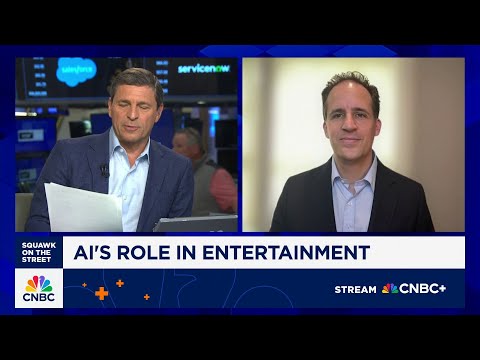
Morgan Stanley's Ben Swinburne: Here's how AI could change how we consume entertainment
CNBC Television· 2025-07-11 15:17
Our next guest is out with a note this week outlining which media companies may stand to benefit the most and the least from advances in AI. Joining us now, Ben Swinburn. He's Morgan Stanley's head of US media research.Guess the first shot, Ben. I would assume we're going to have a lot more reports like this one coming, but you know, what are some of the early takeaways from the work that you did here to put this report out. Well, Dave, thanks for having me.Sorry you and I aren't in Sun Valley, but uh I'm s ...

X @TechCrunch
TechCrunch· 2025-07-10 17:01
YouTube is getting rid of its Trending page and Trending Now list | TechCrunch https://t.co/7DUELs0eim ...
NFL Commissioner Roger Goodell on streaming and media fragmentation
CNBC Television· 2025-07-10 15:00
Audience Reach & Growth Strategy - The company's core media policy is to reach the broadest audience possible by extending beyond current platforms [1] - Utilizing global platforms like YouTube allows the company to share its game with a global audience for free [1] - Reaching fans where they are is a key growth strategy, targeting different demographics on new platforms [2] - The company aims to reach fans across various streaming platforms, including Amazon, Peacock, and Netflix [2] Streaming Platform & Content Navigation - The increasing number of streaming platforms presents a challenge in navigating content for viewers [2] - The company mitigates this challenge by consistently scheduling games in specific windows [3] - Special events like Thursday night games, Friday night games, and Christmas Day games are designed to be tradition [3][4] - Partners in the NFL actively promote these events to ensure they are well-publicized [4]
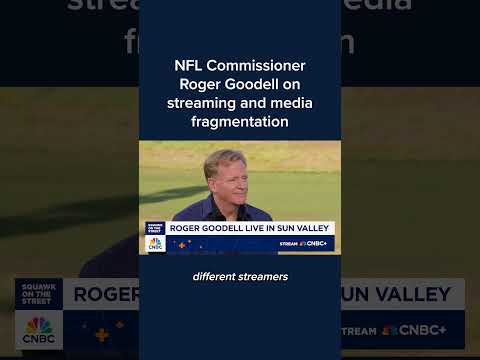
NFL Commissioner Roger Goddell: New streaming platforms allow us to reach different demographics
CNBC Television· 2025-07-10 14:45
Media Rights & Streaming - NFL is extending beyond current platforms, viewing YouTube as a great global platform to reach a broader audience [3][4] - NFL aims to reach fans where they are, targeting different demographics through new platforms as part of their growth strategy [4] - NFL emphasizes consistent game windows, making games special events to mitigate navigation challenges for fans across various streaming platforms [6] - NFL included opt-out clauses in media rights contracts for potential future deals, but no decisions have been made yet, partnerships are valued [8] - NFL will assess CBS's approach to the NFL and their business post-Paramount transaction before making decisions [9] Fan Experience & Game Scheduling - NFL prioritizes the impact on fans when considering flexing games, averaging two flexed games per year [13] - NFL monitors fan reaction closely when moving games, especially Thursday games [13] - NFL aims to ensure the best game is available for the broader fan base nationally and globally [14] International Expansion - NFL hopes to reach 16 regular season international games, with every team playing internationally [18] - NFL aims to create year-round engagement in new international cities through media, partnerships, and club marketing [19][20] - NFL considers packaging international games, leveraging the popularity of the 9:30 AM ET window for European games [21][22] Market & Advertising - NFL is not seeing any impact from tariffs on ticket sales or the advertising market [23] - NFL sales are performing incredibly well, reflecting the value of live sports content for advertisers [23][24]

X @The Wall Street Journal
The Wall Street Journal· 2025-07-10 13:17
Platform Trust & AI Content - Social media platforms like Meta, YouTube, and TikTok are struggling to maintain user trust [1] - The platforms are facing challenges due to the proliferation of AI-generated photos and videos depicting fabricated events [1] Content Integrity - The platforms are actively seeking methods to safeguard user trust amidst the rise of AI-generated content [1]

裁员80人背后的AI生死局:Manus何以至此?
虎嗅APP· 2025-07-10 10:32
Core Viewpoint - Manus, an AI Agent company, has faced significant challenges including a large-scale layoff and a shift in its operational base to Singapore, indicating a strategic pivot in response to market dynamics and funding pressures [1][4][9]. Group 1: Company Developments - Manus confirmed a layoff of employees, with 40 core technical staff relocating to Singapore, while the remaining staff were let go as part of a restructuring aimed at improving operational efficiency [1][4]. - The company has rapidly expanded its global presence, moving its headquarters to Singapore and establishing offices in California and Tokyo, reflecting a trend of Chinese tech companies seeking international markets [1][4][9]. - Manus has completed two rounds of financing in less than a year, with a notable $75 million Series B round led by Benchmark, raising its valuation to $500 million [5][4]. Group 2: Market Challenges - The competitive landscape for AI Agents is intensifying, with new entrants like GenSpark demonstrating rapid growth and user acquisition, posing a threat to Manus's market position [14][15]. - Manus's user engagement metrics have shown a decline, with a significant drop in monthly visits following the initial product launch, highlighting challenges in maintaining user interest and retention [14][15]. - The company faces external pressures from larger tech firms entering the AI space, which could undermine Manus's competitive advantages and market share [15][22]. Group 3: Strategic Considerations - To succeed, Manus must focus on building user loyalty and engagement, leveraging its initial user base of 200,000 potential customers to convert them into paying subscribers [17][20]. - The company may need to explore niche markets or vertical applications to differentiate itself and create a sustainable competitive edge in the crowded AI landscape [20][21]. - There is a growing emphasis on product innovation and user experience, with successful AI companies demonstrating the importance of creating engaging and enjoyable user interactions [19][20].

The art of quitting to win | Kathryn Sparrow | TEDxDeerfield
TEDx Talks· 2025-07-09 16:35
Core Argument - The traditional "never quit" mentality can be detrimental, hindering exploration of new paths and strategic changes [3] - Quitting, redefined as a strategic decision to leave a dead-end path, can be a pathway to success [5] - The "Quit to Win" strategy involves assessing, deciding, and pivoting [8] Supporting Evidence - Successful individuals like Steve Jobs and Martha Stewart achieved greatness by quitting previous ventures [6] - Global brands like Nintendo, Samsung, and YouTube initially pursued different products or services before pivoting to their current successful models [6][7] - A Harvard Business Review study indicated that professionals who switched to more meaningful jobs experienced greater work satisfaction [9] - A study in the Journal of Applied Psychology found that professionals who pivoted mid-career experienced up to 40% greater work satisfaction [9] Practical Application - The "Quit to Win" strategy can be applied to various aspects of life, including relationships, habits, and attitudes [10] - Authenticity is crucial; abandoning one's true voice can lead to failure [11] - It's important to differentiate between strategic quitting and quitting simply because things get difficult [12]

Manus 对谈 YouTube 联创陈士骏:两代创业者聊 AI 创业和长期主义
Founder Park· 2025-07-08 12:57
Core Insights - The article discusses the entrepreneurial spirit and long-term vision exemplified by Steve Chen, co-founder of YouTube, and his interaction with the Manus team, highlighting the importance of risk-taking and iterative learning in the tech industry [3][4][6]. Group 1: Entrepreneurial Principles - Steve Chen emphasizes the significance of prioritizing ideas within a team, advocating for a democratic process where everyone can suggest ideas, but ultimately decisions are made by a leader to ensure quick action and feedback [9][10]. - The concept of "network effects" in technology is crucial, where new features can enhance existing functionalities, leading to unexpected improvements [10][11]. - The importance of tracking key performance indicators (KPIs) is highlighted, with Chen noting that at YouTube, two main metrics—video uploads and user registrations—were critical for assessing product success [13][14]. Group 2: Competitive Strategy - The article discusses how YouTube maintained user engagement through a comprehensive ecosystem that made it difficult for users to switch platforms, emphasizing the need to provide continuous value rather than locking users in [22]. - Chen reflects on the competitive landscape during YouTube's early days, noting that flexibility allowed startups to take risks that larger companies could not afford [20][21]. - The discussion includes the importance of community experience and user retention strategies, which were pivotal in YouTube's growth [36][37]. Group 3: Innovation and Adaptation - The article highlights the necessity of adapting to technological advancements and market changes, with Chen suggesting that companies should maintain a long-term perspective rather than focusing solely on immediate returns [23][24]. - The evolution of YouTube from a dating site to a video-sharing platform illustrates the importance of being open to change and experimentation in the startup environment [45][46]. - Chen discusses the role of AI as a transformative technology, likening its potential impact to that of the internet and smartphones, and emphasizes the need for continuous experimentation [51][52]. Group 4: Silicon Valley Ecosystem - The article underscores the unique ecosystem of Silicon Valley, which fosters innovation and risk-taking, allowing entrepreneurs to thrive [66][67]. - Chen's experiences illustrate how the collaborative environment in Silicon Valley contributes to the success of startups, as it provides access to resources, talent, and a supportive network [50][64]. - The narrative concludes with a reflection on the importance of maintaining the "Silicon Valley spirit" in other regions to encourage innovation and entrepreneurship [67][68].