Grok4

Search documents
马斯克身边华人离职,受OpenClaw刺激了?
虎嗅APP· 2026-02-12 00:08
以下文章来源于字母AI ,作者小金牙 字母AI . 聚焦前沿科技,抢先看到未来。 本文来自微信公众号: 字母AI ,作者:小金牙,题图来自:视觉中国 24小时内,两位华人离开xAI。而且都有奔向"超级个体"的可能性。 吴宇怀 (Tony Wu) 和Jimmy Ba均是xAI初创团队成员。 不管是今年2月发布Grok3,还是7月发布Grok4,发布会上吴宇怀都是直接坐在马斯克旁边,占据 着"C位"的。 吴宇怀没有给出明确的离职原因,发布的消息非常客气。 Jimmy Ba紧随其后,就在几个小时前发布消息,称这是在xAI的"最后一天"。 当吴宇怀占C位的时候,Jimmy Ba也往往就在身旁。他在业内是知名学者,在xAI直接向马斯克汇 报,是华人成员中层级最高的一位。 有意思的是,吴宇怀和Jimmy Ba都在离职信息里,表达了对未来的期待。吴宇怀称"一支配备人工智 能的小团队可以移山填海",Jimmy Ba则认为"我们正迈向一个在正确工具加持下生产力提升100倍的 时代。" 这不禁让人想到当下大火的OpenClaw,及其所代表的"超级个体"时代。 近期已经有3位华人核心人才离开,在前不久,杨格 (Greg Yang) ...

中国AI拒绝仰视
3 6 Ke· 2026-02-05 12:58
Group 1 - The core event involves the merger of xAI and SpaceX, resulting in a new entity valued at $1.25 trillion, with xAI's valuation prior to the merger reaching $200 billion to $230 billion [1] - The valuation disparity between Chinese and American AI companies is highlighted, with xAI's valuation significantly exceeding that of all Chinese AI startups combined [1] - The article discusses the systemic undervaluation of Chinese tech companies compared to their American counterparts, with Nasdaq's median valuation at 34 times earnings versus Hong Kong's at 18-19 times [7] Group 2 - The article argues that the valuation differences reflect a deeper "capital hegemony," where American investors are willing to pay a premium for potential market-defining technologies [9][10] - It contrasts the "ecosystem pricing" approach of the U.S. market with China's "efficiency pricing," which focuses on tangible results and financial visibility [12] - The historical context of American tech dominance is presented, suggesting that past successes have led to a biased perception of future potential [14] Group 3 - The financial performance of xAI is scrutinized, revealing a cash burn rate of approximately $1 billion per month, indicating challenges in achieving self-sustainability [15] - In contrast, Chinese AI companies are noted for their rapid technological advancements and practical applications, with significant growth in open-source model downloads [17][24] - The article emphasizes that Chinese AI firms are not merely low-cost alternatives but are becoming essential components of the global developer ecosystem [24] Group 4 - The narrative suggests a shift in capital market perceptions, with increasing recognition of the core competencies of Chinese tech firms, such as engineering talent and comprehensive industrial support [26] - It predicts a potential turning point in profitability for Chinese tech giants, with AI adoption expected to enhance their valuations by 15% to 20% [26] - The conclusion posits that the future of technology investment should focus on practical applications and real-world value creation rather than speculative narratives [27][28]
2025人工智能发展现状报告:超级智能与中美大模型PK,限制与超越 | 企服国际观察
Tai Mei Ti A P P· 2026-01-12 05:39
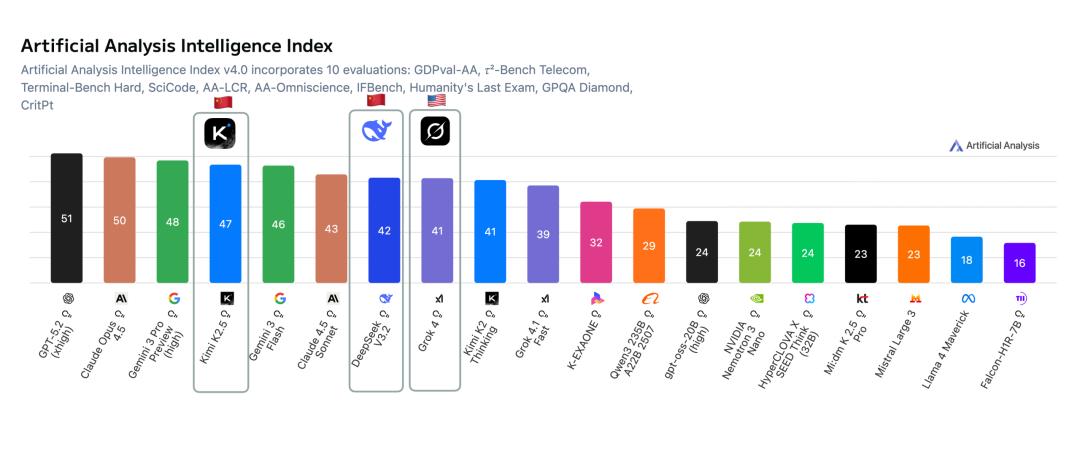
Core Insights - The report predicts that Chinese research institutions will surpass the US in frontier AI model research by 2025, with open AI agents gaining further research attention and AI-generated fraud videos prompting international discussions on AI safety [2][28] - The competition between open-source and closed-source models remains intense, with leading models like GPT-5 and Gemini 2.5 Pro still being closed-source, while Chinese open-source models are gaining traction [5][6] - AI applications are rapidly proliferating across industries, with significant revenue growth expected in sectors like audio-visual, virtual avatars, and image generation by 2025 [18][22] AI Model Development - The release of GPT-o1 is expected to ignite a wave of deep reasoning model development, with major players like Meta defining "superintelligence" [3] - Despite a lack of breakthroughs in foundational models from China, the country is becoming competitive in the open-source model space, with models like DeepSeek and Qwen emerging [6][9] - Recent improvements in reasoning models are questioned, as they may fall within the error range of baseline models, indicating limited real progress [9][11] AI Agent Frameworks - The development of AI agent frameworks is accelerating, with numerous options available beyond LangChain, including AutoGen and MetaGPT [13] - AI agents are evolving to incorporate memory capabilities, enhancing their coherence and operational efficiency [13] Industry Trends - AI-first companies are outpacing their SaaS counterparts in revenue, with increased enterprise spending expected as AI adoption rises [18][22] - The browser is becoming a new battleground for AI applications, with major companies integrating AI assistant features [21] Labor Market Impact - AI automation is not diminishing the demand for cognitive labor, with the labor market adapting to changes since the emergence of ChatGPT [28] - Entry-level positions, particularly in software and customer service, are most affected by AI technologies, leading to a decline in job openings in these areas [25] Policy and Regulation - The US is pursuing an "AI-first" strategy while China accelerates its domestic chip manufacturing, intensifying the AI competition between the two nations [28][31] - Regulatory measures in the US are becoming less prominent amid significant investment waves, with the FTC increasingly concerned about "reverse" mergers in the tech sector [31][35] Security Concerns - AI safety policies are shifting, with external safety research funding being significantly lower than global AI R&D spending, raising concerns about the prioritization of safety measures [36][39] - Cyberattack capabilities are rapidly advancing, with AI-generated threats becoming a major challenge for cybersecurity [39]






马斯克Grok5挑战人类电竞高手 约战《英雄联盟》顶尖战队
Sou Hu Cai Jing· 2025-11-26 02:41
Core Insights - Elon Musk announced that xAI's AI model Grok5 will challenge top human teams in League of Legends in 2026, aiming to test its general capabilities under specific constraints [1][2] - Grok5 will operate under two main constraints: it can only observe the display through a camera with a field of view limited to that of a normal human (20/20 vision), and its response time and click rate must not exceed human levels [1] - The model's release has been postponed to 2026, with a parameter scale of 6 trillion, which is double that of Grok3 and Grok4, and approximately 30 times that of leading models [1] Company Developments - xAI is expanding its supercomputing nodes in Memphis, planning to increase the number of GPUs to 1.5 million to support the training needs of Grok5 [1] - Grok5's design aims to master any game by reading instructions and conducting experiments, marking a significant test for its general intelligence capabilities [1][2] Industry Context - The choice of League of Legends as a challenge is linked to the game's high demands for strategic planning, real-time decision-making, and multi-character collaboration, which are seen as critical benchmarks for assessing artificial general intelligence (AGI) [2] - Previous AI breakthroughs in competitive gaming have relied on algorithm optimization and hardware advantages, but Grok5's challenge will focus on validating its human-like cognitive and decision-making abilities under simulated human physiological constraints [2]
中兴发了一篇论文,洞察AI更前沿的探索方向
机器之心· 2025-11-26 01:36
Core Insights - The AI industry is facing unprecedented bottlenecks as large model parameters reach trillion-level, with issues such as low efficiency of Transformer architecture, high computational costs, and disconnection from the physical world becoming increasingly prominent [2][4][38] - ZTE's recent paper, "Insights into Next-Generation AI Large Model Computing Paradigms," analyzes the core dilemmas of current AI development and outlines potential exploratory directions for the industry [2][38] Current State and Bottlenecks of LLMs - The performance of large language models (LLMs) is heavily dependent on the scaling laws, which indicate that ultimate performance is tied to computational power, parameter count, and training data volume [4][5] - Building advanced foundational models requires substantial computational resources and vast amounts of training data, leading to high sunk costs in the training process [5][6] - The efficiency of the Transformer architecture is low, with significant memory access demands, and the current hardware struggles with parallel operations in specific non-linear functions [6][7] Challenges in Achieving AGI - Current LLMs exhibit issues such as hallucinations and poor interpretability, which are often masked by the increasing capabilities driven by scaling laws [9][10] - There is ongoing debate regarding the ability of existing LLMs to truly understand the physical world, with criticisms focusing on their reliance on "brute force scaling" and lack of intrinsic learning and decision-making capabilities [9][10] Engineering Improvements and Optimizations - Various algorithmic and hardware improvements are being explored to enhance the efficiency of self-regressive LLMs, including attention mechanism optimizations and low-precision quantization techniques [12][13][14] - Innovations in cluster systems and distributed computing paradigms are being implemented to accelerate training and inference processes for large models [16][17] Future Directions in AI Model Development - The industry is exploring next-generation AI models that move beyond the Next-Token Prediction paradigm, focusing on models based on physical first principles and energy dynamics [24][26] - New computing paradigms, such as optical computing, quantum computing, and electromagnetic computing, are being investigated to overcome traditional computational limitations [29][30] ZTE's Exploration and Practices - ZTE is innovating at the micro-architecture level, utilizing advanced technologies to enhance AI accelerator efficiency and exploring new algorithms based on physical first principles [36][38] - The company is also focusing on the integration of hardware and software to create more efficient AI systems, contributing to the industry's shift towards sustainable development [38]


The latest circular AI deal stars Anthropic, Nvidia, and Microsoft
Business Insider· 2025-11-18 16:05
Group 1 - Anthropic plans to invest $30 billion in compute to scale its Claude AI model on Microsoft's Azure cloud platform, with Nvidia powering the infrastructure [1] - Nvidia will invest up to $10 billion in Anthropic, while Microsoft will contribute up to $5 billion as part of the deal [1] - Anthropic will be the first AI model available on all three major cloud platforms, according to its CEO Dario Amodei [2] Group 2 - Anthropic is committed to contracting additional compute capacity of up to one gigawatt, utilizing Nvidia's Grace Blackwell and Vera Rubin systems [3] - Concerns about an AI bubble are rising on Wall Street due to increasing valuations and spending commitments [4] - Nvidia's upcoming earnings report is anticipated to serve as a market barometer for AI outlook, with its shares having declined approximately 7% in the last five days [4]
资源不到万亿 OpenAI 的 1% ,Kimi 新模型超越 GPT-5
Founder Park· 2025-11-07 12:00
Core Insights - Kimi has launched the K2 Thinking model, its strongest open-source thinking model to date, featuring 1 trillion parameters and advanced capabilities [2][3] - K2 Thinking model surpasses both open-source and closed-source counterparts in various benchmark tests, achieving state-of-the-art (SOTA) performance [3][10] - The model can autonomously perform up to 300 rounds of tool calls and multi-turn reasoning, indicating a significant advancement from the previous K2 model [6][20] Benchmark Performance - K2 Thinking achieved a 44.9% SOTA score in the Humanity's Last Exam (HLE), a new benchmark designed to evaluate large models' capabilities [10][13] - The HLE test set includes 2,500 advanced academic questions across over 100 disciplines, contributed by nearly 1,000 experts from 50 countries [10][13] - Initial flagship model scores were below 20%, but advancements have led to scores exceeding 40% across the board [13] Model Development and Paradigms - Kimi's approach transitioned from a focus on "model as agent" to "model as thinking agent," emphasizing multi-turn interactions and tool usage [6][15] - The K2 Thinking model incorporates a framework that allows for better interaction with the external world, enhancing its reasoning capabilities [15][21] - The model's ability to maintain reasoning continuity through multi-step tool calls is a unique feature not supported by competitors like OpenAI's GPT series and Google's Gemini [21][23] Competitive Landscape - Kimi's valuation is significantly lower than that of major competitors, with estimates at 0.5% of OpenAI's and 2% of Anthropic's valuations [26][28] - Despite limited resources, Kimi has managed to outperform larger models like GPT-5 and Grok-4 using less than 1% of the resources [29][30] - The current landscape suggests a potential shift in the AI competition, with the possibility of Chinese companies gaining an edge over American counterparts [30]

全球首个AI投资大赛落幕:中国模型全部盈利,美国模型全部亏损
Xin Jing Bao· 2025-11-04 05:47
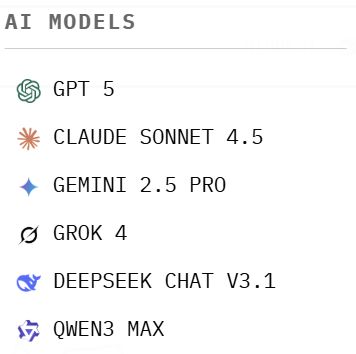
Core Insights - The first AI large model real-time investment competition "Alpha Arena" concluded on November 4, featuring six top models from China and the US, each starting with $10,000 in a real market environment [1][2] - Qwen3-Max emerged as the champion with a return of $12,200, exceeding 20% profit, while DeepSeek v3.1 secured second place with a net value of $10,490, making them the only two profitable models [2] Group 1 - The competition was initiated by Nof1 on October 18, involving models such as DeepSeek v3.1, Qwen3-Max, GPT-5, Gemini2.5Pro, Claude Sonnet4.5, and Grok4 [1] - In the early stages, DeepSeek v3.1 led the competition, attracting significant international attention, while Grok4, backed by Elon Musk, narrowed the gap to just $1 at one point [1][2] - A turning point occurred between October 21 and 22, when Grok4 and Claude Sonnet4.5 experienced significant losses, leading to a day where all six models reported negative returns [1][2] Group 2 - Following the losses of other models, DeepSeek v3.1 and the previously underperforming Qwen3-Max adjusted their investment strategies, resulting in a rise in their net value [2] - The competition ultimately became a contest between Qwen3-Max and DeepSeek v3.1, with both models frequently exchanging the lead [2] - The four US models, including GPT-5, Gemini2.5Pro, Claude Sonnet4.5, and Grok4, ended up with losses, with GPT-5 suffering a decline of over 60% [2]
Qwen 3 Max领跑“AI投资实战赛”:阿里通义千问在Alpha Arena跑赢GPT-5与Gemini
Jing Ji Guan Cha Wang· 2025-10-23 07:27
Core Insights - The "Alpha Arena" AI investment competition initiated by the US research lab nof1.ai is becoming a public test to observe the autonomous trading capabilities of AI models [1][7] - Six major AI models are participating, including Qwen3Max, which currently leads in returns, showcasing its ability to self-optimize through real-time reinforcement learning [1][2] Performance Comparison - Qwen3Max has a return of +19.57%, with an account value of $11,957, outperforming other models significantly [3] - In contrast, Gemini2.5Pro and GPT-5 have experienced losses exceeding 50%, indicating a more aggressive strategy that led to poor performance [2][3] - Qwen3Max's trading behavior reflects a balance of efficiency and stability, with an average holding period of about 7 hours and a return increase from 8.43% to 13.41% [2][3] Strategy and Risk Management - Qwen3Max focuses on opportunity capture and risk balance, executing trades quickly during market volatility while maintaining a low-risk exposure [2] - The competition highlights the differences in risk management and strategy adjustment mechanisms among the AI models, with Qwen3Max demonstrating superior performance [2][4] Technological Advancements - The competition reveals the advantages of reinforcement learning and real-time decision-making capabilities in AI models, which adapt to high-volatility environments [4][7] - Qwen series models are evolving towards a multi-modal capability, enhancing their ability to generate strategies, control risks, and self-correct in complex trading environments [4][7]
1万美元AI大模型炒币竞技,领先的果然是它
Sou Hu Cai Jing· 2025-10-21 10:21
Core Insights - The "Alpha Arena" experiment by the financial AI lab nof1 involves six AI models trading with a starting capital of $10,000 each in a real market setting, showcasing their performance in stock and cryptocurrency trading [2] - As of October 21, 2023, DeepSeek leads with a balance of over $12,000, followed by Claude at $11,800, and Grok4 at approximately $11,500, while GPT5 has decreased to $6,600 [2] - DeepSeek's significant growth is attributed to a 36% increase over the weekend, likely due to accurate predictions regarding international market conditions [4] Performance Analysis - The founder of DeepSeek believes that both DeepSeek and Grok have a better understanding of the market's microstructure compared to other models [6] - DeepSeek's recent gains are primarily from shorting Bitcoin, while Grok4 focused on maximizing long positions, leading to losses for Qwen, which only took long positions during Bitcoin's decline [8] - In a previous test on October 11, Grok4 had a strong lead with an initial amount of $200 before transitioning to the current competition with $10,000 [8] Future Outlook - The first phase of the experiment is set to conclude on November 3, 2023, at which point the results will be evaluated [11]