Huawei

Search documents
X @Bloomberg
Bloomberg· 2025-10-09 09:18
China has added prominent research firm TechInsights to its Unreliable Entity list, shutting out the Canadian teardown specialist that helped expose the inner workings of Huawei’s AI chips https://t.co/NWrhI0YoN5 ...
5 things Nvidia's Jensen Huang said about the state of the AI race with China
CNBC· 2025-10-08 16:41
Core Viewpoint - The U.S. is not significantly ahead of China in the artificial intelligence race, and a nuanced strategy is required to maintain an advantage [1] Group 1: AI Race Insights - Nvidia CEO Jensen Huang highlighted that while U.S. AI models are more advanced, China's open-source models are "well ahead" in certain aspects [1] - Huang has acknowledged the capabilities of Chinese AI models, including those from DeepSeek, Alibaba, and Baidu [1] - The CEO emphasized the importance of a strategic approach for the U.S. to remain competitive in the AI sector [1] Group 2: U.S.-China Relations - Huang has made efforts to engage with China, particularly following U.S. chip restrictions, indicating that Chinese chip systems from companies like Huawei should not be underestimated [2] - A recent call between President Donald Trump and Chinese President Xi Jinping included plans for a meeting at the APEC South Korea summit at the end of October [2]


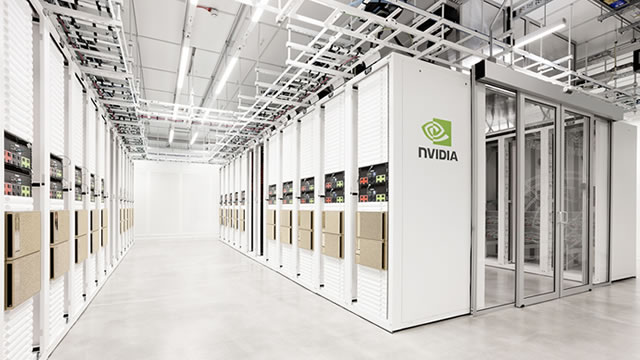
Nvidia CEO Jensen Huang on AI race vs. China: Overall we're not far ahead
Youtube· 2025-10-08 13:16
Core Insights - The company emphasizes the importance of assessing various risks, particularly technological and geopolitical risks, while developing AI infrastructure and products [2][3][4] Risk Assessment - Key risks identified include technology risk, product design risk, and geopolitical risk, with the latter being a new challenge for the company [2][3] - The company is proactive in informing policymakers about AI's unique characteristics and advocating for favorable policies [4] Competitive Landscape - The company believes it is ahead in chip technology but acknowledges that China is advancing rapidly in energy and application layers of AI [5][6][7] - The speed of technology adoption in China is a concern, as their applications are progressing quickly due to less regulation [7][8] Strategic Considerations - The company suggests a nuanced strategy to maintain a competitive edge in chip technology while ensuring that American tech is widely adopted globally [9][10] - It is crucial for the U.S. to have the most advanced chips and to ensure that AI developers worldwide build on the American tech stack [10][11] Market Dynamics - The company highlights the significance of the Chinese market, noting that 50% of the world's AI researchers are in China and that China represents 30% of the global technology market [16][17] - A strategy that isolates American technology could lead to a loss in the global AI race, emphasizing the need for American technologies to be disseminated worldwide [17][18]
Wall Street Breakfast Podcast: Lawmakers Urge Broader China Chip Curbs
Seeking Alpha· 2025-10-08 10:58
Group 1: U.S. Semiconductor Equipment Market - U.S. lawmakers are advocating for expanded restrictions on chipmaking equipment sales to China following a bipartisan investigation revealing that Chinese semiconductor firms spent billions on advanced machinery in the past year [3][5] - A report from the U.S. House of Representatives Select Committee on China indicated that $38 billion in products and services were purchased from top semiconductor manufacturing equipment suppliers, marking a 66% increase from 2022 [5][6] - These purchases accounted for nearly 39% of the total combined sales of major chip equipment makers such as Applied Materials, Lam Research, and KLA, enhancing the production capacity and technological sophistication of Chinese semiconductor fabs [6][7] Group 2: Air Traffic Control Issues - Air traffic controller shortages have resulted in significant flight delays and cancellations across U.S. airports, with over 10,000 flights affected from Monday to early Wednesday [8][9] - The Federal Aviation Administration (FAA) has reported increased staffing shortages, leading to traffic slowdowns at some airports to ensure safe operations [8][9] - Transportation Secretary noted a concerning uptick in absenteeism among air traffic controllers, with some areas experiencing up to 50% reductions in staffing [9][10] Group 3: AI Industry Developments - Anthropic plans to open its first office in India in early 2026, marking its second Asia-Pacific location as it seeks to expand in a rapidly growing market [10][11] - India has become Anthropic's second-largest user base for its Claude chatbot, driven by tech investment and rising enterprise demand [11] - Both Anthropic and OpenAI are facing increasing competition from rivals like Google's Gemini and AI startup Perplexity, which are offering advanced features to Indian users [11][12]



Juniper Research Unveils 2025's Fintech & Payments Awards Winners
Globenewswire· 2025-10-08 06:00
Core Insights - Juniper Research announced the winners of the Future Digital Awards for Fintech & Payments 2025, celebrating innovation in digital payments, banking, and fraud prevention [1][7] - The awards highlight significant contributions from various companies and individuals in the fintech sector, showcasing advancements in technology and services [1][7] Fintech Leadership - DailyPay was awarded Fintech & Payments Startup of the Year (Platinum) [1] - Chrissy Wagner, Senior Vice President at FIS, received the title of Fintech Leader of the Year (Platinum) [1] Banking Innovation - Huawei Mobile Finance Solution won Banking Innovation of the Year (Platinum) [2] - Mitek Systems Digital Fraud Defender was recognized as Fraud & Security Innovation of the Year (Platinum) [2] - Other notable winners include Prometeo Borderless Banking (Platinum) and Amdocs Agentic AI Platform (Platinum) [2] Banking Fraud Prevention - Alipay Tap! was awarded Payment Innovation of the Year (Platinum) [3] - Worldpay received the Omnichannel Payments Platform of the Year (Platinum) [3] - G+D Netcetera BIN Attack Score won in the Soft POS Innovation category (Platinum) [3] Sustainability in Payment Cards - Thales PVC-Free Payment Card received a Platinum award for its sustainability efforts [4] - FV Bank secured a Platinum award for Digital Currency Innovation, emphasizing the integration of traditional banking with digital asset services [4] Company Statements - Mitek emphasized the importance of multi-layered defenses against sophisticated fraud, highlighting their commitment to protecting customers [5] - Thunes celebrated their dual Platinum Awards for B2B and Cross-border Payments, reflecting their global impact on payment solutions [6]

Will The Trump Justice Department Create New Merger Guidelines?
Forbes· 2025-10-07 13:30
Group 1: Political and Regulatory Landscape - Washington County, Pennsylvania, has shifted from a Democratic stronghold to a Republican voting pattern since 2008, influenced by Trump's support for fracking, which has created jobs in a deindustrializing area [2] - A radical consumer advocate group, New Energy Economy, has previously blocked a deal involving TXNM and Avangrid, indicating a trend of regulatory challenges in the energy sector [3] - New Energy Economy is now challenging Blackstone's entry into the data center market in New Mexico, highlighting ongoing scrutiny of corporate moves in energy-rich regions [4] Group 2: Corporate Mergers and Antitrust Issues - The Trump Administration has shown a willingness to approve corporate mergers that align with consumer interests, as seen in the HPE and Juniper Networks settlement, which enhances competition against Huawei [5][6] - Despite external pressures to block the HPE-Juniper merger, the DOJ's approval reflects adherence to established antitrust standards, maintaining a market share below the 30% threshold [10][11] - Ongoing scrutiny from Democratic senators and state attorneys general regarding the DOJ's approval process could impact future mergers in the energy sector, as the HPE case may set a precedent for regulatory challenges [7][8][12] Group 3: Future Implications for the Energy Sector - The potential for increased scrutiny on mergers could hinder the DOJ's ability to enforce antitrust laws effectively, particularly if it deviates from traditional standards [12][13] - The energy sector is likely to see numerous large mergers in the coming years, necessitating a careful approach from regulators to avoid judicial challenges that could limit their jurisdiction [13]



Tan Su Shan, CEO of Southeast Asia’s largest bank, is Fortune’s most powerful woman in Asia for 2025
Fortune· 2025-10-06 20:00
Core Insights - The 2025 ranking of Asia's most powerful women business leaders highlights the influence of executives from the finance and tech sectors, driven by the AI boom and evolving financial flows [1] Group 1: Top Executives - Tan Su Shan, CEO of DBS, is recognized as Asia's most powerful woman in business, leading Southeast Asia's largest bank through challenges like trade wars and the rise of cryptocurrencies [2] - Grace Wang, founder of Luxshare, ranks second, successfully acquiring new clients despite U.S.-China tensions, including OpenAI [3] - Meng Wanzhou, CFO of Huawei, is third, focusing on making China self-sufficient in advanced technology and increasing production of AI chips [4] - Bonnie Chan, CEO of HKEX, is fourth, as Hong Kong's stock exchange sees a resurgence with significant IPOs [5] - Kathy Yang, rotating CEO of Foxconn, rounds out the top five, shifting revenue focus from iPhones to server assembly for companies like Nvidia [6] Group 2: Regional Representation - Mainland China, Hong Kong, and Macau dominate the ranking with 34 executives, followed by Singapore with 15, and India and Thailand each contributing eight [7] Group 3: Broader Influence - Fortune's list also acknowledges women leaders outside of business, emphasizing their impact in sports, pop culture, and policymaking [8] - The rise of Asian pop culture, exemplified by K-pop group Blackpink, showcases the region's growing global profile [9] - In politics, female leaders like Singapore's Josephine Teo and Tokyo's Yuriko Koike are shaping their nations' ambitions in AI and finance [10] - Professional sports see influential figures like Naomi Osaka and Eileen Gu, who embrace their heritage while gaining international recognition [11]


Why Europe Failed to Dominate Consumer Tech: The Paradox of Potential and Regulation
Medium· 2025-10-05 07:10
Core Insights - Europe has historically been a leader in technology but has failed to produce global consumer tech giants comparable to those in the US and Asia [2][3] - Despite a strong foundation in education, industry, and R&D, the European consumer tech market is underdeveloped, with significant gaps in market capitalization compared to US firms [6][7] Market Position - The combined market capitalization of seven major US tech companies reached $13 trillion in 2024, while Europe's top 11 tech companies totaled only $2.2 trillion, representing less than 17% of the US firms' value [7] - The absence of recognizable European consumer tech brands is further highlighted by the rise of Asian tech giants [7] Structural Challenges - Regulatory fragmentation within the EU complicates the establishment of startups, as companies must navigate 27 different regulatory systems [9] - European investors exhibit a cautious investment culture, leading to 54% less funding for startups compared to their US counterparts [10] - A significant brain drain is occurring, with 73% of EU science graduates choosing to stay overseas, impacting the talent pool for high-growth startups [11] Regulatory Landscape - Europe is focusing on regulation to hold tech giants accountable and set global standards, exemplified by the GDPR and the Digital Markets Act [12][14] - The Brussels Effect allows European regulations to become global standards, as multinational companies prefer a single compliance structure [15] - The EU is proactively investing in technology, such as the €43 billion European Chips Act to enhance semiconductor production [15][16] Innovation and Future Outlook - Despite challenges, Europe is fostering innovation, with examples like Estonia's fully digitized government services and France's growing startup ecosystem [16] - The fundamental question remains whether Europe can build its own tech future while regulating the existing landscape [16]


China Jockeys for Better Access to US Deals
Bloomberg Technology· 2025-10-03 21:30
Semiconductor Industry & Geopolitics - China aims to negotiate with the US government to ease technology restrictions, particularly in the semiconductor sector [1] - Restrictions on semi-cap equipment below 14 nanometers by the US administration have hindered China's ability to manufacture next-generation AI chips at the 3 and 2 nanometer nodes [2] - Relaxing restrictions could lead to increased investment in various sectors, including agriculture and manufacturing, potentially altering the existing landscape [3] - Easing restrictions on China could reignite investment in companies with significant China exposure, currently avoided by investors due to geopolitical risks [6][7] - Companies like Lam Research, Applied Materials (AMAT), and KLA Corporation, with approximately 30% China exposure, could benefit from a change in US policy [7] - The presence of Samsung and SK Hynix components in Huawei's Ascend chip raises questions about potential changes in US policy [8] Market & Investment Implications - Increased investment from China could further inflate valuations in companies like Nvidia [4] - Companies facing revenue hits due to restrictions on equipment exports to China, such as iMac (unclear reference, possibly a typo), are under pressure [4] - Failure to transition to next-generation AI architectures could jeopardize a nation's economy and defense capabilities [5][6] - The market has been avoiding companies with over 10% China exposure due to geopolitical concerns [6] - Opening up aid technology to countries like Saudi Arabia in exchange for lower oil prices suggests a complex geopolitical strategy [8]
Government Shutdown Doesn’t Matter: Grenadilla’s Rathbun
Bloomberg Technology· 2025-10-03 21:06
Market Trends & Industry Dynamics - The global supply chain and China's reliance on it are recurring concerns [1] - The urgency of the race for chip production is highlighted, with support from the US government and investments in companies like Intel [3] - China's potential lack of internal supply chains could weaken its negotiating power and lead to inflated valuations [4] - The tech movement is receiving unprecedented support globally, not just in the US and China [5][4] - Government shutdown has implications for all the economy sectors, but tech sector seems not to be affected [11] Investment Opportunities & Potential Risks - High valuations in the tech sector may be justified by the influx of capital and long-term potential [6] - Diversification is crucial to mitigate idiosyncratic risks associated with concentrated investments [13] - Adjacent industries to AI, such as those benefiting from "eye movements" (e.g., Hitachi, Caterpillar), present investment opportunities beyond Nvidia and OpenAI [9][8] - Rebalancing portfolios by taking gains from overplayed tech stocks and reallocating to other sectors is a prudent strategy [14] Company Focus - Nvidia and OpenAI's valuations are under scrutiny, with concerns about revenue justifying investments and potential overspending [7] - The enthusiasm surrounding infrastructure deals and OpenAI's private market valuation of $500 billion is acknowledged [10]