华能国际

Search documents
2026电力行业年度策略:火绿重构,水核筑基,燃气优化
GOLDEN SUN SECURITIES· 2025-12-29 08:38
Group 1: Industry Overview - The public utility sector experienced a modest increase of 0.92% from January to September 2025, underperforming the CSI 300 index by 17.02 percentage points, with total revenue reaching 1.381783 trillion yuan, a slight year-on-year growth of 0.02% [1][13] - The overall profitability of the power sector remained stable, with a net profit attributable to shareholders of 172.32 billion yuan, reflecting an 8.43% increase year-on-year [1][13] - The electricity consumption growth rate for the first three quarters of 2025 was 4.6%, with a notable decline in the elasticity coefficient to 0.88, indicating a shift towards balanced supply and demand in the electricity market [2] Group 2: Thermal Power - The thermal power sector reported a net profit of 71.12 billion yuan for the first three quarters of 2025, marking a 15.83% increase year-on-year, supported by low coal prices [1][20] - The overall revenue for the thermal power sector was 905.78 billion yuan, a decrease of 3.08% year-on-year, while operating costs fell by 6.15% to 745.64 billion yuan [20] - The sector is expected to see a restructuring of its profit model, with a focus on high-dividend thermal power leaders and companies in regions with stable electricity prices [3] Group 3: Renewable Energy - The wind power sector achieved a net profit of 22.03 billion yuan, a year-on-year increase of 31.67%, with revenue rising by 29.98% to 108.09 billion yuan [1][28] - The solar power sector, however, faced challenges with a revenue decline of 18.63% to 26.10 billion yuan, despite a significant profit increase of 67.57% to 2.90 billion yuan [1][28] - The introduction of market-oriented policies and the acceleration of green energy subsidies are expected to improve cash flow for renewable energy companies [3] Group 4: Nuclear Power - The nuclear power sector is projected to see significant growth, with an expected operational capacity of 110 million kilowatts by 2030, driven by the increasing importance of nuclear energy in the context of AI competition [4] - The marketization of nuclear power pricing is gradually increasing, with expectations for price rebounds in Guangdong province due to policy changes [4] - Investment opportunities are recommended in nuclear power operators and companies involved in nuclear fusion and uranium mining [4] Group 5: Hydropower - The hydropower sector reported a revenue of 148.76 billion yuan, with a year-on-year growth of 1.56%, and a net profit of 51.32 billion yuan, reflecting a 3.30% increase [1][37] - The sector's stability and high dividend yield make it an attractive investment, especially in a fluctuating market environment [3][37] - Companies in the hydropower sector are encouraged to maintain strong dividend policies to attract investors [3] Group 6: Natural Gas - The natural gas sector is expected to recover profitability as global LNG production ramps up, with a projected oversupply of 65 billion cubic meters by 2030 [3] - The implementation of pricing reforms in various cities is alleviating margin pressures for city gas companies, leading to increased sales volumes [3] - Investment focus is recommended on high-quality city gas leaders with stable dividend policies [3]





9家A股ESG强信披银行碳排同比上升|ESG热搜榜
2 1 Shi Ji Jing Ji Bao Dao· 2025-12-29 08:22
Group 1: Climate Disclosure Standards - The Ministry of Finance, along with nine other departments, issued the "Corporate Sustainable Disclosure Standard No. 1 - Climate (Trial)" on December 25, marking a significant step towards a unified sustainable disclosure standard system in China [1] - The "Climate Standard" is currently positioned as a trial document, with voluntary implementation by companies until specific requirements are established [1] - The Ministry of Finance plans to adopt a gradual approach to implementation, expanding from listed companies to non-listed companies, and from large enterprises to small and medium-sized enterprises [1] Group 2: ESG Disclosure in A-Share Banks - The list of A-share banks with strong ESG disclosure has expanded to 27, including 6 state-owned banks, 9 joint-stock banks, 10 city commercial banks, and 2 rural commercial banks [2] - Among the 27 banks, 16 reported a year-on-year decrease in carbon emissions, while 9 banks, including 1 state-owned bank and 6 city commercial banks, reported an increase in carbon emissions [2] Group 3: Carbon Emission Changes - The top five banks with the highest year-on-year increase in carbon emissions are Beijing Bank (13.88%), Nanjing Bank (13.23%), Qingdao Bank (11.92%), Chongqing Bank (10.96%), and Hangzhou Bank (10.02%) [3] - The top five banks with the most significant reductions in carbon emissions are Shanghai Rural Commercial Bank (34.52%), Bank of China (23.64%), China Construction Bank (20.65%), Chongqing Rural Commercial Bank (17.89%), and Jiangsu Bank (8.58%) [3] Group 4: Regulatory Actions on Companies - First Capital announced that its wholly-owned subsidiary was fined 12.7358 million yuan for failing to diligently supervise a convertible bond project [4] - Jinghua Pharmaceutical's subsidiary was fined 500,000 yuan for environmental pollution, but the impact on the company's net profit for 2025 is expected to be minimal [5] - Tianyi Medical received a notice of administrative penalty for not producing medical devices according to technical requirements, with a proposed fine of 8.7852 million yuan [6] Group 5: Energy ESG Index - The "National Energy Sustainable Development Index" was officially launched, achieving a cumulative return rate of 40% [7] - The index was developed by the China Energy Research Society and Shenzhen Securities Information Co., focusing on securities with high trading volumes and market capitalization [7] Group 6: Challenges in the Power Sector - Five thermal power companies have been included in the ESG mandatory disclosure category, facing their first ESG assessment in 2026 [8] - A report indicated that while the overall power structure shows a significant reliance on thermal power, the transition to non-fossil energy sources is lagging behind the national average [8]
9家A股ESG强信披银行碳排同比上升
2 1 Shi Ji Jing Ji Bao Dao· 2025-12-29 08:20
Group 1: Climate Disclosure Standards - The Ministry of Finance, along with nine other departments, issued the "Corporate Sustainable Disclosure Standard No. 1 - Climate (Trial)" on December 25, marking a significant step towards a unified sustainable disclosure standard system in China [1] - The "Climate Standard" is currently positioned as a trial document, with voluntary implementation by companies until specific requirements are established [1] - The Ministry of Finance plans to adopt a gradual approach to implementation, expanding from listed companies to non-listed companies, and from large enterprises to small and medium-sized enterprises [1] Group 2: ESG Disclosure in A-Share Banks - The A-share ESG strong disclosure list has expanded to 27 banks, including 6 state-owned banks, 9 joint-stock banks, 10 city commercial banks, and 2 rural commercial banks [2] - Among the 27 banks, 16 reported a year-on-year decrease in carbon emissions, while 9 banks, including 1 state-owned bank and 6 city commercial banks, reported an increase in carbon emissions [2] - The top five banks with the highest year-on-year increase in carbon emissions are Beijing Bank (13.88%), Nanjing Bank (13.23%), Qingdao Bank (11.92%), Chongqing Bank (10.96%), and Hangzhou Bank (10.02%) [3] Group 3: Regulatory Actions and Penalties - First Capital's subsidiary was fined 12.7358 million yuan for failing to diligently supervise a convertible bond project [4] - Jinghua Pharmaceutical's subsidiary was fined 500,000 yuan for environmental pollution, which is not expected to significantly impact the company's net profit for 2025 [5] - Tianyi Medical is facing a potential fine of 8.7852 million yuan for not producing medical devices according to registered technical requirements [6][7] Group 4: Energy Sector ESG Developments - The "National Energy Sustainable Development Index" was officially launched, achieving a cumulative return rate of 40% [8] - Five thermal power companies have been included in the ESG strong disclosure category, which will require them to improve ESG governance and reporting by 2026 [9] - A report evaluated the low-carbon transition performance of 33 thermal power companies, indicating significant disparities in transition progress and a slower development of non-fossil energy compared to national averages [9]




华能国际成立清洁能源发展公司
Zheng Quan Shi Bao Wang· 2025-12-29 07:48
Group 1 - The establishment of Huaneng (Changtu) Clean Energy Development Co., Ltd. has been reported, with Zhang Zhonghua as the legal representative [1] - The company's business scope includes solar power generation technology services, wind power generation technology services, power generation technology services, cooling services, heat production and supply, and energy storage technology services [1] - Huaneng (Changtu) is wholly owned by Huaneng International (600011) through indirect shareholding [1]
A股电力股集体下跌,国电电力、皖能电力跌超6%
Ge Long Hui A P P· 2025-12-29 05:13
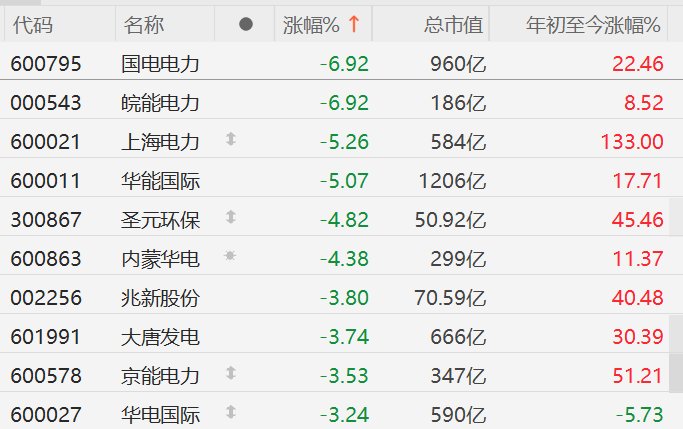
格隆汇12月29日|A股市场电力股集体下跌,其中,国电电力、皖能电力跌超6%,上海电力、华能国 际跌超5%,圣元环保、内蒙华电跌超4%,兆新股份、大唐发电、京能电力、华电国际跌超3%。消息面 上,广东等地2026年长协电价陆续出炉。广东2026年度交易均价372.14厘/千瓦时,同比下降19.72厘/千 瓦时,接近基准价下浮下限;江苏2026年1月集中竞价均价324.71元/兆瓦时,较基准价下浮17%。 MACD金叉信号形成,这些股涨势不错! | 代码 | 名称 | | 涨幅%↑ | 总市值 | 年初至今涨幅% | | --- | --- | --- | --- | --- | --- | | 600795 | 国电电力 | | -6.92 | 960亿 | 22.46 | | 000543 | 皖−九 | | -6.92 | 186亿 | 8.52 | | 600021 | 上海电力 | 1 | -5.26 | 584亿 | 133.00 | | 600011 | 华能国际 | | -5.07 | 1206亿 | 17.71 | | 300867 | 圣元环保 | 1 | -4.82 | 50.92亿 | ...





电力板块持续走弱 国电电力午后跌超7%
Xin Lang Cai Jing· 2025-12-29 05:06
午后电力板块持续走弱,火电方向领跌,国电电力跌超7%,皖能电力、华能国际、上海电力、内蒙华 电、大唐发电均跌逾4%。 ...
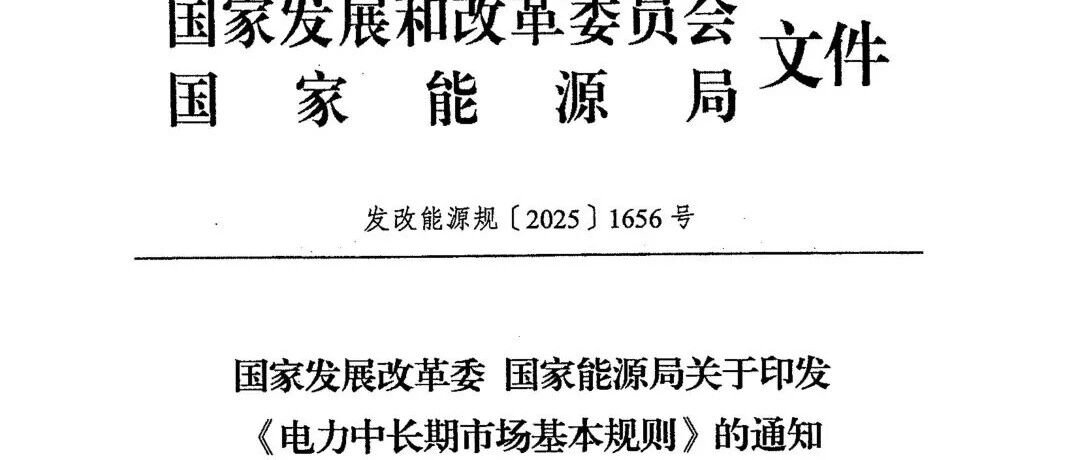
全国一盘棋!《电力中长期市场基本规则》印发
Da Zhong Ri Bao· 2025-12-29 04:39
Core Viewpoint - The National Development and Reform Commission and the National Energy Administration have issued the "Basic Rules for Long-term Electricity Market," aiming to enhance the construction of a unified national electricity market and regulate long-term electricity market transactions [1][2]. Group 1: Background and Purpose - The revision of the rules is a response to the ongoing electricity system reform and aims to support the establishment of a unified national electricity market as outlined in the 20th National Congress [1]. - In the first three quarters of the year, long-term electricity trading accounted for 95.9% of the total market trading volume, indicating the importance of long-term market transactions [1]. Group 2: Key Features of the New Rules - The new rules consist of 13 chapters and 98 articles, covering general principles, market participants, trading varieties and pricing mechanisms, transaction organization, contract management, and risk prevention [2]. - The rules adapt to current and long-term needs of the electricity market, incorporating mechanisms for cross-grid transactions and flexible inter-provincial trading [2][3]. - The rules promote longer and shorter trading cycles, encouraging multi-year transactions and daily continuous trading to enhance market flexibility [3]. Group 3: Implementation and Compliance - The National Energy Administration will work with relevant government departments to draft local and regional implementation details based on the new rules, which must be submitted for record by March 1, 2026 [5].
港股电力股集体走低 华能国际跌7.13%
Mei Ri Jing Ji Xin Wen· 2025-12-29 03:24
Group 1 - Hong Kong power stocks experienced a collective decline, with Huaneng International (00902.HK) dropping 7.13% to HKD 5.73 [1] - Datang Power (00991.HK) fell by 4.27%, trading at HKD 2.24 [1] - Huadian International (01071.HK) decreased by 2.88%, with a price of HKD 4.05 [1] - China Resources Power (00836.HK) saw a decline of 2.19%, priced at HKD 17.39 [1]

央企雄安总部项目集中开工 已有8家央企总部落户
Xin Hua Wang· 2025-12-29 01:49
作为承接北京非首都功能疏解的集中承载地,雄安新区"十四五"期间承接疏解成效显著。中国星网总部 及所属企业已于2024年10月入驻办公;中国中化、中国华能于今年10月9日正式迁驻雄安办公;中国矿 产总部项目主体结构封顶,正抓紧进行室内精装修等工作;中国大唐雄安总部项目已于今年启动建设。 截至目前,已有8家央企总部疏解落户雄安。 新华社石家庄12月28日电(记者苏凯洋、龚璟璐)12月25日至28日,中国农业发展集团有限公司、中国 华电集团有限公司和中国诚通控股集团有限公司先后在雄安新区举行总部项目开工仪式。截至目前,第 二批疏解至雄安的4家央企总部已全部开工建设。 雄安新区党工委副书记、管委会常务副主任吴波介绍,雄安新区坚持以承接疏解带动区域发展、引领科 技创新、加速产业和要素集聚,推动科技创新和产业创新深度融合,当前已有400多家央企分支机构、 4000多家北京来源企业落地雄安。 [ 责编:张璋 ] ...
两部门明确:不再人为规定分时电价水平和时段
中国有色金属工业协会硅业分会· 2025-12-29 01:23
Core Viewpoint - The article discusses the implementation of the "Basic Rules for the Medium and Long-term Electricity Market," which aims to establish a unified national electricity market, regulate medium and long-term electricity trading behaviors, and adapt to the needs of electricity reform and development [5][11]. Group 1: Market Structure and Trading Mechanism - The medium and long-term electricity market prices will be determined by market participants without third-party intervention, except for government-regulated prices [2][31]. - The rules will facilitate the integration of medium and long-term markets with spot markets, ensuring a smooth transition in trading sequences, clearing, and market settlement [2][14]. - The market will allow for flexible and continuous trading to accommodate the volatility of renewable energy output, promoting long-term power purchase agreements [2][14]. Group 2: Market Participants and Rights - All electricity users participating directly in the medium and long-term market can purchase their entire electricity volume through wholesale or retail markets, but cannot participate in both simultaneously [2][11]. - The rights of market participants, including generation companies, retail companies, and electricity users, are defined, ensuring fair access to services and information [18][19][20]. Group 3: Pricing Mechanism - The pricing mechanism for green electricity transactions will consist of energy prices and green electricity environmental values, with specific regulations on how these values are treated in pricing [31][32]. - The government will set upper and lower limits on prices to prevent market manipulation and unhealthy competition [38][39]. Group 4: Implementation Timeline - The rules will take effect on March 1, 2026, and will be valid for five years [3][66].