火电

Search documents
新集能源(601918):公司2025年年报点评:2025Q4煤炭量价环比双增,电厂陆续投产将增厚公司2026年业绩
Guohai Securities· 2026-03-30 15:16
Investment Rating - The investment rating for the company is "Buy" (maintained) [1] Core Views - The company's performance in 2025 shows a decline in revenue and net profit, with total revenue at 12.28 billion yuan, down 3.5% year-on-year, and net profit attributable to shareholders at 2.136 billion yuan, down 10.7% year-on-year [5][6] - The fourth quarter of 2025 saw a significant increase in coal production and sales, with production at 5.08 million tons, up 7.0% quarter-on-quarter, and sales at 5.224 million tons, up 3.8% quarter-on-quarter [6] - The company is expected to benefit from the gradual commissioning of new power plants, which will enhance its performance in 2026 [2][6] Summary by Relevant Sections Financial Performance - In 2025, the company achieved a revenue of 12.28 billion yuan, with a year-on-year decrease of 3.5% and a net profit of 2.136 billion yuan, down 10.7% year-on-year [5][9] - For Q4 2025, revenue was 3.271 billion yuan, a year-on-year decrease of 7.6% but a quarter-on-quarter increase of 2.2%, with net profit at 660 million yuan, up 16.0% year-on-year and 18.6% quarter-on-quarter [5][6] Coal Business - In 2025, the company produced 19.76 million tons of coal, an increase of 3.7% year-on-year, and sold 19.69 million tons, an increase of 4.35% year-on-year [6] - The average selling price of coal was 532.5 yuan per ton, down 6.2% year-on-year, while the cost per ton was 323 yuan, down 5.7% year-on-year, resulting in a gross margin of 210 yuan per ton, down 6.8% year-on-year [6] Power Generation Business - The company generated 14.61 billion kWh of electricity in 2025, a year-on-year increase of 12.6%, with an average on-grid electricity price of 0.38 yuan per kWh, down 7.45% year-on-year [6] - In Q4 2025, electricity generation decreased to 3.58 billion kWh, down 18.1% quarter-on-quarter, but the average on-grid price increased to 0.39 yuan per kWh, up 5.2% quarter-on-quarter [6] Future Outlook - The company is expected to achieve revenues of 14.76 billion yuan in 2026, representing a year-on-year growth of 20%, and net profit of 2.432 billion yuan, up 14% year-on-year [9][10] - The company plans to complete over 9 GW of coal power units by 2026, enhancing its integrated coal and power operations [10]

公用事业行业周报(2026.03.23-2026.03.27):光伏新增装机下滑,天然气价维持高位-20260329
Orient Securities· 2026-03-29 06:59
Investment Rating - The report maintains a "Positive" outlook for the utility sector [7]. Core Insights - New photovoltaic installations have declined, indicating a potential slowdown in growth. In the first two months of 2026, new installed capacity was 65.91 million kilowatts, with photovoltaic installations down by 712 thousand kilowatts year-on-year [7]. - Natural gas prices remain high, influenced by geopolitical tensions affecting global LNG supply. The report notes that the recent attack on Qatar's LNG facility has reduced its export capacity by approximately 17% [7]. - The utility sector is expected to benefit from a revaluation of physical assets amid international order restructuring, with the utility index outperforming major indices [7]. - The report suggests that the coal power sector is transitioning from a base-load to a flexible power source, with an expected increase in dividend capacity and willingness in 2026 [7]. Summary by Sections Electricity Demand and Supply - Electricity demand is on the rise, with thermal power generation seeing significant growth due to the "14th Five-Year Plan" coal power approval [7]. - The report highlights that coal prices are experiencing a temporary increase, but future price hikes may be constrained by domestic supply stability [7]. Investment Recommendations - The report recommends investing in the utility sector, particularly in companies like Jiantou Energy, Huadian International, and Guodian Power, which are expected to benefit from market reforms and increased demand for renewable energy [7]. - It also identifies potential in natural gas upstream assets due to expected price increases [7]. Market Performance - The utility sector index rose by 2.5% during the week, outperforming the CSI 300 index by 3.9 percentage points [52]. - The report notes that coal power had the highest weekly increase among utility sub-sectors, with a 4.8% rise [54].





中泰国际每日晨讯-20260326
ZHONGTAI INTERNATIONAL SECURITIES· 2026-03-26 02:30
Core Insights - The report highlights a significant increase in the Hang Seng Index, which rose by 272 points (1.1%) to close at 25,335 points, driven by a positive sentiment in the tech sector and a net inflow of 22.3 billion HKD from southbound funds [1] - The report notes that Meituan (3690 HK), Alibaba (9988 HK), and JD.com (9618 HK) saw their stock prices increase between 4.6% and 13.9% due to the easing geopolitical tensions and favorable market conditions [1] - The energy sector shows robust growth, with the total installed power generation capacity reaching 3.95 billion kilowatts, a year-on-year increase of 15.9%, and solar power capacity growing by 33.2% [3] Industry Dynamics Consumer Sector - Pop Mart (9992 HK) reported a revenue of 37.12 billion RMB, a year-on-year increase of 184.7%, and a net profit of 12.78 billion RMB, up 308.8%, meeting market expectations [4] - The gross margin improved from 66.8% to 72.1%, but concerns remain regarding the sustainability of its IP lifecycle, leading to a 22.5% drop in its stock price following the earnings report [4] New Energy/Utilities - The new energy and utilities sector exhibited mixed performance, with thermal power companies like Huaneng International (902 HK) and Datang Power (991 HK) seeing stock increases of 5.5% to 6.4% [4] - Huaneng International reported a 42.7% year-on-year increase in net profit for FY25, contributing to positive sentiment in the sector [4] Pharmaceutical Sector - The pharmaceutical industry showed varied performance, with some innovative drug companies rising, while WuXi AppTec (2359 HK) experienced a pullback after a previous surge [5] - WuXi Biologics (2269 HK) reported earnings in line with expectations, and the market anticipates steady revenue growth for 2026 [5]
资产配置日报:还是科技和电力-20260325
HUAXI Securities· 2026-03-25 15:36
Group 1 - The core view of the report indicates a strong performance in the equity market, with the Wind All A index rising by 1.79% and a trading volume of 2.19 trillion yuan, reflecting a significant increase of 968 billion yuan compared to the previous day [1] - The technology sector led the gains, with the Wind Optical Communication Index and Semiconductor Index increasing by 5.35% and 2.63% respectively, while the power sector also saw substantial growth, with the Wind Thermal Power and Hydropower indices rising by 4.44% and 4.43% [1][2] - The report highlights that the market's upward movement is primarily driven by previously leading sectors such as AI computing power, non-ferrous metals, and electricity, although these sectors have already accumulated significant gains, raising concerns about their ability to sustain leadership in future rallies [2] Group 2 - In the Hong Kong market, the Hang Seng Internet Technology Index increased by 2.17%, outperforming the Hang Seng Innovation Drug Index, which rose by 0.67%. This performance is attributed to expectations of easing competition in the food delivery sector [3] - The report notes that the bond market is experiencing a narrow range of fluctuations, influenced by mixed factors such as easing geopolitical tensions and inflation expectations, which are affecting market sentiment [4] - The report suggests that the bond market may continue to exhibit a range-bound trading pattern, with a neutral duration strategy recommended, while also indicating potential trading opportunities within the long-end interest rate range [6]
延续反弹,科技领涨
Tebon Securities· 2026-03-25 10:06
Market Overview - The A-share market continues its rebound, with the Shanghai Composite Index closing at 3931.84 points, up 1.30%, successfully reclaiming the 3900-point mark [2] - The total trading volume in the A-share market reached 2.19 trillion yuan, an increase of 4.6% compared to the previous trading day, indicating active trading and increased market participation [2] - The overall market sentiment is optimistic, with 4871 stocks rising and only 559 declining, reflecting a positive market atmosphere [2] Sector Performance - The technology sector leads the rebound, with significant gains in communication, non-ferrous metals, comprehensive, electronics, and consumer services sectors, which rose by 3.46%, 3.01%, 2.99%, 2.54%, and 2.45% respectively [5] - The power sector continues to perform strongly, with indices for thermal and hydropower rising by 4.44% and 4.43% respectively, and multiple stocks hitting the daily limit [5] - The market anticipates a potential easing of geopolitical tensions in the Middle East, contributing to a rise in risk appetite and a flow of funds back into high-volatility technology stocks [5][7] Bond Market - The government bond futures market shows a strong oscillation, with the 30-year government bond futures (TL2606) increasing by 0.01% to close at 111.18 yuan, with a trading volume of 775.82 billion yuan [10] - The central bank has conducted a 500 billion yuan MLF operation, marking the 13th consecutive month of increased MLF operations, signaling ample liquidity in the market [10] - The overall bond market remains stable, with Shibor rates showing little fluctuation, indicating a continued loose monetary environment [10] Commodity Market - The commodity index slightly increased, closing at 3052.19 points, up 0.08%, with significant rebounds in precious metals, particularly silver, which rose by 7.05% [10] - The market is experiencing notable volatility, with energy and chemical products showing a contrasting performance due to geopolitical influences [12] - The easing of geopolitical tensions has led to a significant drop in energy prices, with WTI crude oil falling below 90 USD per barrel, impacting related commodity prices [12] Investment Themes - The report highlights several key investment themes, including the acceleration of artificial intelligence industrialization, commercial aerospace development, and the impact of geopolitical factors on energy and commodity markets [13] - The focus on artificial intelligence is driven by rapid advancements and new applications, while commercial aerospace is supported by government initiatives [13] - The report emphasizes the importance of monitoring developments in the geopolitical landscape, particularly in the Middle East, as it influences market dynamics and investment opportunities [12][13]
华能国际(600011):25年年报点评:火电盈利提升,减值拖累Q4业绩
CMS· 2026-03-25 01:31
Investment Rating - The report maintains a rating of "Buy" for Huaneng International [3] Core Insights - Huaneng International reported a total revenue of 229.29 billion yuan for 2025, a decrease of 6.62% year-on-year, while the net profit attributable to shareholders increased by 42.17% to 14.41 billion yuan [7] - The fourth quarter of 2025 saw a revenue of 56.31 billion yuan, down 7.92% year-on-year, with a net loss of 431 million yuan, a decline of 55.49% compared to the previous year [7] - The decline in revenue was attributed to a drop in both volume and price, with a significant reduction in coal power generation [7] - The company achieved a gross margin of 18.45%, an increase of 3.3 percentage points year-on-year, and a net margin of 8.51%, up 2.76 percentage points [7] Financial Performance - The total installed capacity of clean energy reached 41.01% of the company's total capacity, with a significant increase in solar and wind power generation [7] - The average on-grid electricity price for coal power was 465.47 yuan per megawatt-hour, down 3.2% year-on-year, contributing to a revenue loss of approximately 6.65 billion yuan [7] - The unit fuel cost for thermal power was 266.88 yuan per megawatt-hour, a decrease of 11.13% year-on-year, which helped improve profitability [7] - The company plans to distribute a cash dividend of 0.4 yuan per share, with a payout ratio of 53.96% [7] Future Outlook - The report forecasts a decline in coal power performance due to expected decreases in long-term contract prices, while the company is set to add 7.86 million kilowatts of new renewable energy capacity [7] - Projected net profits for 2026 to 2028 are 13.40 billion, 14.14 billion, and 14.98 billion yuan, respectively, with growth rates of -7%, 5%, and 6% [7] - The current stock price corresponds to a price-to-earnings ratio of 8.8x for 2026, 8.4x for 2027, and 7.9x for 2028 [7]
机制电价重塑核电
2026-03-24 01:27
Summary of Key Points from Conference Call Records Industry Overview - The conference call discusses the nuclear power industry in China, focusing on the recent changes in pricing mechanisms and their implications for companies like China General Nuclear Power Group (CGN) and the overall nuclear power sector. Core Insights and Arguments 1. **Pricing Mechanism Shift**: The nuclear power pricing mechanism is transitioning from a "fixed price similar to hydropower" to a "market entry + off-market compensation" model, with pilot programs in Liaoning and Guangxi expected to expand nationwide by 2026 [1][2][3]. 2. **Profit Impact**: The policy adjustment is projected to increase CGN's profits by approximately 1 billion yuan in 2026, revising the profit expectation from 9.5 billion yuan (down 5% year-on-year) to 10.5-10.6 billion yuan (up 5%-6% year-on-year) [1][8]. 3. **Long-term Growth**: With the doubling of installed capacity and the implementation of price guarantees, CGN's performance targets are expected to reach 13-14 billion yuan and 18 billion yuan by 2031 for the nuclear power sector [1][8]. 4. **Valuation Logic**: The price-to-book (PB) ratio for nuclear assets is anticipated to recover from current levels to previous highs of 2.4-2.5 times, driven by a clear profit floor established by policy [1][10]. 5. **Comparative Analysis**: The fundamentals of nuclear power are seen as more favorable than hydropower, with thermal power benefiting from capacity price increases and spot pricing authority, likely exceeding expectations in 2026 [1][11]. Additional Important Content 1. **Market Misconceptions**: In 2024, market perceptions of nuclear power as a stable, high-priced asset led to inflated valuations, ignoring the market-driven nature of nuclear pricing [2]. 2. **Compensation Mechanism**: A proposed compensation mechanism aims to ensure reasonable returns for nuclear power in market transactions, following a model similar to the "Document 136" for renewable energy [3]. 3. **Liaoning and Guangxi Policies**: The specific policies in Liaoning and Guangxi include time-segmented compensation for 80% of electricity, with the average settlement price around 0.3798 yuan/kWh, indicating a favorable pricing environment [4][5][6]. 4. **Future National Policy Trends**: The pilot policies in Liaoning and Guangxi are expected to serve as a blueprint for national nuclear pricing policies, providing a clear profit floor and stabilizing asset returns [7][10]. 5. **Performance Projections**: The new pricing mechanisms in Liaoning and Guangxi are expected to significantly enhance CGN's profits, with estimates indicating a total profit increase of around 1 billion yuan for 2026 [8][9]. Conclusion The nuclear power sector in China is undergoing significant changes in pricing mechanisms, which are expected to enhance profitability and stabilize valuations for companies like CGN. The transition to a market-driven pricing model, coupled with compensation mechanisms, aims to address the challenges posed by the increasing participation of renewable energy sources in the market.

公用事业行业周报(2026.03.16-2026.03.20):用电需求上行,火电由负转正-20260322
Orient Securities· 2026-03-22 13:31
Investment Rating - The report maintains a "Positive" investment rating for the utility sector in China [4] Core Insights - Electricity demand is on the rise, with a year-on-year increase of 6.1% in total electricity consumption for January and February 2026, compared to a 3.3 percentage point increase from December 2025 [8] - The growth in electricity consumption is attributed to a recovery in economic activity and a low base effect from the previous year [12] - Power generation growth has rebounded, with thermal power growth turning positive at 3.3% year-on-year for January and February 2026 [19] - The report highlights the potential for value reassessment of low-priced utility assets amid international order restructuring [8] - The report suggests that the utility sector remains a quality asset for investment, benefiting from the ongoing reforms in the electricity market [8] Summary by Sections Electricity Demand and Supply - Total electricity consumption increased by 6.1% year-on-year in January and February 2026, with significant growth in primary (7.4%), secondary (6.3%), and tertiary industries (8.3%) [8][12] - Power generation from large-scale power plants rose by 4.1% year-on-year, with thermal power showing a recovery [19] Investment Recommendations - The report recommends investing in the utility sector, particularly in thermal power companies such as: - Jiantou Energy (000600, Buy) - Huadian International (600027, Buy) - Guodian Power (600795, Buy) - Huaneng International (600011, Buy) - Anhui Energy (000543, Buy) [8] - For gas, companies like Shouhua Gas (300483, Not Rated) and Xintian Gas (603393, Not Rated) are highlighted as potential beneficiaries of rising natural gas prices [8] - In hydropower, quality assets in favorable basins are recommended for investment [8] Market Dynamics - The report notes a decline in the Shenyang spot electricity price by 14.2% year-on-year, while Shanxi's price increased by 26.3% year-on-year [31][33] - Coal prices have risen, with Qinhuangdao's Q5500 coal price at 735 RMB/ton, reflecting a 9.2% increase year-on-year [35] - Natural gas prices have surged, with the Dutch TTF gas price increasing by 18.2% week-on-week [48]


每日晨讯-20260319
ZHONGTAI INTERNATIONAL SECURITIES· 2026-03-19 03:10
Market Overview - The Hong Kong stock market continued its upward trend, with the Hang Seng Index and the Hang Seng China Enterprises Index closing at 26,025.42 points and 8,835.50 points, respectively, up by 0.6% and 0.1% [1] - Market turnover was HKD 240.4 billion, a decrease of 10.4% from the previous day's HKD 268.3 billion, indicating cautious sentiment among some investors [1] - In sector performance, composite enterprises, industrial, and financial indices rose by 2.0%, 1.7%, and 1.1%, while telecommunications, consumer staples, and energy sectors fell by 0.1%, 0.2%, and 0.7% [1] U.S. Market Performance - The U.S. stock market saw a decline, with the Dow Jones Industrial Average closing at 46,225 points, down by 1.6% [2] - The Hang Seng Index futures closed at 25,479 points, indicating a discount of 546 points, suggesting pressure on the Hong Kong market today [2] Macroeconomic Dynamics - The U.S. Federal Funds Rate remains unchanged at 3.5%-3.75%, aligning with market expectations [3] - The U.S. Producer Price Index (PPI) for February increased by 3.4% year-on-year, surpassing January's 2.9% and market forecasts of 2.9% [3] - Factory orders in the U.S. rose by 0.1% month-on-month in February, an improvement from January's -0.4%, consistent with market predictions [3] Automotive Sector Insights - Geely Automobile (175 HK) reported a 39.0% year-on-year increase in sales for 2025, with total revenue up by 25.1% and a core net profit of RMB 14.41 billion, reflecting a 36% increase [4] - The company plans a dividend payout ratio of approximately 29%, with a year-on-year increase of 51% in the dividend per share [4] - Geely's sales target for 2026 is set at 3.45 million units, a 14% increase year-on-year, with capital expenditure expected to decrease from RMB 17.9 billion to RMB 16 billion [4] Healthcare Sector Developments - The Hang Seng Healthcare Index rose by 1.1%, with Rongchang Biopharmaceutical (9995 HK) seeing a 7.4% increase in stock price following the announcement of multiple original research results at the 2026 EAU [4] - Junshi Biosciences (1877 HK) also experienced a stock price increase of 5.8% after reporting a reduction in losses for 2025 [4] New Energy and Utilities Sector Performance - The new energy and utilities sector generally saw gains, except for photovoltaic and nuclear energy [5] - Electric equipment stocks performed well, with Weisheng Holdings (3393 HK) rising by 8.6% after securing a supply contract worth approximately RMB 180 million with Brazil's CEMIG [5] - The thermal power sector also experienced increases, with Huaneng International (902 HK), Datang Power (991 HK), and Huadian International (1071 HK) rising between 0.5% and 2.3% [5]
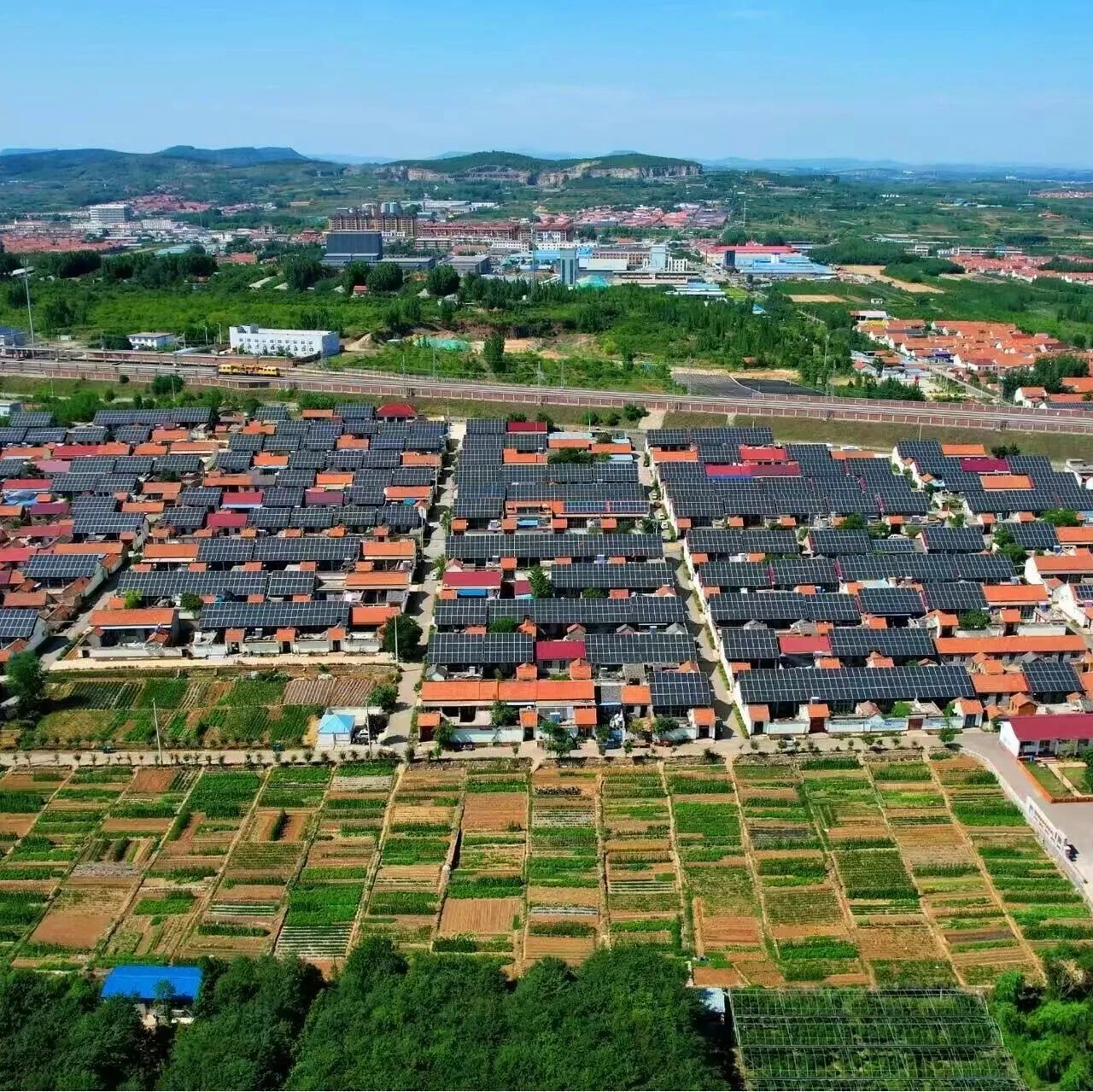
全国首单户用分布式光伏ABS挂牌上市,新能源行业资产证券化提速
第一财经· 2026-03-17 14:04
Core Viewpoint - The article discusses the listing of the first asset-backed securities (ABS) in China based on household distributed photovoltaic assets, which aims to optimize the asset-liability structure and financing channels for companies in the renewable energy sector [3][4]. Group 1: Asset-Backed Securities Overview - The ABS issued by Taiping Asset is the first of its kind in the country, backed by over 28,000 household distributed photovoltaic power stations across 10 provinces, with a total installed capacity of 990.34 MW and an issuance scale of 1.216 billion yuan [3][4]. - The primary purpose of issuing ABS is to "activate" stable operating power stations without affecting company control, thereby reducing asset-liability ratios and broadening financing channels [3]. Group 2: Industry Challenges and Responses - The renewable energy sector, particularly photovoltaic power, is facing significant challenges, including rising asset-liability ratios and tightening external financing, exacerbated by a prolonged period of losses among leading companies since Q4 2023 [6]. - The conversion of stable operating power stations into liquidity through asset securitization is seen as a key method for companies to optimize their asset-liability structures and expand financing options [6]. Group 3: Expansion of Asset Securitization in the Industry - There has been a noticeable acceleration in asset securitization within the renewable energy sector, with various types of underlying assets being explored beyond just photovoltaic and wind power, including hydropower and thermal power [8]. - Notable examples include the issuance of ABS by Envision Group and Sichuan Energy Development Group, with scales of 2.85 billion yuan and 2.5449 billion yuan respectively, showcasing the growing trend of securitization in the energy sector [8].