新石器

Search documents
富临运业(002357)事件点评:乘风而起 携手新石器开启无人驾驶试运营
Xin Lang Cai Jing· 2026-01-30 00:29
Group 1 - The company has officially launched its first unmanned vehicle for trial operation, marking a significant breakthrough in its unmanned driving business [1] - The public transport business remains stable, providing robust revenue support through strategies like "transportation and tourism integration" and the introduction of "point-to-point" convenient bus services [2] - The company is positioned to benefit from the commercialization of unmanned driving, as it collaborates with leading L4 unmanned delivery vehicle companies to expand its service boundaries [2] Group 2 - The company is recognized as a leader in public transport in Southwest China, and the current period is seen as a window for the commercialization of unmanned driving [3] - The partnership with New Stone Technology for unmanned delivery trial operations is viewed as an early exploration with cautious optimism regarding its commercial prospects [3]

富临运业:事件点评乘风而起,携手新石器开启无人驾驶试运营-20260130
Jinyuan Securities· 2026-01-30 00:25
Investment Rating - The report maintains a rating of "Accumulate" for the company [2] Core Viewpoints - The company is positioned as a leading player in the road passenger transport sector in Southwest China, with stable core business operations providing robust revenue support [8] - The collaboration with New Stone Technology marks a significant step towards commercializing autonomous driving, potentially opening a "second growth curve" for the company [4][8] - The company has successfully launched its first autonomous vehicle for trial operations, indicating a breakthrough in its autonomous driving business [2] Financial Data Summary - Current Price: 12.86 CNY - Market Capitalization: 4,031.47 million CNY - Gross Margin: 18.63%, significantly higher than the industry average of 12.19% [1] - Net Margin: 25.95%, compared to the industry average of 3.47% [1] - Return on Equity: 9.38%, well above the industry average of 0.85% [1] - Debt to Asset Ratio: 38.92%, lower than the industry average of 40.32% [1] - Dividend Yield: 0.93%, compared to the industry average of 0.11% [1] - Price-to-Earnings Ratio: 21.45, contrasting with the industry average of -44.55 [1] - Price-to-Book Ratio: 2.34, slightly lower than the industry average of 2.90 [1] Profit Forecast and Investment Suggestions - The company is expected to generate main revenue of 85,583.94 million CNY in 2024, with a year-on-year growth of -1.05% [6] - The net profit attributable to the parent company is projected to be 12,223.13 million CNY in 2024, reflecting a year-on-year decline of 18.77% [6] - Earnings per share (EPS) is forecasted to be 0.39 CNY in 2024, with a gradual increase to 0.71 CNY by 2027 [6]
菜鸟无人车并入九识RoboVan生态
Hua Er Jie Jian Wen· 2026-01-29 10:43
Core Viewpoint - After nearly 10 years of investment in autonomous vehicle development, the company has made a significant decision to integrate its autonomous vehicle business with Jiushi Intelligent, marking the beginning of deep collaboration in the autonomous vehicle sector [1][3]. Group 1: Strategic Integration - The company has injected its autonomous vehicle business and made a cash investment to become a shareholder of Jiushi Intelligent, supporting the creation of the RoboVan super carrier [1]. - Following this integration, the company will no longer directly produce and sell autonomous vehicles but will leverage its logistics scenarios and ecosystem advantages to enhance the application of autonomous vehicles in logistics [3]. - Jiushi Intelligent will operate under a dual-brand strategy, with the "Cai Niao Unmanned Vehicle" brand being authorized for use by Jiushi, while maintaining its identity as an Alibaba-invested incubated enterprise [3]. Group 2: Market Position and Product Development - The company has achieved breakthroughs in 2024, transitioning its autonomous vehicle work scenarios from closed and semi-closed areas to public roads for last-mile delivery, with its L4-level autonomous vehicle GT entering mass production [4]. - The company has launched new models, including the upgraded GT Pro and the budget-friendly GT-Lite, and has been actively involved in various applications such as heavy load, short-distance, cold chain delivery, and police patrols [4]. - Jiushi Intelligent, established in 2021, focuses on L4 RoboVan and aims to have over 16,000 autonomous vehicles operating by the end of 2025, covering more than 300 cities in China [4][5]. Group 3: Industry Outlook - The demand for logistics autonomous vehicles is significant, with the potential to reduce costs and improve efficiency for express logistics companies, applicable in various fields such as express delivery, takeaway, B2C retail, and fresh delivery [6]. - The average price of mainstream logistics autonomous vehicles is around 50,000 yuan, with a business model based on vehicle sales and FSD service fees [6]. - The integration of the two companies is seen as a key milestone in moving from "single-point breakthroughs" to "system integration" in the autonomous driving industry, with expectations for a win-win development in different market dimensions [6].
菜鸟入股九识智能 无人车市场“大变天”?
Xin Lang Cai Jing· 2026-01-29 09:08
Core Insights - The unmanned logistics vehicle industry is entering a critical phase where ecological integration is becoming the new core competitive point, replacing the previous focus on single technology competition [1] Company Developments - Jushi Intelligent and Cainiao have announced a deep strategic integration in the unmanned vehicle business, with Cainiao becoming a shareholder of Jushi through cash investment and business injection [1][2] - Jushi will receive the "Cainiao Unmanned Vehicle" brand authorization and will operate under a dual-brand model, while Cainiao will focus on enhancing the application of unmanned vehicles in logistics without producing or directly selling unmanned vehicles [1][2] - The management and technical leaders from Cainiao Unmanned Vehicles will join Jushi to participate in future strategic planning and operational management [1] Market Positioning - Jushi Intelligent will focus on developing fully self-researched autonomous driving technology and providing comprehensive smart transportation solutions, while Cainiao Unmanned Vehicles will concentrate on deep service in specific logistics scenarios [2] - The combined unmanned vehicle fleet of Jushi and Cainiao will exceed 20,000 units, making it the largest RoboVan fleet in the country [2] - Jushi has deployed unmanned vehicles in over 300 cities, while Cainiao operates in over 200 cities for safety operations and support [2] Industry Trends - The unmanned logistics vehicle industry is experiencing rapid development driven by policy, technology, and market resonance, with a clear differentiation in market competition emerging [3] - By 2025, the global unmanned logistics vehicle market is expected to exceed 35,000 units in delivery volume, with China contributing significantly to this growth [3] - Major players in the industry include Jushi Intelligent and New Stone, both delivering over 10,000 units, while Cainiao and White Rhino have delivered over 4,000 and 2,000 units, respectively [3] Financial Considerations - Despite the industry's high growth, profitability remains a common challenge, with RoboVan offering a cost-effective solution compared to traditional delivery models [4] - RoboVan's operational advantages, such as city-based operations and mature technology, allow for a significant reduction in costs, potentially helping to expand the user base and achieve profitability [4] - The market for RoboVan is expected to grow significantly, with micro vans in China being a core replacement market, and unmanned devices projected to account for 20% of urban logistics equipment shipments by 2030 [4]
2026年Robovan深度报告汇报
2026-01-26 02:49
Summary of the Conference Call on RoboOne Industry Industry Overview - The RoboOne (LOB ONE) market is experiencing explosive growth, with leading companies expected to deliver 50,000 units in 2024, significantly up from over 20,000 units last year, primarily for urban internal delivery applications in complex environments similar to Robotaxi technology [1][2] - The regulatory policies pose a major challenge for the development of LOB ONE, with current licensing management being relatively ambiguous, and stricter regulations in the future potentially impacting industry expansion [1][4] Key Players and Competitive Landscape - Desay SV is noted for its full-stack self-research capabilities, from chip pre-controllers to vehicle operations, providing a latecomer advantage [1][5] - Youjia Innovation, a commercial vehicle autonomous driving operator, is actively expanding its orders [1][5] - Jingwei Hirain has a strong partnership with Baixin Niu, excelling in remote control and line control hardware capabilities [1][5] - Major competitors in the RoboOne field include Jiushi Intelligent, New Era, and Baixin Niu, with Jiushi Intelligent rapidly increasing its market share through partnerships with several express delivery companies [20][25] Market Applications and Trends - RoboOne is primarily applied in the express delivery sector, with approximately 27,000 units delivered domestically from January to November 2025, nearing a total of 30,000 units for the year [1][6] - Future penetration into urban delivery markets for fast-moving consumer goods (FMCG), durable goods warehousing, and chain restaurants is anticipated [1][6] - The express delivery industry is the preferred landing scene for RoboOne due to its large scale and cost-reduction pressures, with a potential market size of 20 billion yuan in 2024, expected to grow to 60 billion yuan by 2030 [3][19] AI Empowerment and Efficiency - AI empowerment is enabling the transportation industry to enhance efficiency at the hardware level, particularly for B-end scenarios with complex but predictable demands, driving urban delivery market development [7][9] - The current AI technology upgrade is significantly improving B-end transportation efficiency compared to the previous 4G mobile internet wave, which primarily addressed C-end issues [8][10] Market Size and Potential - The domestic urban delivery market exceeds 1 trillion yuan, with 64% attributed to branch transportation, and key components include FMCG delivery (30%) and cross-regional e-commerce (17%) [15] - The demand for RoboOne is estimated at 15 million units, with a potential market space of approximately 730 billion yuan if fully replacing existing vehicles, indicating a total market scale exceeding 1 trillion yuan when combined with the express delivery sector [23][24] Challenges and Future Outlook - The development of LOB ONE faces challenges from regulatory pressures, with the current rapid expansion of major players dependent on policy changes [4][21] - The ideal application scenarios for RoboOne include e-commerce express delivery, FMCG delivery, durable goods warehousing, and chain restaurants, which are characterized by fixed-route transportation without door-to-door service requirements [18][17] - The express delivery sector's economic pressures and the potential for significant cost reductions (over 50%) through the use of RoboOne vehicles are driving strong demand from B-end enterprises [19] Conclusion - The RoboOne industry is poised for substantial growth, driven by technological advancements, regulatory developments, and increasing demand for cost-effective delivery solutions across various sectors. The landscape is competitive, with several key players emerging as leaders in the market.
安全行驶破100万公里,新石器无人车联合南通找家纺打造“无人驾驶第一产城”
Yang Zi Wan Bao Wang· 2026-01-24 12:43
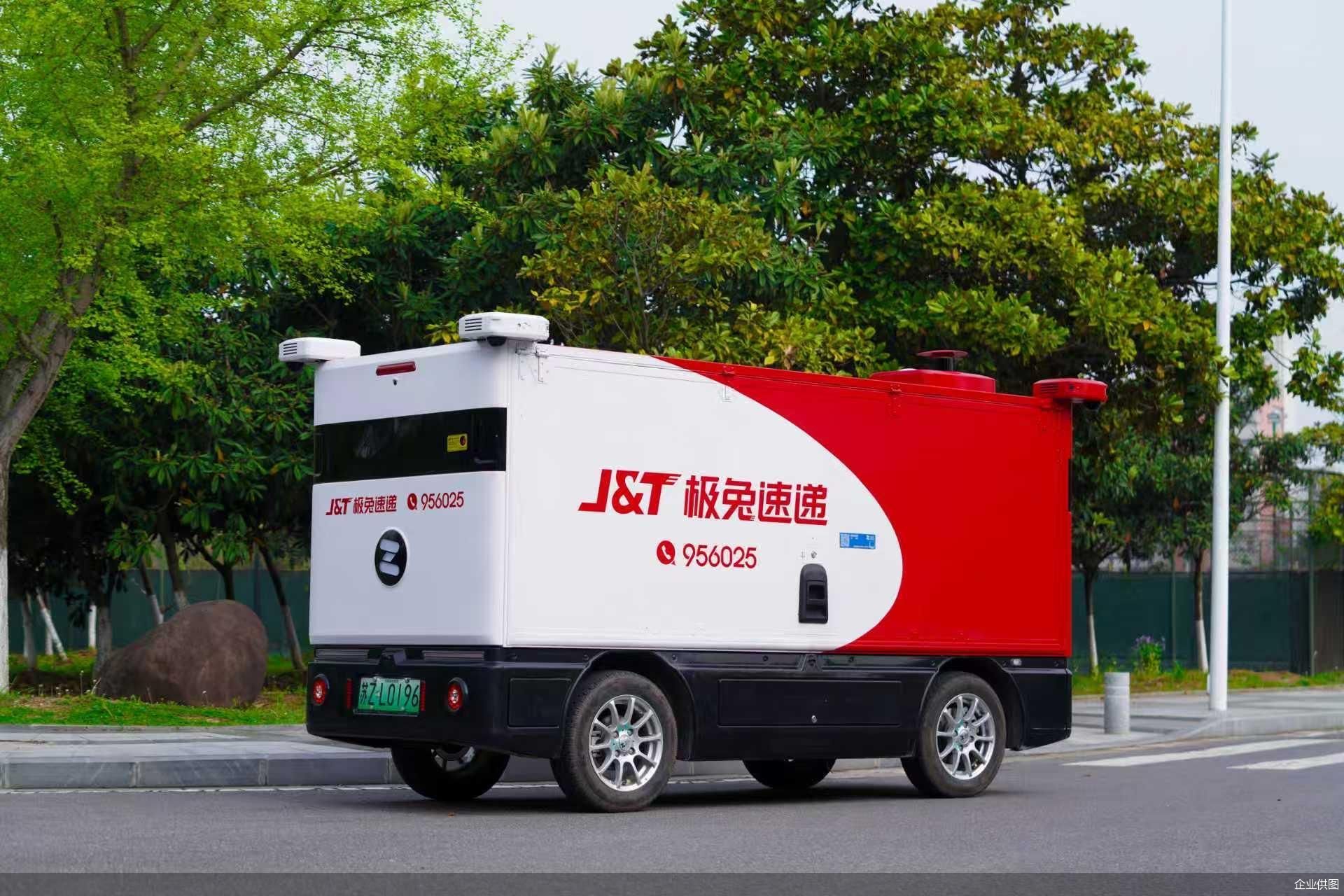
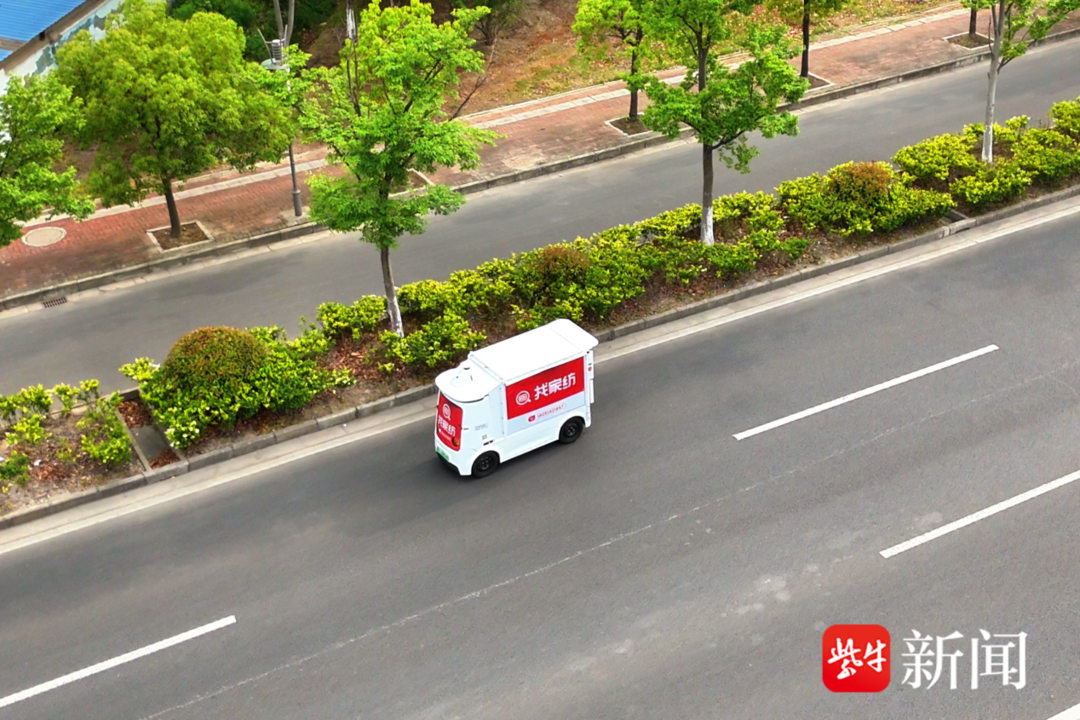
1月24日,江苏省南通市通州区举行无人驾驶成果发布暨产业生态共建大会。新石器无人车与南通云尚找家纺电子商务有限公司(以下简称"找家纺")共同 宣布,双方联合部署的L4级无人车累计安全行驶里程突破100万公里。这一成果标志着南通市通州区在无人驾驶规模化商用落地领域跻身全国第一梯队, 成为"自动驾驶第一产城",为家纺产业物流数字化转型树立了可复制、可推广的行业标杆。 作为深耕产业数字化基建的家纺服务商,找家纺于2025年3月率先引入新石器无人车,用于当地家纺产业带内的货物配送。在与找家纺的深度合作中,新 石器不仅提供了先进的无人配送车,更立足通州家纺产业"小批量、多频次"的核心物流需求,提供全栈式智能配送解决方案,助力找家纺构建高效、智 能、绿色的智能配送系统。 百万公里的安全行驶,是双方规模化、常态化运营的重要成果。截至目前,找家纺累计投入超260辆新石器无人车,单日行驶里程超1.8万公里,单日运送 家纺商品超10万件。双方共同构建起覆盖3066条线路、3485个服务点位的全链路产业带物流网络,为260余家家纺工厂、380余家电商企业提供精准配送服 务。 为进一步破解家纺行业的物流痛点,新石器与找家纺联合打造了 ...

2026年春节无人车接力快递小哥“站岗” 运输成本下降5成
Bei Jing Shang Bao· 2026-01-23 06:28
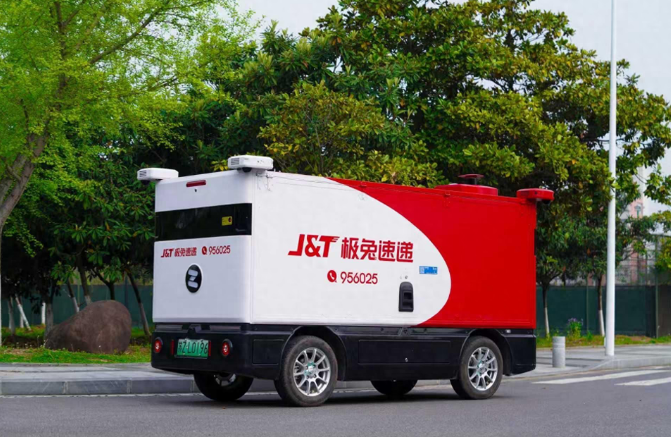
Core Insights - The logistics industry is increasingly adopting unmanned vehicles to address the surge in delivery demands during the Spring Festival, significantly reducing delivery times and costs [1][4][6] Group 1: Unmanned Vehicle Implementation - Several logistics companies, including Jitu, Zhongtong, and JD Logistics, are accelerating the deployment of unmanned vehicles to assist in delivery operations, particularly during peak seasons like the Spring Festival [1][8] - Unmanned vehicles are expected to enhance delivery efficiency, with estimates indicating a reduction of over 3 hours in delivery times and a 50% decrease in transportation costs [4][7] Group 2: Increased Delivery Volume - The Spring Festival is seeing a notable increase in the volume of heavy packages and gift boxes, with some logistics points expecting daily package volumes to rise by approximately 1,000 compared to previous years [3][6] - The characteristics of this year's delivery peak include a more prolonged high volume period and a greater variety of package types, which places higher demands on logistics capabilities [3][6] Group 3: Cost Management Strategies - To manage the increased workload during the Spring Festival, logistics companies are employing strategies such as flexible scheduling and the use of unmanned vehicles for short-distance transport, which helps alleviate pressure on human resources [4][6] - Major logistics firms like SF Express and JD Logistics are implementing resource adjustment fees during the peak season to manage operational costs effectively [6] Group 4: Market Trends and Future Outlook - The trend of utilizing unmanned vehicles is expected to continue growing, with projections indicating that over 1,000 unmanned vehicles will be deployed during the Spring Festival to support various sectors, including logistics, retail, and healthcare [10] - The overall operational efficiency of logistics companies is anticipated to improve, with JD Logistics reporting a 21% reduction in transportation costs since the introduction of unmanned vehicles [9]


今年春节无人车接力快递小哥“站岗” 运输成本下降五成
Bei Jing Shang Bao· 2026-01-22 23:22
Core Viewpoint - The logistics industry is increasingly adopting unmanned vehicles to address the challenges posed by the upcoming Spring Festival, including the surge in heavy packages and rising operational costs, with companies like Jitu, Zhongtong, and JD Logistics leading the way in this transformation [1][6]. Group 1: Unmanned Vehicle Implementation - Unmanned vehicles are being deployed to assist delivery personnel, significantly reducing delivery times by over 3 hours and cutting transportation costs by 50% [1][6]. - Companies are scaling up the use of unmanned vehicles, with Jitu, Zhongtong, and JD Logistics expanding their applications in various scenarios, including industrial zones and campuses [7][8]. - JD Logistics has reported a 21% reduction in transportation costs and a 1-hour decrease in average delivery time since implementing unmanned vehicles [7]. Group 2: Increased Demand During Spring Festival - The Spring Festival is expected to see a notable increase in package volume, with some logistics points anticipating a rise of approximately 1,000 packages per day compared to previous years [2][3]. - The characteristics of this year's Spring Festival include a more prolonged peak period and a greater variety of larger packages, which places higher demands on logistics capabilities [2][4]. - The introduction of unmanned vehicles is seen as a solution to manage the increased workload during this busy season, allowing for more efficient operations [5][6]. Group 3: Cost Management Strategies - Logistics companies are adjusting their operational strategies to manage increased costs during the Spring Festival, including hiring temporary workers and implementing resource adjustment fees for heavier packages [4][6]. - The use of unmanned vehicles is expected to alleviate some of the financial pressures by reducing the need for dedicated drivers and vehicles for short-haul tasks [5][6]. - Unmanned vehicles are projected to save approximately 0.1 yuan per package in transportation costs, contributing to overall cost efficiency [6].
今年春节无人车接力快递小哥“站岗”
Bei Jing Shang Bao· 2026-01-22 15:57
Core Viewpoint - The logistics industry is increasingly adopting unmanned vehicles to address the challenges posed by the upcoming Spring Festival, including the surge in heavy packages and rising operational costs, with companies like Jitu, Zhongtong, and JD Logistics leading the way in this transformation [1][8]. Group 1: Unmanned Vehicle Implementation - Unmanned vehicles are being deployed to assist delivery personnel, significantly reducing delivery times by over 3 hours and cutting transportation costs by 50% [1][5][7]. - Companies are scaling up the use of unmanned vehicles, with Jitu, Zhongtong, and JD Logistics integrating them into their operations for short-distance transportation tasks [8][9]. - JD Logistics has reported a 21% reduction in transportation costs and a 1-hour decrease in average delivery time since implementing unmanned vehicles [8]. Group 2: Increased Demand During Spring Festival - The Spring Festival is expected to see a notable increase in package volume, with some logistics points anticipating a rise of approximately 1,000 packages per day compared to previous years [3][4]. - The characteristics of this year's Spring Festival include a more prolonged peak period and a greater variety of larger packages, which places higher demands on logistics capabilities [3][4]. - E-commerce platforms are ramping up promotions leading into the Spring Festival, further intensifying the pressure on logistics networks to manage increased volumes effectively [3]. Group 3: Cost Management Strategies - Logistics companies are implementing flexible scheduling and human-vehicle collaboration strategies to manage the increased workload during the Spring Festival [4][6]. - Temporary hiring of drivers and workers is common during peak periods to handle the surge in package volume, leading to increased operational costs [6]. - Companies like SF Express and JD Logistics are introducing resource adjustment fees during the Spring Festival to manage the heightened demand and associated costs [6].

2026年春节,无人车接力快递小哥“站岗”
Bei Jing Shang Bao· 2026-01-22 13:08
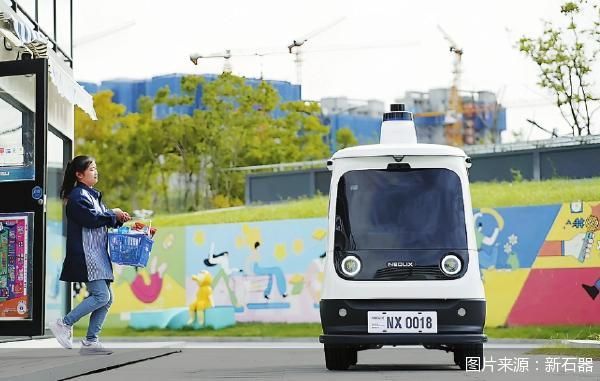
Core Viewpoint - The logistics industry is increasingly adopting unmanned vehicles to address the challenges posed by the surge in delivery volumes during the Spring Festival, significantly reducing delivery times and transportation costs [1][8]. Group 1: Unmanned Vehicle Implementation - Several logistics companies, including Jitu, Zhongtong, and JD Logistics, are accelerating the large-scale application of unmanned vehicles to assist in delivery operations during the Spring Festival [1][9]. - Unmanned vehicles are expected to reduce delivery times by over 3 hours and cut transportation costs by 50% [1][8]. - JD Logistics has deployed unmanned vehicles in cities like Shenzhen, Wuhan, and Guangzhou, achieving a 21% reduction in transportation costs and a 1-hour decrease in average delivery time for couriers [9]. Group 2: Increased Delivery Volume and Challenges - The average daily package volume at logistics points is expected to increase significantly during the Spring Festival, with some points anticipating an additional 1,000 packages per day compared to previous years [3][4]. - The characteristics of this year's delivery surge include a more prolonged peak period and a greater variety of larger packages, which increases the pressure on logistics points [3][4]. - To manage the increased workload, logistics points are employing strategies such as "human-vehicle collaboration" and flexible scheduling, utilizing unmanned vehicles for short-distance transport tasks [4][6]. Group 3: Cost Management and Adjustments - During the Spring Festival, logistics companies often hire temporary workers to cope with the increased volume, leading to higher operational costs as many businesses shut down for the holiday [6][7]. - Companies like SF Express and JD Logistics are implementing resource adjustment fees for heavy packages during the peak season to manage costs [7]. - The introduction of unmanned vehicles is helping to alleviate some of the operational pressures by reducing the need for dedicated drivers and allowing couriers to focus on service quality [8][9]. Group 4: Market Demand for Unmanned Vehicles - The demand for unmanned vehicles in the logistics sector is strong, with companies like New Stone Technology deploying over 16,000 unmanned vehicles, a significant increase from the previous year [10][11]. - Unmanned vehicles are being utilized not only for package delivery but also in various sectors such as retail and healthcare, indicating a broadening application of this technology [11].