陆家嘴

Search documents
REITs向商业不动产扩容
Jing Ji Ri Bao· 2026-02-23 22:15
Core Viewpoint - The first batch of commercial real estate REITs has been officially submitted for approval, marking the expansion of China's REITs market into the commercial real estate sector [1] Group 1: Market Development - The commercial real estate REITs are designed to generate stable cash flows through holding commercial properties and distributing profits to fund shareholders [1] - The REITs market in China is evolving with a multi-tiered structure, including infrastructure REITs, inter-institutional REITs, and commercial real estate REITs [1] - The submission of the first batch of commercial real estate REITs signifies a key expansion from infrastructure to commercial real estate, aligning with policies aimed at revitalizing existing assets and increasing effective investment [1] Group 2: Project Details - The first batch includes 10 commercial real estate REITs, with 9 listed on the Shanghai Stock Exchange and 1 on the Shenzhen Stock Exchange, featuring participants from state-owned enterprises, leading local firms, quality private enterprises, and foreign companies [2] - The total fundraising target for the first batch of commercial real estate REITs is 37.7 billion yuan, with notable projects including CICC Vipshop REIT aiming to raise 7.47 billion yuan and Guotai Junan Sand Boat REIT targeting 5.064 billion yuan [2] - The financial advisory institutions involved in these REITs include top securities firms such as CITIC Securities, Guotai Junan, Huatai United, CICC, and Shenwan Hongyuan [2] Group 3: Financial Considerations - Compared to infrastructure REITs, commercial real estate REITs have a more market-driven rental income and asset appreciation logic, with cash flows influenced directly by economic cycles, consumer trends, and regional competition [3] - The China Securities Regulatory Commission (CSRC) emphasizes the importance of developing commercial real estate REITs as a means to support a new model of real estate development through market mechanisms [3] - Recent regulatory updates and guidelines aim to ensure the smooth launch of commercial real estate REITs and promote the healthy development of the REITs market [3]
陆家嘴财经早餐2026年2月23日星期一
Sou Hu Cai Jing· 2026-02-23 00:50
Group 1 - The global market is focused on the new 15% tariffs announced by President Trump, which may face legal challenges, while bilateral trade agreements remain valid [4][10] - The A-share market is set to open for trading after the Spring Festival, with public funds prepared for investment, anticipating a balanced market structure with a focus on "technology growth" and "Chinese advantages" [5] - The Spring Festival box office has exceeded 5 billion yuan, marking the eighth consecutive year of over 100 million viewers [6] Group 2 - The Chinese government is pushing for modernization in agriculture, emphasizing the integration of various sectors and the development of technology-driven agriculture [2] - The steel industry in China has achieved significant reductions in energy consumption and emissions, with over 80% of crude steel capacity meeting ultra-low emission standards [6] - The AI industry is experiencing strong demand, with companies like SK Hynix and Huagong Technology reporting full order books and operational capacity [8] Group 3 - The global investment landscape is seeing a surge in capital inflow into Latin American markets, with the MSCI Emerging Markets Latin America Index reaching an eleven-year high [11] - The Chinese yuan has been appreciating against the US dollar, driven by favorable external conditions and increased corporate demand for currency exchange [11]


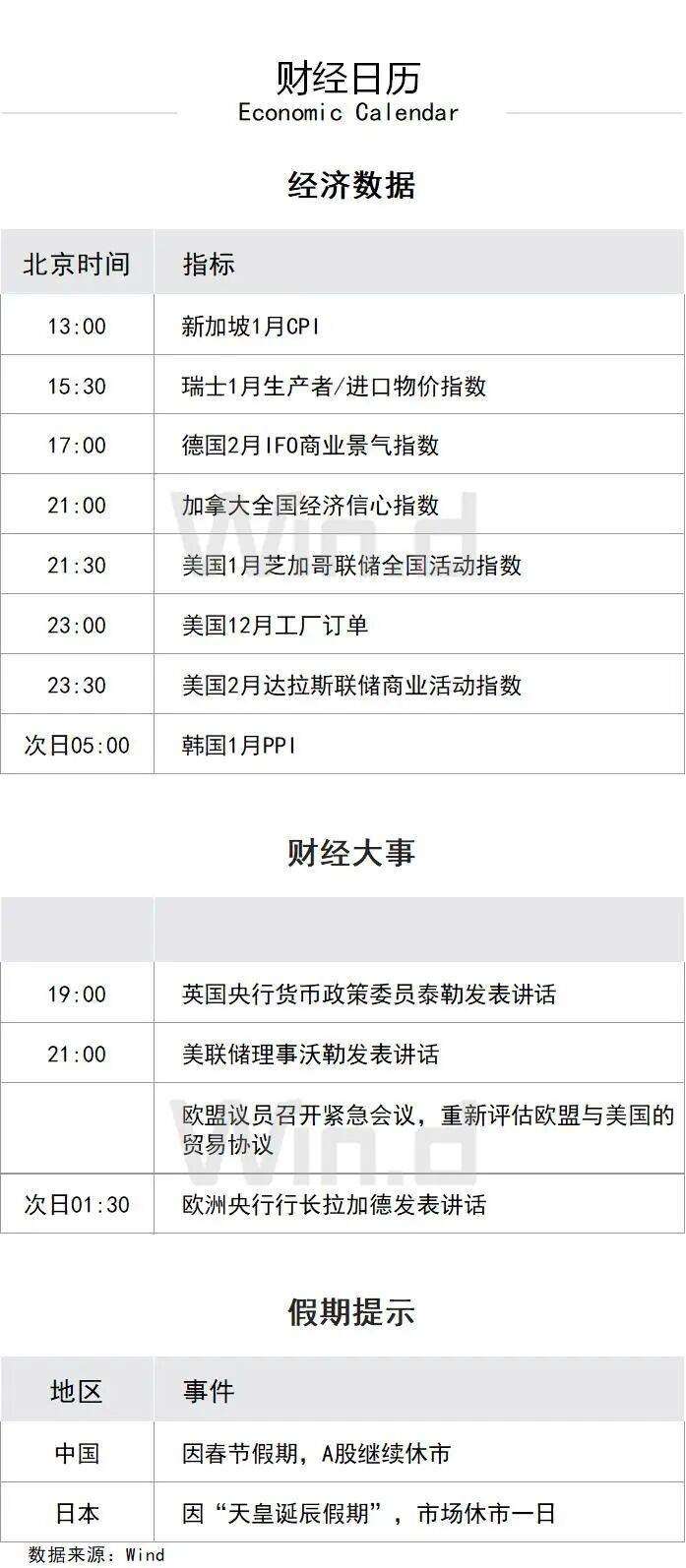
陆家嘴财经早餐2026年2月19日星期四
Sou Hu Cai Jing· 2026-02-18 23:30
Group 1 - Strong demand for green, smart, and healthy consumption during the Spring Festival holiday, with sales of smart wearable devices increasing by 130%, smart blood pressure monitors and blood glucose meters up over 60%, and organic food sales rising by 52% [1] - The U.S. Federal Reserve's January meeting minutes reveal significant divisions among decision-makers regarding future interest rate directions, with some members discussing the possibility of rate hikes if inflation remains above 2% [1] - High-profile political changes in Japan as Fumio Kishida is confirmed as the new Prime Minister, with expectations to focus on accelerating budget reviews and implementing the U.S.-Japan trade agreement [1] Group 2 - The Spring Festival holiday sees a booming market for holiday consumption and tourism services, with regulatory measures in place to stabilize prices in accommodation, dining, and other sectors [2] - Despite not being listed on the capital market, the founder of Lu Hua Group has been active in the A-share market, investing approximately 400 million yuan and 1 billion yuan in recent private placements [2] - The appointment of a "post-00" executive at Xiao Fang Pharmaceutical, with the nomination of a 24-year-old as a non-independent director, highlights a generational shift in corporate leadership [2] Group 3 - The China Real Estate Market Outlook report predicts a 6.2% year-on-year decline in new residential sales area in 2026, with a narrowing decline compared to 2025 [3] - Deloitte forecasts a 26% growth in the global semiconductor industry by 2026, reaching a record high of $975 billion, driven by the development of AI infrastructure [3] Group 4 - Barclays Bank reports that the AI and robotics market is expected to grow to a trillion-dollar scale by 2035, marking it as a key investment theme for the next decade [5] - UBS predicts that 2026 will be a critical turning point for humanoid robots, with global shipments expected to reach 30,000 units and the Chinese market surpassing 8.5 billion yuan [5] - The AI boom is driving unprecedented electricity demand, with gas turbine manufacturers experiencing a backlog of orders extending to 2030 [5] Group 5 - The global AI unicorn Anthropic anticipates paying $80 billion in sales shares to cloud service providers by 2029, a significant increase from $1.3 million in 2024 [7] - Bayer proposes a $7.25 billion settlement in the U.S. related to its flagship herbicide Roundup, addressing over 200,000 cancer-related lawsuits [7] - Volkswagen's marine engine and heat pump production division, Everllence, is attracting interest from top private equity firms, with a potential valuation between €5 billion and €6 billion [7]
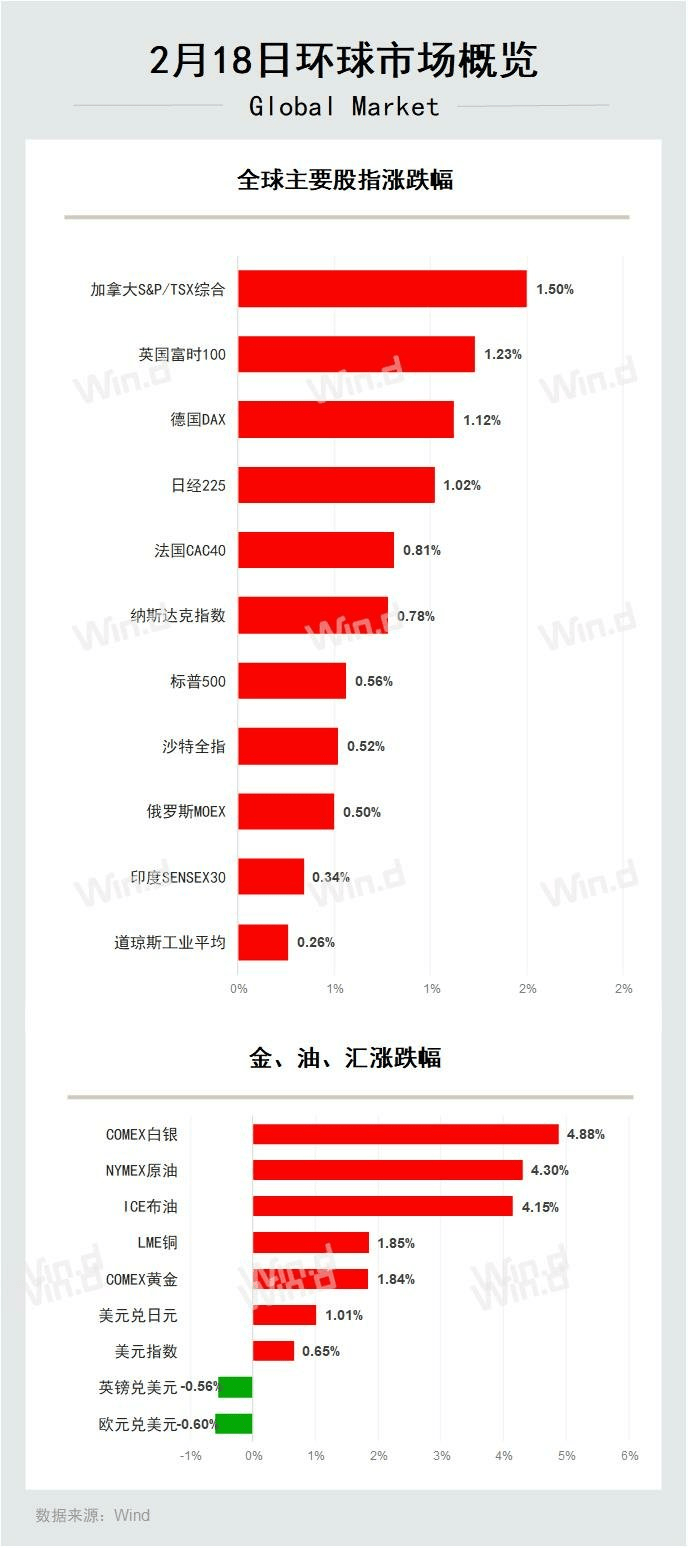
陆家嘴财经早餐2026年2月16日星期一
Sou Hu Cai Jing· 2026-02-15 23:34
Group 1: Economic Policies and Initiatives - The article emphasizes the importance of domestic demand in driving economic growth, with a focus on building a strong domestic market and promoting consumption and investment [1] - A special action plan to boost consumption will be implemented, alongside a plan to increase the income of urban and rural residents [1] - The government plans to optimize the use of local government special bonds and enhance the role of new policy financial tools to stimulate private investment [1] Group 2: International Relations and Travel Policies - China will implement a visa-free policy for ordinary passport holders from Canada and the UK starting February 17, 2026, facilitating business, tourism, and family visits for up to 30 days [2] Group 3: Financial Market Developments - Guotai Junan LOF has introduced a compensation plan for investors affected by valuation adjustments, with over 90% of investors expected to receive full compensation [2] - The Chinese financial regulatory authorities have launched a series of measures to optimize refinancing, signaling a supportive environment for brokerage and investment banking businesses [4] Group 4: Consumer Trends and Market Dynamics - Several listed companies in the food and beverage sector are preparing for the Chinese New Year by offering pre-packaged meal options, indicating a trend towards convenience in consumer dining [5] - The demand for gold has surged during the holiday season, with a significant increase in customer traffic at gold stores in Shenzhen, reflecting a robust consumer appetite for luxury goods [13]
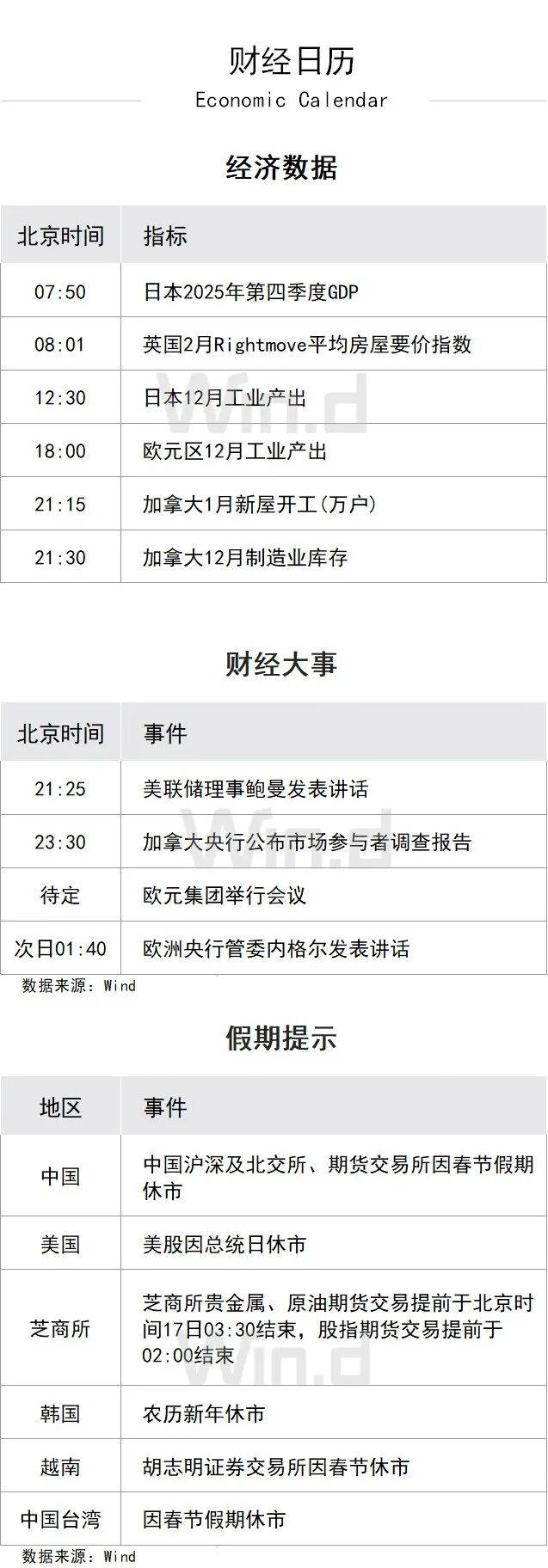
陆家嘴财经早餐2026年2月14日星期六
Sou Hu Cai Jing· 2026-02-14 01:14
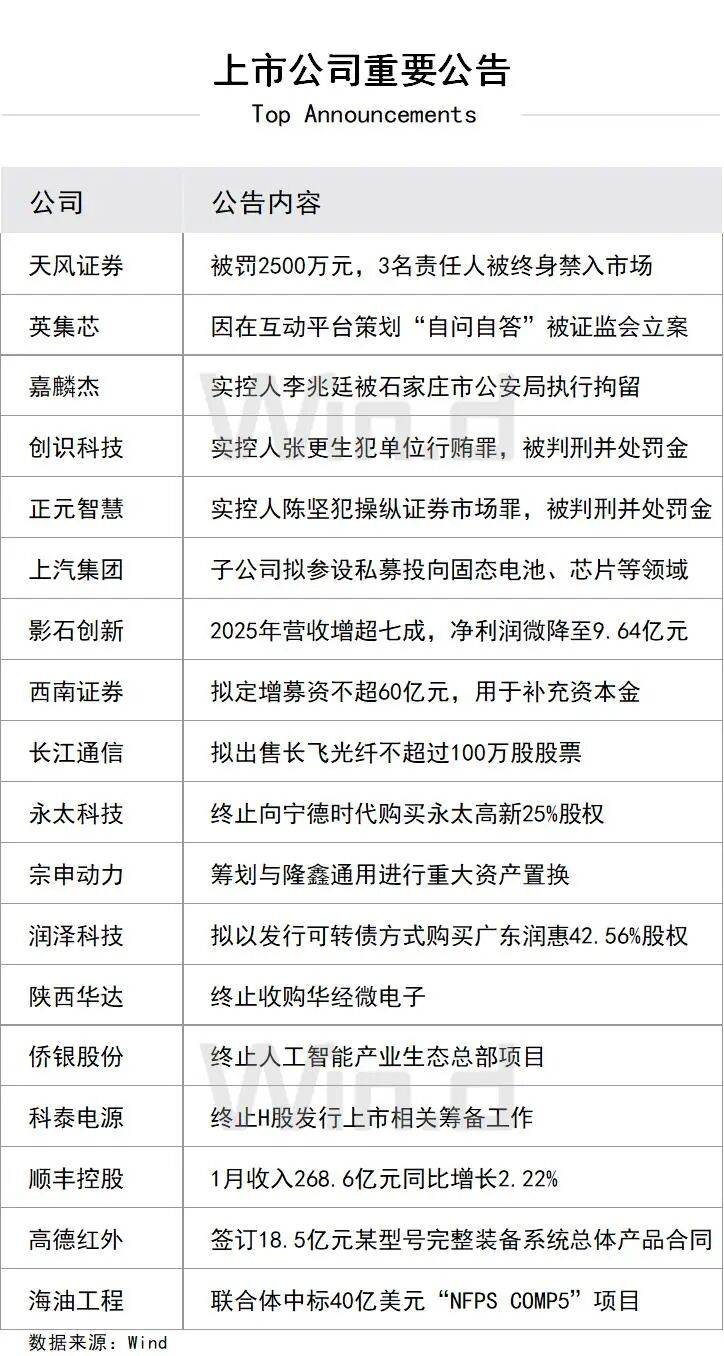
Financial Data - In January, China's social financing increased by 7.22 trillion yuan, up by 166.2 billion yuan year-on-year, while RMB loans rose by 4.71 trillion yuan, with a total balance of 276.62 trillion yuan, reflecting a year-on-year growth of 6.1% [1] - The weighted average interest rate for new corporate loans in January was approximately 3.2%, down by about 20 basis points year-on-year, while the rate for personal housing loans remained stable at 3.1% [3] - The M2 money supply grew by 9% year-on-year, and M1 increased by 4.9% [1] Real Estate Market - Data from the National Bureau of Statistics indicated that the month-on-month decline in second-hand housing prices in 70 cities narrowed, with first, second, and third-tier cities seeing reductions of 0.4, 0.2, and 0.1 percentage points respectively [1] - Year-on-year, new and second-hand housing prices in 70 major cities continued to decline, with the rate of decrease further widening [1] Stock Market Performance - The A-share market showed a positive trend in the post-Spring Festival period, with the Shanghai Composite Index rising by 4.85% in the first five trading days of 2024, marking the highest increase in nearly a decade [2] - The Shanghai Composite Index closed down by 1.26% at 4082.07 points on the last trading day before the Spring Festival, with a total market turnover of 2 trillion yuan [4] Regulatory Developments - The China Securities Regulatory Commission (CSRC) imposed strict penalties on Tianfeng Securities for illegal financing and information disclosure violations, with fines totaling 25 million yuan [4] - The State Administration for Market Regulation and the Ministry of Commerce announced enhanced supervision of cross-border e-commerce retail imports, focusing on recall regulations [3] Corporate News - Meituan projected a loss of over 23 billion yuan for the previous year, with continued losses expected in the first quarter of this year, primarily due to a significant decline in operating profit in its core local business segment [6] - The Hong Kong Stock Exchange is considering expanding the scope of confidentiality applications beyond technology and biotech sectors to include traditional industries [5]




中国房地产行业展望,2026 年 2 月
Zhong Cheng Xin Guo Ji· 2026-02-13 08:33
Investment Rating - The report maintains a negative outlook on the real estate industry, indicating a slight improvement in overall credit quality over the next 12 to 18 months, but it has not yet reached a stable level [4][6]. Core Insights - The real estate industry in China is expected to continue facing downward pressure on sales and investment in 2026, although the pace of decline is anticipated to slow down. The policy environment is likely to shift towards a more normalized implementation phase, with a potential turning point in unsold housing inventory [4][6]. - The report highlights that while the sales scale of the real estate market has seen a narrowing decline, the industry remains in a deep adjustment phase, with significant volatility expected among mid-tier and lower-tier companies based on their resource acquisition and inventory management capabilities [4][6]. - The financing policies have transitioned from short-term emergency measures to a long-term development mechanism, with a cautious approach expected in 2026. The report emphasizes the need to monitor the short-term repayment pressures faced by non-state-owned enterprises [25][34]. Summary by Sections Industry Fundamentals - The real estate sector has been in a state of adjustment since 2025, with a reduction in policy intensity compared to the previous year. The sales scale has contracted less sharply, and inventory reduction has made some progress, indicating a phase of stabilization [8][10]. - The report notes that the demand for housing is expected to weaken due to demographic trends, with a declining birth rate and an increasing proportion of elderly individuals in the population [10][11]. - The average disposable income of residents increased by 5.0% in 2025, but the overall purchasing confidence remains low due to the industry's downturn and uncertainties regarding housing delivery [10][11]. Sample Company Performance - The report analyzes the performance of the top 30 real estate companies, noting that their sales volume has decreased, but the rate of decline has slowed. The overall industry is entering a phase of bottoming out and differentiation [35][36]. - The average total assets of sample companies have continued to decline, but the rate of decline has shown signs of easing. The report indicates that the focus is shifting from scale reduction to optimizing the quality of existing assets [39][40]. - The average gross profit margin has shown initial signs of stabilization, with some companies demonstrating strong recovery capabilities in profitability [35][44]. Policy Environment - The report outlines that the policy framework for the real estate industry in 2025 focused on stabilizing the market, promoting transformation, and preventing risks, with a notable reduction in short-term demand stimulation measures [9][18]. - The financing environment has shifted towards a more structured approach, with the "white list" policy becoming a regular feature, aimed at avoiding excessive short-term stimulus [25][34]. - The report anticipates that the financing policies will remain cautious in 2026, with a focus on long-term stability and risk prevention [25][34].
陆家嘴国泰人寿80后董事长王岗上位,业绩报喜难掩多项指标滑坡
Xin Lang Cai Jing· 2026-02-11 15:36
Group 1 - The insurance industry is experiencing a wave of personnel changes, reflecting a deep transformation from scale expansion to high-quality development [2] - The new chairman of Lujiazui Cathay Life, Wang Gang, is notably younger and has a diverse background in various financial sectors, although he lacks direct insurance experience [3][4] - The management changes at Lujiazui Cathay Life indicate a strengthening control by the "Lujiazui system," with significant shifts in executive roles occurring since the second half of 2025 [4][5] Group 2 - Lujiazui Cathay Life reported a significant increase in insurance business revenue, reaching 106.09 billion yuan in 2025, a nearly 50% year-on-year growth [5] - The net profit for 2025 surged to 10.51 billion yuan, influenced by changes in accounting standards and strong investment performance [5][6] - Despite impressive revenue and profit figures, the company faces challenges such as a significant decline in net assets, which dropped from 51.46 billion yuan at the end of 2024 to 33.05 billion yuan by the end of 2025 [7][8] Group 3 - The cash flow situation is concerning, with a cumulative net cash flow of only 1.29 billion yuan by the end of 2025, a decrease of 6.64 billion yuan from the third quarter [8] - The company has seen a continuous increase in surrender payments, with the surrender rate for certain products reaching as high as 54.17% [9] - The solvency ratios are under pressure, with the core solvency adequacy ratio dropping to 116.69% by the end of 2025, a decline of 30.19 percentage points from the previous year [9]

首批商业不动产REITs产品获受理 拓宽实体经济融资渠道
Zheng Quan Ri Bao Wang· 2026-02-11 14:04
Core Viewpoint - The launch of commercial real estate investment trusts (REITs) in China represents a significant new option for investors, enhancing asset allocation opportunities and promoting the efficient utilization of existing assets [1][6]. Group 1: Market Development - The China Securities Regulatory Commission (CSRC) announced the pilot program for commercial real estate REITs on December 31, 2025, marking a critical step in expanding the public REITs market [1]. - The first batch of commercial real estate REITs has been accepted for registration, indicating a move towards a more comprehensive asset class in public REITs [1]. - The market has shifted from anticipation to active interest in commercial real estate REITs, suggesting a growing acceptance and recognition of their potential [1]. Group 2: Asset Utilization - China has accumulated a substantial amount of quality commercial real estate, which holds significant value potential that can be unlocked through REITs [2]. - Commercial real estate REITs can transform stable cash flow-generating real estate assets into standardized, tradable financial shares, facilitating the reinvestment of funds into innovation and industrial upgrades [2][3]. Group 3: Industry Transformation - The introduction of commercial real estate REITs provides a new opportunity for the real estate sector to transition from a development-focused model to one centered on asset management and services [4]. - REITs will serve as a crucial pricing anchor for the commercial real estate market, enhancing price transparency and providing a benchmark for non-listed commercial assets [4]. Group 4: Financial Environment - The current low-interest-rate environment has altered the underlying logic of asset allocation, making commercial real estate REITs an attractive option for institutional investors seeking stable, long-term returns [5]. - REITs offer a transparent and efficient exit channel for companies holding quality commercial properties, facilitating a shift from heavy asset ownership to professional management [5]. Group 5: Regulatory Framework - The development of commercial real estate REITs is grounded in principles of marketization and rule of law, emphasizing compliance and the need for a balanced approach to innovation and regulation [7]. - The regulatory framework aims to ensure that the launch of REITs contributes to a multi-tiered capital market system, enhancing financing channels for the real economy [7].
沪市债券新语 | 扩品增类启新程 商业REITs激活资管新生态
Xin Lang Cai Jing· 2026-02-11 12:33
Core Viewpoint - The launch of commercial real estate investment trusts (REITs) in China represents a significant new option for investors, enhancing the asset allocation landscape and promoting the efficient utilization of existing social assets [2][4]. Group 1: Introduction of Commercial Real Estate REITs - The China Securities Regulatory Commission (CSRC) announced the pilot program for commercial real estate REITs on December 31, 2025, marking a key step in expanding public REITs to encompass a wider range of underlying assets [2]. - The first batch of commercial real estate REITs projects was disclosed by the CSRC and exchanges at the end of January 2026, indicating a growing market interest and the transition of public REITs into a more diversified phase [2][3]. Group 2: Value Creation and Market Opportunities - China has accumulated a substantial amount of quality commercial real estate, which holds significant value potential, especially as the economy shifts towards efficiency and innovation [3]. - The first batch of commercial real estate REITs projects has shown stable cash flows and strong historical performance, particularly from state-owned enterprises in key urban areas [3][4]. Group 3: Industry Transformation and Financial Innovation - The introduction of commercial real estate REITs is seen as a pivotal opportunity for the real estate industry to transition from a high-leverage development model to a more sustainable asset management approach [5]. - REITs provide a crucial "pricing anchor" for the commercial real estate market, enhancing price transparency and enabling better asset valuation through public market mechanisms [5][6]. Group 4: Demand and Supply Dynamics - The ongoing low-interest-rate environment has shifted the asset allocation logic, creating favorable conditions for the adoption of commercial real estate REITs, which can meet the demand for stable, long-term income assets [6][7]. - The market has seen a rational adjustment in valuations for quality commercial properties, providing a foundation for REITs to acquire or consolidate assets at reasonable costs [7][8]. Group 5: Regulatory Framework and Compliance - The development of commercial real estate REITs is guided by a commitment to market-oriented and legal principles, ensuring compliance while fostering innovation [9][10]. - Regulatory bodies emphasize the importance of balancing compliance with market needs, allowing for a constructive approach to project approvals and asset management [10]. Group 6: Future Outlook - The launch of commercial real estate REITs is expected to enhance the multi-tiered capital market system in China, facilitating better financing channels for the real economy and contributing to high-quality economic development [11].

中欧陆家嘴国际金融研究院:2025年全球资产管理中心评价指数报告
Sou Hu Cai Jing· 2026-02-10 08:46
Core Insights - The report highlights the competitive landscape of global asset management centers in 2025, emphasizing a "one strong, many strong" characteristic, with New York maintaining its top position due to its integrated advantages in capital, underlying assets, and asset management technology [1][17][21]. Group 1: Overall Evaluation - New York ranks first with a score of 97.91, an increase of 2.39 points from 2024, leading in multiple dimensions such as capital sources and underlying assets [24][26]. - Paris rises to second place, benefiting from its leadership in ESG and alternative assets, despite a slight decrease in score [24][26]. - London falls to third place, with a widening gap from New York, reflecting a decline in its competitiveness in talent and tax policies [24][26]. - Boston and Toronto show significant improvements, with Boston rising to fourth and Toronto to seventh, driven by stable capital inflows and strong performance in active management strategies [24][26]. Group 2: Sector Analysis - The report indicates a concentration of capital sources in major U.S. cities, reinforcing the trend of "U.S. stock and bond attraction," while European and Asian markets face pressure [18][32]. - In terms of tax incentives and talent supply, Asian cities show a catching-up trend, with Singapore and Hong Kong making notable gains [35][36]. - The underlying asset quality has improved across most asset management centers, with significant increases in scores for cities like Beijing and Hong Kong [40]. Group 3: Technological Integration - The introduction of asset management technology as a secondary evaluation indicator marks a significant innovation in the report's methodology, allowing for a comprehensive assessment of digital infrastructure and AI investment [19][21]. - New York's technological dominance is evident in smart investment and high-frequency trading, while London excels in cross-border compliance and regulatory technology [19][21]. - Shanghai demonstrates strong performance in AI venture capital and patent output, indicating its potential to catch up in quality and application [19][21]. Group 4: Future Outlook - The global asset management industry is expected to undergo deep restructuring, with geopolitical and macroeconomic factors driving a more multipolar landscape [3][21]. - Cross-border cooperation and regulatory recognition are becoming increasingly important, with a focus on technology, regulation, and capital interaction shaping the future [3][21].