
HUMAIN

Search documents
高通挑战英伟达
21世纪经济报道· 2025-10-29 03:52
Core Viewpoint - Qualcomm is making a significant move into the data center market with the launch of its next-generation AI inference optimization solutions, including the Qualcomm AI200 and AI250 chips, which are expected to be commercially available in 2026 and 2027 respectively [1][3][4]. Group 1: Product Launch and Market Strategy - Qualcomm announced the introduction of AI200 and AI250, targeting AI inference workloads with a focus on low total cost of ownership (TCO) and optimized performance [4][8]. - The AI200 solution is designed for large language models (LLM) and multimodal models (LMM), while the AI250 will utilize near-memory computing architecture to achieve over 10 times effective memory bandwidth [4][8]. - Both solutions will feature direct liquid cooling for improved thermal efficiency and will support PCIe and Ethernet for scalability [7][8]. Group 2: Historical Context and Competitive Landscape - This is not Qualcomm's first attempt to enter the data center market; a previous effort in 2017 with the Centriq 2400 processor did not succeed due to a lack of market acceptance [3][18]. - Qualcomm has strengthened its capabilities through acquisitions and partnerships, including the acquisition of Nuvia for $14 billion, which focuses on data center CPUs [19]. - The company is also pursuing the acquisition of Alphawave IP Group, which will enhance its high-speed connectivity solutions for data centers [19]. Group 3: Market Opportunities and Challenges - Qualcomm's expansion into the data center market is seen as a new growth opportunity, especially as cloud service providers are building dedicated inference clusters [8][9]. - The AI inference market is expected to grow faster than the AI training market, with many players, including custom ASICs from cloud service providers, competing for market share [20]. - Qualcomm's differentiation strategy includes using LPDDR memory instead of the more common HBM, aligning with its goal of lower TCO [8][20]. Group 4: Initial Partnerships and Future Prospects - Qualcomm has announced its first customer for the new data center products, HUMAIN, a national AI company in Saudi Arabia, which plans to deploy 200 megawatts of Qualcomm's solutions starting in 2026 [10][9]. - The success of Qualcomm's data center strategy will depend on the performance validation of its products in real-world applications and the establishment of a robust software ecosystem [20].


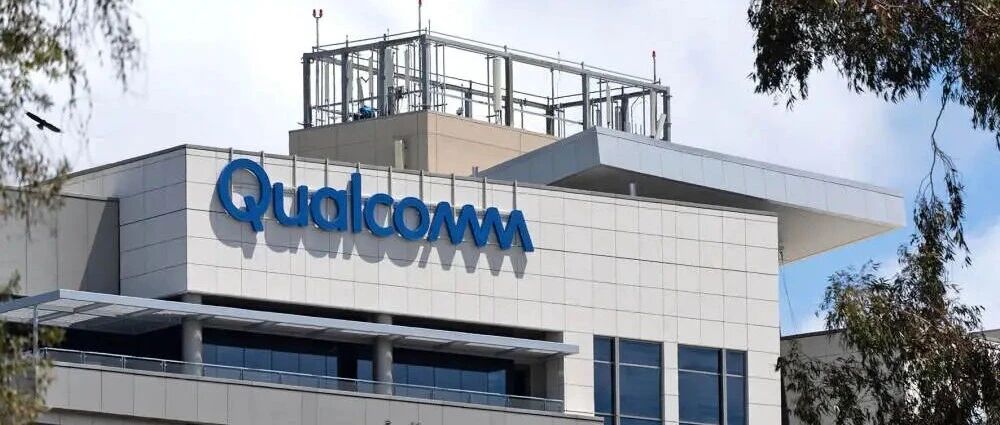
向英伟达发起挑战?高通连发两款AI芯片,正式进军数据中心领域
Mei Ri Jing Ji Xin Wen· 2025-10-28 01:33
Core Insights - Qualcomm is challenging Nvidia's dominance in the AI computing sector by launching two AI chips, AI200 and AI250, expected to be commercially available in 2026 and 2027 respectively [1][2] - Qualcomm's stock surged over 20% on October 27, marking its largest single-day gain since 2019 following the announcement of these AI chips [1] - Nvidia has a stronghold in the AI computing chip market, particularly in data center GPUs, with established technology and ecosystem barriers [1] Group 1: Product Launch and Strategy - Qualcomm's AI chips focus on rack-level performance and high memory for rapid generative AI inference, emphasizing advantages in energy efficiency and total cost of ownership [1] - The first AI rack solutions are set to be deployed in 2026 at the data center of Middle Eastern client "HUMAIN," marking a significant milestone for Qualcomm's AI chip commercialization [1] Group 2: Market Position and Acquisitions - Qualcomm's acquisition of Alphawave Semi for approximately $2.4 billion aims to enhance its semiconductor technology for data centers, indicating a strategic move to strengthen its AI product portfolio [2] - Qualcomm's revenue is primarily driven by its semiconductor business, which consists of mobile, automotive, and IoT segments, with mobile chips contributing about 70% of revenue [2] Group 3: Competitive Landscape and Challenges - Despite Qualcomm's technical advantages from its experience in mobile chip design, Nvidia's market and ecosystem barriers remain high, and specific performance metrics for AI200 and AI250 are yet to be disclosed [2] - The lengthy procurement cycles and complex validation processes in data center equipment mean that Qualcomm may require time to achieve scalable revenue from its new AI products [2]

AMD's AI Journey Rides on Strong Partner Base: What's the Path Ahead?
ZACKS· 2025-08-29 16:52
Group 1: Company Overview - Advanced Micro Devices (AMD) is leveraging a strong partner ecosystem, including Microsoft, Oracle, Google, Dell, HPE, Lenovo, and IBM, to enhance its presence in the AI infrastructure market, facing competition from NVIDIA and Broadcom [1][10] - AMD's EPYC processors are in high demand for cloud and enterprise workloads, with significant adoption by major cloud hyperscalers [2][10] Group 2: Product Developments - The launch of the Instinct MI350 series has strengthened AMD's system-level capabilities, supporting deployments with AMD CPUs, GPUs, and NICs [3] - AMD has formed a multibillion-dollar collaboration with HUMAIN to develop AI infrastructure powered by its CPUs, GPUs, and software [3] Group 3: Financial Performance - AMD anticipates third-quarter 2025 revenues of $8.7 billion, reflecting a 28% year-over-year increase and 13% sequential growth [5][10] - The Zacks Consensus Estimate for third-quarter 2025 earnings is projected at $1.17 per share, indicating a 21.2% year-over-year growth [11] Group 4: Competitive Landscape - AMD faces tough competition from NVIDIA, which is central to AI computing with its advanced GPUs, and Broadcom, which provides networking chips and custom ASICs for efficient hyperscale data centers [6][7] Group 5: Stock Performance and Valuation - AMD shares have increased by 39.2% year to date, outperforming the broader Zacks Computer and Technology sector and the Zacks Computer Integrated industry [8] - AMD's stock is considered overvalued with a forward 12-month price/sales ratio of 7.46X compared to the sector's 6.7X [9]


7月16日电,马斯克的XAI正与沙特公司HUMAIN谈数据中心交易。
news flash· 2025-07-16 14:51
Group 1 - The core point of the article is that Elon Musk's XAI is in discussions with the Saudi company HUMAIN regarding a data center deal [1] Group 2 - The collaboration indicates a potential strategic partnership between XAI and HUMAIN, which may enhance XAI's data processing capabilities [1] - This move aligns with the growing trend of tech companies seeking partnerships in the Middle East to leverage local resources and infrastructure [1] - The deal could signify an increasing interest in artificial intelligence and data management solutions in the region [1]
Tareq Amin, HUMAIN CEO
AMD· 2025-07-03 15:00
True innovation comes from shared purpose. Hear from Tareq Amin, CEO of HUMAIN, to see how together we're building more than products—we're lowering the total cost of ownership and shaping the future of AI. #AdvancingAI *** Subscribe: https://bit.ly/Subscribe_to_AMD Join the AMD Red Team Discord Server: https://discord.gg/amd-red-team Like us on Facebook: https://bit.ly/AMD_on_Facebook Follow us on Twitter: https://bit.ly/AMD_On_Twitter Follow us on Twitch: https://Twitch.tv/AMD Follow us on LinkedIn: https ...

Tareq Amin, HUMAIN CEO
AMD· 2025-07-01 14:30
To truly innovate AI at scale, you need the full stack. Listen to Tareq Amin, CEO of HUMAIN, to see how together we’re building state-of-the-art AI factories and data centers with the power, connectivity, and chipsets to lower infrastructure costs and accelerate global innovation. #AdvancingAI *** Subscribe: https://bit.ly/Subscribe_to_AMD Join the AMD Red Team Discord Server: https://discord.gg/amd-red-team Like us on Facebook: https://bit.ly/AMD_on_Facebook Follow us on Twitter: https://bit.ly/AMD_On_Twit ...

文晶:中东为何成人工智能投资高地?
Huan Qiu Wang Zi Xun· 2025-05-20 22:47
Core Insights - The Middle East is emerging as a new hub for artificial intelligence (AI) development due to its unique geopolitical position and strong capital resources [1][2][3] - Major powers like the US and China are accelerating their strategic investments in the region, with significant technology deals and initiatives being established [1][2] - The integration of AI with the energy sector is a key driver, as AI's demand for energy is projected to increase significantly, aligning with the Middle East's abundant energy resources [1][2] Group 1: AI and Energy Sector Synergy - AI's operational data centers are experiencing a 12% annual increase in electricity consumption, with projections indicating that global data center electricity demand will more than double by 2030 [1] - The UAE has invested over $40 billion in clean energy projects, aiming for 30% of its electricity supply to come from clean energy by 2030 and 44% by 2050 [1] - Saudi Arabia plans to achieve 50% of its electricity from renewable sources by 2030, highlighting the region's strong potential for green energy development [1] Group 2: Policy Support for AI Development - The UAE has established itself as a leader in AI policy by appointing the world's first AI minister in 2017 and launching various initiatives to cultivate talent in the sector [2] - Saudi Arabia's Vision 2030 outlines a digital economy development blueprint, with a $40 billion fund announced in 2023 to support AI growth [2] - By 2030, AI is expected to generate $320 billion in economic value for the Middle East, according to PwC [2] Group 3: Economic Diversification and Future Challenges - Middle Eastern countries like Saudi Arabia and the UAE are actively seeking economic diversification to reduce reliance on oil, with AI presenting new opportunities for growth [3] - The rise of AI in the region is influenced by a combination of energy advantages, supportive policies, and geopolitical factors [3] - Future challenges include balancing competition and cooperation among major tech powers and addressing potential regional conflicts that may impact AI development [3]
Americas Technology_ Hardware_ AI infrastructure to benefit from newly announced US _ Middle East partnerships
2025-05-20 12:06
Summary of Key Points from the Conference Call Industry Overview - The conference call discusses the **AI infrastructure industry**, particularly focusing on partnerships between the **US** and the **Middle East** that are expected to benefit companies involved in AI infrastructure such as **DELL**, **ANET**, **SMCI**, and **CSCO** [2][10]. Core Insights and Arguments - **Partnership Announcements**: Recent partnerships worth several billion dollars between the US and Middle Eastern countries have been announced, enhancing visibility into the demand for Sovereign AI infrastructure, which had previously been underestimated due to lack of traction [2][10]. - **Investment Opportunities**: The US is set to receive significant investments from Saudi Arabia, including **$600 billion** announced on May 13th, which includes **$20 billion** for data center and energy infrastructure by **DataVolt** and **$80 billion** in technology investments across various companies [5][9]. - **AI Diffusion Rule Changes**: The US Department of Commerce rescinded the AI Diffusion rule, which would have imposed chip export restrictions, indicating a shift in regulatory landscape that could impact AI technology distribution [5][10]. - **NVIDIA's Export Agreement**: The US and UAE have agreed on a deal allowing **NVIDIA** to export **500,000 H100 GPUs** annually to the UAE, with **100,000 GPUs** allocated to **G42** for AI weather forecasting solutions [5][6]. Important Partnerships and Deals - **DataVolt and SMCI**: DataVolt announced a **$20 billion** deal with **Super Micro** to deliver GPU platforms for AI campuses in Saudi Arabia and the US [9][10]. - **Cisco Collaborations**: Cisco has entered into agreements with **G42** and **HUMAIN** to enhance AI infrastructure and explore cybersecurity solutions [9][10]. - **NVIDIA and HUMAIN Partnership**: NVIDIA will collaborate with HUMAIN to build AI factories in Saudi Arabia, deploying significant data center capacity supported by NVIDIA GPUs [9][10]. Market Sentiment and Future Outlook - The recent announcements are expected to improve investor sentiment towards AI infrastructure, especially following a series of negative headlines in the sector [2][10]. - The diversification of customer demand for AI infrastructure beyond US neo-clouds is highlighted, with companies like **SMCI** expanding their customer base [10][14]. - US hyperscalers such as **Google**, **Microsoft**, and **Oracle** are also participating in Middle Eastern investments, indicating a robust future demand for AI servers in the region [10][14]. Potential Risks - There are concerns regarding potential security risks associated with the KSA+UAE/US AI partnership, particularly regarding GPU diversion to China and unauthorized model use. However, these risks are expected to be mitigated by the operational control of US hyperscalers [14][10]. This summary encapsulates the key points discussed in the conference call, providing insights into the current state and future prospects of the AI infrastructure industry, particularly in the context of US-Middle East partnerships.

Buybacks and Big-Time Developments: 3 Stocks Making Huge Moves
MarketBeat· 2025-05-19 12:31
Group 1: Weyerhaeuser - Weyerhaeuser announced a $1 billion share buyback program, representing around 5% of its market capitalization [3] - The company has partnered with Occidental Petroleum to capture and sequester carbon dioxide, leasing 30,000 acres for CO2 storage [4][5] - This partnership is expected to provide a long-term revenue source once a facility is operational in 2029, while still allowing timber growth above the land [5] Group 2: Advanced Micro Devices (AMD) - AMD has initiated a substantial $6 billion share buyback program, adding to the $4 billion remaining from its previous plan, totaling $10 billion in buyback capacity [6][7] - The company struck a $10 billion deal with Saudi Arabia's HUMAIN for AI computing technology, following the end of the AI Diffusion rule [8] Group 3: Western Digital - Western Digital announced a $2 billion share buyback program, equating to 11% of its market capitalization, reflecting confidence in future business prospects [11] - The company will begin paying a quarterly dividend for the first time since 2020, with a dividend yield of around 0.8% [12] - The recent revenue drop is attributed to the separation from SanDisk and does not indicate underlying weakness in the business [11] Group 4: Broader Investment Thesis - The buybacks and partnerships of Weyerhaeuser, AMD, and Western Digital indicate forward-looking strategies that suggest depth behind capital returns [13]


未知机构:semianalysis 最新:中东协议对全球AI设备的影响20250518-20250518
未知机构· 2025-05-18 12:55
Summary of Key Points from the Conference Call Industry Overview - The conference call discusses the impact of recent agreements between the United States, the United Arab Emirates (UAE), and Saudi Arabia on the artificial intelligence (AI) industry, particularly focusing on infrastructure and geopolitical dynamics [2][3][4]. Core Insights and Arguments 1. **Transformative Agreements**: The US has signed two significant agreements with the UAE and Saudi Arabia, which are expected to reshape the AI landscape by enhancing US leadership in AI infrastructure and alleviating bottlenecks such as power shortages [2][3]. 2. **Investment in AI Infrastructure**: The agreements are projected to unlock a capital influx exceeding $1 trillion, facilitating the construction of AI infrastructure both in the Gulf region and the US [3][4]. 3. **Data Center Capacity Growth**: The Middle East is anticipated to become a regional AI hub, with predictions indicating that by 2030, operational data center capacity in the region will exceed 6 GW, driven by investments from local companies like G42 [3][4]. 4. **G42's Role**: G42, a UAE-based AI giant, is set to import 500,000 high-end Nvidia chips annually and is leading the development of a 5 GW AI data center park, with the first phase of 1 GW already underway [5][6]. 5. **Saudi Arabia's Economic Plans**: Saudi Arabia's $600 billion economic plan includes rapid growth in data center capacity, although it remains more fragmented compared to the UAE [7][20]. 6. **Bilateral Investment**: Middle Eastern companies are expected to invest hundreds of billions into US AI infrastructure, with G42 already operating data centers in the US [8][20]. Additional Important Content 1. **Geopolitical Implications**: The agreements strengthen the technological ties between the US and the Gulf states, increasing their dependency on US hardware and software [3][12]. 2. **Risks and Security Concerns**: The collaboration raises concerns about GPU transfers to China and unauthorized model usage, necessitating strict security measures and KYC protocols [13][14][16]. 3. **Market Dynamics**: The influx of Middle Eastern capital is expected to lower financing costs and support AI infrastructure development, countering potential credit market tightening [9][10]. 4. **Competitive Landscape**: The agreements position the Middle East as a key customer for US technology, potentially sidelining competitors like China [12]. 5. **Investment from Major Tech Firms**: Companies like Oracle and AMD are committing significant funds to projects in Saudi Arabia, indicating strong interest from major players in the region's AI development [20]. Conclusion - Overall, the agreements between the US, UAE, and Saudi Arabia are poised to significantly impact the AI industry, enhancing infrastructure capabilities while presenting new geopolitical and security challenges [11][12].