
大参林

Search documents
医药商业板块8月21日涨0.27%,国发股份领涨,主力资金净流出2.77亿元
Zheng Xing Xing Ye Ri Bao· 2025-08-21 08:30
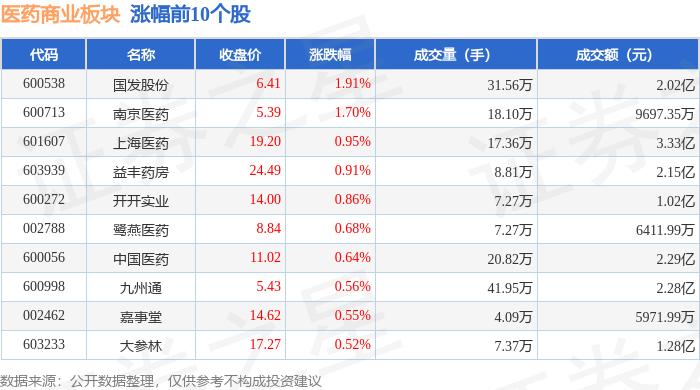
Market Overview - The pharmaceutical commercial sector increased by 0.27% on August 21, with Guofang Co., Ltd. leading the gains [1] - The Shanghai Composite Index closed at 3771.1, up 0.13%, while the Shenzhen Component Index closed at 11919.76, down 0.06% [1] Stock Performance - Guofang Co., Ltd. (600538) closed at 6.41, up 1.91% with a trading volume of 315,600 shares and a transaction value of 202 million yuan [1] - Nanjing Pharmaceutical (600713) closed at 5.39, up 1.70% with a trading volume of 181,000 shares and a transaction value of 96.97 million yuan [1] - Shanghai Pharmaceuticals (601607) closed at 19.20, up 0.95% with a trading volume of 173,600 shares and a transaction value of 333 million yuan [1] - Yifeng Pharmacy (603939) closed at 24.49, up 0.91% with a trading volume of 88,100 shares and a transaction value of 215 million yuan [1] Capital Flow - The pharmaceutical commercial sector experienced a net outflow of 277 million yuan from institutional investors, while retail investors saw a net inflow of 293 million yuan [2] - The data indicates that institutional investors are withdrawing capital, while retail investors are increasing their investments in the sector [2] Individual Stock Capital Flow - Nanjing Pharmaceutical saw a net inflow of 16.81 million yuan from institutional investors, while retail investors had a net outflow of 4.14 million yuan [3] - Yifeng Pharmacy experienced a net inflow of 15.49 million yuan from institutional investors, with a net outflow of 23.62 million yuan from retail investors [3] - China National Pharmaceutical (600056) had a net inflow of 8.93 million yuan from institutional investors, while retail investors had a negligible net inflow of 0.12 million yuan [3]





关店潮来了!零售药店谋变
Zheng Quan Shi Bao Wang· 2025-08-21 02:56
Core Viewpoint - The retail pharmacy industry in China is entering a phase of negative growth by 2025, with a significant number of store closures and a shift in focus towards health services rather than just product sales [1][2][3] Group 1: Industry Growth and Challenges - The retail pharmacy sector has seen a 50% increase in store numbers over the past seven years, but the growth has reversed, with a net decrease of approximately 3,000 stores in the first quarter of 2025 [2][3] - The total market size for pharmaceuticals in China is projected to decline for the first time, with a forecast of 1.97 trillion yuan in 2024, reflecting a mere 0.9% growth in 2023 [2][3] - The median revenue growth for eight listed pharmacy companies is only 4.7%, while median profit has decreased by 32.9% year-on-year [2][3] Group 2: Market Dynamics and Strategic Responses - Many retail pharmacies are slowing down on new store openings, with a notable increase in the proportion of franchise stores to enhance market share [3] - The concentration of the top 100 retail chains has risen to 53%, indicating a trend towards consolidation in the industry [3] - The DTP (Direct to Patient) market is expanding, with a projected sales scale of 89.3 billion yuan in 2024, growing by 17.2% [4][5] Group 3: Opportunities for Innovation and Diversification - Despite declines in traditional categories like Chinese medicine and medical devices, the sales of biological products have surged by 17.7%, indicating a potential growth area for the industry [3][4] - There is a growing demand for personalized healthcare services, with over 85% of chronic disease patients expecting medication guidance and over 75% seeking disease awareness education [5][6] - Retail pharmacies are encouraged to explore partnerships with companies in beauty and health supplements, as well as to adopt a more diversified approach to meet evolving consumer needs [6][7]
闭店潮下零售药店谋变 靠前服务拓展价值点
Zheng Quan Shi Bao· 2025-08-20 18:30
Core Viewpoint - The retail pharmacy industry in China is entering a phase of negative growth by 2025, with a significant number of store closures and a shift in focus towards health services rather than just product sales [1][2][3] Industry Overview - The retail pharmacy sector has seen a 50% increase in store numbers over the past seven years, but the total number of pharmacies has now dropped below 700,000, marking the beginning of negative growth [2][3] - In Q1 2025, approximately 3,000 pharmacies closed, indicating a trend that may continue as the market contracts [2][3] Market Dynamics - The overall market size for pharmaceuticals in China is projected to decline for the first time, with a forecasted sales figure of 1.97 trillion yuan in 2024, reflecting a year-on-year decrease [2] - The competition among pharmacies has intensified due to a shrinking market, leading to a median revenue growth of only 4.7% among eight listed pharmacy companies, while median profit has decreased by 32.9% [2] Strategic Responses - Some retail pharmacies are slowing down their expansion plans, while others are increasing their franchise operations to boost market share [3] - The concentration of the top 100 pharmacy chains has risen to 53%, indicating a trend towards consolidation in the industry [3] Opportunities for Innovation - Despite declines in various product categories, the sales of biopharmaceuticals have surged by 17.7%, suggesting a potential growth area for the industry [3][4] - The DTP (Direct to Patient) market is expanding, with a projected sales growth of 17.2% in 2024, highlighting a shift towards more personalized patient care [4][5] Collaboration and Diversification - There is a growing interest from innovative pharmaceutical companies to collaborate with retail pharmacies, particularly in the DTP sector, to enhance patient services [5][6] - Retail pharmacies are exploring diversification into beauty and health products, with potential market opportunities reaching trillions [6][7] Future Outlook - The industry is expected to evolve from a product-centric model to a health-centric approach, driven by increasing health demands and innovations in drug supply [7][8] - The existing network of nearly 700,000 pharmacies provides a unique opportunity to enhance health service delivery across the country [7]
2025年西地那非品牌推荐:从ED到“男性自信”,药店里赚钱的“男人加油站”
Tou Bao Yan Jiu Yuan· 2025-08-18 12:49
Investment Rating - The report does not explicitly provide an investment rating for the industry Core Insights - Sildenafil, the first PDE-5 inhibitor approved for erectile dysfunction (ED), has seen a significant market evolution in China, with both original and generic drugs coexisting. The market is expected to continue growing due to increasing health awareness among men, although competition from newer ED medications like tadalafil is intensifying [5][7]. Market Background - Sildenafil is a PDE-5 inhibitor used for treating ED and pulmonary hypertension, with various formulations available in China [6]. - The market has evolved since the late 1990s, with the introduction of generic versions following the expiration of patents, leading to a reshaped competitive landscape [7]. Market Status - The market size for sildenafil in China grew from 3.51 billion RMB in 2019 to 5.72 billion RMB in 2023, with a compound annual growth rate (CAGR) of 13.00%. It is projected to reach 9.43 billion RMB by 2028, with a CAGR of 9.70% [8][9]. - Demand is primarily driven by middle-aged and older men, with a growing acceptance of ED treatments among younger demographics [12]. Market Competition - The market is characterized by intense competition between original and generic drugs, with price competition becoming a focal point. Pfizer remains a leading player, but local companies like Baiyunshan are gaining ground through competitive pricing and market understanding [17][18]. - The report identifies ten key brands in the market, highlighting their strengths in brand recognition, distribution networks, and innovation capabilities [19][20][21][22][23][24][25][26][27][28]. Development Trends - The market is transitioning from original to generic drugs, with price competition and differentiation strategies becoming essential for long-term success [29]. - Social attitudes towards male health are evolving, leading to increased demand for sildenafil as more men seek treatment for ED [30]. - Regulatory pressures are pushing companies to enhance product quality and compliance, fostering a shift towards high-quality offerings in the industry [31].

三个月做到商圈第一!小药店如何凭即时零售突围
Sou Hu Cai Jing· 2025-08-14 18:58
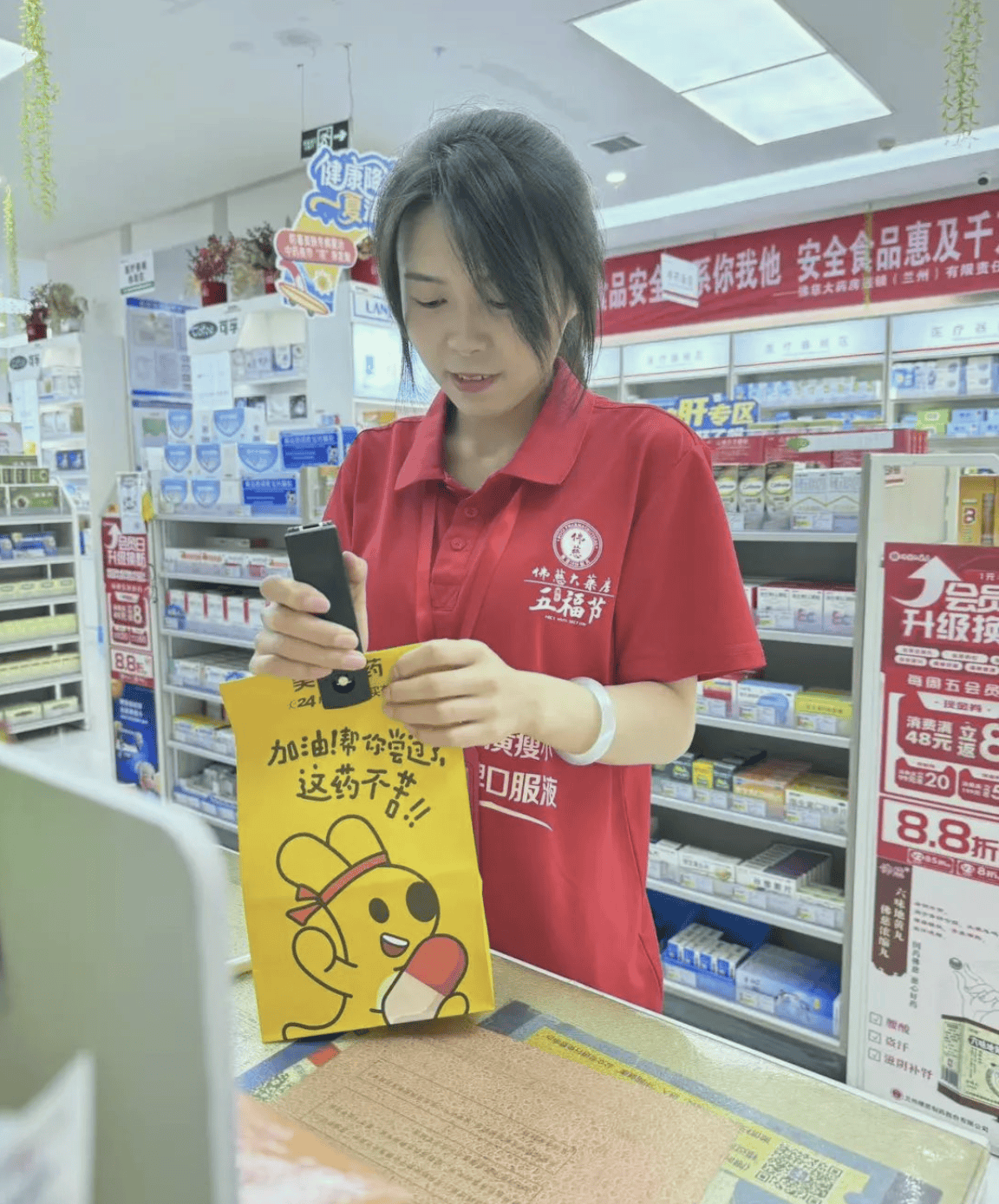
Core Insights - The retail pharmacy industry is undergoing a rational adjustment, with a net decrease of approximately 3,000 stores in the first quarter of 2025, bringing the total number of stores below 700,000 [1] - Analysts suggest that the market is experiencing a positive transformation, with inefficient stores being phased out, thereby creating opportunities for high-quality pharmacies [1] - Small and medium-sized chains are finding ways to survive and innovate amidst the challenges posed by larger competitors and market dynamics [1] Group 1: Industry Trends - In the first quarter of 2025, 7,118 new pharmacies opened while 10,284 closed, indicating a significant shift in the industry landscape [1] - The focus is shifting towards consolidation among leading chains, while small and medium-sized chains are implementing differentiated strategies to carve out their niche [1][3] - The rise of instant retail is becoming a key strategy for pharmacies, with companies like Yinpian Pharmacy and Foci Pharmacy successfully leveraging this model to enhance their market presence [2][4] Group 2: Operational Strategies - Strategic determination is crucial for small chains to excel in instant retail, as demonstrated by the experiences of Liu Simiao from Yinpian Pharmacy and Yu Yue from Foci Pharmacy [2][3] - Both companies have adopted a "Tianji's horse racing" strategy, focusing on specific market segments to avoid direct competition with larger chains [4][6] - Yinpian Pharmacy has utilized data insights from Meituan to optimize its operations, transforming a large store into a 24-hour delivery outlet, which has led to significant order volume increases [6][8] Group 3: Resource Management - Small chains are effectively managing their operations with minimal staff, as seen with Yinpian Pharmacy operating over 90 stores with just 1.5 personnel dedicated to online operations [8] - The digital infrastructure provided by platforms like Meituan has enabled these pharmacies to streamline their operations and enhance efficiency [8] - Training programs such as Meituan's "Accelerator Program" are helping small chains develop digital operational skills, which are essential for navigating the evolving retail landscape [8]

中证互联网医疗主题指数上涨0.25%,前十大权重包含久远银海等
Sou Hu Cai Jing· 2025-08-13 11:06
Group 1 - The core index of the China Securities Internet Medical Theme Index (CS Mutual Medical, 930720) rose by 0.25% to 2762.05 points, with a trading volume of 8.387 billion yuan [1] - The CS Mutual Medical Index has increased by 3.77% over the past month, 4.28% over the past three months, and 16.80% year-to-date [1] - The index reflects the overall performance of representative companies providing hardware, software, or services for medical information and intelligence [1] Group 2 - The top ten holdings of the CS Mutual Medical Index include Lepu Medical (6.7%), Jiahe Meikang (5.83%), Haier Biomedical (5.52%), Jiuyuan Yinhai (5.46%), Yaoyigou (5.1%), Weining Health (5.06%), Aier Eye Hospital (5.04%), Sichuang Medical (5.0%), Donghua Software (4.95%), and Daclin (4.92%) [1] - The market share of the CS Mutual Medical Index holdings is 55.77% from the Shenzhen Stock Exchange and 44.23% from the Shanghai Stock Exchange [1] - The industry composition of the index holdings shows that 64.12% is in pharmaceuticals and healthcare, 30.88% in information technology, and 5.00% in communication services [1] Group 3 - The index samples are adjusted quarterly, with adjustments implemented on the next trading day following the second Friday of March, June, September, and December [2] - Weight factors are generally fixed until the next scheduled adjustment, with temporary adjustments made under special circumstances [2] Group 4 - Public funds tracking the CS Mutual Medical Index include Huatai-PineBridge China Securities Internet Medical A and Huatai-PineBridge China Securities Internet Medical C [3]

医药商业板块8月13日跌0.01%,华人健康领跌,主力资金净流入3373.55万元
Zheng Xing Xing Ye Ri Bao· 2025-08-13 08:41
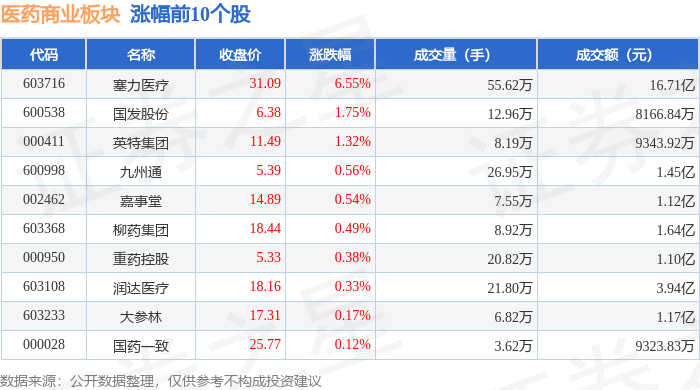
Market Overview - The pharmaceutical commercial sector experienced a slight decline of 0.01% on August 13, with Huaren Health leading the drop [1] - The Shanghai Composite Index closed at 3683.46, up 0.48%, while the Shenzhen Component Index closed at 11551.36, up 1.76% [1] Stock Performance - Key stocks in the pharmaceutical commercial sector showed varied performance, with the following notable movements: - Seli Medical (603716) rose by 6.55% to a closing price of 31.09, with a trading volume of 556,200 shares and a transaction value of 1.671 billion [1] - Guofa Co. (600538) increased by 1.75% to 6.38, with a trading volume of 129,600 shares [1] - Huaren Health (301408) fell by 1.76% to 15.11, with a trading volume of 179,600 shares and a transaction value of 271 million [2] Capital Flow - The pharmaceutical commercial sector saw a net inflow of 33.73 million from institutional investors, while retail investors experienced a net outflow of 42.05 million [2] - Notable capital flows for specific stocks included: - Seli Medical had a net inflow of 10.9 million from institutional investors, while retail investors saw a net outflow of 2.46 million [3] - Yiyang Pharmaceutical (301015) had a net inflow of 6.29 million from institutional investors, but retail investors faced a net outflow of 31.02 million [3]



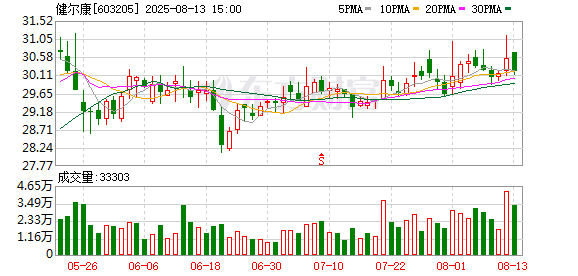
健尔康:公司线上渠道目前主要是和部分连锁药房合作推广
Mei Ri Jing Ji Xin Wen· 2025-08-13 08:28
健尔康(603205.SH)8月13日在投资者互动平台表示,公司线上渠道目前主要是和部分连锁药房合作 推广。 (文章来源:每日经济新闻) 每经AI快讯,有投资者在投资者互动平台提问:线上渠道(天猫、京东、抖音)的销售团队搭建进展 如何?是否计划与连锁药店(如大参林、老百姓)合作推广? ...
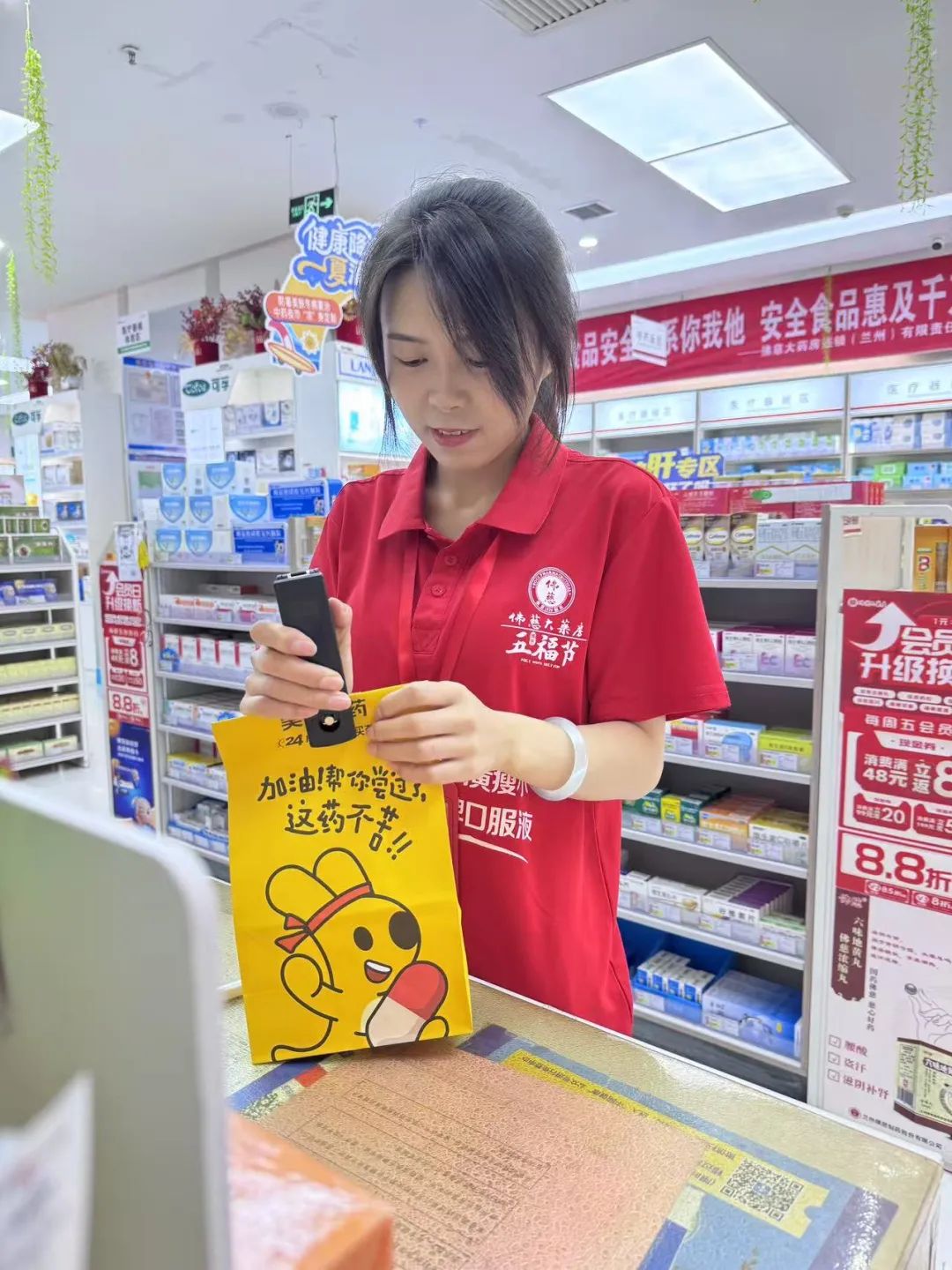
小药店的突围样本:自学即时零售运营,从夹缝中抢出1万单
Mei Ri Jing Ji Xin Wen· 2025-08-12 04:29
Core Insights - The retail pharmacy industry is undergoing significant restructuring, with a net decrease of approximately 3,000 stores in the first quarter of this year, bringing the total number of retail pharmacies below 700,000 [1][10] - Smaller chains are struggling under competitive pressure, while those adapting to online retail strategies are finding new survival methods [1][10] Industry Trends - The number of chain pharmacies in China has increased from 170,000 to nearly 400,000, with a peak chain rate of 60.52% [2] - The competition has shifted from expansion to a focus on efficiency, service, and compliance due to new healthcare policies affecting profit margins [2][10] - The trend of "hive deep cultivation" emphasizes penetrating local markets rather than merely increasing the number of stores [2][10] Company Strategies - Companies like Yinpian Pharmacy have successfully implemented instant retail strategies, achieving significant online sales growth despite competition from larger chains [2][4] - The use of third-party platforms, such as Meituan, has become crucial for smaller chains, providing not only traffic but also essential operational tools [5][6] - Efficient supply chain management and internal training programs have allowed smaller chains to compete effectively with larger ones [6][7] Performance Metrics - In the first quarter, leading chain pharmacies reported over 10% year-on-year growth in instant retail performance, significantly outpacing traditional retail growth [10] - The average online retail business share for leading chains is around 8% to 10%, while smaller chains can range from 3% to 20% depending on their strategies [5] Future Outlook - The ongoing reshaping of the pharmacy sector suggests that survival will depend on finding niche markets and leveraging digital tools rather than competing on scale [10][11] - The ability to adapt to changing consumer behaviors and preferences will be critical for pharmacies aiming to thrive in a competitive landscape [11]
合富中国收盘上涨1.52%,滚动市盈率203.28倍,总市值29.34亿元
Sou Hu Cai Jing· 2025-08-11 11:20
Group 1 - The core viewpoint of the articles highlights the financial performance and market position of HeFu China, particularly its high PE ratio compared to industry averages [1][2] - HeFu China's closing price on August 11 was 7.37 yuan, with a 1.52% increase, resulting in a rolling PE ratio of 203.28, which is the lowest in 100 days, and a total market capitalization of 2.934 billion yuan [1] - The average PE ratio for the pharmaceutical distribution industry is 44.67, with a median of 30.06, positioning HeFu China at 26th place within the industry [1][2] Group 2 - As of March 31, 2025, HeFu China had 33,527 shareholders, a decrease of 3,450 from the previous count, with an average holding value of 352,800 yuan and an average shareholding of 27,600 shares per shareholder [1] - The main business of HeFu China involves international trade and after-sales services related to in vitro diagnostic medical devices and consumables, as well as consulting services for hospital information management systems [1] - The latest quarterly report for Q1 2025 shows HeFu China achieved a revenue of 176 million yuan, a year-on-year decrease of 26.35%, with a net loss of approximately 6 million yuan, reflecting a year-on-year decline of 184.13%, and a gross profit margin of 16.71% [1]
