
多元化经营

Search documents
海螺创业(00586):核心主业平稳增长,分红率延续提升
HTSC· 2026-03-29 10:58
Investment Rating - The investment rating for the company is maintained as "Buy" with a target price of HKD 13.52 [1]. Core Insights - The company reported a stable growth in its core business, with a full-year revenue of RMB 6.548 billion, representing a year-on-year increase of 4.42%. The net profit attributable to the parent company was RMB 2.245 billion, up 11.22% year-on-year, although slightly below the expected RMB 2.484 billion due to reduced investment income [5]. - The company continues to optimize its financial structure and governance, with an increase in dividend levels expected as capital expenditures decrease. The proposed dividend for the year is HKD 0.40 per share [5][8]. Financial Performance - Revenue projections for the upcoming years are as follows: RMB 7.638 billion in 2026 (up 16.65%), RMB 8.826 billion in 2027 (up 15.55%), and RMB 10.417 billion in 2028 (up 18.04%) [4]. - The company's net profit is expected to reach RMB 2.497 billion in 2026 (up 11.18%), RMB 2.699 billion in 2027 (up 8.07%), and RMB 2.936 billion in 2028 (up 8.79%) [4]. Business Segments - The waste-to-energy business generated revenue of RMB 4.699 billion in 2025, a decrease of 3.7% year-on-year, primarily due to a 48.3% drop in construction revenue. However, operational revenue increased by 7.45% to RMB 4.195 billion, driven by higher electricity and steam sales [6]. - The new energy business saw a significant revenue increase of 277.36% to RMB 1.093 billion, with the production of cathode materials reaching approximately 42,000 tons, up 21.4% year-on-year [7]. Governance and Financial Optimization - The company reduced capital expenditures, with net cash from investment activities amounting to RMB 1.297 billion, a decrease of RMB 1.130 billion year-on-year. The debt-to-asset ratio improved to 39.64%, down 0.63 percentage points [8]. - The company plans to distribute a year-end dividend of HKD 0.30 per share, alongside an interim dividend of HKD 0.10, resulting in an overall dividend level increase of 3.8 percentage points to 28.4% [8]. Valuation and Forecast - The company’s valuation is based on a segmented approach, with the environmental business assigned a P/E ratio of 9.6x for 2026, reflecting a 10% discount compared to peers. The target price has been adjusted upward by 11.5% to HKD 13.52 [9].
蜜雪冰城进入下半场
远川研究所· 2026-03-27 13:06
Core Viewpoint - After years of growth, Mixue Ice City is entering a new development phase, focusing on product and operational insights rather than pure store expansion [3][5]. Group 1: Financial Performance - In 2025, Mixue Group reported a revenue of 33.56 billion yuan, a year-on-year increase of 35.2%, and a net profit of nearly 6 billion yuan, with a growth rate of 33.1% [2]. - The company has maintained stable growth during a challenging period for the restaurant industry, particularly from 2020 to 2023 [7]. Group 2: Business Model and Supply Chain - Mixue Ice City operates under a franchise model, with nearly all stores being franchisee-owned, which is common in the restaurant industry [7]. - The company has a highly streamlined product structure and supply chain, allowing for significant cost control and scalability [11][14]. - Mixue's supply chain management is crucial, as even minor cost reductions can lead to substantial profit elasticity [10][15]. Group 3: Market Expansion and Strategy - Mixue has over 44,000 stores in China, with a significant presence in lower-tier cities, accounting for 58% of its total stores [20]. - The company added 8,261 stores in lower-tier markets in 2025 alone [20]. - Mixue's franchise model has attracted a strong interest from franchisees, with 6,474 new franchisees added in 2025 [22]. Group 4: Operational Efficiency - The company focuses on improving single-store efficiency rather than merely expanding the number of stores [26]. - Mixue has implemented digital tools for better inventory and supply chain management, significantly reducing losses from long supply chains [25]. Group 5: Future Directions - Mixue is diversifying its offerings with new brands like "Lucky Coffee" and "Fresh Beer," aiming to leverage its supply chain for rapid market entry [27][28]. - The company plans to invest 1.4 billion yuan in domestic supply chain upgrades, emphasizing fresh ingredients [31]. - Mixue aims to enhance product quality while maintaining affordability, representing a significant shift in consumer experience in the restaurant industry [34].



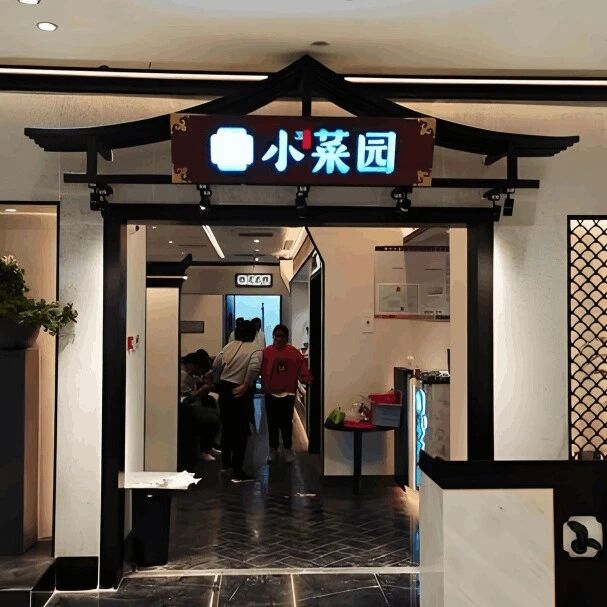
小菜园2025年净利润增23%、直营门店增至819家:稳居中式正餐直营连锁之首
IPO早知道· 2026-03-26 01:52
Core Viewpoint - Xiaocaiyuan International Holdings Limited (0999.HK) reported a revenue increase of 2.6% year-on-year to 5.345 billion RMB for the year ending December 31, 2025, with a notable net profit growth of 23.2% to 715 million RMB, indicating strong operational efficiency and cost management [4][6]. Financial Performance - The gross profit margin for Xiaocaiyuan stood at 70.4%, leading in the Chinese dining industry [6]. - Adjusted EBITDA reached 1.208 billion RMB, reflecting a 24.7% increase year-on-year [6]. - Operating cash flow improved significantly from 903 million RMB in 2024 to 1.162 billion RMB in 2025, marking a 28.7% growth [6]. Market Position and Expansion - As of December 31, 2025, Xiaocaiyuan operated 819 stores, adding 146 new locations and solidifying its position as the leading chain in the Chinese dining sector [7]. - The overall table turnover rate was maintained at an average of 3.0 times per day, with second-tier cities performing particularly well at 3.3 times [8]. Revenue Composition - Dine-in services contributed 3.261 billion RMB, accounting for 61.0% of total revenue, while takeout services generated 2.065 billion RMB, representing 38.6% [8]. - Takeout order volume increased by 18.3%, from 29 million in 2024 to 34.3 million in 2025 [8]. - The average dine-in customer spend decreased from 59.2 RMB to 56.1 RMB due to strategic price adjustments aimed at enhancing customer loyalty and repeat purchases [8]. Membership and Customer Engagement - Xiaocaiyuan launched the "88VIP" membership program, marking a shift from customer acquisition to user engagement, focusing on enhancing brand loyalty and customer lifetime value [8]. Future Development Plans - The company plans to enhance its supply chain with a new central factory in Anhui, set to commence operations in the first half of 2026, which will support future store expansions [9]. - International expansion will begin with a focus on Hong Kong, while also exploring new retail formats to diversify revenue streams [9]. - Digital transformation efforts will aim to integrate data across operations, management, and supply chain for improved control [9]. - The board proposed a final dividend of 0.2125 RMB per share, resulting in an annual payout ratio of 69.8%, reflecting strong cash flow confidence [9].
国内最赚钱的航司,创下史上最大破产案
商业洞察· 2026-03-23 09:37
Core Viewpoint - The article discusses the rise and fall of HNA Group, highlighting its aggressive leveraging strategy and subsequent financial collapse, which serves as a cautionary tale in the business world [3][5]. Group 1: HNA's Rise - HNA Group, once a major player in the aviation industry, became the most profitable airline in China by leveraging debt and aggressive expansion strategies [5]. - The company started with a small capital of 10 million yuan and quickly raised 250 million yuan through financial institutions, showcasing its ability to attract investment [8]. - By 1999, HNA became the first airline in China to list on the stock market, marking its entry into capital markets and further expanding its operations [12]. Group 2: Aggressive Expansion - HNA's growth strategy involved extensive acquisitions across various sectors, including logistics, retail, finance, and real estate, leading to a diversified business model [17]. - Between 2013 and 2017, HNA executed over 80 overseas acquisitions totaling more than $50 billion, significantly increasing its global footprint [20]. - By 2017, HNA's total assets reached 1 trillion yuan, making it one of the largest private enterprises in China [20]. Group 3: Financial Struggles - By the end of 2018, HNA's total liabilities soared to approximately 750 billion yuan, with 61% being short-term debt, indicating severe financial pressure [24]. - The company faced a daily interest payment of 150 million yuan, which its operations could not cover, leading to a liquidity crisis [25]. - Regulatory changes aimed at reducing leverage further strained HNA's financial situation, culminating in a forced asset liquidation [25][26]. Group 4: Collapse and Aftermath - HNA's internal conflicts and management issues exacerbated its financial troubles, leading to a power vacuum following the death of co-founder Wang Jian [28][30]. - The COVID-19 pandemic dealt a final blow to HNA, crippling its cash flow and forcing it to sell assets at significant discounts [31]. - In January 2021, HNA Group filed for bankruptcy reorganization, marking one of the largest corporate bankruptcies in China's history, with its assets being taken over by various stakeholders [32].


Arch Capital Group (NasdaqGS:ACGL) Conference Transcript
2026-03-11 18:22
Arch Capital Group Conference Call Summary Company Overview - **Company**: Arch Capital Group (NasdaqGS:ACGL) - **Market Capitalization**: Approximately $35 billion - **Business Segments**: Insurance, reinsurance, and mortgage insurance - **S&P 500 Inclusion**: Added in 2022 [2][11] Core Business Strategy - **Focus**: Specialty lines of business where underwriting expertise is critical [5][6] - **Key Segments**: 1. **Commercial Insurance**: Primarily outside North America, especially in continental Europe [5] 2. **Reinsurance**: Global access to risks across Asia, North America, and Europe [6] 3. **Mortgage Insurance**: Unique segment compared to peers, providing a diversified capital deployment vehicle [6][11] Growth Engines and Capital Allocation - **Growth Strategy**: Emphasis on smart capital deployment rather than market share [9][11] - **Capital Deployment**: Each business unit evaluates opportunities independently, with no set targets for premium growth [13][14] - **Market Cycles**: The company adapts to market conditions, pulling back in less profitable areas and returning capital to shareholders when necessary [19][20][21] Reinsurance Market Insights - **1/1 Renewals**: Rate decreases were more significant than expected due to increased competition and strong returns in previous years [27][30] - **Property Segment**: Experienced a reset in 2023, with incumbents retaining business due to strong past performance [30][32] - **Casualty Segment**: Expected to perform better in terms of volume, but opportunities were limited due to ceding companies retaining more business [36][38] Reserving Philosophy - **Initial Loss Pick**: Emphasis on realistic initial loss estimates to avoid future discrepancies [59][62] - **Long-term View**: Focus on long-term trends rather than short-term fluctuations in loss costs [62][63] - **Commercial Auto Concerns**: Identified as a challenging line due to high jury awards and loss trends [66][70] Alternative Capital Sources - **MGAs**: Long-term relationships with a stable number of program managers, focusing on aligning incentives [74][81] - **ILS Market**: Significant involvement with third-party capital, utilizing vehicles like Somers Re for property reinsurance [90][92] M&A Strategy - **Acquisition Philosophy**: Focus on acquisitions that enhance Arch's capabilities without overlapping existing operations [97][99] - **Past Acquisitions**: Successful integration of United Guaranty in the mortgage sector; future acquisitions will be evaluated for their potential to improve market position [99][103] Conclusion - **Overall Strategy**: Arch Capital Group aims to leverage its diversified platform to navigate market cycles effectively, focusing on capital efficiency and long-term growth opportunities while maintaining a cautious approach to acquisitions and market entry [11][19][97]

PHINIA (PHIN) - 2025 Q4 - Earnings Call Transcript
2026-02-12 14:32
Financial Data and Key Metrics Changes - Total net sales for Q4 2025 were $889 million, representing a year-over-year increase of 6.7% [5][15] - Adjusted EBITDA for the quarter was $116 million, up $6 million, with a margin of 13% [6][16] - Adjusted earnings per diluted share increased to $1.18 from $0.71 in the same period last year [7] - Full year revenue was approximately $3.5 billion, a 3% increase, excluding final contract manufacturing sales from the former parent [17][18] Business Line Data and Key Metrics Changes - Fuel system segment sales for Q4 were $560 million, up 7.9%, with an adjusted operating margin of 10.7% [6][19] - Aftermarket segment sales were $329 million, up 4.8%, with an adjusted operating margin of 15.8% [7][20] - For the full year, fuel systems revenue increased by 3.3%, while aftermarket segment sales rose by 2.7% [19][20] Market Data and Key Metrics Changes - Sales in Asia and the Americas showed strength, while Europe experienced lower sales within fuel systems [14][15] - The company noted that the aftermarket segment remained resilient, supported by an aging global vehicle fleet [9] Company Strategy and Development Direction - The company aims to differentiate through product leadership and focus on sustainable growth markets [12][24] - Capital allocation remains disciplined, with a focus on M&A opportunities while returning capital to shareholders [10][11] - The company plans to continue expanding its presence in core and adjacent markets, including aerospace and defense [8][12] Management's Comments on Operating Environment and Future Outlook - Management highlighted the resilience of the business amid a complex operating landscape and expressed confidence in long-term growth [3][25] - The outlook for 2026 anticipates flat to slightly down global industry volumes, with expectations of mid-single-digit sales growth [24][25] Other Important Information - The company reduced its debt by $24 million, resulting in a net leverage ratio decrease from 1.4x to 1.3x [7][21] - An 11% increase in dividends and a $150 million increase in the share repurchase program were announced [11][21] Q&A Session Summary Question: Clarification on commercial vehicle growth expectations in Europe - Management confirmed that the mid to upper single digits growth expectation refers to the overall industry [27][29] Question: Inquiry about Adjusted EBITDA margins and growth hurdles - Management explained that while revenue growth is expected, factors like FX and tariffs are impacting margin expansion [30][31] Question: Details on the third aerospace and defense supply contract - Management confirmed that the third contract is with the same customer as the previous two [32] Question: Volume assumptions for 2026 and potential for positive light vehicle volumes - Management indicated that the market is expected to be flat to down, but the company anticipates market share gains [82][84] Question: Capital allocation priorities and M&A outlook - Management stated that capital allocation decisions will focus on maximizing shareholder value, with share repurchases remaining a priority [59][60]

PHINIA (PHIN) - 2025 Q4 - Earnings Call Transcript
2026-02-12 14:30
Financial Data and Key Metrics Changes - Total net sales for Q4 2025 were $889 million, representing a year-over-year increase of 6.7% [5][12] - Adjusted EBITDA for the quarter was $116 million, up $6 million from the previous year, with a margin of 13% [5][14] - Adjusted earnings per diluted share increased to $1.18 from $0.71 in the same period last year [6] - Full year revenue was approximately $3.5 billion, a 3% increase, with adjusted EBITDA flat year-over-year at $478 million [15][16] Business Line Data and Key Metrics Changes - The fuel system segment reported sales of $560 million, up 7.9%, with an adjusted operating margin of 10.7% [5][17] - The aftermarket segment had sales of $329 million, up 4.8%, with an adjusted operating margin of 15.8% [6][18] - Adjusted operating income for the fuel system segment was $244 million, an increase of $16 million year-over-year [17] Market Data and Key Metrics Changes - Sales in Asia and the Americas showed strength, while Europe experienced lower sales within fuel systems [12][13] - The aftermarket segment's demand was supported by an aging global vehicle fleet and an expanding portfolio [8] Company Strategy and Development Direction - The company aims to differentiate through product leadership and focus on sustainable growth markets [11][22] - Capital allocation remains disciplined, with a focus on M&A opportunities while returning capital to shareholders [9][10] - The company completed its first acquisition in 2025 and received aerospace quality certification [10] Management's Comments on Operating Environment and Future Outlook - The management highlighted resilience amid a dynamic macro and industry environment, with diversification across regions and products serving as a strength [3][4] - For 2026, the company expects industry volumes to be flat to slightly down globally, but aims to offset this through market share gains [21][22] - The adjusted effective tax rate is projected to be in the 30%-34% range for 2026 [22] Other Important Information - The company reduced its debt by $24 million, resulting in a net leverage ratio decrease from 1.4x to 1.3x [6] - A dividend increase of 11% and a $150 million increase in the share repurchase program were announced [10] Q&A Session Summary Question: Clarification on commercial vehicle growth expectations in Europe - Management confirmed that the guidance reflects overall industry expectations, with positive signs from customers in the region [25][26] Question: Inquiry about Adjusted EBITDA margins and growth hurdles - Management explained that while revenue growth is expected, margin expansion is limited due to factors like FX and tariff impacts [27][28] Question: Details on the third aerospace and defense supply contract - Management confirmed that the third contract is with the same customer as the previous two [29] Question: Volume assumptions for 2026 and potential for positive light vehicle volumes - Management indicated that while the market may be flat to down, they expect to gain market share and continue growth [78][80] Question: Competitors' focus on GDI platforms and ICE vehicles - Management noted that competitors have not significantly changed their strategies, allowing the company to gain market share [81][82]
【遇见小面(2408.HK)】川渝风味面馆龙头,加速全国布局——投资价值分析报告(陈彦彤/汪航宇/聂博雅)
光大证券研究· 2026-02-09 23:06
Core Viewpoint - The article highlights the growth and expansion strategy of "Yujian Xiaomian," a leading brand in the Sichuan-Chongqing style noodle restaurant sector in China, which operates through a combination of direct sales and franchising. The company aims to become the largest in its category by 2024 and plans to go public in Hong Kong by 2025 [4]. Group 1: Company Overview - "Yujian Xiaomian" was founded in 2014 and has adopted a dual model of direct sales and franchising, positioning itself as the leading Sichuan-Chongqing noodle restaurant in China [4]. - The management team is experienced, and the company has achieved continuous revenue growth and profitability through price reductions and effective raw material cost control [4]. - Despite challenges such as high debt and rental pressures, the company is expected to optimize operations and further enhance profitability due to its mature team and scale advantages [4]. Group 2: Industry Landscape - The Chinese noodle restaurant industry is steadily expanding, with Sichuan-Chongqing style noodles gaining popularity and a clear trend towards chain operations, particularly in lower-tier markets [5]. - The industry is highly fragmented, with the top five companies holding only 2.9% market share in 2024, and "Yujian Xiaomian" ranks fourth overall and first in the Sichuan-Chongqing segment, showing the fastest growth [5]. - Following a period of industry consolidation, brands are now restarting expansion efforts, utilizing strategies such as franchise openings and price reductions to gain market share [5]. Group 3: Growth Strategies - "Yujian Xiaomian" employs a strategy of diversification, digital empowerment, and capital support to drive growth [6]. - The company targets a wide demographic with a diverse product range (30-40 SKUs) and operates 24-hour stores to cater to various customer needs [6]. - The number of stores increased from 170 in 2022 to 417 in the first half of 2025, supported by a self-developed system that enhances operational efficiency through real-time data [6]. Group 4: Market Expansion - The company is expanding into lower-tier markets, increasing its stores in these areas from 30 to 76 between 2022 and the first half of 2025, while lowering the average price of main dishes to 21 yuan to compete with local low-cost noodle shops [7]. - The franchise model is characterized by "slow expansion and strong control," with franchise stores growing from 59 to 86 during the same period, ensuring quality through a unified supply chain [7]. - Internationally, the company is testing the market in Hong Kong, where seven stores are achieving daily sales of 42,000 yuan, nearly four times that of its stores in first-tier and new first-tier cities, indicating strong market adaptability [8].

遇见小面(02408):投资价值分析报告:川渝风味面馆龙头,加速全国布局
EBSCN· 2026-02-09 09:38
Investment Rating - The report assigns an "Accumulate" rating for the company, marking its first coverage [5]. Core Insights - The company, "Yujian Xiaomian," is the leading brand in the Sichuan-Chongqing flavor noodle restaurant sector in China, employing a dual model of direct operation and franchising. It was founded in 2014 and is projected to become the largest Sichuan-Chongqing flavor noodle restaurant by 2024, with plans for an IPO in 2025 [1][21]. - The company has experienced continuous revenue growth and has turned profitable through price reductions and effective raw material cost control, despite facing challenges such as high debt and rental pressures from store expansions [1][3]. - The Sichuan-Chongqing flavor noodle market is witnessing a resurgence in expansion following industry consolidation, with a notable increase in popularity and a clear trend towards chain operations, particularly in lower-tier markets [1][2]. Summary by Sections 1. Company Overview - Yujian Xiaomian is recognized as the top Sichuan-Chongqing flavor noodle restaurant in China, utilizing a combination of direct operation and franchising [1]. - The company has expanded its menu to include a variety of noodle dishes, rice, snacks, and beverages, catering to a wide demographic and operating in various locations [21]. 2. Market Dynamics - The Chinese noodle restaurant industry is steadily growing, with Sichuan-Chongqing flavors gaining popularity. The market is highly fragmented, with the top five companies holding only 2.9% market share [1][2]. - The company is positioned as the fourth largest in the Chinese noodle restaurant sector and the fastest-growing in the Sichuan-Chongqing category [1]. 3. Growth Strategy - The company is focusing on market penetration in lower-tier cities, with the number of stores in these areas increasing from 30 to 76 between 2022 and 2025 [3]. - The franchise model is being implemented with a strategy of "slow expansion, strong control," ensuring quality through a unified supply chain [3]. 4. Financial Projections - Revenue is expected to grow significantly, with forecasts of 1.15 billion CNY in 2024 and 1.66 billion CNY in 2025, reflecting growth rates of 44.2% and 43.8% respectively [4]. - The company anticipates net profits of 105 million CNY in 2025, with an EPS of 0.15 CNY, and a corresponding P/E ratio of 32X [4][13]. 5. Operational Efficiency - The company has implemented a digital system to enhance operational efficiency across all business segments, leveraging real-time data to improve performance [2]. - Despite rapid expansion, the company faces challenges in maintaining store efficiency, with average daily sales per store showing a declining trend [41]. 6. Competitive Advantages - Yujian Xiaomian's competitive edge lies in its diversified offerings, standardized management practices, and strong capital backing from notable investors [2][3]. - The company has successfully reduced raw material costs from 38.3% in 2022 to 31.4% in 2025, showcasing effective cost management strategies [49].
横店影视:预计2025年净利润1.30亿元-1.80亿元 同比扭亏为盈
Xin Lang Cai Jing· 2026-01-30 09:28
Core Viewpoint - The company expects to achieve a net profit attributable to shareholders of between 130 million to 180 million yuan in 2025, a significant turnaround from a loss of 96.3764 million yuan in the same period last year, driven by a recovery in the film market and improved operational management [1] Group 1 - The anticipated net profit for 2025 represents a substantial improvement, indicating a successful transition from loss to profit [1] - The recovery in the film market is a key factor contributing to the expected increase in box office revenue [1] - The company has strengthened its operational management and diversified its business, which are critical strategies for enhancing efficiency and reducing costs [1] Group 2 - The company has released multiple films and is actively reserving high-quality projects, which supports its growth strategy in the film industry [1]
