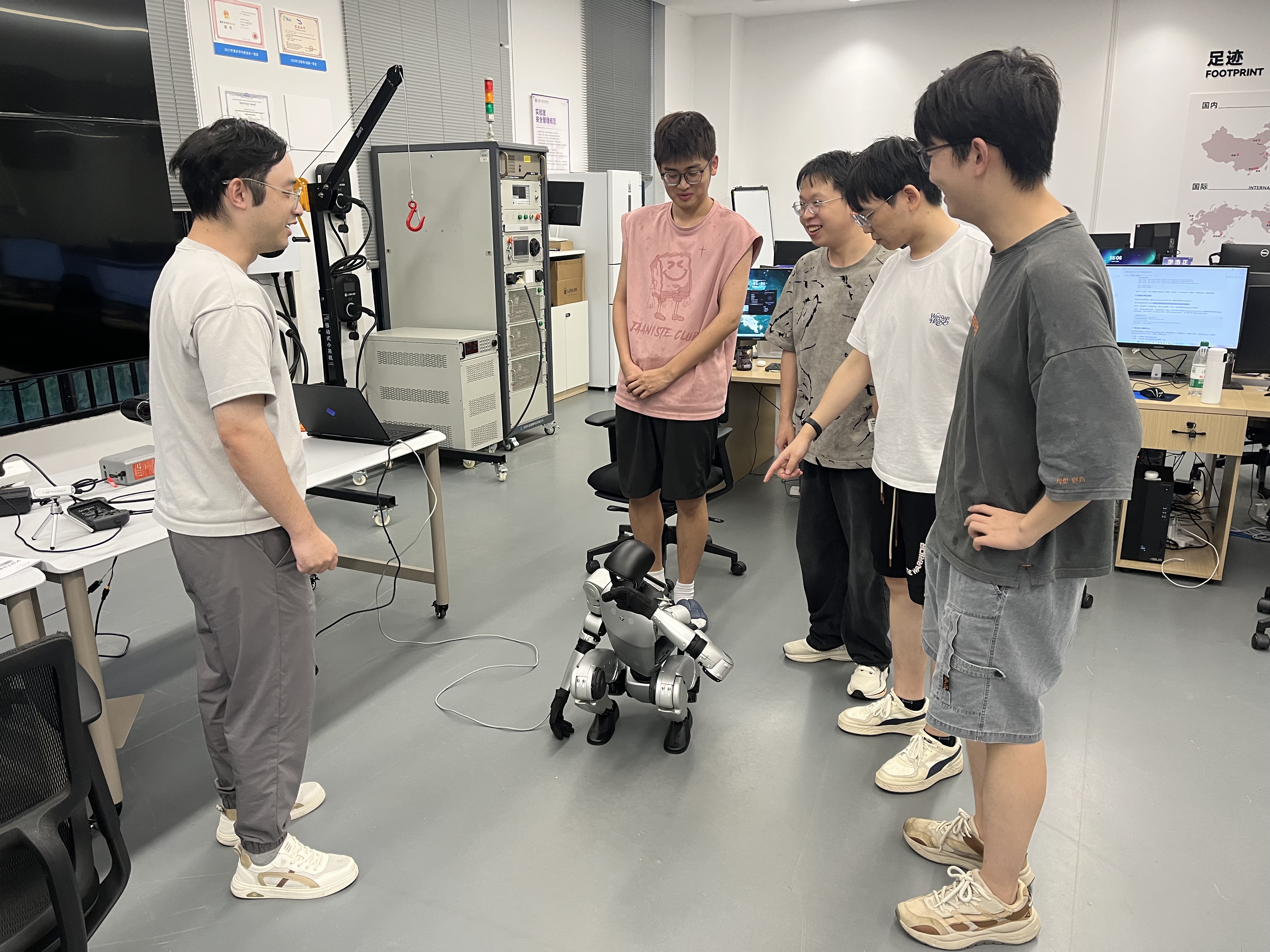
东土科技

Search documents
东土科技:目前公司在具身机器人领域的业务布局进展正常
Zheng Quan Ri Bao· 2025-09-24 08:09
Core Viewpoint - The company, Dongtu Technology, has reported that its business development in the field of embodied robotics is progressing normally as of September 24 [2] Company Summary - Dongtu Technology is actively engaged in the embodied robotics sector and is maintaining a steady pace in its business layout [2]


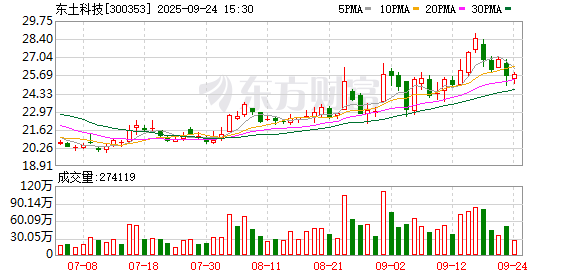
东土科技(300353.SZ):工业网络通信业务不涉及OCS光电路交换机产品
Ge Long Hui· 2025-09-24 07:39
Group 1 - The company Dongtu Technology (300353.SZ) clarified on its interactive platform that its industrial network communication business does not involve OCS optical circuit switch products [1]
突发!创业板人工智能ETF(159381)高开低走盘中下挫超2%,光库科技跌近8%
Xin Lang Cai Jing· 2025-09-23 06:37
Core Insights - The A-share market experienced a decline, with all three major indices dropping over 1%, while the AI computing and technology sectors initially opened strong but followed the overall market trend downwards [1] - Nvidia and OpenAI announced a strategic partnership to build and deploy at least 10 gigawatts of AI data centers, which will involve an investment of up to $100 billion from Nvidia [1] - The AI computing industry is expected to continue its growth trajectory, with significant performance releases anticipated in the coming years, indicating a high level of industry vitality and visibility [2] Market Performance - The AI computing sector, particularly the light module CPO concept stocks, saw significant declines, with the ChiNext AI index dropping over 2% and individual stocks like Guangku Technology falling nearly 8% [1] - The trading volume for popular ETFs was high, with the lowest fee ChiNext AI ETF (159381) exceeding 170 million yuan in trading volume, and the largest 5G communication ETF (515050) surpassing 900 million yuan [1] Industry Outlook - The capital expenditure for computing power remains in a high growth phase, with the domestic market accelerating in line with global AI development [2] - Nvidia is expected to continue upgrading its GPU capabilities, and North American cloud computing giants are increasing their investments, which will benefit companies closely related to the overseas AI industry chain [2] - By 2025, the AI computing industry chain is projected to accelerate further, driven by evolving demand in inference, creating broader growth opportunities [2] ETF Selection - The ChiNext AI ETF (159381) tracks the ChiNext AI index, with over 50% weight in light module CPO stocks, and has a low fee rate of 0.20% [3] - The 5G communication ETF (515050) focuses on the Nvidia, Apple, and Huawei supply chains, with a weight of 38% in light module CPO stocks and 14% in PCB circuit board stocks [3]


中证2000ETF嘉实(159535)跌2.36%,半日成交额162.70万元
Xin Lang Cai Jing· 2025-09-23 04:15
Core Viewpoint - The 中证2000ETF嘉实 (159535) has experienced a decline of 2.36% as of the midday close on September 23, with a trading volume of 1.627 million yuan [1] Group 1: Fund Performance - The fund's performance benchmark is the 中证2000 index return [1] - Since its establishment on September 14, 2023, the fund has achieved a return of 40.10% [1] - The fund's return over the past month is 0.03% [1] Group 2: Major Holdings Performance - Major holdings in the fund include: - 每日互动: down 4.50% [1] - 汉威科技: down 0.38% [1] - 宏创控股: down 3.84% [1] - 东土科技: down 7.11% [1] - 恒宝股份: down 6.64% [1] - 台基股份: up 1.69% [1] - 热景生物: down 2.29% [1] - 仕佳光子: down 5.77% [1] - 华胜天成: down 6.19% [1] - 泰恩康: down 2.43% [1]
通信ETF(159695)逆势红盘,冲击6连涨,光模块龙头领涨AI算力需求持续释放
Xin Lang Cai Jing· 2025-09-23 03:20
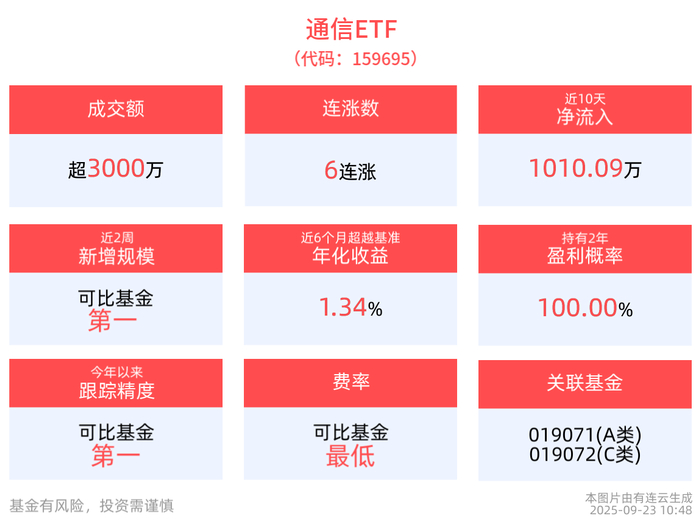
Core Insights - The communication sector is experiencing fluctuations, but the fundamentals of the optical module industry remain strong due to significant demand in the AI computing space, indicating a favorable investment opportunity in the long term [4]. Group 1: Market Performance - As of September 23, 2025, the Guozheng Communication Index decreased by 0.28%, with Yongding Co., Ltd. leading the gains at 10.00% [1]. - The Communication ETF (159695) has shown resilience, achieving a six-day consecutive increase despite the overall market decline [1]. - The Communication ETF recorded a turnover of 10.61% during the trading session, with a total transaction value of 31.588 million yuan [3]. Group 2: Fund Performance - Over the past two weeks, the Communication ETF's scale increased by 35.1476 million yuan, ranking first among comparable funds [3]. - The ETF has seen a net inflow of 10.1009 million yuan over the last ten trading days, despite a recent net outflow of 17.4384 million yuan [3]. - The Communication ETF's net value has risen by 113.58% over the past year, placing it in the top 8.34% among index equity funds [3]. Group 3: Key Stocks - The top ten weighted stocks in the Guozheng Communication Index account for 64.43% of the index, with significant players including Xin Yiseng, Zhongji Xuchuang, and ZTE [4][6]. - Zhongji Xuchuang saw a price increase of 3.74%, while China Telecom and ZTE experienced declines of 0.74% and 3.47%, respectively [6]. Group 4: Strategic Developments - Nvidia has signed a letter of intent with OpenAI for a strategic partnership, planning to invest up to 100 billion dollars, which will enhance the deployment of AI models using Nvidia's GPUs [3].
中证2000ETF嘉实(159535)跌0.92%,半日成交额45.31万元
Xin Lang Cai Jing· 2025-09-19 03:38
Core Viewpoint - The performance of the Zhongzheng 2000 ETF managed by Jiashi Fund has shown a decline in its share price and mixed results among its major holdings since its inception on September 14, 2023 [1] Group 1: ETF Performance - As of the midday close on September 19, the Zhongzheng 2000 ETF Jiashi (159535) decreased by 0.92%, trading at 1.395 yuan with a transaction volume of 453,100 yuan [1] - Since its establishment, the fund has achieved a return of 40.87%, with a monthly return of 1.85% [1] Group 2: Major Holdings Performance - Major stocks within the ETF include: - Meiri Hudong down 0.31% - Hanwei Technology down 7.97% - Hongchuang Holdings up 5.27% - Dongtu Technology down 1.34% - Hengbao Shares down 5.53% - Taiji Shares down 0.72% - Rejing Biology down 4.53% - Shijia Photon up 0.67% - Huasheng Tiancai down 4.24% - Tainkang up 1.49% [1]


中证2000ETF嘉实(159535)开盘跌0.21%
Xin Lang Cai Jing· 2025-09-18 01:43
Core Viewpoint - The performance of the China Securities 2000 ETF managed by Harvest Fund Management has shown a significant return since its inception, indicating strong market interest and potential investment opportunities in the small-cap sector [1] Group 1: Fund Performance - The China Securities 2000 ETF (159535) opened at 1.422 yuan, experiencing a slight decline of 0.21% [1] - Since its establishment on September 14, 2023, the fund has achieved a return of 42.36% [1] - Over the past month, the fund's return has been 4.97% [1] Group 2: Top Holdings Performance - Among the top holdings, Daily Interaction opened with an increase of 0.84% [1] - Hanwei Technology saw a rise of 3.27% [1] - Other notable movements include Dongtu Technology down by 1.65%, Hengbao shares down by 2.14%, and Huasheng Tiancheng down by 2.60% [1]
东土科技20250917
2025-09-17 14:59
Summary of Dongtu Technology Conference Call Industry and Company Overview - **Company**: Dongtu Technology - **Industry**: Industrial Control Systems, Semiconductor Equipment, Communication Solutions Key Points and Arguments 1. **Market Positioning and Strategy**: Dongtu Technology is consolidating its network communication business in mature markets such as rail transit and electricity, while enhancing technical research and service stickiness. The company collaborates with the Electric Power Research Institute to provide communication solutions for new power systems using TSN and AUTOSAR buses [2][3] 2. **Business Structure Adjustment**: In 2025, Dongtu Technology is focusing on optimizing its business structure and cultivating high-value-added businesses, particularly in industrial AI applications and controller business scenarios. The company aims to solidify its foundation in existing markets while actively expanding into new ones [3][4] 3. **Domestic Semiconductor Equipment Market**: The domestic semiconductor equipment market has significant potential for domestic substitution, with an estimated market size of 400 billion RMB in 2024. Currently, 20% of this market has completed domestic substitution, leaving a potential space of approximately 270 billion RMB for control systems [5][10] 4. **Traffic Server Market Breakthrough**: Dongtu Technology has made significant progress in the traffic server market, winning contracts for smart traffic projects in Beijing, with a total order exceeding 69 million RMB. The traffic signal machine market is vast, with local brands accounting for over 55% of the market share [5][6] 5. **Industrial Operating System Development**: The company is collaborating with leading enterprises in CNC machine tools and industrial robots to advance its industrial operating system. This initiative is supported by government policies and aims to expand the ecosystem through partnerships with state-owned enterprises [6][7] 6. **Strategic Partnership with Haiguang**: Dongtu Technology has entered a strategic partnership with Haiguang, utilizing their third to fifth generation CPU products to support seamless operation of user programs on Dongtu's operating system. This collaboration aims to enhance product performance and meet domestic substitution needs [8][9] 7. **Full-Stack Domestic Solutions**: The company offers a full-stack domestic solution covering semiconductor equipment, including upper and lower machines, PFC, and various components, accelerating the replacement of foreign real-time operating systems [4][10] 8. **Market Potential for Industrial Control Machines**: The domestic industrial control machine market has a potential capacity of 2-3 billion RMB annually, with Dongtu Technology providing comprehensive solutions to accelerate the replacement of foreign products [11][12] 9. **Challenges in Product Iteration**: Domestic enterprises face challenges in product iteration and service due to economic impacts and strategic requirements. Many companies prioritize domestic technologies for supply chain security and stability [14] 10. **Future Market Expectations**: The market for public machines is projected to reach 16.5 billion RMB in 2024, with significant growth expected in the semiconductor sector. The adoption of domestic CPUs is increasing, although Intel remains dominant [19][22] Other Important Insights - **Profit Margins**: Dongtu Technology's profit margin is at least 47%, with higher margins typically seen in the semiconductor industry due to its high-risk nature and associated services [22] - **Industrial Communication System Market Share**: The company's share in the industrial communication system market is approximately 3%-4% [24] - **Future Orders and Product Development**: The company anticipates seeing orders materialize in the fourth quarter, with significant progress in the industrial innovation sector and a strong competitive position in the market [26]
谷歌、智元都提前押注,谁能做机器人领域的“安卓”?
第一财经· 2025-09-17 14:40
Core Viewpoint - The article discusses the emergence of a new role in the robotics industry, akin to an Android operating system, which aims to bridge hardware differences and enable compatibility among various robotic systems for large-scale deployment in real-world scenarios [3][19]. Group 1: Industry Challenges - Different robot manufacturers are entering various application scenarios, but the lack of compatibility among their algorithms and hardware is hindering the transfer of successful experiences across different environments [5][19]. - Companies are investing significant resources in collaboration with robot manufacturers, but the return on investment (ROI) remains uncertain due to inconsistent machine efficiency and high operational costs [5][19]. - The complexity of deploying robots in real-world settings is exacerbated by the need for extensive adjustments and testing for each unique scenario, leading to prolonged proof of concept (POC) cycles [5][12]. Group 2: Middleware Development - Middleware is being developed to act as a unifying layer that can mask hardware differences and allow algorithms to be transferred across different robotic systems without the need for retraining [6][19]. - The middleware aims to serve as a "translator" between various robotic brains and operational commands, facilitating smoother integration and operation [7][8]. - Companies like Annu Intelligent are working on middleware solutions that could potentially streamline the deployment process and enhance the scalability of robotic applications [18][20]. Group 3: Learning and Adaptation - Robots face challenges in adapting to real-world conditions due to the limitations of offline reinforcement learning, which cannot encompass all possible scenarios [12][15]. - Real-time online learning algorithms are being explored to allow robots to learn and adapt during actual operations, thereby reducing the need for extensive offline training [13][15]. - The integration of physical laws into simulation environments is crucial for improving the accuracy of robotic learning and performance in real-world applications [14][15]. Group 4: Industry Dynamics and Future Outlook - Major players like Google and various Chinese companies are investing in middleware solutions, indicating a growing interest in creating standardized frameworks for robotic integration [17][18]. - The future of the robotics industry may hinge on whether a unified "operating system" can emerge, similar to that in the smartphone industry, despite the complexities and differing goals among hardware manufacturers and AI model developers [19][20]. - The success of middleware in bridging the gaps between manufacturers and application scenarios will be critical for achieving large-scale deployment of robotic systems [19][20].

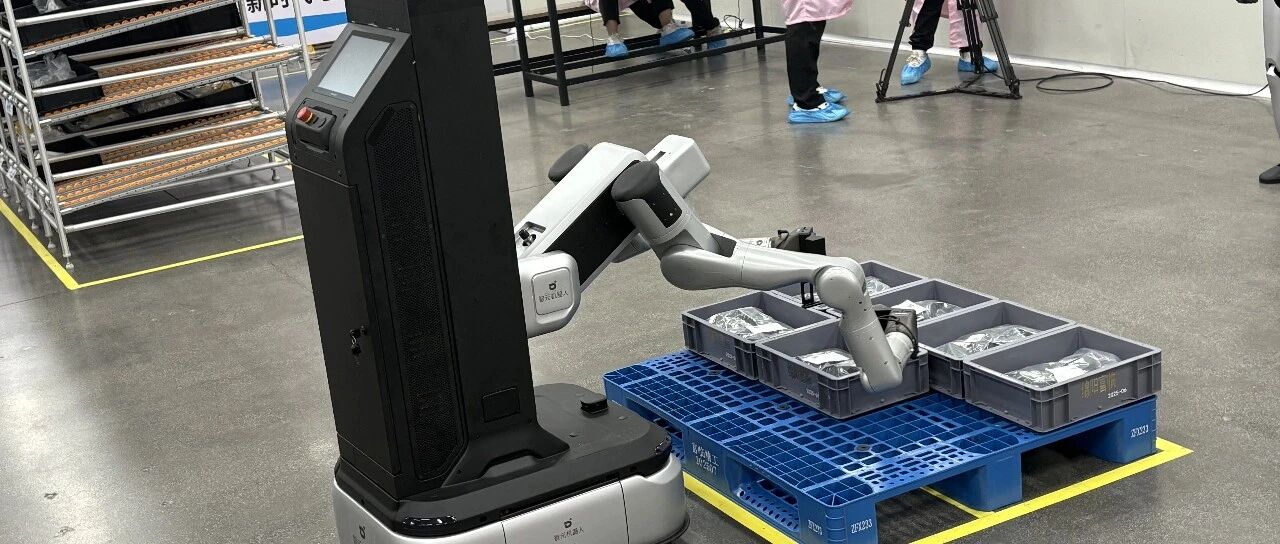
谷歌、智元都提前押注,谁能做机器人领域的“安卓”?
Di Yi Cai Jing· 2025-09-17 10:29
Group 1 - The core idea is that the development of middleware similar to the Android operating system could facilitate the large-scale deployment of robots by enabling compatibility across different hardware and algorithms [1][19]. - A new role in the industry is emerging, where middleware acts as an intermediary layer to mask hardware differences and allow various robot manufacturers to integrate their systems [1][18]. - Major companies such as Google, Zhiyuan, and others are investing in this middleware approach, indicating a growing interest in creating a standardized framework for robot deployment [1][17]. Group 2 - The logistics sector is facing challenges as companies attempt to collaborate with multiple robot manufacturers, leading to increased resource allocation and uncertainty regarding ROI [2][3]. - Compatibility issues among different robot algorithms and hardware are hindering the transfer of successful experiences from one scenario to another, complicating the deployment process [2][8]. - The need for a unified middleware solution is emphasized, as it could streamline the integration of various robots into a cohesive operational framework [3][4]. Group 3 - Real-time online learning algorithms are being explored to allow robots to learn and adapt during actual operations, potentially reducing the time and resources required for training [9][12]. - The integration of physical laws into simulation environments is crucial for improving the accuracy of robot training, as current simulations often lack realistic physical interactions [10][12]. - The ultimate goal is to create a robust middleware that can support the diverse needs of the robot industry, similar to how operating systems function in the software realm [18][19].