宝洁公司

Search documents
深度丨不止PDRN,十大热门科研赛道即将引爆2026
FBeauty未来迹· 2025-12-29 12:14
Core Insights - The article discusses the transformative impact of longevity science and AI on the beauty industry, emphasizing the shift in research and product development towards enhancing the quality of life rather than merely extending lifespan [5][6][10]. Group 1: Longevity Science in Beauty - Longevity science is redefining the foundational logic of beauty research, focusing on long-term skin health and preventive solutions rather than just immediate cosmetic needs [5][6]. - L'Oréal's integration of longevity science aims to transition from symptom treatment to root cause intervention, creating a comprehensive research framework that connects various aging markers to skin health [6][7]. - Companies are encouraged to develop their own longevity science theories based on their brand positioning, focusing on specific research areas like mitochondrial energy and chronic inflammation [8]. Group 2: AI's Role in Beauty Research - AI is significantly accelerating research processes in the beauty industry, with companies like L'Oréal and Unilever reporting dramatic increases in the number of molecules evaluated within shorter timeframes [11][14]. - The efficiency of AI in research is contingent upon the availability of high-quality data, necessitating the digitalization of research outcomes and the development of proprietary AI models [14]. - AI's application in ingredient discovery and development is becoming a competitive edge, with companies leveraging AI to enhance research accuracy and speed [11][14]. Group 3: PDRN and New Ingredient Trends - PDRN has emerged as a highly sought-after ingredient, with major brands like L'Oréal and Lancôme entering the market, indicating a potential surge in new product launches by 2026 [21][22]. - The development of PDRN is diversifying, with companies exploring various sources, including plant and microbial origins, to enhance efficacy and differentiate their products [22][23]. - Despite its popularity, PDRN's application in beauty products is still in its early stages, with concerns regarding its performance and safety yet to be fully validated [24]. Group 4: Advances in Peptide Technology - The beauty industry is witnessing a "technological iteration period" for recombinant collagen and functional proteins, focusing on precise structural design to address specific skin issues [25][26]. - Innovations in peptide technology include the development of multi-peptide matrices and targeted delivery systems, enhancing the effectiveness of these ingredients [26][35]. - The trend towards functionalized proteins reflects a broader industry consensus on the importance of efficacy-driven ingredient development [25][26]. Group 5: Integration of Aesthetic and Medical Approaches - The convergence of aesthetic and medical beauty is becoming a prominent trend, with brands increasingly seeking to provide scientifically validated, high-efficacy skincare solutions [30][32]. - This integration is reflected in the migration of medical-grade ingredients into consumer products, enhancing their appeal to consumers seeking immediate results [32][33]. - Brands are exploring new applications for established medical ingredients, such as PDRN and hyaluronic acid, in their product lines [32][33]. Group 6: Sensory Science and Consumer Experience - Sensory science is gaining traction in beauty research, focusing on the emotional and experiential aspects of product use, which are critical for consumer satisfaction [44][48]. - Companies are investing in technologies to quantify sensory experiences and their impact on consumer emotions, aiming to create products that resonate on a deeper level [47][48]. - The emphasis on sensory value in product development reflects a shift towards a more holistic understanding of consumer needs and preferences [44][48]. Group 7: Future Directions in Beauty Research - The article concludes that the beauty industry is entering a phase of unprecedented innovation driven by scientific advancements and consumer demand for effective, emotionally resonant products [56]. - Companies that successfully integrate rigorous scientific research with emotional engagement are likely to lead the market in the coming years [56].



What to Expect From Procter & Gamble's Q2 2026 Earnings Report
Yahoo Finance· 2025-12-29 10:27
Core Viewpoint - Procter & Gamble Company (PG) is set to announce its fiscal second-quarter earnings for 2026, with analysts projecting a slight decline in earnings per share (EPS) compared to the previous year [1][2]. Financial Performance - Analysts expect PG to report a profit of $1.87 per share on a diluted basis for the upcoming quarter, down from $1.88 per share in the same quarter last year [2]. - For the full fiscal year 2026, EPS is anticipated to be $6.99, reflecting a 2.3% increase from $6.83 in fiscal 2025, with further growth expected to $7.37 in fiscal 2027, a 5.4% year-over-year rise [3]. Stock Performance - PG stock has underperformed the S&P 500 Index, which gained 14.8% over the past 52 weeks, with PG shares down 14.9% during the same period [4]. - The stock also lagged behind the Consumer Staples Select Sector SPDR Fund, which experienced a 1.8% loss [4]. Market Challenges - The underperformance of PG is attributed to sector-wide challenges, including higher tariffs, soft consumer spending, and competition from lower-priced brands, despite resilient fundamentals [5]. - The company faces muted sales growth and margin pressures due to investments and tariffs impacting stock performance [5]. Recent Earnings Report - On October 24, PG reported its Q1 results, with an adjusted EPS of $1.99, surpassing Wall Street expectations of $1.90, and revenue of $22.4 billion, exceeding forecasts of $22.2 billion [6]. Analyst Sentiment - The consensus opinion on PG stock is moderately bullish, with a "Moderate Buy" rating from analysts. Out of 24 analysts, 11 recommend a "Strong Buy," 3 suggest a "Moderate Buy," and 10 give a "Hold" rating [7]. - The average analyst price target for PG is $169.68, indicating a potential upside of 17.2% from current levels [7].

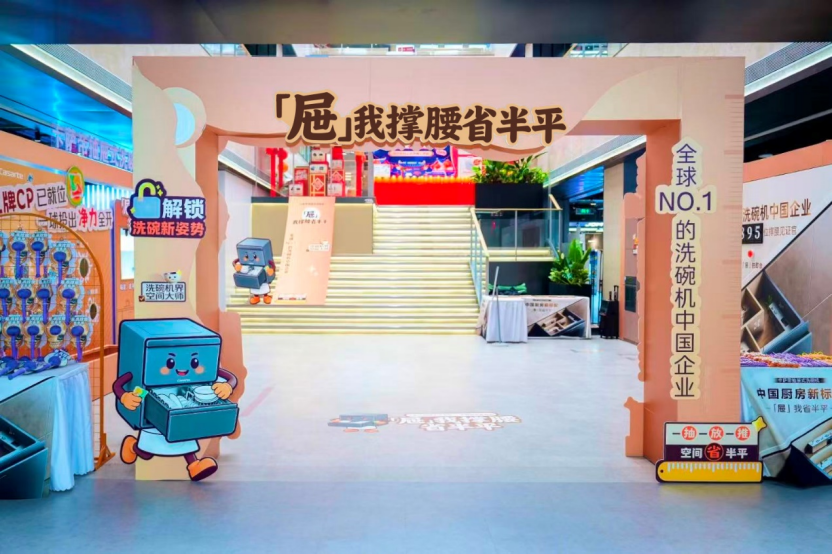
以科技创新重塑厨房健康新体验:卡萨帝厨电携手宝洁JOY定义“中国厨房新标配”
Feng Huang Wang· 2025-12-29 06:29
Core Insights - The modern kitchen is evolving into a space that emphasizes health, comfort, and emotional connection, marking a new stage in the quality of life for Chinese families [2][13] - The collaboration between high-end appliance brand Casarte and cleaning industry leader Procter & Gamble's Joy aims to address common kitchen challenges in Chinese households through technological innovation [2][10] Group 1: User Pain Points and Innovations - The average kitchen size in China is only 6.1 square meters, with over 70% of households being small to medium-sized, leading to ergonomic challenges with traditional dishwashers [3][11] - Users experience over 7,300 instances of bending down annually while using traditional dishwashers, resulting in a cumulative weight burden of 1,022 tons [3] - Casarte's innovative drawer-style dishwasher design allows users to operate it without bending, saving nearly 30% of operational space compared to traditional designs [3][5] Group 2: User Experience and Market Feedback - The drawer-style dishwasher has achieved a user satisfaction rate of 98.2% for its "no bending" experience, indicating its human-centered design [5] - Casarte's drawer-style dishwasher has led the offline market in China for three consecutive years, becoming a new trend in high-quality kitchen configurations [5][11] - The collaboration with Procter & Gamble's Joy has resulted in a complete kitchen ecosystem that enhances both space efficiency and cleanliness [10][11] Group 3: Product Integration and Ecosystem Development - Procter & Gamble's Joy has introduced a multi-chamber dishwashing pod that simplifies the cleaning process, addressing the clutter of traditional cleaning supplies [8][10] - The integration of Casarte's dishwasher and Joy's cleaning pods creates a seamless kitchen experience, transitioning from functional satisfaction to optimized user experience [10][11] - This collaboration signifies a shift in the appliance industry from competition based on technical specifications to delivering user-centric experiences [11][13] Group 4: Future Directions and Industry Impact - The partnership between Casarte and Procter & Gamble is set to expand nationwide, promoting a new kitchen experience focused on "no bending, space-saving, and cleanliness" [13] - The evolution of the kitchen as a core area reflecting family life quality is driven by technological integration and a focus on user needs [13] - The ongoing development of smart home ecosystems and health-conscious living will continue to shape the future of kitchen appliances [13]
Better Consumer Staples ETF: Vanguard's VDC vs. Invesco's RSPS
The Motley Fool· 2025-12-28 15:24
Core Insights - Investors in the consumer staples sector face a choice between broader coverage with the Vanguard Consumer Staples ETF (VDC) and a focused strategy with the Invesco S&P 500 Equal Weight Consumer Staples ETF (RSPS) [1] Cost and Size Comparison - VDC has a significantly lower expense ratio of 0.09% compared to RSPS's 0.40%, making it more cost-effective for long-term investors [3][4] - VDC has a much larger asset under management (AUM) of $8.6 billion versus RSPS's $236.3 million, indicating greater investor confidence and liquidity [3] Performance and Risk Analysis - Over the past year, VDC has outperformed RSPS with a return of -0.4% compared to RSPS's -2.6% [3] - VDC has a lower maximum drawdown of -16.55% over five years compared to RSPS's -18.64%, indicating better risk management [5] Portfolio Composition - VDC holds 103 stocks and is heavily weighted towards major consumer defensive companies like Walmart (14.53%), Costco (12.00%), and Procter & Gamble (10.09%), providing broader diversification [6] - RSPS, with only 36 holdings, employs an equal-weighted strategy, giving each stock the same influence, which can lead to less diversification and a focus on smaller companies [7][9] Investment Implications - VDC is suitable for investors seeking low costs and willing to have larger companies influence returns, while RSPS appeals to those wanting a pure representation of the consumer staples sector [11]

DSTL: Unconvincingly Blending Value And Quality
Seeking Alpha· 2025-12-28 15:01
Core Insights - The article discusses the expertise of Fred Piard, a quantitative analyst with over 30 years in technology, focusing on data-driven systematic investment strategies since 2010 [1]. Group 1: Expertise and Background - Fred Piard has authored three books and runs an investing group called Quantitative Risk & Value, which focuses on quality dividend stocks and innovative tech companies [1]. - He provides various market strategies, including market risk indicators, real estate, bond, and income strategies in closed-end funds [1].



Potentially 12%-15% Consistent Income: Monthly Options Series (January 2026)
Seeking Alpha· 2025-12-28 13:00
Group 1 - The primary goal of the "High Income DIY Portfolios" service is to provide high income with low risk and capital preservation for DIY investors [1] - The service offers seven portfolios designed for income investors, including retirees, featuring three buy-and-hold portfolios, three rotational portfolios, and a conservative NPP strategy portfolio [1] - The portfolios include two high-income portfolios, two dividend growth investing (DGI) portfolios, and a conservative NPP strategy portfolio aimed at low drawdowns and high growth [1] Group 2 - The author of the article has 25 years of investment experience and focuses on dividend-growing stocks with a long-term investment horizon [2] - A unique 3-basket investment approach is applied, targeting 30% lower drawdowns, 6% current income, and market-beating growth over the long term [2] - The service includes a total of 10 model portfolios with varying income targets, buy and sell alerts, and live chat for portfolio management and asset allocation [2]




Better Consumer Staples ETF: State Street's XLP vs. Fidelity's FSTA
Yahoo Finance· 2025-12-27 22:36
Core Insights - The article compares two ETFs targeting the U.S. consumer staples sector: Fidelity MSCI Consumer Staples Index ETF (FSTA) and State Street Consumer Staples Select Sector SPDR ETF (XLP), highlighting their differences in portfolio structure, yield, and liquidity [4][5][10]. Group 1: Portfolio Structure - FSTA holds 104 stocks with a sector tilt of 98% towards consumer defensive, providing broader diversification compared to XLP, which has only 36 holdings [1][8]. - XLP's top holdings include Walmart, Costco Wholesale, and The Procter & Gamble Co., which constitute a significant portion of its assets, indicating a concentrated investment approach [2][5]. - FSTA's top five holdings represent a larger percentage of its total portfolio compared to XLP, making it somewhat top-heavy [9]. Group 2: Yield and Expense Ratio - Both ETFs charge a low expense ratio of 0.08%, but XLP offers a higher yield of 2.7% compared to FSTA's 2.3%, appealing to income-focused investors [3][5]. Group 3: Liquidity and Size - XLP has $14.9 billion in assets under management (AUM), making it larger and more liquid than FSTA, which may benefit investors looking for ease in executing large trades [2][8]. - The greater liquidity of XLP is a significant advantage over FSTA, despite both ETFs covering the same defensive sector [5][10].


中伦助力江天科技在北京证券交易所上市
Sou Hu Cai Jing· 2025-12-25 12:03
Group 1 - The core viewpoint of the article highlights Jiangtian Technology's successful public offering and listing on the Beijing Stock Exchange, supported by comprehensive legal services from Zhonglun Law Firm [2] - Jiangtian Technology, founded in 1992, specializes in providing integrated and high-value label solutions for global consumer brands, evolving labels into comprehensive visual systems that include anti-counterfeiting, traceability, interactivity, and artistic aesthetics [3] - The company is recognized as the first national-level printing demonstration enterprise in China focused on label printing and has won the World Label Award for two consecutive years, showcasing its industry leadership and innovation capabilities [3] Group 2 - Jiangtian Technology has established long-term partnerships with renowned global brands such as Unilever, Procter & Gamble, and Shell, as well as domestic brands like Nongfu Spring and Heytea, indicating its strong market presence [3] - The company aims to continue its commitment to technological upgrades and innovation to enhance brand value in the label printing industry [3]

从宝洁架构调整,看品牌人未来职业发展方向
3 6 Ke· 2025-12-25 01:54
Core Insights - The article discusses the evolution of brand management, highlighting the initial establishment of the brand manager role at Procter & Gamble (P&G) and its significance in systematic brand development [1][3][4] - It contrasts the original intent of brand management with the current trend where many companies are downsizing or eliminating brand departments, leading to a perception of brand roles as expendable [5][6][7] - The article emphasizes the need for a new approach to brand management that integrates comprehensive skills and responsibilities, as demonstrated by P&G's recent restructuring into a "Brand Growth Department" [15][16][21] Group 1: Historical Context of Brand Management - In 1931, Neil McElroy proposed the brand manager system at P&G to address inefficiencies in brand advertising and sales, leading to a structured approach to brand management [1][3] - The brand manager's role was defined as akin to a small CEO, responsible for all aspects of brand development and marketing [3][4] - P&G's systematic approach to brand management has been a key factor in its success, establishing it as a leader in the branding industry [3][4] Group 2: Current Trends and Challenges - Recent layoffs in various companies, including JD.com and Lenovo, have targeted brand and marketing departments, indicating a shift in how brands are perceived within organizations [5][6] - Many brand departments have become mere "decorative" entities, lacking real influence on business operations and often being the first to face cuts during financial downturns [6][7] - The article argues that the focus on short-term profitability has led to a neglect of the deeper, strategic aspects of brand management [9][10] Group 3: Future Directions in Brand Management - P&G's creation of the "Brand Growth Department" signifies a shift towards integrating brand management with business growth strategies, emphasizing the need for leaders who can navigate both marketing and operational challenges [15][16][21] - The new role requires skills in consumer insight, product innovation, and integrated marketing strategies, moving away from traditional siloed functions [18][20] - The article suggests that the future of brand management lies in developing leaders who can oversee the entire brand lifecycle and drive growth through a holistic understanding of the market [22][23]

科蒂进入转型关键期
Xin Lang Cai Jing· 2025-12-24 17:47
Core Viewpoint - Coty has appointed Markus Strobel as the interim CEO starting January 1, 2026, succeeding Sue Nabi, as the company aims to strengthen its leadership in the beauty sector and drive profitability growth and expansion [1][3] Leadership Change - Markus Strobel brings 33 years of experience from Procter & Gamble, where he led the global skin and personal care business, recognized for revitalizing the SK-II brand [1] - Coty expresses confidence in Strobel's ability to lead the company during a critical period, particularly with a strategic review of its consumer beauty business [3] Business Restructuring - Coty is adjusting its product portfolio, having sold the remaining 25.8% stake in Wella to KKR, completing a plan initiated in 2020 to simplify its operations and maximize the value of its Wella business [3] - The proceeds from this transaction will primarily be used to repay short-term and long-term debt, marking a significant milestone in Coty's transformation and long-term deleveraging commitment [3] Impact of Brand Loss - The recent deal between Kering and L'Oréal, valued at over €4 billion, affects Coty's operations of the Gucci brand, which is crucial to Coty's revenue, accounting for approximately 8% of total sales and 11% of profits [4][5] - Losing the Gucci brand is expected to significantly impact Coty's high-end strategy and brand competitiveness in the beauty market [5] Financial Performance - Coty reported a net revenue of $5.893 billion for fiscal year 2025, a decline of 3.68%, resulting in a loss of $381 million, marking a shift from profit to loss [5] - In the first quarter of fiscal year 2026, Coty experienced an 8% revenue decline, with both the high-end beauty and mass beauty segments seeing decreases of 6% and 11%, respectively [5] Strategic Initiatives - In response to challenges, Coty is focusing on its high-end lines, including Hugo Boss and Burberry, with Hugo Boss's new fragrance performing well in Europe [6] - Coty has signed beauty licensing agreements with brands like Etro and Marni, and is launching its own fragrance brand, Infiniment Coty Paris, in 2024, aiming to innovate in the fragrance market [6]