
TotalEnergies SE

Search documents
Murphy Oil Q3 Earnings & Sales Beat Estimates, New Wells Boost Volumes
ZACKS· 2025-11-06 17:16
Core Insights - Murphy Oil Corporation (MUR) reported third-quarter 2025 adjusted net earnings of 41 cents per share, exceeding the Zacks Consensus Estimate of 16 cents by 156.3%, but down 60.9% from 74 cents in the same quarter last year [1] - The company’s revenues were $732.9 million, surpassing the Zacks Consensus Estimate of $665 million by 10.3%, although this represents a 3.3% decline year over year [2] - Murphy Oil produced 200,383 barrels of oil equivalent per day (BOE/D) in Q3 2025, exceeding the guidance range of 185,000-193,000 BOE/D due to strong new well productivity and no storm downtime [3] Financial Performance - Total costs and expenses for Murphy Oil were $727.2 million, reflecting a 25.5% increase from $579.3 million in the year-ago quarter [3] - Interest expenses rose to $24.7 million from $21.3 million in the previous year [4] - The company returned $242.4 million to shareholders in the first nine months of 2025, which includes $102.6 million in share repurchases and $139.8 million in dividends [4] Financial Condition - As of September 30, 2025, Murphy Oil had cash and cash equivalents of $425.9 million, slightly up from $423.6 million at the end of 2024, with total liquidity of $1.6 billion [5] - Long-term debt increased to $1.425 billion from $1.27 billion at the end of 2024 [5] - Net cash provided by continuing operational activities in the first nine months of 2025 was $0.99 billion, down from $1.29 billion in the same period last year [5] Future Guidance - For Q4 2025, Murphy Oil expects production, excluding non-controlling interest, to be in the range of 176,000-182,500 BOE/D and exploration expenses to be $80 million [6] - The company reiterated its 2025 capital expenditures guidance of $1.13-$1.28 billion and expects total production for the year to be between 174,500-182,500 BOE/D [6]


Devon Q3 Earnings & Sales Beat Estimates on Strong Production Volumes
ZACKS· 2025-11-06 16:56
Core Insights - Devon Energy Corp. reported third-quarter 2025 earnings per share (EPS) of $1.04, exceeding the Zacks Consensus Estimate of 93 cents by 11.8%, although down 5.5% year over year [1][9] - Total revenues for the quarter were $4.33 billion, surpassing the Zacks Consensus Estimate of $4.11 billion by 5.17% [3][9] Financial Performance - GAAP EPS for the quarter was $1.09, compared to $1.41 in the same quarter last year, with differences attributed to asset disposition gains and other financial adjustments [2] - Net cash from operating activities was $1.69 billion, slightly up from $1.66 billion in the third quarter of 2024 [11] - Total production expenses increased to $895 million, reflecting a 17.3% year-over-year rise [7] Production Metrics - Net production totaled 853,000 barrels of oil equivalent per day (Boe/d), marking a 17.2% increase year over year and exceeding the guidance range of 829,000-847,000 Boe/d [4][9] - Oil production reached 390,000 barrels per day, up 16.4% year over year, driven by strong performance in the Rockies region [5] Pricing and Realized Prices - Realized oil prices were $63.99 per barrel, down 13.8% from $74.26 a year ago, while realized prices for natural gas liquids decreased by 11.3% to $17.18 per barrel [6] - Total oil equivalent realized prices, including cash settlements, were $36.46 per Boe, down nearly 10.4% year over year [6][8] Shareholder Returns and Debt Management - Devon repurchased shares worth $250 million and paid dividends of $151 million to shareholders during the quarter [7] - Long-term debt decreased to $7.39 billion as of September 30, 2025, down from $8.88 billion at the end of 2024 [10] Future Guidance - For the fourth quarter, production is expected to be in the range of 828,000-844,000 Boe/d, with capital spending estimated between $0.89 billion and $0.95 billion [12] - In 2026, the company aims to maintain production levels between 835,000-855,000 Boe/d, with capital expenditures projected at $3.5 billion to $3.7 billion [13]


数智驱动,体验革新:北京地铁广告的价值进阶之路
Jing Ji Guan Cha Wang· 2025-11-06 16:46
Core Insights - The outdoor advertising industry is undergoing significant transformation, with programmatic and digitalization as key drivers of evolution [1] - Beijing Metro Tongcheng aims to enhance media value through technology and reshape scene experiences, transitioning subway advertising from "traffic coverage" to "scene value" by 2025 [1] Group 1: Company Strategies - Beijing Metro Tongcheng integrates "technology + scene + data" to create a deep synergy, utilizing the VIOOH programmatic digital outdoor media trading platform [1] - The company establishes a "full-link data closed loop" for quantifiable and optimizable advertising effectiveness through big data analysis and real-time monitoring [1] - The transformation of subway spaces into "interactive experience venues" allows for immediate responses to brand information and passenger needs [1] Group 2: Successful Case Studies - 1664 Beer targets young professionals aged 18-35 during peak hours, using programmatic platforms to achieve high-frequency ad rotations in key locations, resulting in increased brand visibility and sales [2] - Total Energy collaborates with Beijing Metro Tongcheng to promote green energy initiatives, effectively reaching government and business audiences through targeted advertising during peak hours [4] - Kyoto Nishiyuan utilizes innovative mirror lightbox matrices to create emotional connections with consumers, enhancing brand exposure and social engagement [6] Group 3: Market Outlook for 2026 - The outdoor advertising market is expected to enter a phase of "programmatic deepening + technology integration," with increased penetration of pDOOH as a core component of brand marketing [8] - The adoption of AI and DCO technologies will enable dynamic creative optimization, allowing real-time adjustments to advertising content [8] - Innovations in scene creation will extend into "refined" areas, with new hardware upgrades providing fresh traffic opportunities for growth [8] Group 4: Opportunities for Brands - Brands should leverage "full integration" opportunities by combining outdoor advertising with online channels for comprehensive customer journey coverage [9] - Focusing on interactive creativity and utilizing AI tools can reduce content production costs while enhancing personalization [9] - Capitalizing on "suburban scenes" will offer higher cost-effectiveness as the subway network expands, providing better advertising foundations for brands [9]

Seadrill(SDRL) - 2025 Q3 - Earnings Call Presentation
2025-11-06 14:00
Fleet Status Overview - The report is a Fleet Status Report from Seadrill Limited, dated November 5, 2025[1] - The report contains forward-looking statements and is subject to risks and uncertainties that could cause actual results to differ materially[2, 3, 4] Active Rigs - Seadrill has 13 active rigs across various locations including S E Asia, Brazil, U S Gulf, Norway and Angola[7] - 6 rigs are located in Brazil, 3 in the U S Gulf, 3 in Angola, 1 in S E Asia and 1 in Norway[7] Contract Details - West Auriga has a contract with Petrobras in Brazil until December 2027, with a total contract value at signing of approximately $577 million, including mobilization and additional services[9] - West Carina has a contract with Petrobras in Brazil until January 2026[9] - West Jupiter has a contract with Petrobras in Brazil from April 2026 to April 2029, with a total contract value at signing of approximately $525 million, including mobilization and additional services[9] - West Polaris has a contract with Petrobras in Brazil until January 2028, with a total contract value at signing of approximately $518 million, including mobilization and additional services[9] - West Tellus has a contract with Petrobras in Brazil until February/April 2026, with a total contract value at signing of approximately $539 million, including mobilization and additional services, and another contract from June 2026 to June 2029[9] - West Neptune has a contract with LLOG in the U S Gulf until November 2025/May 2026, with a total contract value at signing of approximately $86 million, excluding additional services, for an approximate 180-day duration[9] - West Vela has a contract with Walter Oil & Gas in the U S Gulf from March 2026 to May/June 2026, with a total contract value at signing of approximately $26 million, excluding MPD[9] - West Elara has a contract with ConocoPhillips in Norway until March 2028, but a notice of suspension has been received for the period from late Q3 2026 to late Q4 2027[10]

全球能源巨头汇聚,第八届中国石油国际合作论坛在沪举办
Sou Hu Cai Jing· 2025-11-06 12:18
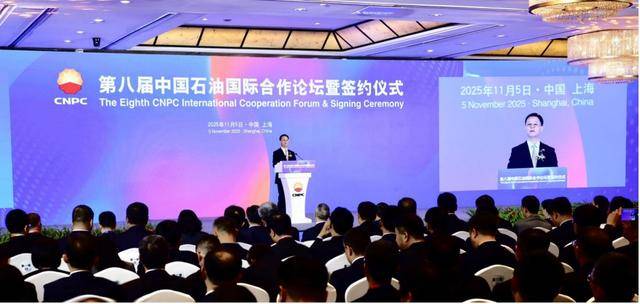
Core Insights - The eighth China Petroleum International Cooperation Forum was successfully held in Shanghai, focusing on building a fair, resilient, and sustainable global energy cooperation paradigm [1][3] - China National Petroleum Corporation (CNPC) signed 43 procurement agreements with 41 global partners during the event, totaling $17.485 billion, indicating a stable increase compared to last year's procurement agreements [3] - Since the first China International Import Expo, CNPC has signed procurement agreements worth $144.785 billion with 232 international suppliers, showcasing a cooperative image of Chinese energy enterprises [3] Group 1: Forum Highlights - The forum featured a keynote speech by CNPC General Manager Zhou Xinhai, emphasizing the need for a new energy cooperation paradigm based on fairness, resilience, and sustainability amid global energy transitions [3][4] - Zhou highlighted CNPC's commitment to green development and its goal to become a world-class integrated international energy and chemical company [4] - CNPC aims to enhance energy supply efficiency and security, achieving a new pattern of "three 100 million tons" in domestic and overseas oil and gas production [4] Group 2: Strategic Initiatives - Zhou proposed four initiatives to deepen global energy cooperation: promoting bilateral and multilateral cooperation, fostering energy technology innovation, accelerating green low-carbon transitions, and enhancing global energy governance [5] - The forum included high-level dialogues with leaders from top global energy companies, discussing topics such as energy justice transformation and supply chain resilience [6]

谁在追逐欧洲电池产业的新浪潮
Di Yi Cai Jing· 2025-11-06 05:39
Core Insights - European economies like the UK and Germany are either restarting or planning to restart subsidies for electric vehicles (EVs) early next year, indicating a renewed focus on the EV market [1][5] - Local battery manufacturers in Europe, such as Northvolt and ACC, have faced significant challenges, including production inefficiencies and quality issues, leading to Northvolt's potential bankruptcy and ACC's halted investment plans [2][3] - The disparity in battery production capabilities between Chinese and European companies is evident, with Chinese firms demonstrating a more effective approach to scaling production and market penetration [8][13] Group 1: Market Dynamics - The European EV market is experiencing a turnaround, with a 34% year-on-year increase in sales in September 2025, reaching 307,000 units [5] - Subsidy policies in Europe are increasingly tied to local production requirements, such as the French policy mandating that vehicles be assembled in the EU and batteries manufactured in the European Economic Area [5] - Investment in the European battery sector is expected to rebound, with Richard Grtner suggesting that the worst is over for the industry [5][12] Group 2: Company Challenges - Northvolt, once a highly anticipated battery manufacturer in Europe, has encountered severe issues with product delivery and quality, leading to its potential bankruptcy proceedings in 2024 [2][3] - ACC, a joint venture involving Stellantis, Mercedes-Benz, and TotalEnergies, has also suspended its investment plans in Germany and Italy, reflecting broader struggles within the European battery sector [2][3] - The challenges faced by these companies highlight a lack of understanding of battery technology and production processes among European manufacturers [3][4] Group 3: Competitive Landscape - Chinese battery companies are rapidly expanding their presence in Europe, with significant investments and new factories being established, such as Guoxuan High-Tech's €1.2 billion plant in Slovakia [9][14] - CATL, the largest battery manufacturer globally, is also making substantial investments in Europe, including a €7.34 billion factory in Hungary with a planned capacity of 100 GWh [11] - The competitive landscape is shifting, with Richard Grtner estimating that Chinese battery factories could capture up to 80% of the European market share, leaving the remainder for American, Korean, and Japanese firms [13][14] Group 4: Strategic Adjustments - Chinese companies are adapting their strategies in Europe, often opting for joint ventures to navigate local regulations and market dynamics, as seen with CATL's partnership with Stellantis in Spain [14][15] - The approach of Chinese firms contrasts with their previous preference for wholly-owned operations, indicating a shift towards collaboration and local partnerships to enhance market access [14][15] - The evolving global economic landscape necessitates that Chinese battery manufacturers remain flexible and responsive to international conditions and local policies [15]




Plains All American Q3 Earnings Beat Estimates, Sales Decline Y/Y
ZACKS· 2025-11-05 17:36
Core Insights - Plains All American Pipeline, L.P. (PAA) reported third-quarter 2025 adjusted earnings of 39 cents per unit, exceeding the Zacks Consensus Estimate of 34 cents by 14.7% and up from 37 cents in the same quarter last year [1][8] PAA's Total Revenues - Net sales for the quarter were $11.58 billion, missing the Zacks Consensus Estimate of $12.96 billion by 10.6% and decreasing 7% from $12.46 billion in the year-ago quarter [2][8] Highlights of PAA's Q3 Earnings Release - Total costs and expenses were $11.09 billion, down 9.5% year over year due to lower purchases, field operating costs, and general and administrative expenses [3] - Net interest expenses increased to $135 million, up 19.5% from the prior-year quarter [3] PAA's Financial Update - As of September 30, 2025, cash and cash equivalents totaled $1.18 billion, a significant increase from $0.35 billion as of December 31, 2024 [4] - Long-term debt rose to $8.44 billion from $7.21 billion as of December 31, 2024, with long-term debt-to-total book capitalization increasing to 46% from 42% [4] PAA's 2025 Guidance - For 2025, PAA narrowed its adjusted EBITDA guidance to a range of $2.84-$2.89 billion from the previous range of $2.80-$2.95 billion, with adjusted free cash flow anticipated at $900 million [5][8] - The company plans disciplined capital investments, expecting full-year 2025 growth capital and maintenance capital of $490 million and $215 million, respectively [5]


道达尔能源莫桑比克LNG项目将重启
Zhong Guo Hua Gong Bao· 2025-11-05 06:56
Core Insights - TotalEnergies and its partners are set to restart the construction and engineering work on a $20 billion liquefied natural gas (LNG) export facility in Mozambique after a four-year force majeure status has been lifted [1] Group 1: Project Status - The project was previously halted due to deteriorating security conditions in the region [1] - TotalEnergies has submitted a notification to the Mozambique government to lift the force majeure status [1] - The restart of the project is contingent upon two key conditions: approval from the Mozambique government and an updated budget and timeline [1] Group 2: Timeline and Costs - The initial target for the first LNG production has been postponed from 2027 to 2029 [1] - Since 2021, TotalEnergies has been continuously assessing the conditions for restarting the project [1] - According to minority shareholder Bharat Petroleum, the four-year delay may have resulted in an estimated cost increase of approximately $4 billion [1]

道达尔能源莫桑比克LNG项目将重启
Zhong Guo Hua Gong Bao· 2025-11-05 02:42
Group 1 - TotalEnergies and its partners are set to restart the construction and engineering work on a $20 billion LNG export facility in Mozambique after a four-year force majeure status has been lifted [1] - The project requires approval from the Mozambique government and an updated budget and timeline before full resumption [1] - The initial target for the first LNG production has been postponed from 2027 to 2029 due to ongoing assessments since 2021 [1] Group 2 - The four-year halt may have resulted in an estimated cost increase of approximately $4 billion, according to minority shareholder Bharat Petroleum [1]
原油成品油早报-20251105
Yong An Qi Huo· 2025-11-05 01:55
Report Summary 1. Report Industry Investment Rating - Not provided in the content 2. Core View of the Report - This week, crude oil prices maintained a volatile trend. On Friday, US media reported that the US was about to launch a military attack on Venezuela, causing oil prices to rise. On Sunday, OPEC+ members confirmed a production increase of 137,000 barrels per day in December. Fundamentally, global on - land oil inventories slightly increased, while floating storage inventories slightly decreased. Affected by a significant decline in net crude oil imports, US commercial crude oil inventories decreased by 6.858 million barrels, and gasoline and diesel inventories also decreased. Refining profits in Europe and the US rebounded this week. Although short - term geopolitical risks have resurfaced, the pressure on crude oil supply release is relatively high. With the commissioning of Brazil's P78, further production increases by OPEC, and the US maintaining a high total production, crude oil will maintain a weak pattern [5] 3. Summary by Relevant Catalogs a. Price Changes - From October 29 to November 4, 2025, WTI crude oil prices decreased by $0.49, BRENT decreased by $0.75, and DUBAI decreased by $0.76. Among refined products, NYMEX RBOB increased by $0.67, and NYMEX HO increased by $3.93. For other related products, SC decreased by 4.40 yuan, and Japanese naphtha CFR decreased by $2.57 [3][12] b. Daily News - The API crude oil inventory in the US for the week ending October 31 was 6.521 million barrels, with the previous value being - 4.02 million barrels. BP's CEO stated that oil demand remains strong, with aviation and petrochemical products driving a 1% increase in oil demand. TotalEnergies' CEO believes that global renewable energy will double by 2040, and there is no investment shortage in the oil market. The US Energy Department's deputy minister said that energy demand is rising rapidly, and the top priority is to replenish the strategic petroleum reserve. Brazil's National Petroleum Agency reported that the country's oil production in September was 3.915 million barrels per day, a year - on - year increase of 12.7% [3][4] c. Inventory - According to the EIA report for the week ending October 24, US crude oil exports increased by 158,000 barrels per day to 4.361 million barrels per day; domestic crude oil production increased by 15,000 barrels to 13.644 million barrels per day; commercial crude oil inventories excluding strategic reserves decreased by 6.858 million barrels to 416 million barrels, a decrease of 1.62%; the four - week average supply of US crude oil products was 20.753 million barrels per day, a 0.91% decrease compared to the same period last year; the strategic petroleum reserve (SPR) inventory increased by 533,000 barrels to 409.1 million barrels, an increase of 0.13%; and crude oil imports excluding strategic reserves were 5.051 million barrels per day, a decrease of 867,000 barrels per day compared to the previous week. US gasoline inventories decreased by 5.941 million barrels, and refined oil inventories decreased by 3.362 million barrels. From October 23 - 30, the operating rate of domestic main refineries decreased, while that of local refineries slightly increased. Gasoline and diesel inventories accumulated, with local refinery gasoline inventories increasing and diesel inventories decreasing. The profits of both main and local refineries decreased [4][5] d. Weekly View - This week, crude oil prices were volatile. On Friday, news of a potential US military attack on Venezuela drove up oil prices. On Sunday, OPEC+ confirmed a production increase in December. According to data, Russia's average daily seaborne oil product exports in the first 26 days of October were 1.89 million barrels, and the average daily seaborne crude oil exports in October were 5.198 million barrels, a month - on - month decrease of 460,000 barrels and a year - on - year increase of 321,000 barrels. Fundamentally, global on - land oil inventories slightly increased, while floating storage inventories slightly decreased. Affected by a significant decline in net crude oil imports, US commercial crude oil inventories decreased. Gasoline and diesel inventories also decreased, and refining profits in Europe and the US rebounded. Despite short - term geopolitical risks, the pressure on crude oil supply release is high, and crude oil will maintain a weak pattern [5]