
Lyft

Search documents
Lyft CEO David Risher: Surge Pricing ‘Deeply Unpopular' With Customers
PYMNTS.com· 2025-04-25 17:32
Lyft found that surge pricing is “deeply unpopular” with customers, CEO David Risher said in his annual letter to shareholders, released Thursday (April 24).Surge pricing, which the rideshare company calls Prime Time or PT, balances supply and demand by raising prices when demand is high, thereby incentivizing more drivers to get online, according to the letter.The company knew this was unpopular with customers, but the issue was clarified when Risher hit the road as a Lyft driver, as he does every six week ...


Lyft to Start Adding Licensed Taxis to Rideshare Platform
PYMNTS.com· 2025-04-24 19:30
Lyft is set to start rolling out a feature that will let riders opt in to be matched with a licensed taxi when that vehicle can get there faster than a rideshare one.The company will launch this feature in St. Louis on May 5, Bloomberg reported Thursday (April 24), saying the rideshare company confirmed this plan after the feature was discovered within the code of its mobile app.“We’re always exploring new ways to help riders get to the people and places they love,” the company said, per the report. “We’re ...

Lyft Scales Into Europe: Can It Take Market Share From Uber?
MarketBeat· 2025-04-24 11:16
Core Insights - Lyft is attempting to increase its market share outside the United States by acquiring the FreeNow mobility platform, which operates in 19 countries [4][6] - The acquisition is expected to double Lyft's annual ride volume to over 160 million, leveraging FreeNow's established customer base of 6.3 million users [6] - Lyft's stock forecast indicates a potential upside of 43.98%, with a 12-month price target of $16.45 [5] Financial Performance - Lyft reported a 17% year-over-year growth in gross bookings, reaching $16.1 billion [15] - Revenue increased by 31% year-over-year to $5.8 billion [15] - The company achieved a net income of $22.8 million, a significant improvement from a loss of $340.3 million in 2023 [15] - Adjusted EBITDA rose to $382.4 million compared to $222.4 million in 2023 [15] - Free cash flow improved to $849.7 million from a loss of $98.2 million in 2023 [15] - Total rides increased by 17% year-over-year to 828 million in 2024, marking Lyft's first full year of GAAP profitability [15] Market Position - Uber dominates the U.S. ride-hailing market with a 76% market share, while Lyft holds 8% of the global ride-hailing market [4] - Lyft's strategy to target markets where Uber has less concentration is seen as a logical move [4] - The FreeNow acquisition positions Lyft to compete more effectively in the European market [4][6] Future Developments - Lyft plans to roll out autonomous vehicles (AVs) in partnership with May Mobility and Mobileye as early as summer 2025 [11][12] - The partnership with Marubeni aims to deploy thousands of AVs on the Lyft platform starting in Dallas by 2026 [13]


Hitching A Bargain Ride With Lyft
Seeking Alpha· 2025-04-22 10:22
Analyst's Disclosure: I/we have a beneficial long position in the shares of LYFT, UBER either through stock ownership, options, or other derivatives. I wrote this article myself, and it expresses my own opinions. I am not receiving compensation for it (other than from Seeking Alpha). I have no business relationship with any company whose stock is mentioned in this article. Hello! I am a Latin-American fundamentalist investor searching for discounted stocks across the region, but also worldwide. I have worke ...

Lyft(LYFT.O):预计今年夏天在亚特兰大市中心推出自动驾驶出租车服务。
news flash· 2025-04-16 15:27
Lyft(LYFT.O):预计今年夏天在亚特兰大市中心推出自动驾驶出租车服务。 ...
Uber:自动驾驶真能杀死“美版滴滴”?
海豚投研· 2025-04-08 14:16
Core Viewpoint - The article discusses the impact of autonomous driving technology on the ride-hailing industry, particularly focusing on Uber's current valuation and market position amidst the evolving landscape of autonomous vehicles [1][3]. Group 1: Impact of Autonomous Driving on Ride-Hailing Demand - Autonomous driving technology primarily reduces the labor and associated costs of driving, but it is unlikely to significantly increase the overall demand for ride-hailing services [5][6]. - The structure of ride-hailing demand is expected to change, with private car usage increasing and public transport declining, while ride-hailing's share remains stable [9][10]. - The pandemic has shifted commuting patterns, with a notable increase in remote work, affecting the demand for various transportation modes [7][9]. Group 2: Market Dynamics and Competition - The introduction of autonomous ride-hailing services is anticipated to capture a significant portion of public transport usage, potentially increasing the market size for ride-hailing by approximately 40% [17][18]. - The competition landscape will shift as autonomous vehicle technology providers may either compete directly with existing platforms or collaborate with them [27][31]. - The pricing strategies of ride-hailing platforms will be crucial, as lower prices could lead to increased usage but may compress profit margins [23][24]. Group 3: Uber's Valuation and Future Outlook - Current estimates suggest that Uber's valuation does not reflect a significant discount, with projected net profits for 2025 and 2026 indicating a neutral market sentiment [50][51]. - The potential impact of autonomous driving on Uber's business model includes a decrease in average revenue per ride and a shift in profit distribution between platforms and vehicle operators [58][59]. - The article posits that Uber's market share may stabilize around 60% by 2031, with the emergence of new competitors in the autonomous ride-hailing space [55][56].
4 Reasons to Buy Uber Technologies Stock Like There's No Tomorrow
The Motley Fool· 2025-03-31 08:30
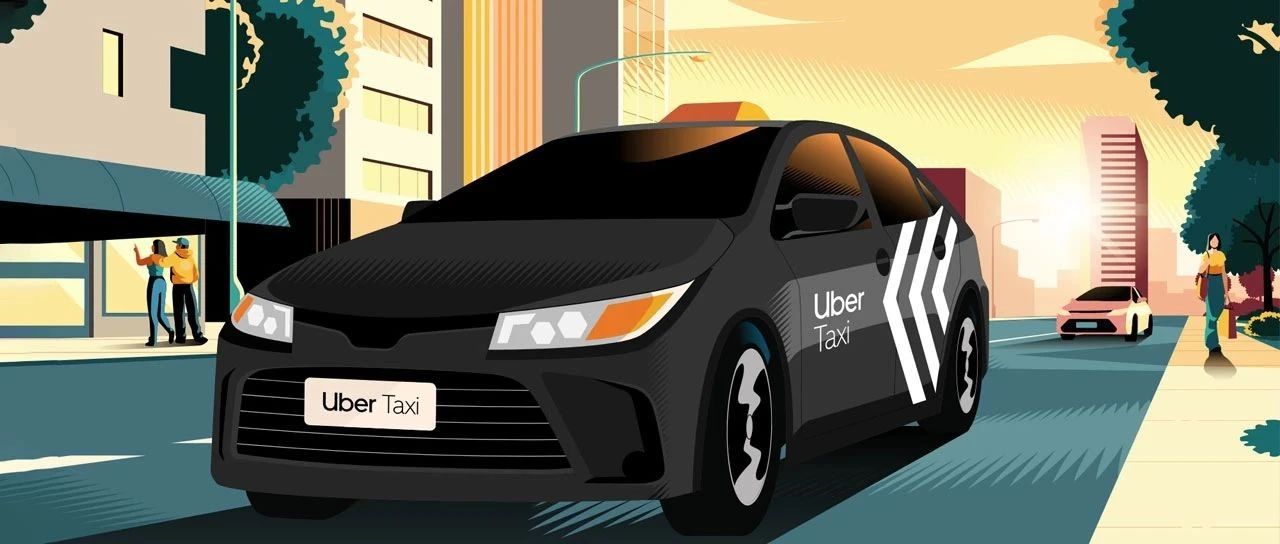
Core Viewpoint - Uber Technologies has demonstrated resilience in the stock market, achieving a 23% year-to-date gain while the S&P 500 index has declined by approximately 3.5% in 2025, indicating strong demand and accelerating profitability [1] Group 1: Strong Platform Demand - Uber's monthly active platform consumers (MAPCs) have surpassed 170 million, more than doubling from 80 million in 2018 [3] - In 2024, Uber facilitated 11.3 billion trips globally, generating $44 billion in net revenue, reflecting an 18% year-over-year increase [3] - The company has diversified its services beyond ride-sharing, successfully introducing new transportation options and leveraging its technology for food delivery and freight solutions [4][5] Group 2: Financial Performance - Uber's earnings per share (EPS) reached $4.56 in 2024, a significant increase from $0.87 in 2023, while free cash flow rose to $6.9 billion, up 105% [6] - The company has announced a $7 billion share repurchase authorization, indicating confidence in its financial outlook and ability to return cash to shareholders [7] Group 3: Autonomous Vehicle Positioning - Uber is strategically positioned to lead in the autonomous vehicle (AV) market, despite challenges in mass-scale commercialization [8] - The company has partnered with AV leaders like Waymo and WeRide, integrating autonomous rides into its network and targeting a projected $1 trillion market over the next decade [9] Group 4: Valuation - Uber shares are trading at 23 times the consensus 2025 EPS estimate, which is considered attractive for a consumer-focused tech company with double-digit growth [10] - Compared to smaller rivals like Lyft, which trades at a forward P/E of 12, Uber's premium valuation is justified by its stronger brand recognition and diversified offerings [11] Final Thoughts - The outlook for Uber remains positive, with expectations for the stock price to reach its October 2024 all-time high of $87 within the next year, supported by strong growth and recurring profitability [13]
Block Dips 31% YTD: Should Investors Hold or Fold the Stock?
ZACKS· 2025-03-27 17:51
Core Viewpoint - Block (XYZ) shares have experienced significant declines due to increased competition in the fintech sector and a challenging macroeconomic environment, particularly influenced by U.S. trade policies [1][15]. Stock Performance - Block shares have dropped 31% year to date and 68.1% since reaching a 52-week high of $99.26 on December 5, 2024 [2][1]. - Over the past 12 months, XYZ shares fell 31.4%, underperforming competitors like PayPal, Affirm, and Shopify, which saw respective gains of 3%, 26.8%, and 31.3% [2]. Financial Outlook - Block anticipates at least 15% year-over-year gross profit growth, despite a 50 basis points headwind from unfavorable foreign exchange [6]. - Adjusted operating profit is projected at $2.1 billion, with a margin of 21% on gross profit, indicating a 240 basis points year-over-year expansion [6]. - The Zacks Consensus Estimate for 2025 earnings is $3.95 per share, reflecting a 17.21% growth from the 2024 figure of $3.37 per share [12]. Business Strategy - Block is leveraging an expanding product portfolio and strong marketing initiatives to drive growth in 2025 [5]. - The company’s comprehensive commerce ecosystem supports sellers by integrating software, hardware, and payment services, enhancing customer experiences [7]. - Gross Payment Volume increased by 7.8% year-over-year to $61.95 billion, with the Buy Now Pay Later (BNPL) platform growing 19% to $10.3 billion in Gross Merchandise Value [8]. Partnerships and Collaborations - Block's partnerships, including one with Sysco, are aimed at enhancing operational efficiency for food and beverage sellers [10]. - Collaborations with Cash App and Lyft, as well as Google Play, are designed to provide customer-friendly payment options [11]. Competitive Landscape - Block faces stiff competition in the BNPL space from Affirm and from PayPal, which is monetizing products like Braintree and Venmo [15]. - The current valuation of Block is considered stretched, indicated by a Value Score of C [15]. Market Position - XYZ shares are trading below both the 50-day and 200-day moving averages, suggesting a bearish trend [16]. - The company holds a Zacks Rank 3 (Hold), indicating a cautious approach for potential investors [18].


Billionaire Investor Ron Baron Thinks This Artificial Intelligence (AI) Stock Could Climb 525% (Hint: It's Not Nvidia)
The Motley Fool· 2025-03-26 22:00
Core Viewpoint - Ron Baron, a billionaire mutual fund manager, believes Tesla could achieve a $5 trillion valuation within the next decade, significantly increasing from its current market capitalization of $800 billion [1][2]. Group 1: Autonomous Driving and Robotaxi Initiative - Autonomous driving is seen as a crucial factor for Tesla's future growth, with the company actively working on integrating self-driving software into its vehicles [3][4]. - Tesla's robotaxi initiative is expected to be a major revenue driver, allowing consumers to use a fleet of Tesla vehicles for rides or rentals, potentially leading to high profit margins [5][9]. - The Full Self-Driving (FSD) software, available via subscription, is anticipated to generate substantial recurring revenue, enhancing Tesla's overall profitability [6][7]. Group 2: Financial Projections and Market Potential - Each robotaxi could generate between $30,000 to $50,000 in profits annually, suggesting that a fleet of one million cars could add $30 billion to $50 billion in profits per year [6][7]. - The potential for robotaxis to create a stable and lucrative business model could lead investors to assign Tesla a premium valuation similar to high-growth software companies [9]. - While the path to a $5 trillion valuation is acknowledged, it is emphasized that achieving this goal will not be straightforward and will depend on various factors [10][12]. Group 3: Competitive Landscape and Challenges - Questions remain regarding how Tesla's robotaxi service will compete with established players like Waymo and whether Tesla will partner with or compete against ride-hailing services such as Uber and Lyft [14]. - The regulatory environment for robotaxis is also a significant consideration that could impact the feasibility and success of Tesla's initiative [14].

美国银行认为优步和Lyft将在自动驾驶行业中扮演关键角色
Zheng Quan Shi Bao Wang· 2025-03-20 00:27
Core Viewpoint - Bank of America believes that Uber and Lyft will play a crucial role in the autonomous driving industry as the technology rapidly develops [1] Group 1: Company Positioning - Uber and Lyft are expected to establish new partnerships with major automotive manufacturers to integrate autonomous vehicles into their ride-hailing services, unlike companies like Waymo and Tesla that are developing their own fleets [1] - These partnerships will help Uber and Lyft maintain competitiveness as autonomous driving technology becomes more widespread [1] Group 2: Future Outlook - Bank of America forecasts that Uber and Lyft could deploy autonomous vehicles between 2026 and 2027, leveraging their existing ride-hailing networks as a solid foundation for integration [1] - The companies are positioned to scale quickly once the technology matures [1] Group 3: Investment Ratings - Bank of America maintains a buy rating on both Uber and Lyft stocks, indicating confidence in their future performance [1] - Lyft is seen to have greater upside potential, with an average target price of $16.90 per share [1]