北京银河通用机器人有限公司

Search documents
王兴兴 将有新身份!
Mei Ri Jing Ji Xin Wen· 2025-09-14 00:21
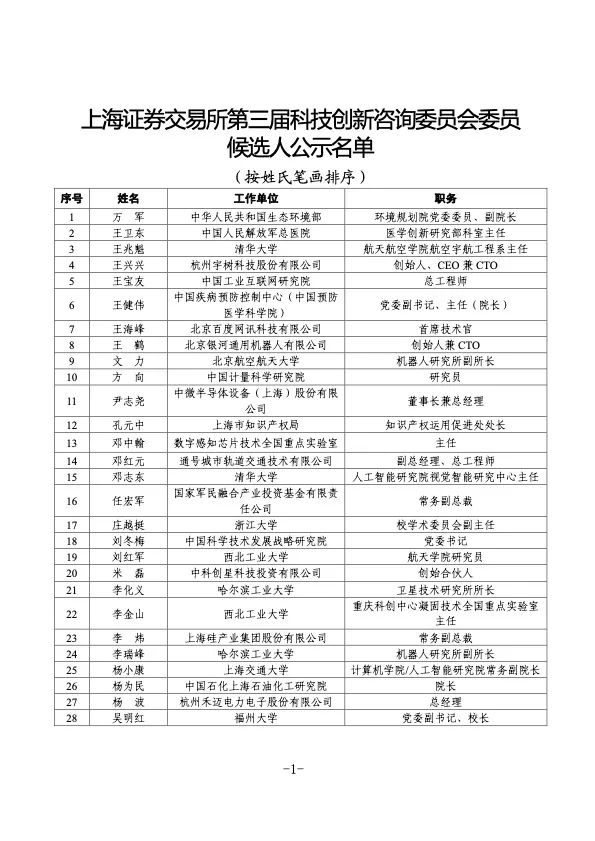
Group 1 - The Shanghai Stock Exchange (SSE) has announced the candidate list for the third Technology Innovation Advisory Committee, which includes 60 members, featuring founders from well-known tech companies [1] - Notable candidates include Wang Xingxing (CEO and CTO of Yushu Technology), Peng Zhihui (co-founder and CTO of Zhiyuan Robotics), and Han Bicheng (founder and CEO of Qiangnao Technology) [1] - The committee aims to provide professional consulting and policy advice for the construction of the Sci-Tech Innovation Board and the review of IPO applications [2][3] Group 2 - The SSE has implemented the "1+6" policy reform for the Sci-Tech Innovation Board, reintroducing the fifth set of listing standards applicable to emerging industries such as artificial intelligence and commercial aerospace [2] - Since the policy's announcement, 15 new IPO applications have been accepted, including four from unprofitable companies and one that meets the fifth set of standards [2] - The advisory committee will consist of experts from high-tech industries, strategic emerging industries, and renowned entrepreneurs, all serving in a part-time capacity [2][3] Group 3 - The advisory committee is responsible for providing professional consulting, personnel training, and policy recommendations on national technology innovation strategies and sector planning [3] - It will also address matters related to the construction of the board, regulatory frameworks, and the dynamics of domestic and international technology innovation [3]

上交所发布!王兴兴等在列
券商中国· 2025-09-13 15:07
Core Viewpoint - The Shanghai Stock Exchange has announced the candidate list for the third Technology Innovation Advisory Committee, which includes founders and leaders from several well-known technology companies, indicating a focus on enhancing the advisory capacity for the STAR Market [1][4]. Group 1: Candidate List - The candidate list for the third Technology Innovation Advisory Committee includes 60 individuals, featuring prominent figures such as Wang Xingxing (Founder, CEO, and CTO of Yushu Technology), Wang He (Founder and CTO of Galaxy General Robotics), and Han Bicheng (Founder and CEO of Qiangnao Technology) [1][4]. - The committee aims to provide professional consultation and policy advice for the construction of the STAR Market and the review of IPO applications, with members primarily from high-tech industries and strategic emerging sectors [12]. Group 2: Recent Developments - The recent "1+6" policy reform for the STAR Market has been implemented, reintroducing the fifth set of listing standards applicable to cutting-edge industries such as artificial intelligence and commercial aerospace, allowing companies without profits to access capital markets [12]. - Since the implementation of the new policy, 15 IPO applications have been accepted by the STAR Market, including four from unprofitable companies and one that meets the fifth set of standards [12].

上交所发布!王兴兴等在列
证券时报· 2025-09-13 14:15
Core Viewpoint - The Shanghai Stock Exchange has announced the candidate list for the third Technology Innovation Advisory Committee, featuring prominent founders and leaders from well-known technology companies [1][3]. Group 1: Candidate Overview - The third advisory committee consists of 60 candidates, including notable figures such as Wang Xingxing (Founder, CEO, and CTO of Yushu Technology), Wang He (Founder and CTO of Galaxy General Robotics), and Han Bicheng (Founder and CEO of Qiangnao Technology) [1][3]. - The committee aims to provide professional consultation and policy advice for the construction of the Sci-Tech Innovation Board and the review of IPO applications [12]. Group 2: Industry Representation - The new committee includes experts from various high-tech industries, such as aerospace and robotics, with members like Wang Zhaokui (Director of the Aerospace Engineering Department at Tsinghua University) and Zhao Yuanfu (Chief Technology Officer at the Ninth Research Institute of China Aerospace Science and Technology Corporation) [10][11]. - The inclusion of leaders from the integrated circuit industry, such as Zhang Xin (Chairman and President of the National Integrated Circuit Industry Investment Fund), highlights the focus on advancing strategic emerging industries [11]. Group 3: Policy Context - The recent "1+6" policy reform for the Sci-Tech Innovation Board allows companies in cutting-edge sectors like artificial intelligence and commercial aerospace to access capital without needing to demonstrate profitability [11][12]. - Since the policy's implementation, 15 new IPO applications have been accepted, including four from unprofitable companies, indicating a shift towards supporting innovative firms [12].

银河通用机器人在宜宾投资成立新公司
Zheng Quan Shi Bao Wang· 2025-09-10 05:47
人民财讯9月10日电,企查查APP显示,近日,宜宾银河通用机器人有限公司成立,法定代表人为姚腾 洲,经营范围包括服务消费机器人制造、服务消费机器人销售、智能机器人的研发等。企查查股权穿透 显示,该公司由北京银河通用机器人有限公司全资持股。 ...

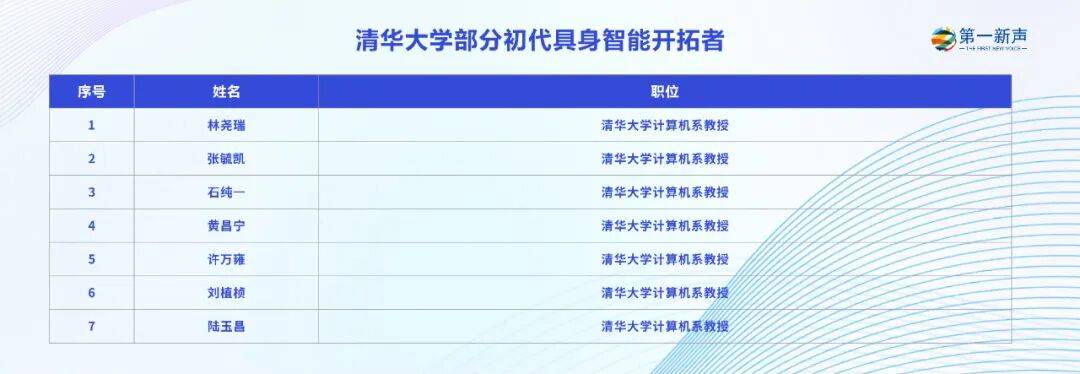
一群清华人,与具身智能的四十年
Sou Hu Cai Jing· 2025-09-01 08:21
Group 1 - The core viewpoint of the articles highlights the emergence of Tsinghua University alumni-led companies in the field of embodied intelligence, with significant funding and technological advancements [1][2][17] - In June, Galaxy General raised 1.1 billion yuan, marking the largest single financing in the domestic embodied intelligence sector for the year, bringing its total funding to over 2.4 billion yuan and achieving a valuation of 1 billion USD [1] - By 2025, nearly 20 companies founded or led by Tsinghua alumni in the embodied intelligence sector are expected to emerge, with total financing exceeding 5 billion yuan [1][2] Group 2 - Tsinghua University has a long history in the field of artificial intelligence, dating back to 1988 when it initiated research on the THMR series of robots, laying the groundwork for the current entrepreneurial ecosystem [2][3] - Zhang Bo, a prominent figure in Chinese AI, has been instrumental in the development of AI and robotics in China, establishing the first national key laboratory for intelligent technology and systems [3][5] - The establishment of the first intelligent robot laboratory at Tsinghua in 1985 marked a significant milestone in the development of embodied intelligence in China [5][6] Group 3 - The Tsinghua Fire God Team, led by Zhao Mingguo, has consistently participated in the RoboCup competitions, achieving significant milestones and contributing to the development of humanoid robots in China [9][10] - The team has evolved over the years, adapting to technological advancements and shifting focus towards humanoid robots, which has led to notable achievements in international competitions [11][12] - The Fire God Team's success has inspired many alumni to venture into entrepreneurship, leading to the establishment of several companies in the field of embodied intelligence [14][16] Group 4 - Tsinghua University has produced a diverse range of entrepreneurs in the embodied intelligence sector, including those with strong academic backgrounds and industry experience [19][21] - Companies like Galaxy General, Accelerated Evolution, and others have emerged as key players in the humanoid robot market, showcasing significant technological advancements and commercial potential [19][21] - The entrepreneurial spirit fostered at Tsinghua has led to the creation of a vibrant ecosystem of startups focused on embodied intelligence, positioning the university as a leading incubator in this field [16][30]
优蓝国际与银河通用机器人合资成立优蓝银河科技,共筑智能职教新生态
Ge Long Hui· 2025-08-29 14:29
格隆汇8月29日|中国领先的蓝领人才终身服务商优蓝国际(YOUL.US)与具身智能机器人领军企业北京 银河通用机器人有限公司正式签署合资协议,优蓝国际出资并占股51%成立"北京优蓝银河科技有限公 司"。双方将深度融合优蓝国际的职业教育资源与银河通用机器人的前沿技术,打造智能化、场景化、 国际化的职业教育新范式,为中国蓝领人才升级注入核心动能。 优蓝银河已启动三大核心计划:1.机器 人产业学院规模化:预计到2025年9月末,优蓝银河将为中国高等职业学院的约数千名学生提供智能机 器人的课程与技能培养服务;2.课程体系升级:联合企业定制课程,覆盖智能制造、主动健康等新兴领 域,实现"所学即所用";3.全球化人才网络:依托优蓝国际全球化战略,为"一带一路"中资企业定向输 送智能设备操作人才。 未来三年,优蓝银河计划在全国建成多个智能产教融合基地,赋能职业院校, 并联合银河通用机器人的战略合作伙伴,开发通用机器人职教课程体系,推动中国职教技术标准走向全 球。 ...
智元、宇树之后,又一家人形机器人创企估值超百亿!
Robot猎场备忘录· 2025-08-26 00:02
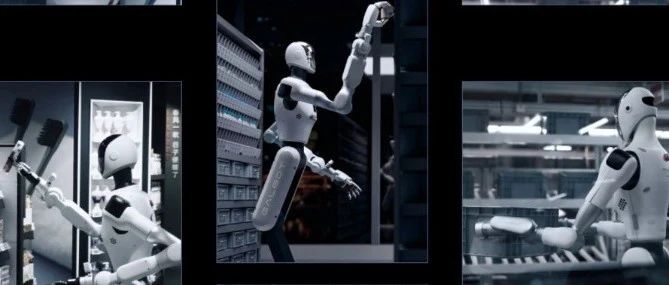
Core Viewpoint - The article highlights the rapid growth and valuation of the humanoid robot startup "Galaxy General," which has surpassed 10 billion yuan in valuation, making it the third domestic humanoid robot company to achieve this milestone after "Zhiyuan Robotics" and "Yushu Technology" [2][6]. Group 1: Company Overview - "Galaxy General" was established in May 2023 in Beijing, focusing on providing general-purpose robotic products for global users, with applications in commercial, industrial, and medical scenarios [7]. - The founding team consists of experienced professionals from the robotics industry and academia, including Wang He, a Stanford University PhD, and Yao Tengzhou, who has extensive experience in industrial and service robotics [8][9]. Group 2: Financing and Valuation - "Galaxy General" has completed over 2.4 billion yuan in financing across three rounds, with the latest round raising 1.1 billion yuan led by CATL, along with participation from top investors [10][12]. - The company has received significant backing from major investors, including Meituan and CATL, positioning it as a strong player in the humanoid robotics sector [12][13]. Group 3: Product and Technology - The company launched its first wheeled bionic robot, Galbot G1, which is claimed to be the world's first robot capable of demonstrating generalized skills in real-world settings [14][15]. - "Galaxy General" has developed a series of advanced models, including GraspVLA, which achieved zero-shot generalization capabilities, and GroceryVLA, designed for retail applications [17][19]. Group 4: Commercialization Efforts - The company has announced a "smart pharmacy solution" utilizing Galbot for inventory management and product delivery, with plans to deploy in 100 stores nationwide [22][24]. - Collaborations with Bosch China aim to develop robots for high-precision manufacturing scenarios, enhancing production efficiency in automotive companies like Benz and Zeekr [26][28]. Group 5: Market Position and Challenges - "Galaxy General" is positioned as a leading player in the domestic humanoid robotics market, focusing on AI capabilities and practical applications [30]. - Despite the advancements, the article notes that many startups in the field face challenges in achieving sustainable commercialization and establishing a competitive moat [30].
专利“加速器”助力 机器人产业“跑起来”
Zhong Guo Chan Ye Jing Ji Xin Xi Wang· 2025-08-21 23:05
Group 1: Event Overview - The 2025 World Robot Conference and Expo were held in Beijing from August 8 to 12, focusing on cutting-edge technological innovations and the expansion of robot application scenarios [1] Group 2: Humanoid Robots - The humanoid robots showcased by Siasun Robot & Automation Co., Ltd. attracted significant attention, demonstrating advanced capabilities in tasks such as water dispensing through precise coordination of their systems [2] - Siasun's CTO emphasized the importance of proprietary technology and patent protection for their competitive edge [2] - The RICO wheeled humanoid robot exhibited advanced assembly skills, showcasing its patented core technologies in commercial service applications [2] Group 3: Retail and Industrial Applications - Beijing Galaxy General Robot Co., Ltd. introduced a wheeled dual-arm retail robot capable of accurately identifying and grasping products in crowded environments, supported by their proprietary VLA large model technology [3] - The robot has applications in both retail and industrial settings, demonstrating versatility through a strong patent portfolio [3] - Variable Robot Technology (Shenzhen) Co., Ltd. presented robots capable of performing household tasks and industrial functions, highlighting their strong generalization capabilities and patent applications [3] Group 4: Medical Robotics - Changmu Valley Medical Technology Co., Ltd. showcased the ROPA orthopedic surgery robot, which utilizes AI to enhance surgical precision and reduce the learning curve for young doctors [5] - The robot integrates extensive surgical experience from experts, supported by a significant number of patents to ensure safety and uniqueness [5] Group 5: Industrial Robotics - Siasun's SR270A robot demonstrated advanced capabilities in precision tasks, essential for automotive manufacturing, with improvements in repeatability due to structural optimizations and patented technology [6] - Collaborative robots with patented trajectory planning algorithms are expanding the operational scope of industrial robots into precision manufacturing [6] - The D700C AI cleaning robot showcased innovative self-cleaning technology and efficiency improvements through patented systems [6] Group 6: Industry Ecosystem - The Chinese robotics industry is exhibiting strong ecological synergy, with a deep integration of production, education, research, and application [7] - Companies like Xingdong Era and Tianxun Intelligent are emerging as competitive players with significant patent accumulations in structural design and motion control [7] - Patents are viewed as a critical indicator of innovation and a passport for global competition in the robotics sector [7]

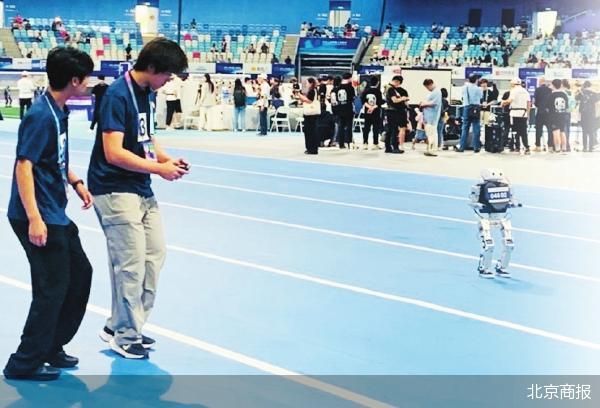
抠药片、物料整理…世界人形机器人运动会场景赛里的具身智能大考
Bei Ke Cai Jing· 2025-08-19 10:16
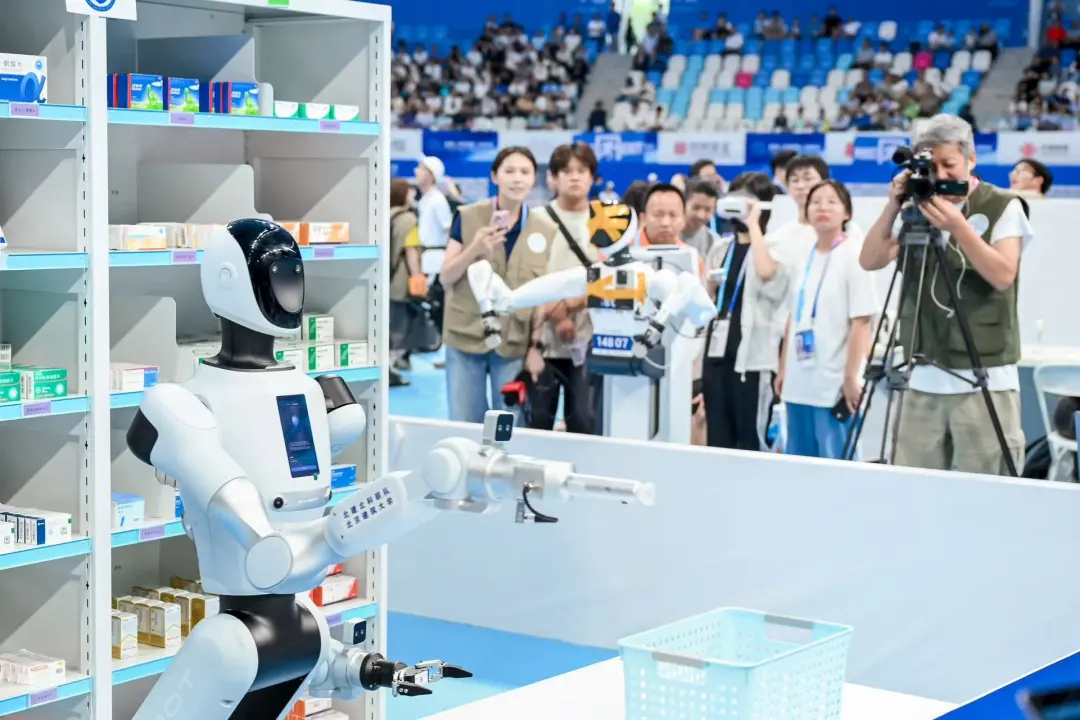
Core Insights - The 2025 World Humanoid Robot Games took place in Beijing, featuring 280 teams from 16 countries, showcasing various competitions including practical application scenarios that produced 7 gold medals, indicating a strong focus on real-world applications of robotics [1][18] - The competition highlighted the commercial viability of robotic solutions, with many winning teams having already implemented their technologies in real-world settings, demonstrating the importance of practical experience in achieving success [1][6][10] Group 1: Competition Overview - The event included four main scenario competitions: industrial (material handling), warehousing (mixed material sorting), hotel (greeting and cleaning services), and medical (drug sorting and packaging) [1][2] - The medical scenario required robots to complete drug sorting tasks under time constraints, simulating real pharmacy operations [2] Group 2: Notable Performances - Beijing Galaxy General Robotics' Galbot won the gold medal in the drug sorting competition with a score of 336, nearly double that of the second-place team, showcasing its advanced capabilities in a complex environment [4][6] - The Wandering Future Warriors team from Youliqi Robotics won gold in both the greeting and cleaning service categories, demonstrating the effectiveness of their second-generation robot priced at 88,000 yuan [7][10] Group 3: Technological Insights - The competition tested robots' abilities to handle various tasks, such as opening doors and accurately sorting materials, emphasizing the need for precise control and adaptability in real-world applications [11][12] - The Tianzhu team from Beijing Humanoid Robot Innovation Center achieved gold in the material sorting project, utilizing their Tianyi 2.0 robot, which demonstrated high precision and stability in handling delicate materials [14][15] Group 4: Industry Implications - The event served as a platform for academic and industry collaboration, allowing teams from universities and research institutions to test their technologies and gain practical experience [18][20] - The competition also highlighted the importance of developing standardized platforms and safety regulations for the robotics industry, as emphasized by industry leaders [17][24] Group 5: Future Prospects - Many participants expressed intentions to return for future competitions, indicating a growing interest in robotics and its applications across various sectors [1][20] - The event is seen as a catalyst for increased investment and attention in the robotics field, with expectations for further advancements and commercial applications [23][24]
人才缺口激增4倍 人形机器人产教融合加速跑
Bei Jing Shang Bao· 2025-08-18 16:19
Core Insights - The first global humanoid robot sports event showcased the evolution of humanoid robots from performance to competition and practical applications, highlighting the increasing demand for skilled talent in this field [1] Group 1: Market Demand and Talent Shortage - The humanoid robotics sector experienced a staggering 398.1% year-on-year increase in job postings in Q2 2025, indicating a significant surge in demand for talent [2] - The current talent shortage is particularly acute in algorithm-related roles, including embodied large models, reinforcement learning, and control algorithms, as well as hardware and software positions [2] - The industry is still in a critical phase of technology development and scenario validation, necessitating urgent recruitment for roles focused on technical research and system optimization [2] Group 2: Salary Insights - The average monthly salaries for top technical positions in the robotics field are as follows: robot algorithm engineers at 25,368 yuan, navigation and positioning engineers at 21,066 yuan, and mechanical structure design engineers at 15,266 yuan [3] Group 3: Educational Integration and Practical Training - The 2025 World Humanoid Robot Games served as both a competition and a training ground for talent, providing a platform for students to apply their knowledge in practical scenarios [6] - Educational institutions are increasingly focusing on integrating competition into their curricula to enhance learning outcomes and foster interdisciplinary skills among students [6][7] - The collaboration between industry and educational institutions is crucial for aligning talent supply with market demand, emphasizing the importance of regular communication and practical training opportunities [8]