
基石资本

Search documents
创新融资模式激活科创生态 四单民营股权投资机构科创债在银行间市场完成发行
Zhong Guo Jin Rong Xin Xi Wang· 2025-12-01 13:49
Core Insights - The issuance of technology innovation bonds by four prominent private equity investment institutions marks a significant advancement in the financial support system for technological innovation [1][3] - The "Technology Board" launched in May has rapidly gained traction, effectively connecting capital markets with the tech innovation sector through flexible structures and multi-layered risk-sharing mechanisms [1][3] Group 1: Company Highlights - Cornerstone Capital, established in 2001, has a total managed scale of 85 billion yuan, focusing on hard technology, advanced manufacturing, and healthcare, with a recent bond issuance featuring a 1+3+2 year term and a coupon rate of 2.10% [1] - Tongchuang Weiye, managing over 35 billion yuan and having assisted 120 companies in going public, issued bonds with a 5+5 year term and a coupon rate of 2.05%, aimed at enhancing liquidity in semiconductor and biomedicine sectors [2] - Shengjing Jiacheng, a key platform connecting top research resources with capital markets, issued 3-year bonds at a coupon rate of 2.43%, with funds directed towards establishing technology innovation funds in collaboration with social capital and local government [2] - Daohe Long-term Investment, a relatively new player with nearly 10 billion yuan under management, issued bonds of 30 million yuan with a 5-year term and a rate of 2.2%, focusing on integrated circuits and artificial intelligence [2] Group 2: Industry Trends - The issuance of technology innovation bonds reflects the effectiveness of risk-sharing tools in lowering issuance thresholds and boosting market confidence, with diverse investor participation [3] - The interbank bond market has supported nearly 300 companies in issuing technology innovation bonds, with around 250 being tech firms and about 50 being equity investment institutions, indicating a developing direct financing service system covering the entire innovation cycle [3] - The continuous enrichment of practical cases in the capital market is expected to foster a more efficient and precise "innovation power," contributing to high-quality financial development [3]
央行:持续打击虚拟货币相关非法金融活动;白银价格接连创下历史新高 | 金融早参
Mei Ri Jing Ji Xin Wen· 2025-12-01 05:56
Group 1 - The People's Bank of China (PBOC) emphasizes that virtual currencies do not have the same legal status as fiat currencies and should not be used in market circulation, categorizing related activities as illegal financial activities [1] - The PBOC continues to enforce prohibitive policies against virtual currencies to mitigate risks associated with money laundering, fraud, and illegal fund transfers [1] Group 2 - The PBOC has opened a green channel for cross-border RMB donations to support disaster relief efforts in Hong Kong, ensuring that donations are processed without delays [2] - This initiative reflects the PBOC's commitment to humanitarian efforts and enhances public trust in financial institutions [2] Group 3 - A meeting of the Market Interest Rate Pricing Self-Discipline Mechanism was held to discuss current interest rate pricing and self-regulation issues, indicating progress in financial market self-discipline [3] - The meeting involved key members from major banks, aiming to stabilize market expectations and enhance confidence in the financial sector [3] Group 4 - The second batch of private venture capital technology innovation bonds was successfully issued in the interbank market, with significant participation from private investment institutions [4] - The issuance of these bonds, totaling 7 billion yuan, supports key sectors such as integrated circuits, artificial intelligence, and biomedicine, demonstrating the effectiveness of leveraging debt to promote investment [4] Group 5 - International silver prices have surged, with spot silver reaching over $56 per ounce, marking a historical high, while silver futures also hit record closing prices [5] - The price increase is attributed to rising expectations of interest rate cuts by the Federal Reserve, increased ETF holdings, and ongoing supply constraints [6]
民营创投科创债扩容!从“破冰”到常态,解码背后看点
Zheng Quan Shi Bao· 2025-11-28 02:39
Core Viewpoint - The second batch of technology innovation bonds (科创债) supported by risk-sharing tools has been launched, indicating a shift from pilot programs to a more normalized expansion of policy support for private venture capital institutions [1][5]. Summary by Sections Innovation in Risk-Enhancement Mechanism - The second batch of technology innovation bonds features an upgraded risk-enhancement mechanism that is more tool-oriented and collaborative compared to the first batch [3]. - Among the four issuing companies in the second batch, three received risk enhancement from risk-sharing tools, while one received market-based enhancement from China Bond Credit Enhancement Co [3]. - The new risk-sharing model allows for a multi-party risk-sharing mechanism, effectively lowering financing costs and extending financing cycles [3][4]. Financing Cost and Duration - The interest rates for private venture capital institutions' bonds are generally high, often exceeding 6%, due to lower credit ratings compared to traditional financial institutions [4]. - The innovative risk-enhancement model has led to a significant decrease in interest rates for the first batch of bonds, with rates as low as 1.85% for some institutions [4]. - The second batch of bonds has a longer duration, with terms such as "5+3+2" for a total of 10 years, aligning well with the long investment cycles of hard technology [7][8]. Market Response and Participation - The successful issuance of the first batch of technology innovation bonds has prompted more private venture capital institutions to plan for their own bond issuances [10]. - The innovative risk-enhancement model aims to support private venture capital institutions in addressing long-standing fundraising challenges [10]. - Institutional investors are increasingly attracted to technology innovation bonds, focusing on the stability and repayment capacity of the issuing entities [11].
民营创投科创债扩容!从“破冰”到常态,解码背后看点
证券时报· 2025-11-28 00:20
Core Viewpoint - The second batch of science and technology bonds (Sci-Tech Bonds) supported by risk-sharing tools has been launched, indicating a shift from pilot programs to a more normalized expansion of policy support for private venture capital institutions [1][5]. Group 1: Upgraded Credit Enhancement Mechanism - The second batch of Sci-Tech Bonds features an upgraded credit enhancement mechanism that is more tool-oriented and collaborative, with three out of four issuing companies receiving credit enhancement from risk-sharing tools [3][4]. - The new credit enhancement model allows for a multi-party risk-sharing mechanism, which effectively lowers financing costs and extends financing cycles, addressing the high costs and short cycles previously faced by private venture capital institutions [3][4]. Group 2: Interest Rate and Market Response - The interest rates for private venture capital institutions' bonds have historically been high, often exceeding 6%, due to lower credit ratings stemming from unstable cash flows and market volatility [4]. - The first batch of Sci-Tech Bonds saw significant interest rate reductions, with rates as low as 1.85% for some institutions, demonstrating the effectiveness of the new credit enhancement model [4]. Group 3: Long-term Financing Solutions - The innovative design of the Sci-Tech Bonds addresses the "short fundraising, long investment" dilemma faced by VC institutions, allowing for bond terms that align with the long investment cycles of hard technology [6][7]. - For example, the upcoming issuance by Base Capital has a total term of 10 years, which matches the investment cycle of their managed funds [6]. Group 4: Increased Participation from Private Institutions - The successful issuance of the first batch of Sci-Tech Bonds has prompted more private venture capital institutions to plan their own bond issuances, indicating a growing trend in the market [9]. - The innovative credit enhancement model aims to support private venture capital institutions in alleviating long-standing fundraising challenges, thereby enhancing investor confidence in private equity funds [9]. Group 5: Investor Considerations - Institutional investors are increasingly attracted to Sci-Tech Bonds, but they remain cautious, focusing on the stability and repayment capacity of the issuing entities [10]. - The introduction of risk-sharing tools has significantly improved the credit ratings of these bonds, attracting conservative institutional investors who were previously hesitant due to perceived risks [10].


民营创投科创债扩容 “募短投长”堵点再纾解
Zheng Quan Shi Bao· 2025-11-27 19:35
证券时报记者留意到,与首批创投机构科创债相比,第二批发行机构的增信机制更趋工具化与协同性。 从增信机制来看,在第二批4家发行企业中,3家由科创债风险分担工具提供增信,通过所投企业股权或 自身股权提供反担保,构建多方风险共担机制;1家由中债信用增进公司提供市场化增信。此次拟发行 的4家民营股权投资机构分别为基石资本、同创伟业、盛景嘉成和道禾长期。Wind统计显示,盛景嘉成 和道禾长期已发行完毕。 "相比于之前主要由地方提供担保,中债增公司的风险分担工具给予发行人信用增进,提高发行规模, 延长融资周期,降低融资成本,有效补充科创投资资金。"基石资本财务总监巫双宁接受证券时报记者 采访时表示。 事实上,在此次债市科技板推出之前,创投机构尤其是民营机构发债普遍面临成本高、周期短的问题。 据证券时报记者梳理,自2017年以来,部分私募股权投资机构都尝试发行"双创债"、科创债来拓展募资 渠道,其中包括部分头部民营创投机构,如东方富海、天图投资、松禾资本、基石资本等均在不同阶段 发行过债券。 但从债券的票面利率来看,民营创投机构的利率普遍高达6%及以上。根本原因在于,债券市场对民营 企业发债主体信用评级往往比照传统金融机构 ...
民营创投科创债扩容!4家机构入列发行,优化“长钱”适配硬科技
Zheng Quan Shi Bao Wang· 2025-11-27 13:06
此次科创债的增信创新彻底改变了这一局面。首批民营创投机构科创债发行利率显著下降,东方富海低 至1.85%,君联资本2.05%,中科创星2.10%。 继今年6月首批5家民营创投机构成功发行科创债后,第二批科创债风险分担工具支持的科创债也于日前 开展了专场路演,并定于11月26日至28日在银行间市场开启发行。 与首批创投机构科创债相比,第二批创投机构科创债在增信机制、期限设置上进一步升级,并通过"增 信+投资"双轮驱动模式,有效降低融资成本、匹配科技投资周期。受访人士认为,此次创新科创债的 增信模式,标志着政策性工具对民营创投机构的支持正在从试点破冰走向常态化扩容。 增信机制升级:风险分担工具发力 票面利率大幅下降 证券时报记者留意到,与首批创投机构科创债相比,第二批发行机构的增信机制更趋工具化与协同性。 从增信机制来看,在本批4家发行企业中,3家由科创债风险分担工具提供增信,通过所投企业股权或自 身股权提供反担保,构建多方风险共担机制;1家由中债信用增进公司提供市场化增信。此次拟发行的4 家民营股权投资机构分别为基石资本、同创伟业、盛景嘉成和道禾长期。统计显示,盛景嘉成和道禾长 期已发行完毕。 "相比于之前主要 ...
2025「F40中国青年投资人」揭晓
投资界· 2025-11-27 07:17
Core Insights - The "F40 China Young Investors" initiative aims to identify outstanding investors under 40 years old, highlighting the generational shift in the investment landscape and the emergence of new players in niche sectors [2][4]. Group 1: Industry Trends - The investment industry is undergoing a significant generational transition, with younger investors becoming the backbone of leading institutions [3]. - Corporate Venture Capital (CVC) is increasingly recognized as a vital force within the venture capital ecosystem [3]. - Technology investments have become the dominant narrative, with educational and industry backgrounds gaining unprecedented importance [4]. Group 2: Investment Focus Areas - The AI wave is creating opportunities for a new generation of investors, while the healthcare sector is witnessing a resurgence for those who remain committed [4]. - Consumer sectors are regaining prominence, leading to unexpected high returns for certain investors [4]. Group 3: Notable Young Investors - The article lists several notable young investors and their typical investment cases, showcasing their contributions to various sectors [5][6][8][9][11][13][15][19][21][23][25][27][29][31][33][35][37][39][41][43][45][47][49][51][53][55][57][59][61][63][64][65][67][69][71][73][75].

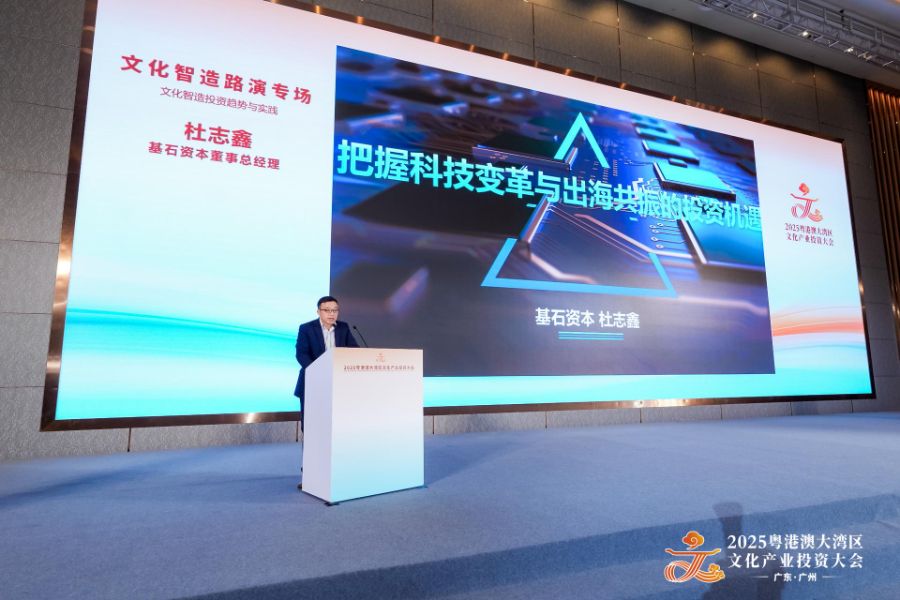
基石资本杜志鑫:未来十年重仓AI硬科技和制造业出海
2 1 Shi Ji Jing Ji Bao Dao· 2025-11-27 03:37
Core Insights - The report highlights cultural intelligence manufacturing as one of the most promising sectors in the Guangdong-Hong Kong-Macao Greater Bay Area [2] - The investment strategy of the company focuses on embracing technological changes and global market opportunities [2][3] Investment Trends - Cultural intelligence manufacturing is seen as a new foundational medium that integrates the entire industry chain from creation to production and experience [2] - The company has invested in over 30 projects in the cultural media sector, including newspapers, internet, gaming, education, video, variety shows, and AI [3] Key Investment Opportunities - The company identifies two main opportunities for future enterprises: leveraging technological changes, particularly in the context of the fourth industrial revolution driven by AI, and expanding into global markets [2] - The company emphasizes the importance of hard technology, advanced manufacturing, and biomedicine as key focus areas for the next decade [3]
谁是下个文化爆款?“大湾区金文投”2025年度案例出炉
Nan Fang Du Shi Bao· 2025-11-26 08:28
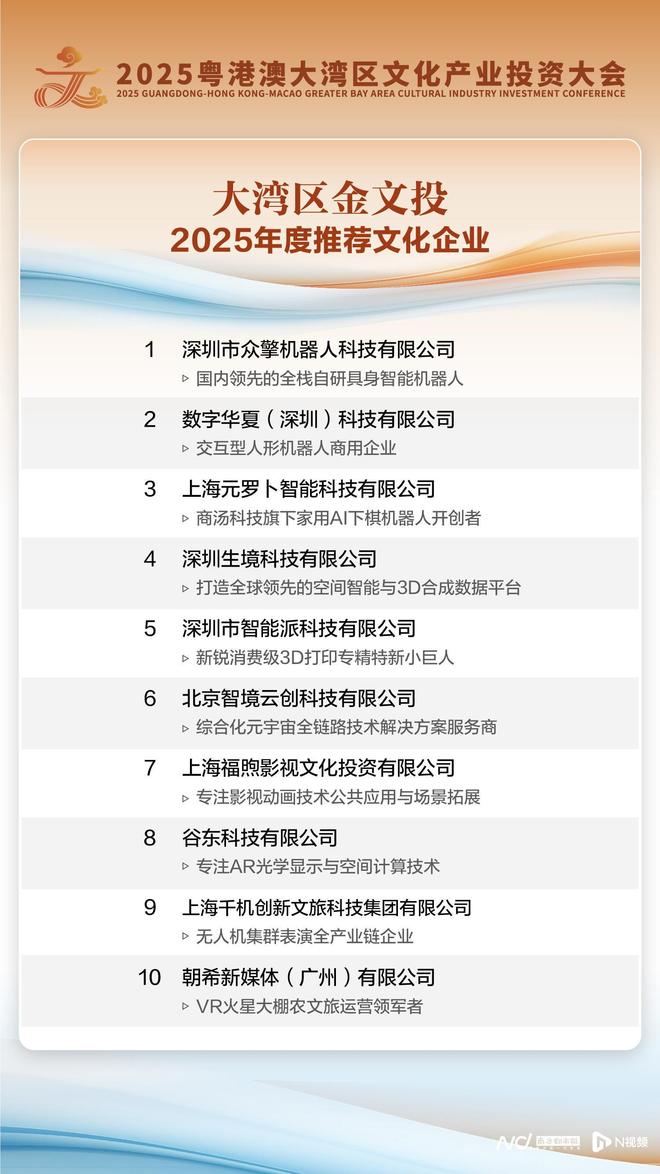
Core Insights - The 2025 Guangdong-Hong Kong-Macao Greater Bay Area Cultural Industry Investment Conference aims to create an efficient financing service platform for cultural enterprises and investment institutions, promoting deep integration of culture, technology, and finance [1][7] - The conference features a series of activities including a main conference, specialized financing roadshows, and various supporting services, with over 300 cultural enterprises participating [1][4] - The event recognizes exemplary cultural enterprises, parks, and investment institutions, with 10 cultural enterprises, 9 cultural parks, and 24 investment institutions selected for their significant cultural representation and investment success [1][4][7] Summary by Category Cultural Enterprises - The conference selected 10 innovative cultural enterprises for the "Greater Bay Area Golden Cultural Investment 2025 Annual Recommended Cultural Enterprises" based on their cultural representation, technological advancement, and development potential [1] Cultural Parks - A total of 52 cultural parks with significant cultural industry attributes and over 30,000 square meters in area were evaluated, resulting in 9 parks being recognized as "Greater Bay Area Golden Cultural Investment 2025 Annual Recommended Cultural Parks" [4] Investment Institutions - Over 100 renowned financial investment institutions participated, with 24 selected as "Greater Bay Area Golden Cultural Investment 2025 Annual Recommended Investment Institutions" based on criteria such as fund size, number of investment projects, and successful cultural industry investment cases [7][9]
科创债拓宽“硬科技”融资新通道
Jin Rong Shi Bao· 2025-11-26 01:40
Core Insights - The issuance of technology innovation bonds (科创债) has effectively addressed challenges such as small scale, short duration, and difficulty in credit enhancement, injecting stable and patient capital into the venture capital industry [2][3] - As of November 21, 230 technology companies and 46 private equity institutions have issued technology innovation bonds totaling over 530 billion yuan, indicating strong market activity and interaction between product innovation and financing for tech companies [2][4] Group 1: Market Activity - The technology innovation bond market has seen 230 tech firms and 46 private equity institutions participate, with a total issuance exceeding 530 billion yuan [2][4] - Notably, 55 private enterprises have issued 107.4 billion yuan in technology innovation bonds, representing 20% of the total issuance in the interbank market and 88% of the total for private enterprises [4] - Four private equity institutions are set to issue a combined 930 million yuan in technology innovation bonds, reflecting increased participation from private equity under supportive policies [2][4] Group 2: Structural Changes - The average duration of technology innovation bonds has extended to over three years, with more than 60% of the issuance being five years or longer, aligning better with the long-term nature of tech development [5] - The introduction of risk-sharing tools has been a key innovation, alleviating concerns for both issuers and investors, and enhancing the financing chain for tech innovation [6][8] Group 3: Investment Focus - The funds raised through technology innovation bonds are being directed towards critical sectors such as integrated circuits, artificial intelligence, biomedicine, and new materials, demonstrating a strong leverage effect in promoting investment [6][7] - The establishment of the technology innovation bond market has accelerated the pace of setting up venture capital funds, with significant investments already made in "hard tech" companies across various innovative fields [7] Group 4: Future Directions - Industry experts suggest that improving risk tolerance and focusing on non-financial indicators like intellectual property strength and R&D investment are essential for better serving tech innovation [3] - The collaborative risk-sharing mechanisms being developed are expected to further enhance the long-term capital sources for private equity institutions, supporting the growth of "hard tech" enterprises [8][9]