Birkenstock

Search documents
纺织服装行业周报:361度中报收入双位数增长,关注运动板块业绩催化-20250817
Shenwan Hongyuan Securities· 2025-08-17 14:15
Investment Rating - The report maintains a "Positive" outlook on the textile and apparel industry, highlighting potential growth opportunities in the domestic market and specific companies [2]. Core Insights - The textile and apparel sector underperformed the market, with the SW textile and apparel index declining by 1.4% from August 8 to 15, lagging behind the SW All A index by 4.5 percentage points [3][4]. - Key industry data indicates that from January to July, the total retail sales of clothing, shoes, and textiles reached 837.1 billion yuan, reflecting a year-on-year growth of 2.9% [3][25]. - Exports of textiles and apparel totaled 170.74 billion USD from January to July, showing a slight increase of 0.6% year-on-year, with textile exports rising by 1.6% and apparel exports declining by 0.3% [3][30]. Summary by Sections Textile Sector - Bylon Oriental's H1 2025 profits exceeded expectations, with revenue of 3.59 billion yuan (down 10% year-on-year) and a net profit of 390 million yuan (up 67.5% year-on-year) [9]. - The USDA's August report significantly reduced the global cotton production forecast for 2025/26, indicating a contraction in supply that may support cotton prices [9][10]. - The report continues to recommend Nobon Co., which operates in the non-woven cleaning products sector, highlighting its growth potential due to partnerships with major clients [10]. Apparel Sector - 361 Degrees reported a 11% year-on-year revenue increase to 5.7 billion yuan in H1 2025, with a net profit growth of 9% to 860 million yuan [11][22]. - The company improved its operating cash flow by 227% year-on-year to 520 million yuan, attributed to reduced inventory and slower growth in accounts receivable [11]. - The report emphasizes the resilience of the sportswear segment in domestic demand and suggests monitoring future performance catalysts [11]. Market Dynamics - The report notes that the domestic market is showing signs of recovery, with quality domestic brands beginning to reverse their previous downturns [3]. - It highlights the importance of the U.S. tariff situation and its impact on textile manufacturing, suggesting that companies with strong supply chain positions may benefit from a favorable trade environment [10]. - The report also points out the ongoing challenges in the apparel sector, particularly with brands like Adidas and Nike facing declining sales in the Chinese market [12][20].


中国消费者追捧,勃肯鞋亚洲收入猛涨24%
Sou Hu Cai Jing· 2025-08-15 05:14
Core Insights - Birkenstock has experienced significant growth in China, driven by a combination of comfort and a sense of identity, with a 12% year-over-year revenue increase in Q3, reaching €635 million [3] - The Asia-Pacific region saw a remarkable 21% revenue increase, with China being the primary driver, as the brand expands its offline presence and leverages e-commerce to reach younger consumers [3][4] - The brand's positioning as a lifestyle symbol has allowed it to avoid direct competition with sports giants like Nike and Adidas, instead competing with brands like UGG and Crocs [4] Financial Performance - Birkenstock's wholesale revenue grew by 15%, reaching €390.2 million, while retail revenue increased by 9% to €243.9 million, supported by channel expansion and pricing strategies [4] - The company's gross margin improved from 59.5% to 60.5%, with adjusted EBITDA rising by 17% to €21.83 million and net profit soaring by 73% to €129.2 million [4] - Despite tariff challenges, the brand has maintained pricing power, indicating strong demand and the ability to enhance profit margins without losing customers [5] Market Positioning - Birkenstock's expansion aligns with a polarized global footwear market, where it has successfully positioned itself within the high-end lifestyle segment, aided by collaborations with brands like Dior Men and Rick Owens [4] - The company is expected to maintain a revenue growth forecast of 15% to 17% for the 2024/25 fiscal year, capitalizing on structural opportunities in Chinese consumer upgrades [5] - Birkenstock's majority stake was sold to LVMH-backed private equity firm L Catterton in 2021, marking its transition into a luxury brand within the footwear sector [6]

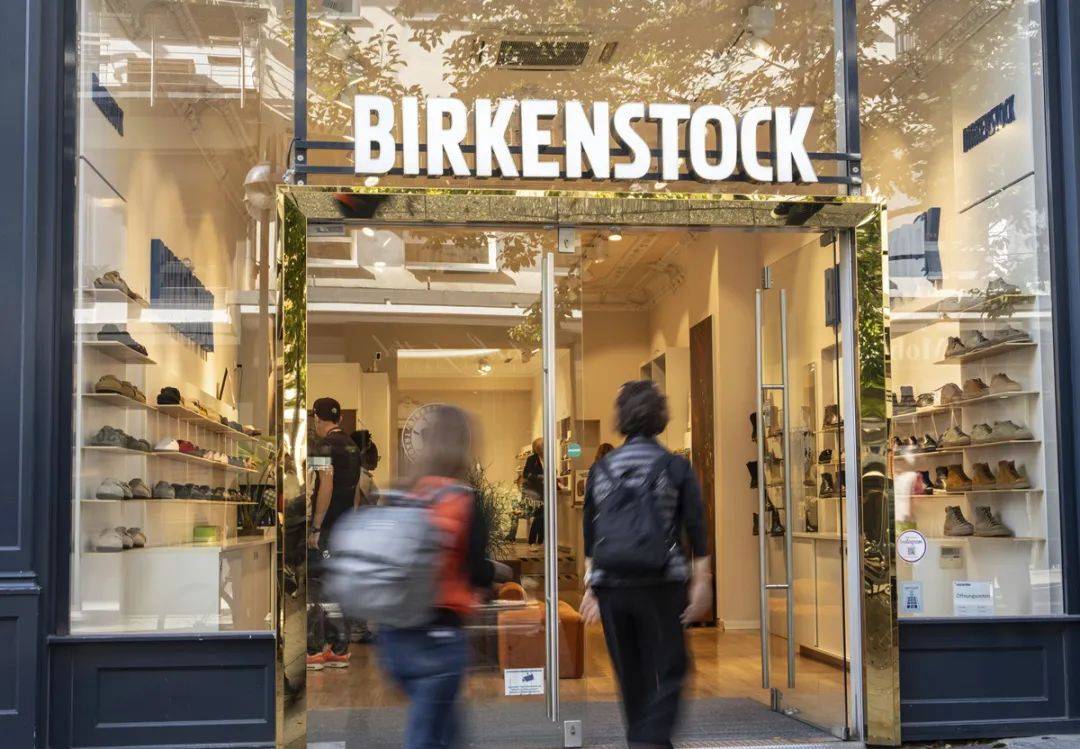
Birkenstock Q3 earnings beat estimates as price hikes offset tariffs
Proactiveinvestors NA· 2025-08-14 16:43
Company Overview - Proactive is a financial news publisher that provides fast, accessible, informative, and actionable business and finance news content to a global investment audience [2] - The company has a team of experienced news journalists who produce independent content across various financial markets [2] Market Focus - Proactive specializes in medium and small-cap markets while also covering blue-chip companies, commodities, and broader investment stories [3] - The content includes insights across sectors such as biotech and pharma, mining and natural resources, battery metals, oil and gas, crypto, and emerging digital and EV technologies [3] Technology Adoption - Proactive is committed to adopting technology to enhance its content creation and workflow processes [4] - The company utilizes automation and software tools, including generative AI, while ensuring that all published content is edited and authored by humans [5]

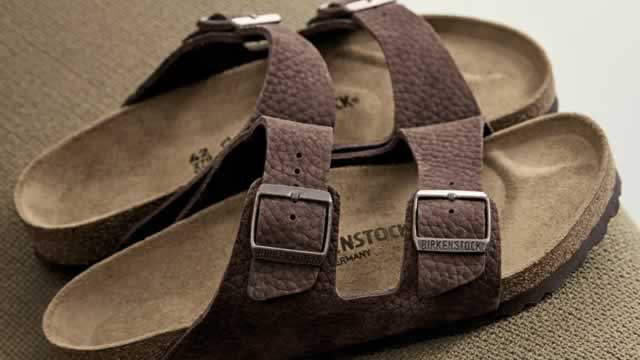
Stocks fall after hot PPI inflation data, bitcoin, ethereum, and the crypto rally
Yahoo Finance· 2025-08-14 15:44
Welcome to Yahoo Finance's flagship show, The Morning Brief. I'm Julie Hyman. Let's get to the three things you need to know today.First off, US stock futures are falling after the latest read on inflation came in hotter than expected. We're talking about producer price index data for July. It showed that US wholesale inflation accelerated last month by the most in three years, driven by a surge in the cost of services.The latest data throwing some cold water on Wall Street's bets on interest rate cuts in S ...

X @Bloomberg
Bloomberg· 2025-08-14 09:27
Birkenstock reported earnings that were slightly better than expected as the German company benefitted from raising prices and strong demand from retail partners https://t.co/c8JfyOU7HZ ...
洞洞鞋红利退场,Crocs CEO直言:潮流回归运动风
Sou Hu Cai Jing· 2025-08-12 07:08
Core Viewpoint - Crocs is experiencing a significant decline in sales and market performance, with a projected revenue drop of 9%-11% year-over-year for Q3, attributed to changing consumer preferences and economic pressures [2][4]. Group 1: Financial Performance - For Q2 of FY2025, Crocs reported revenue of $1.15 billion, a 3.4% increase year-over-year, but the main brand's growth has slowed to just 2.4% [7]. - The North American market saw a decline of 6.5%, while international markets grew by 18.1% [7]. - The company recorded a net loss of approximately $500 million for Q2, largely due to a $700 million goodwill impairment related to the acquisition of HEYDUDE [4][7]. Group 2: Market Challenges - The company faces increased cost pressures, including a projected $40 million increase in tariffs by the second half of 2025, totaling $90 million for the year [4]. - Crocs is attempting to counteract these pressures by reducing promotions and raising prices, which may further suppress demand [4]. - Legal challenges have arisen due to product quality issues, with consumers alleging that the shoes deform under heat, which could impact brand reputation and pricing power [6]. Group 3: Competitive Landscape - The market is shifting back towards functional and athletic styles, with brands like Nike and Adidas regaining popularity [2][9]. - Crocs' sales model, which thrived on social media trends and comfort during the pandemic, is now under threat from emerging competitors and lower-priced alternatives [9]. - The rise of brands like Birkenstock and the availability of cheaper "knock-off" versions of Crocs are further squeezing market share [9].

年轻人正在用丑鞋踹翻全世界
虎嗅APP· 2025-07-24 09:42
Core Viewpoint - The article discusses the rise of "ugly shoes" as a fashion trend among young people, highlighting a shift from traditional stylish footwear to more comfortable and unconventional designs that prioritize comfort over aesthetics [7][8][9]. Group 1: Trends in Footwear - The year 2024 has been declared the year of ugly shoes, with a notable shift in fashion preferences from stylish high heels to comfortable, unconventional footwear [7][8]. - Young people are increasingly embracing various forms of slip-on shoes, including clogs, Ugg boots, and chef shoes, which are now considered fashionable [11][20]. - The trend is characterized by a focus on comfort, with shoes becoming flatter, wider, and more casual, reflecting a broader cultural shift away from traditional fashion norms [90][93]. Group 2: Specific Shoe Types - Ballet flats and thin-soled shoes have gained popularity, with brands like Adidas and Puma leading the trend, often associated with K-pop idols [24][26]. - The emergence of fishnet shoes and five-toe shoes has created a new niche in the market, appealing to young consumers looking for unique and functional designs [20][41]. - Brands like KEEN have capitalized on the trend of outdoor and functional footwear, which has become fashionable in urban settings, despite their originally intended use for outdoor activities [66][73]. Group 3: Cultural Shifts - The article notes a significant cultural shift where high heels, once a symbol of femininity and power, are now being rejected by younger generations in favor of comfort and practicality [93][98]. - The rise of "ugly shoes" reflects a rebellion against traditional beauty standards and societal expectations, with young people prioritizing comfort and self-expression over conventional aesthetics [58][83]. - The trend is also linked to broader societal changes, including the impact of the pandemic and movements like MeToo, which have influenced perceptions of femininity and professional attire [98][111].

为什么越丑的鞋越值钱?
3 6 Ke· 2025-07-08 23:38
Group 1 - The core argument of the article highlights the unexpected success of "ugly shoes," particularly Crocs and Birkenstock, which have gained popularity despite initial criticism, with Crocs outperforming the Dow Jones U.S. Shoe Company Index for four consecutive years [2][18] - Birkenstock has seen continuous double-digit revenue growth for nine consecutive quarters, demonstrating that "ugliness" can translate into commercial success [3][18] - The rise of Birkenstock was significantly boosted by its appearance in the movie "Barbie," leading to a 110% increase in search volume on fashion platform Lyst [6][18] Group 2 - Both Crocs and Birkenstock share a foundation in practicality, with Birkenstock focusing on foot health and comfort, while Crocs emphasized comfort and ease of cleaning [7][9] - Crocs experienced a 300-fold increase in revenue from 2003 to 2006, driven by word-of-mouth among professionals like chefs and doctors [9][18] - The operational strategies of Crocs and Birkenstock differ significantly, with Crocs adopting a high-volume, low-cost model, while Birkenstock maintains a focus on scarcity and high-quality production in Germany [23][24] Group 3 - Crocs has shifted production to third-party manufacturers, allowing for flexibility and rapid response to market demands, but this has also led to a high incidence of counterfeiting [24][11] - In contrast, Birkenstock controls its production closely, with 95% of its products made in Germany, which helps maintain brand integrity and pricing power [24][25] - Birkenstock's average selling price has consistently increased, with a high full-price sell-through rate of 90%, indicating strong brand positioning in the market [28][18] Group 4 - The article emphasizes that the key to success for these brands lies not just in their "ugliness," but in the additional value they provide to consumers, creating a narrative that resonates with their audience [29][32] - Birkenstock's commitment to traditional craftsmanship and European materials enhances its brand value, distinguishing it from mass-produced alternatives [32][33] - The luxury positioning of Birkenstock has allowed it to thrive in a market where scarcity and exclusivity are highly valued, contrasting with Crocs' volume-driven approach [28][18]

为什么越丑的鞋越值钱?
远川研究所· 2025-07-08 10:54
Core Viewpoint - The article discusses the rise of "ugly shoes," particularly focusing on Crocs and Birkenstock, highlighting how their unconventional designs have led to significant market success and changing perceptions in the fashion industry [4][32]. Group 1: Market Performance - Crocs has outperformed the Dow Jones U.S. Shoe Company Index for four consecutive years, indicating strong market demand [5]. - Birkenstock has maintained double-digit revenue growth for nine consecutive quarters, showcasing its successful business model [9]. - In the 2024 fiscal year, Crocs' revenue growth is expected to slow down, while Birkenstock continues to achieve double-digit growth despite having only half the revenue of Crocs, with a market valuation exceeding Crocs by over 50% [32]. Group 2: Brand Strategy - Both Crocs and Birkenstock originated from a practical standpoint, focusing on comfort and functionality rather than aesthetics [14][18]. - Crocs adopted a volume-driven strategy, achieving over $2 billion in sales for its Classic Clog model in 2024, surpassing the entire Yeezy line from Adidas [36]. - Birkenstock, in contrast, has focused on maintaining scarcity and exclusivity, producing 95% of its products in Germany and controlling distribution to enhance brand value [40][41]. Group 3: Consumer Perception and Marketing - The perception of "ugly shoes" has shifted, with Crocs and Birkenstock leveraging their controversial designs to create media interest and public relations opportunities [24]. - Birkenstock's collaborations with luxury brands have significantly increased its market presence, with products that were once priced under $100 now selling for up to $1,000 on secondary markets [48]. - The article emphasizes that the key to success for these brands lies not in their aesthetics but in their ability to create a narrative and perceived value that resonates with consumers [51][59].

The level of tariffs will dictate retail stock price sentiment, says Dana Telsey
CNBC Television· 2025-07-03 17:57
Sector Performance & Rebound Potential - Consumer discretionary sector is the worst performing sector this year, but may rebound in the second half [1] - Product newness and tariff implementation will dictate the sentiment in the second half of the year [3] Consumer Behavior & Retailer Strategy - Customers are trading down, with Walmart's biggest growth coming from higher-income consumers [4] - Companies are being more cautious with inventory for the holiday season due to tariffs [4] - Value, discounters, and brand leaders are key, with revivals also contributing to growth, such as Wolverine Worldwide's Sakin up 30% [7] Brand & Product Dynamics - Brand leaders with newness drive demand, like Birkenstock's closed-toe shoes and collaborations such as Levi's and Nike [5] - Unique items allow for better pricing, but overall price upticks have been limited [5][6] Trade & Tariffs - Vietnam tariffs include a 20% tariff on exports to the US and a 40% transshipment tariff on goods from third countries, potentially targeting China [8][9] - Supply chain dynamics are challenging, with freight expenses as a headwind and potential price increases in the mid to high single-digit range [9] - Retailers can navigate tariffs by diversifying sourcing, sharing costs with manufacturers, and raising prices to consumers [10] - Companies suspended earnings guidance due to uncertainty about tariff impacts on margins and costs [10] - Shifting sourcing away from North America due to high labor costs, with tariff levels dictating stock prices [11]