Databricks

Search documents
Databricks CEO says SaaS isn’t dead, but AI will soon make it irrelevant
Yahoo Finance· 2026-02-09 21:14
Core Insights - Databricks has achieved a revenue run rate of $5.4 billion, reflecting a 65% year-over-year growth, with over $1.4 billion coming from AI products [2] - The company aims to differentiate itself from traditional SaaS labels, as it is primarily valued in private markets as an AI company [3] - Databricks has successfully closed a $5 billion funding round at a valuation of $134 billion and secured a $2 billion loan facility [3] AI Product Impact - The LLM user interface named Genie is significantly driving the usage of Databricks' data warehouse, allowing users to interact with data using natural language [4] - Genie simplifies data queries that previously required technical expertise, contributing to the company's growth in usage [5] SaaS Industry Dynamics - The perceived threat of AI to SaaS is not about replacing existing systems of record but rather transforming user interfaces to be more accessible [6][7] - Ghodsi emphasizes that the challenge for SaaS businesses lies in the potential invisibility of their products as interfaces become more user-friendly, which could diminish the need for specialized knowledge [8]
Databricks获50亿股权+20亿债务融资 估值1340亿美元 年化营收破54亿
Jin Rong Jie· 2026-02-09 16:30
Core Insights - Databricks announced a $5 billion equity financing round at a valuation of $134 billion, along with an additional $2 billion in debt financing [1] - The company reported an annualized revenue exceeding $5.4 billion for the fiscal year ending in January, representing a 65% year-over-year growth, and achieved positive free cash flow over the past year [1] - Databricks' AI-related products have reached an annualized revenue of $1.4 billion, with growth accelerating beyond previous expectations of 50% [1] - The CEO indicated that the company is prepared for an IPO when the timing is right, noting strong market interest in the recent funding round [1] - Major investors in this financing round include Goldman Sachs, GladeBrook Capital, Morgan Stanley, Neuberger Berman, and Qatar Investment Authority, with JPMorgan leading the debt financing [1] - Databricks currently holds several billion dollars in cash [1]
Databricks完成50亿美元融资轮,估值达1340亿美元
Xin Lang Cai Jing· 2026-02-09 15:36
"我们原本不确定能否真的募满50亿美元,"戈德西表示,并补充称近几周市场认购热情极高。他提到, 风险资本市场往往需要数月时间,才能反映股票市场的重大变化。 本轮融资投资方包括高盛、GladeBrookCapital、摩根士丹利、纽伯格伯曼以及卡塔尔投资局等。摩根大 通牵头本次债务融资,目前Databricks手握数十亿美元现金。 "如果本轮市场调整尚未触底、还会继续下行,我们就继续保持私有公司状态,"戈德西说。 Databricks联合创始人兼 CEO阿里・戈德西 Databricks于周一宣布,以1340亿美元估值完成50亿美元股权融资,并新增20亿美元债务融资额度。 这家私营数据分析软件公司同时披露,截至1月季度的年化营收突破54亿美元,同比增长65%,且过去 一年实现正向自由现金流。 这样的业绩表现有望激发公开市场投资者的兴趣——近期高增长科技企业的新股发行数量并不多。 Databricks联合创始人兼CEO阿里・戈德西在接受采访时表示,公司已做好上市准备,"时机合适时"便 会启动IPO。 2026年有望成为科技IPO大年。据知情人士透露,高速增长的人工智能公司Anthropic、OpenAI也在考 虑 ...


Databricks raises $5 billion in latest funding, defying software selloff
Yahoo Finance· 2026-02-09 15:13
By Jaspreet Singh, Pritam Biswas and Krystal Hu Feb 9 (Reuters) - Databricks said on Monday it has completed a fundraising of about $5 billion at a $134 billion valuation, as the data analytics software company bolsters its balance sheet to invest in artificial intelligence products focusing on enterprise customers. One of the most valuable privately held companies, Databricks also announced about $2 billion in new debt capacity, as its annualized revenue run-rate rose 65% to $5.4 billion in the fou ...
Yuki Joins AWS ISV Accelerate (ISVA) Program to Bring Real-Time Data Cost Control to AI Workloads on Snowflake
Globenewswire· 2026-02-09 13:05
Core Insights - Yuki has joined the Amazon Web Services (AWS) ISV Accelerate Program, enhancing its market presence and collaboration with AWS partners [1][5] - The platform is designed to manage variable data workloads for GenAI and LLM applications, improving performance and cost predictability [2][6] - Yuki serves as an orchestration layer for Snowflake and BigQuery, optimizing resource allocation and reducing operational drag [3][7] Company Overview - Yuki is a control platform for cloud data warehouses, focusing on automatic workload routing and resource right-sizing [7] - The platform has demonstrated significant cost savings for customers, averaging 42% last year, with quick onboarding processes [5] - Yuki plans to expand its support to additional environments, including Databricks, later in the year [5] Industry Context - The increasing complexity of AI-era data stacks presents governance challenges, which Yuki aims to address through its automation capabilities [6] - The ISV Accelerate Program provides co-sell support, enabling Yuki to leverage AWS's global sales network for better customer outcomes [5][6]



在参与OpenAI、Google、Amazon的50个AI项目后,他们总结出了大多数AI产品失败的原因
AI前线· 2026-02-09 09:12
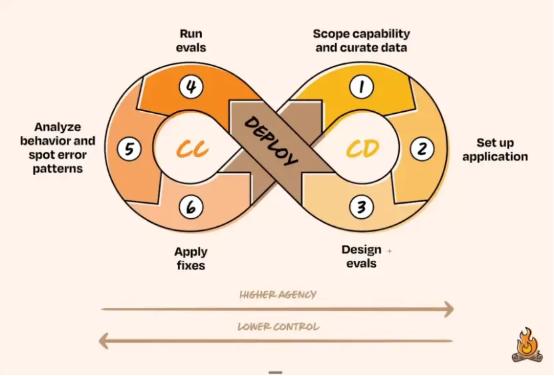
Core Insights - The construction of AI products has become significantly easier and cheaper, but many still fail due to a lack of focus on problem-solving and product design [3][4] - Leaders need to engage directly with the development process to rebuild their judgment and acknowledge that their intuition may no longer be entirely accurate [3][4] - The era of "busy but ineffective" work is ending; companies must focus on creating substantial impacts rather than hiding behind non-essential tasks [3][4] Challenges in AI Product Development - There is a noticeable reduction in skepticism towards AI, but many leaders still hesitate to invest fully, fearing it may be another bubble [4] - Companies are beginning to rethink user experience and business processes, realizing that successful AI products require a complete overhaul of existing workflows [4][5] - The lifecycle of AI products differs fundamentally from traditional software, necessitating closer collaboration among PMs, engineers, and data teams [4][5] Differences Between AI and Traditional Software - AI systems deal with non-deterministic APIs, making user input and output unpredictable, unlike traditional software with clear decision-making processes [5][6] - There is a trade-off between agency and control; higher autonomy in AI systems means less control, which must be earned through reliability and trust [6][7] Development Approach - A recommended approach is to start with low autonomy and high control, gradually increasing autonomy as confidence in the system grows [7][8] - For example, in customer support, AI should initially assist human agents before taking on more complex tasks [7][8] Continuous Calibration and Development Framework - The CC/CD framework emphasizes continuous calibration and development, allowing teams to adapt to user behavior and improve system performance over time [24][26] - This framework helps in understanding user interactions and maintaining user trust while gradually increasing the system's autonomy [27][31] Key Success Factors for AI Products - Successful companies typically exhibit strong leadership, a healthy culture, and ongoing technical capabilities [13][14] - Leaders must be willing to learn and adapt their intuition to the new AI landscape, fostering a culture that empowers employees rather than instilling fear [14][15] Future of AI - The potential of coding agents is still underestimated, with significant value expected to be unlocked in the coming years as they become more integrated into workflows [36][37] - The focus should remain on solving business problems rather than merely adopting new tools, as the true value lies in understanding user needs and workflows [38][39]



在参与OpenAI、Google、Amazon的50个AI项目后,他们总结出了大多数AI产品失败的原因
3 6 Ke· 2026-02-09 06:57
Core Insights - The cost of building AI products has significantly decreased, but the real challenge lies in product design and understanding the pain points to be addressed [1][2][3] - AI is a tool for solving problems, and leaders must engage directly to rebuild their judgment and adapt to new realities [2][3] - Retaining a degree of "foolish courage" is essential in an era where data suggests high failure rates [3] AI Product Development Challenges - Skepticism towards AI has decreased, but many leaders still view it as a potential bubble, delaying genuine investment [4] - Successful AI product development requires a thorough understanding of user experience and business processes, often necessitating a complete overhaul of existing workflows [4] - The lifecycle of AI products differs from traditional software, leading to a need for closer collaboration among PMs, engineers, and data teams [4][5] Key Differences in AI Product Construction - AI systems operate with a level of non-determinism that traditional software does not, complicating user interactions and outputs [5][6] - The balance between agency and control is crucial; higher autonomy in AI systems requires a foundation of trust built over time [6][7] - Starting with low autonomy and high control allows for gradual understanding and confidence in AI capabilities [7][8] Successful AI Product Patterns - Successful companies exhibit strong leadership, a healthy culture, and ongoing technical capabilities [14][15][16] - Leaders must acknowledge the need to relearn and adapt their intuition in the context of AI [14] - A culture that empowers employees and emphasizes AI as a tool for enhancement rather than a threat is vital for success [15] Continuous Calibration and Development Framework - The CC/CD framework emphasizes continuous improvement and understanding user behavior while maintaining user trust [25][28] - Initial stages should focus on low autonomy and high control to mitigate risks and build confidence in the system [28][29] - The framework encourages iterative processes to adapt to new user behaviors and system capabilities [32][34] Future of AI - The potential of Coding Agents remains underestimated, with significant value expected to be unlocked in the coming years [35] - The integration of AI into real workflows will enhance its contextual understanding and proactive capabilities [38] - A shift towards multi-modal experiences is anticipated, allowing for richer interactions and unlocking previously inaccessible data [39] Skills for AI Product Builders - The ability to focus on problem-solving and understanding workflows is becoming increasingly important as implementation costs decrease [40][42] - Proactive engagement and a willingness to iterate through trial and error are essential for success in AI product development [41][42]
Snowflake’s $200M Bet: Can The OpenAI Deal Fix the Slump?
Yahoo Finance· 2026-02-03 14:38
Core Insights - Snowflake has announced a strategic partnership with OpenAI, investing $200 million to integrate advanced AI models like GPT-5.2 into its platform, positioning itself as a key player in the AI era [4][5][6] - The partnership aims to enhance Snowflake's consumption-based business model by reducing technical barriers for customers, thereby increasing usage and revenue potential [10][8] - Despite the positive strategic implications, Snowflake's stock has faced pressure, trading at approximately $192 per share, which is below its historical valuation [11][12] Competitive Landscape - Snowflake is competing against major players like Databricks, which is generating nearly $4.8 billion in annualized revenue and preparing for an IPO, intensifying the market competition [1] - The company is adopting a "Switzerland of AI" strategy, partnering with multiple AI firms to avoid direct competition and create a neutral platform for various AI models [6][7] Financial Metrics - Snowflake reported a $100 million AI revenue run rate in its third-quarter report for fiscal year 2026, ahead of schedule, indicating strong customer adoption with over 1,200 customers utilizing Snowflake Intelligence [16] - The company has maintained a product gross margin of approximately 76% and is targeting a 25% free cash flow margin for the full fiscal year, reflecting financial discipline amid aggressive investments [17] Market Reaction - The market has shown skepticism towards AI investments, leading to a 12% decline in Snowflake's stock price since the beginning of the year, despite the potential upside indicated by analysts [3][12] - The upcoming fourth-quarter earnings report on February 25, 2026, will be crucial for assessing the success of the OpenAI partnership and its impact on consumption growth [13][14]
2025年四季度企业SaaS公共报表和估值指南(英)
PitchBook· 2026-02-03 02:00
Investment Rating - The report does not explicitly provide an investment rating for the industry but indicates a cautious outlook for enterprise SaaS multiples into 2026 due to global uncertainty and technological disruptions [6]. Core Insights - The median EV/TTM revenue multiple for public enterprise SaaS companies decreased to 5x at the end of Q4 2025, down from 5.3x in Q3 2025, and is expected to see limited upside into 2026 [6]. - Revenue growth rates for 2026 are anticipated to step down to high single digits or low double digits, with significant declines expected in several segments, while slight growth is expected in collaboration, productivity, and creative segments [9]. - The median gross margin for public enterprise SaaS companies increased to nearly 77% in 2025, with expectations of continued strength but limited substantial growth in 2026 [10]. - The median EBITDA margin rose to 19.8% in 2025, with expectations for further strengthening across most segments into 2026 [11]. Summary by Sections Revenue - Revenue growth rates for enterprise SaaS companies are projected to decline significantly in 2026, with the median growth rate barely in double digits, down from previous years' rates of 15% to 30% [9]. - The report highlights specific segments expected to experience declines, including CRM, sales, marketing & CX, finance, ERP, HR & payroll, and data, analytics & AI platforms [9]. Valuation - The report notes that valuation multiples have continued to decline, with 76 out of 102 tracked companies experiencing decreases in their EV/TTM revenue multiples from year-end 2024 to year-end 2025 [12]. - Notable companies that outperformed the broader SaaS decline include Unity, On24, and CS Disco, while companies like Ibotta and The Trade Desk saw significant decreases in their multiples [12]. Gross Margin and EBITDA - The median gross margin across public enterprise SaaS companies is projected to remain strong at 77% in 2026, with some segments like DevOps and vertical SaaS expected to see slight growth [10]. - The report anticipates that EBITDA margins will continue to improve, with the highest growth expected in data, analytics & AI platforms and collaboration, productivity & creative segments [11].


2026全球IPO展望:资本流向、市场选择与估值范式 | 氪睿研究院
Sou Hu Cai Jing· 2026-02-01 09:23
Core Insights - The global IPO market is showing signs of recovery in 2026, with an increase in listing projects across multiple exchanges, particularly in AI, hard technology, energy, and advanced manufacturing sectors, indicating a potential restoration of risk appetite in capital markets [1][2] - However, this IPO wave does not align with typical characteristics of past cyclical recoveries, as the types of companies successfully pursuing IPOs have significantly changed [2][4] Changes in Company Types - Companies that can successfully advance to IPOs are now concentrated in a few high-capital-density industries with long investment cycles and strong policy connections, while many light-asset and narrative-driven companies remain outside the listing doors [2][4] Shifts in IPO Pricing Logic - The pricing logic for IPOs is shifting from a focus on "growth potential" to prioritizing strategic necessity, cash flow verifiability, and long-term capital sustainability due to high interest rates and geopolitical factors [3][11] - This indicates a transition of IPOs from a "market reward mechanism" to a strategic asset selection and pricing mechanism [4][15] Strategic IPOs - A new category of "strategic IPOs" is emerging, characterized by companies that are critical to industry chains, have capital-intensive operations with verifiable cash flow paths, and are closely tied to national development goals or global industrial patterns [12][14] - The existence of these companies is deemed essential, leading to a higher threshold for IPO eligibility, as capital markets now differentiate between "replaceable product innovation" and "irreplaceable system capabilities" [14][15] Market Differentiation - The 2026 IPO landscape is not a uniform recovery but rather a highly differentiated and selective return, with capital becoming more concentrated and cautious [4][16] - Different markets are pricing entirely different types of assets, reflecting their unique industrial structures, policy goals, and capital systems [17][18] Regional Insights - In the U.S. market, IPOs are focused on "future infrastructure" pricing, with companies embedded in national or global systems receiving significant premiums [20][21] - In China, IPOs serve as an extension of industrial policy rather than a reflection of market sentiment, with a focus on companies that align with long-term industrial frameworks [21][22] - Emerging markets like India are selling long-term options based on population and digital penetration, with a different pricing logic compared to the U.S. and China [22][29] Conclusion - The 2026 IPO market represents a structural reset rather than a mere emotional recovery, emphasizing the need for companies to demonstrate long-term viability and strategic importance to be recognized as worthy of public capital [75][81]