宝洁公司

Search documents
VDC vs. FSTA: Comparing Two Similar Consumer Staples ETFs
The Motley Fool· 2025-12-21 03:05
Core Insights - The Vanguard Consumer Staples ETF (VDC) has a larger asset base and a longer track record compared to the Fidelity MSCI Consumer Staples Index ETF (FSTA), making it a more established option for investors [1][10]. Cost & Size - FSTA has an expense ratio of 0.08%, while VDC's is slightly higher at 0.09%, indicating that FSTA is marginally more affordable [3][4]. - As of the latest data, FSTA manages $1.3 billion in assets under management (AUM), whereas VDC has $7.4 billion in AUM, highlighting VDC's significant size advantage [3][10]. Performance & Risk - Over the past year, FSTA has returned -2.7% and VDC has returned -2.4%, showing that VDC has performed slightly better [3][15]. - The maximum drawdown over five years for FSTA is -17.08%, while VDC's is -16.54%, indicating that VDC has experienced less volatility [5]. Portfolio Composition - VDC holds 107 stocks primarily focused on consumer defensive companies, with top holdings including Walmart, Costco, and Procter & Gamble [6]. - FSTA has a similar focus, with 98% of its holdings in consumer defensive stocks and also includes Walmart, Costco, and Procter & Gamble among its top holdings [7]. Historical Performance - VDC has been operational for nearly 22 years, while FSTA was launched in 2013, giving VDC a historical performance advantage [10]. - Since FSTA's inception, it has achieved a compound annual growth rate (CAGR) of 8.5%, while VDC has a CAGR of 8.7%, indicating comparable long-term performance [15].


9 Best Fundamentally Strong Penny Stocks to Buy According to Analysts
Insider Monkey· 2025-12-20 15:50
分组1 - The article discusses fundamentally strong penny stocks that analysts recommend for investment, highlighting their potential despite the general volatility associated with such stocks [1] - The broader economic sentiment is shifting towards optimism, with executives reporting the brightest near-term expectations seen this year, driven by a focus on customer needs and technology investments [2][3] - A recent McKinsey Global Survey indicates that 63% of executives expect their companies' profits to increase in the next six months, the highest share since December 2024 [4] 分组2 - The methodology for selecting penny stocks involved filtering for stocks trading under $5, with market capitalizations over $2 billion and an upside potential of at least 20% [6] - The article emphasizes the importance of hedge fund holdings, suggesting that imitating top stock picks from hedge funds can lead to market outperformance [7] - The quarterly newsletter strategy has achieved a return of 427.7% since May 2014, significantly outperforming its benchmark [8] 分组3 - Clarivate Plc (NYSE:CLVT) has an upside potential of 20.34% as of December 19, 2025, with a market capitalization of $2.27 billion and 25 hedge fund holders [9] - Morgan Stanley downgraded Clarivate to Underweight, citing struggles in its turnaround and limited growth potential due to funding pressures and competition [9][11] - Analyst sentiment on Clarivate is mixed, with 30% of analysts rating it as a Buy and a wide range in consensus price targets, indicating uncertainty [13] 分组4 - Coty Inc. (NYSE:COTY) has an upside potential of 22.70% as of December 19, 2025, with a market capitalization of $2.84 billion and 30 hedge fund holders [15] - Coty sold its remaining 25.8% stake in Wella for $750 million, intending to use the proceeds to pay off debt amid challenges in the mass beauty segment [15][16] - Citi has reduced Coty's price target to $3.50 from $4.25, maintaining a Neutral rating, reflecting a revised outlook for the beauty sector [18]



利润、渠道、专利全给美国!电池霸主南孚是怎么被榨干的?
Sou Hu Cai Jing· 2025-12-20 11:47
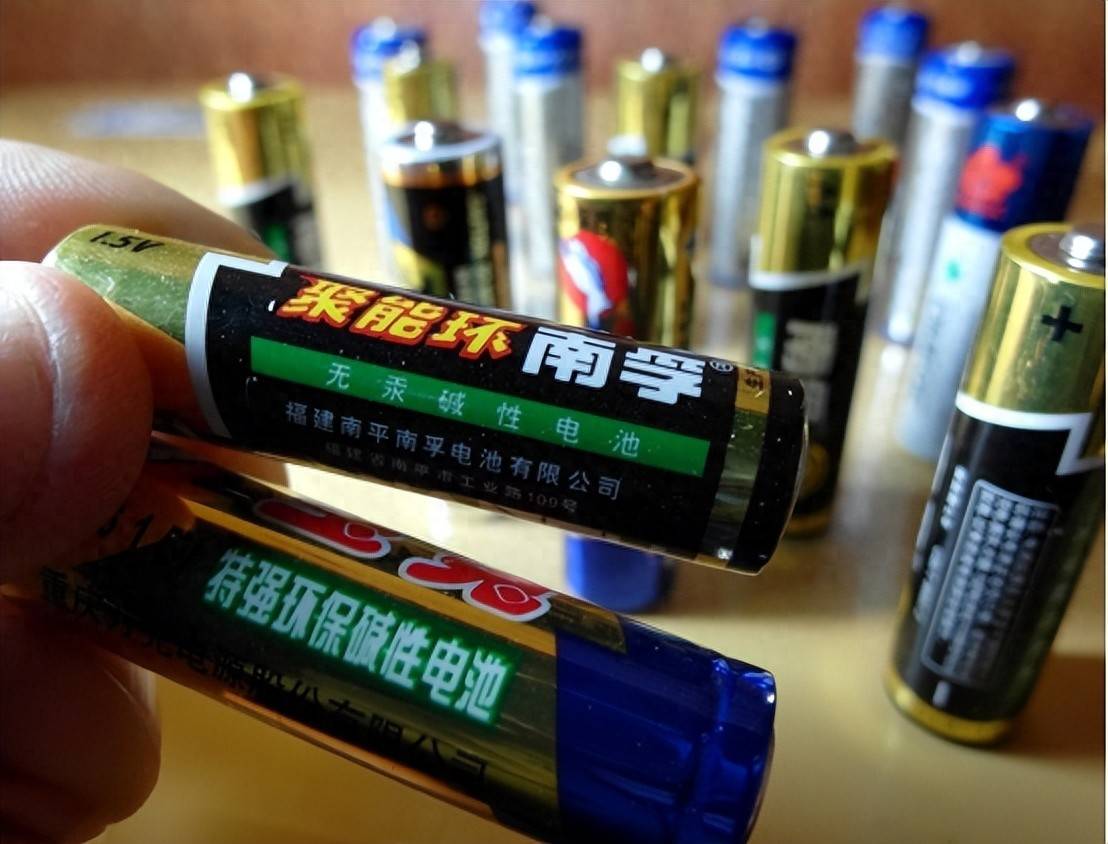
Core Viewpoint - The story of Nanfu Battery illustrates the rise and fall of a once-dominant Chinese brand, highlighting the risks of foreign investment and the complexities of capital structure in maintaining control over a company [1][21]. Company History - Nanfu Battery, originally founded as Nanping Battery in 1954, started as a small workshop struggling for survival [3][5]. - In the 1970s, Chen Laimao joined the company, leading it to expand from rural markets to urban areas through partnerships with well-known battery manufacturers [5][6]. - The company capitalized on the rising demand for alkaline batteries in the 1980s, becoming a market leader [6]. Capital Structure and Foreign Investment - In 1988, Nanfu Battery became the first joint venture battery company in China, partnering with foreign capital, which later complicated its ownership structure [8][10]. - By 1999, foreign investors held significant control over Nanfu, culminating in a sale to Gillette in 2003, which marked the end of its status as a national brand [10][12]. - Gillette's acquisition led to a focus on its own brand, Eveready, at the expense of Nanfu, which saw its production capabilities and resources significantly reduced [12][14]. Corporate Changes and Challenges - After Gillette was acquired by Procter & Gamble in 2005, Nanfu continued to be used primarily to support the sales of Eveready, further limiting its growth [15][17]. - In 2014, Nanfu was sold to Dinghui Capital, which aimed to diversify its product line and reduce reliance on battery sales [17][19]. - By 2017, Nanfu's revenue reached 2.32 billion yuan, showing signs of recovery under new management [19]. Recent Developments - In 2022, Anhui Andeli announced plans to acquire Nanfu's controlling company, aiming to leverage its brand strength in the battery industry [21]. - Despite this potential opportunity, Nanfu faces significant competition and technological challenges in the evolving market [21][23]. Lessons Learned - The narrative of Nanfu Battery serves as a cautionary tale for companies regarding the importance of maintaining control over their core operations when engaging with foreign investors [23].
好书推荐 | 当“网红股”跌落神坛,什么才是穿越周期的投资真谛?
点拾投资· 2025-12-20 11:00
Core Viewpoint - The article emphasizes the importance of identifying companies with a sustainable economic moat that can withstand economic cycles and competition, providing long-term reliable returns for investors [1]. Group 1: Company Overview - Morningstar, founded in 1984, has grown from a small office to a trusted authority in financial data and research, focusing on creating value for investors [3]. - The company's stock research is rooted in a long-term ownership perspective, avoiding short-term noise and focusing on identifying companies with sustainable competitive advantages [3][4]. Group 2: Economic Moat Analysis - Morningstar defines the economic moat as a company's ability to maintain a competitive advantage over time, which is crucial for achieving returns above the cost of capital [6]. - The analysis framework includes five identifiable sources of economic moats: 1. Intangible assets, such as brand loyalty and patents [8]. 2. Cost advantages, allowing companies to offer products at lower costs [9]. 3. Switching costs that lock customers into a company's services [10]. 4. Network effects that enhance the value of a product as more users join [11]. 5. Efficient scale, where market conditions limit the number of profitable competitors [12]. Group 3: Investment Timing and Valuation - Identifying great companies is only part of the investment success; buying them at fair or undervalued prices is essential for generating excess returns [13]. - Morningstar employs a discounted cash flow model to estimate a company's intrinsic value, requiring deep analysis of industry trends and company strategies [14]. Group 4: Risk Management and Safety Margin - Acknowledging the limitations of human predictions, Morningstar incorporates a "margin of safety" principle to protect against unforeseen risks [15]. - The company uses an uncertainty rating system to assess the difficulty and risk of future cash flow predictions, assigning different safety margin requirements based on the level of uncertainty [19]. Group 5: Consumer Sector Insights - The consumer sector is highlighted as an ideal area for applying the economic moat theory, with strong brands and cost advantages being key factors [21]. - Specific examples include beverage companies like Coca-Cola, which leverage brand loyalty and distribution networks, and packaged goods companies like Nestlé, which benefit from scale economies [25][27].

The 5 stocks dragging down the Dow in 2025
Yahoo Finance· 2025-12-19 23:37
UnitedHealth Group (UNH), Salesforce (CRM), Procter & Gamble (PG), Nike (NKE), and Honeywell (HON) are the worst performers of the Dow Jones Industrial Average (^DJI) in 2025. Yahoo Finance Markets and Data Editor Jared Blikre examines the index's 2025 losers. To watch more expert insights and analysis on the latest market action, check out more Market Catalysts here: https://finance.yahoo.com/videos/series/market-catalysts/ #youtube #stocks #investing #news Yahoo Finance provides free stock ticker data, up ...
Jim Cramer on Procter & Gamble: “It’s Cheaper Than I Can Ever Recall”
Yahoo Finance· 2025-12-19 19:14
Core Viewpoint - Procter & Gamble (NYSE:PG) is highlighted as a strong investment opportunity due to its significant R&D investments and current stock price decline, making it a potentially undervalued asset [1]. Group 1: Company Overview - Procter & Gamble provides a wide range of branded consumer goods across various sectors, including beauty, grooming, health care, home care, and family care [2]. - The company markets its products under well-known brands such as Tide, Pampers, Gillette, Crest, Olay, and Febreze [2]. Group 2: Investment Insights - The company invests over $2 billion annually in research and development to enhance its product offerings, which include innovative items like Pampers, Tide evo detergent, and Gillette Labs heated razors [1]. - The stock has decreased by more than 13% this year, and management has indicated that they will miss the upcoming quarter's expectations, which some investors view as a de-risking factor [1].
Shares of P&G Struggled in 2025. What Will It Do in 2026?
Yahoo Finance· 2025-12-19 18:13
Core Insights - Procter & Gamble (P&G) is a long-established blue-chip stock, known for its stability and reliable quarterly dividend of $1.06, with a modest growth of 2% in fiscal 2025, but faces potential challenges in 2026 due to recessionary fears [1][2] Consumer Sentiment and Market Position - P&G's stock has declined over 13% as of December 15, indicating a negative shift in consumer sentiment, which could lead to increased competition from private label brands as consumers seek more affordable options [4][8] - The company is significantly exposed to premium-priced consumer goods, making it vulnerable to competition from in-house labels of retailers like Walmart, Target, and Costco [5][8] Growth Strategies - To mitigate economic challenges in the U.S., P&G is focusing on expanding into emerging markets such as Asia and Latin America, as it approaches market saturation in the U.S. and Europe [6] - The company may also consider acquiring new brands in lucrative sectors like beauty and skincare to diversify its revenue streams [6] External Factors - Tariffs are expected to impact P&G's performance in 2026, with potential price increases for consumers and an anticipated $1 billion hit to its balance sheet due to tariff pressures [7]
KMB vs. PG: Which Consumer Staples Stock Offers Better Upside Now?
ZACKS· 2025-12-19 17:26
Core Insights - Procter & Gamble (PG) and Kimberly-Clark (KMB) are leading companies in the global consumer staples sector, focusing on personal care, household, and hygiene products [1] - PG has a market capitalization of approximately $350 billion, while KMB's market cap is about $45 billion, with PG leveraging its brand equity and supply chain for competitive advantage [2][3] - Both companies face challenges from pressured household budgets and cautious consumer behavior, raising questions about their respective growth strategies [4] Procter & Gamble (PG) - PG has achieved over 40 consecutive quarters of organic sales growth, supported by its focus on non-discretionary categories like fabric care and baby care [12] - The company invests around $10 billion annually in advertising and R&D, which is about 11% of its sales, to drive innovation across key product lines [13] - In the first quarter of fiscal 2026, PG reported adjusted free cash flow productivity of 102%, returning $3.8 billion to shareholders through dividends and share repurchases [14] - Despite stable demand, PG's organic sales growth has slowed to around 2%, with competitive pressures leading to a 30-basis-point decline in global market share [15] - The core gross margin decreased by approximately 50 basis points year-over-year in the fiscal first quarter due to increased investments in brand support and competitive spending [16] - The Zacks Consensus Estimate for PG indicates year-over-year increases of 3.1% in sales and 2.6% in EPS for the current fiscal year [20] Kimberly-Clark (KMB) - KMB is focusing on a multi-year transformation strategy aimed at volume-plus-mix growth, emphasizing innovation and productivity to enhance competitiveness [3][5] - The 2024 Transformation Initiative aims to create a more agile operating structure, including portfolio simplification and productivity improvements [6] - KMB's acquisition of Kenvue is expected to create a $32 billion health and wellness leader, with anticipated synergies of $2.1 billion [8] - The company faces near-term challenges from softer global demand and increased promotional activity, impacting profitability and leading to a decline in adjusted gross margin [9] - The Zacks Consensus Estimate for KMB suggests year-over-year declines of 17.8% in sales and 16.4% in EPS for the current financial year [17] - KMB is trading at a forward price-to-sales (P/S) multiple of 1.99, below its three-year median of 2.21 [22] Comparative Analysis - PG is viewed as better positioned for near to medium-term performance due to its stable earnings visibility and defensive business mix, while KMB's recovery relies on successful execution of its transformation strategy [26] - Both companies currently hold a Zacks Rank of 3 (Hold), indicating a neutral outlook [27]


No ‘Intelligence or Emotional Stability’ Required: Warren Buffett Warns Short-Term Markets Are a ‘Voting Machine,’ But Eventually Reflect Reality
Yahoo Finance· 2025-12-19 16:54
Core Insights - The article emphasizes that stock prices and business value often diverge, particularly during periods of market volatility and innovation, such as the current interest in artificial intelligence [1][6][15] - It highlights that established companies with strong fundamentals may see their stock prices stagnate or decline due to market sentiment, despite their underlying business strength [1][9][12] Company Examples - **Coca-Cola (KO)**: The stock experienced a significant drop of over 50% within a year of its IPO in 1919, but ultimately compounded into over $2.1 million by 1993, and projected to reach $29.4 million by December 2025 [5][6] - **United Parcel Service (UPS)**: Despite improvements in operational efficiency and margins, UPS shares have not appreciated since pre-pandemic levels, reflecting a disconnect between business fundamentals and market perception [9][10][11] - **Procter & Gamble (PG)**: The company faces valuation pressure due to investor rotation towards faster-growing sectors, yet continues to deliver consistent cash flow and dividend growth, illustrating the divergence between share performance and business fundamentals [12][13] - **PayPal (PYPL)**: The company has seen a decline in share price amid growth concerns, but remains profitable and generates significant free cash flow, indicating that market skepticism may not reflect its underlying earnings power [14][15]


一个被特朗普带货的中国品牌,如何穿越多重风暴?
财富FORTUNE· 2025-12-19 13:05
Core Viewpoint - Anker Innovations, a Chinese company known for its charging products, is facing challenges in its efforts to diversify beyond its core business of power banks, especially in light of geopolitical tensions and recent product recalls [3][4][6]. Group 1: Company Background and Market Position - Anker Innovations was founded by Yang Meng, who aimed to create high-quality, cost-effective products using Chinese supply chains, establishing the Anker brand in the U.S. [5]. - The company has maintained a strong market position, being the largest independent mobile charging brand in both global and North American markets by retail sales [4]. - Over the past three years, Anker's overseas revenue has consistently exceeded 96%, with North America and Europe contributing 95.05 billion yuan and 56.45 billion yuan respectively in the first three quarters of this year, accounting for over 70% of total revenue [3]. Group 2: Recent Developments and Financial Performance - Anker Innovations submitted a prospectus for a secondary listing on the Hong Kong Stock Exchange, aiming to enhance its global strategy and brand image [3][8]. - The company recently completed a convertible bond financing of approximately 1.1 billion yuan and reported a revenue of 81.52 billion yuan in Q3, a year-on-year increase of 19.88%, although the growth rate has declined to the lowest since Q1 2023 [7][8]. - Despite the revenue growth, the company faced significant challenges, including a product recall of over 2.3 million power banks due to quality issues, leading to an estimated liability of 130 million yuan and asset impairment of 238 million yuan [4][6]. Group 3: Strategic Challenges and Future Outlook - Anker is navigating a complex international market with increased competition and regulatory challenges, particularly in the U.S., where it is under investigation for tax evasion and product safety issues [6][7]. - The company is attempting to reduce its reliance on Amazon, which has historically contributed over half of its revenue, by expanding into offline retail and investing in its own e-commerce platform [7]. - Yang Meng aspires for Anker to evolve into a company that integrates multiple product lines successfully, aiming to avoid the pitfalls faced by many consumer electronics firms that struggle to survive long-term [5][8].